The Accidental Technique That Doubles Your Bud Sites
Picture this: a grower goes to top their plant, hesitates mid-snip, and removes only part of the new growth. They stare at the mangled tip and mutter, "F*** I Missed." A legend is born. Fimming cannabis is genuinely one of the most productive training mistakes ever made — and today you're going to master it on purpose.
Unlike topping, which produces 2 new main colas, a successful FIM can trigger 4 to 8 new growth sites from a single cut. That's more bud sites, a wider canopy, and heavier harvests — all from one deliberate (or delightfully clumsy) snip.
This guide covers everything: the exact cut, the right timing, how long recovery takes, how fimming cannabis compares to topping, and whether it works on autoflowers. Let's build a bushier plant from the ground up.
What Is FIMming Cannabis? (And Why It Works)
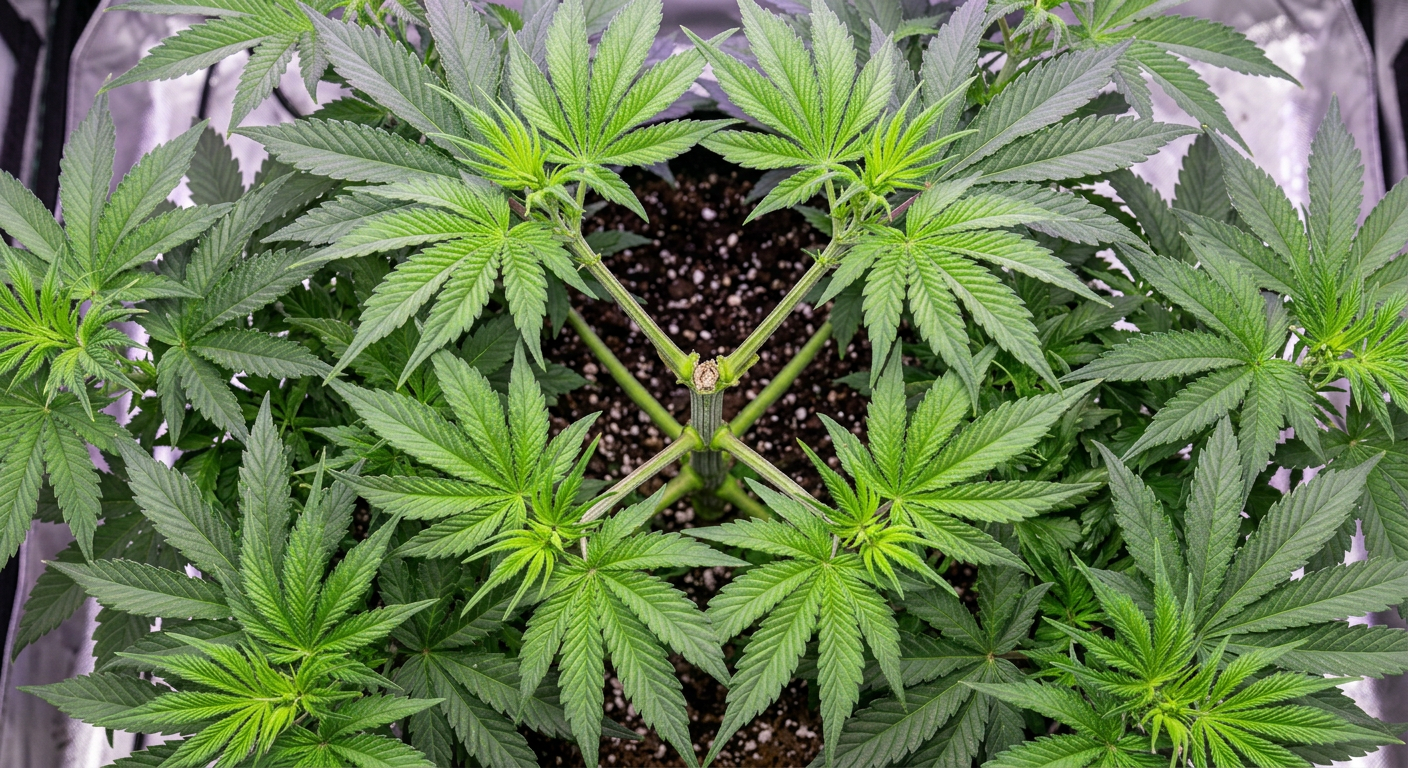
FIMming cannabis is a high-stress training (HST) technique where you remove roughly 75–80% of the plant's newest growth tip — but intentionally leave a small portion behind. That leftover tissue is the secret. Instead of signalling the plant to grow two symmetrical replacement shoots (as topping does), the partial cut sends the plant's auxin hormones into overdrive, producing multiple disorganised but productive new growth sites.
The science comes down to apical dominance. Cannabis naturally channels most of its energy into one leading shoot. Cutting that shoot — partially or fully — disrupts the auxin flow from the apical meristem and forces lateral branches to accelerate. With a FIM cut, because some meristem tissue remains, the plant's hormonal response is less predictable and more explosive, generating up to 8 new shoots instead of a clean pair.
Science insight: Auxin (indole-3-acetic acid) produced at the shoot apex suppresses lateral bud growth. A FIM cut partially destroys the auxin source without removing it entirely, creating a chaotic hormonal signal that activates multiple lateral meristems simultaneously — hence the 4–8 cola response.
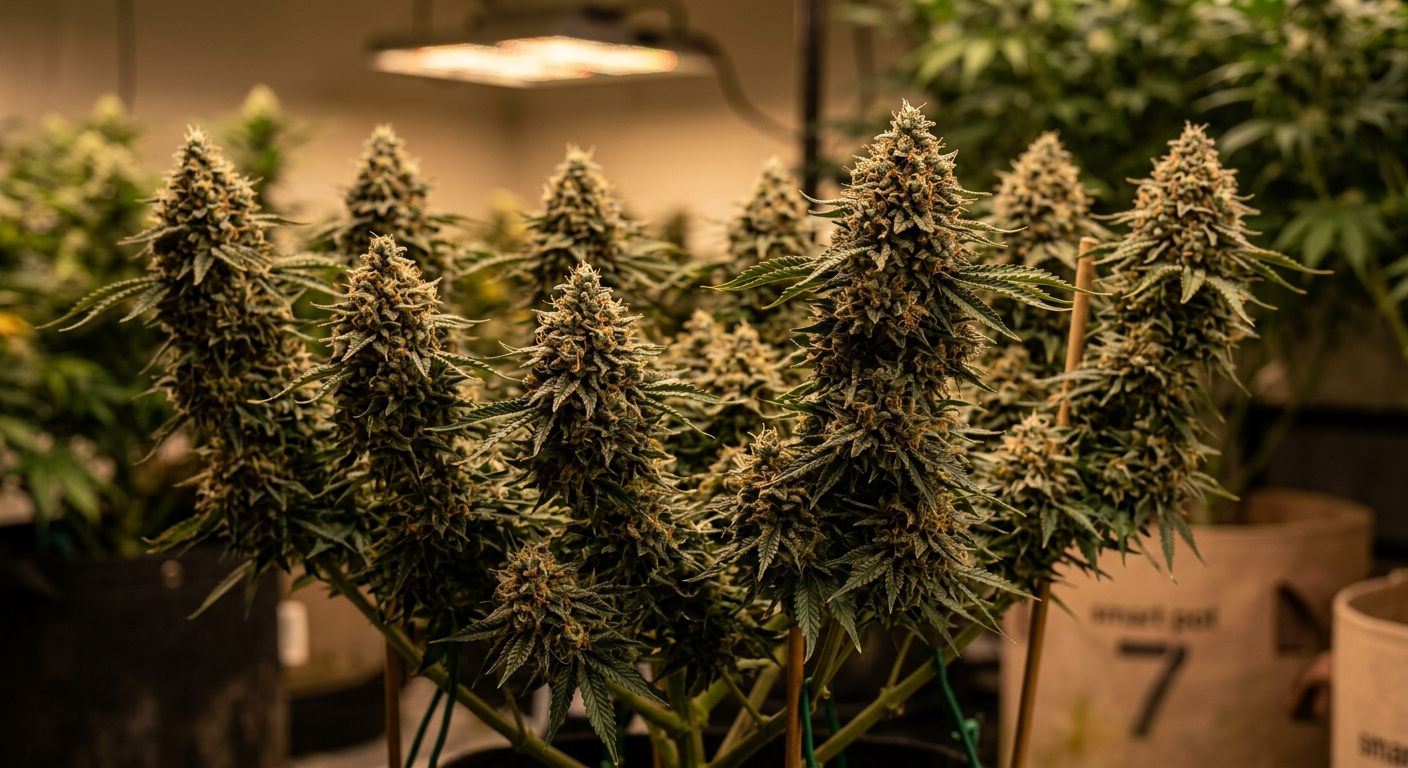
The result is a plant that grows wide and bushy rather than tall and Christmas-tree shaped. That structure is ideal for maximising light penetration across a canopy, especially when combined with techniques like ScrOG training.
FIM vs Topping Cannabis: Which Technique Wins?
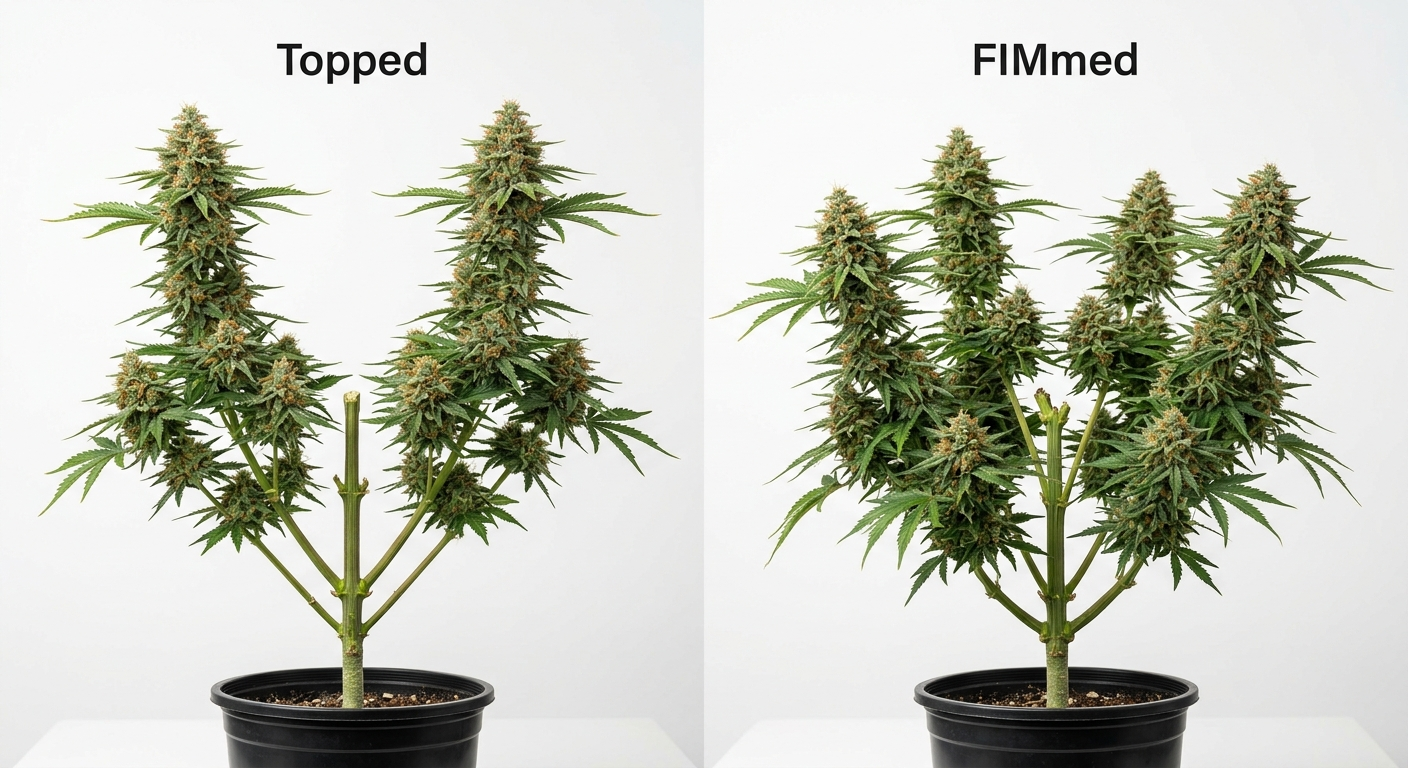
Both FIMming and topping are forms of HST, and both redirect energy from vertical growth into lateral branching. But they behave differently in practice, and choosing the right one depends on your goals, experience level, and grow space.
| Factor | FIMming | Topping |
|---|---|---|
| New colas produced | 4–8 (variable) | 2 (consistent) |
| Cut precision needed | Moderate (75–80% removal) | High (clean node cut) |
| Recovery time | 3–5 days | 5–7 days |
| Stress level | Lower | Higher |
| Predictability | Variable (75–85% success) | Near 100% success |
| Best for | Bushy, wide canopy | Symmetrical, even canopy |
| Works on autoflowers? | Risky — only early veg | Not recommended |
| Can repeat? | Yes, 2–3 times | Yes, 2–3 times |
Topping gives you a guaranteed, clean result every time — two colas, no surprises. FIMming gives you potentially double or triple the colas but with more variation in how the plant responds. Beginners often prefer topping for its predictability, while experienced growers love FIMming for its explosive branching potential. For a deeper look at topping, check our complete topping guide.
Key takeaway: FIMming produces more new colas than topping (up to 8 vs 2) but with less predictability. Choose topping if you want a guaranteed even canopy. Choose FIMming if you want maximum bud sites and don't mind some variability in the result.
When to FIM Cannabis: The Exact Timing Window
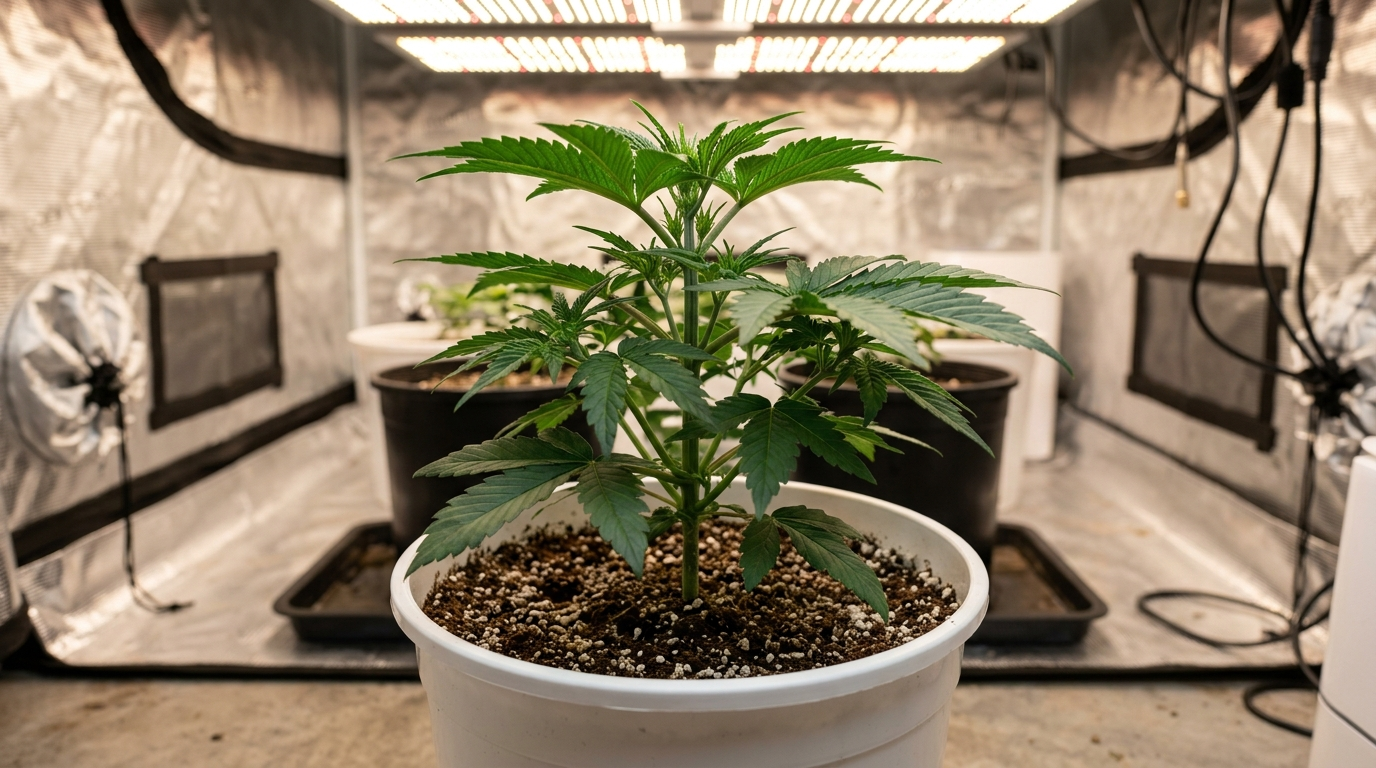
Timing is everything with fimming cannabis. Cut too early and the seedling doesn't have the root mass to recover quickly. Cut too late and you're stressing a plant that's already committing resources to pre-flower development. The sweet spot is during the vegetative stage, after the plant has developed 3–5 nodes.
At the 3-to-5-node stage, your plant is vigorous, has an established root system, and still has plenty of vegetative time to develop the new shoots into productive colas before you flip to 12/12. You want to see healthy, dark green growth with no signs of stress, deficiency, or pest damage before you make a cut.
Pro tip: Look for a new growth tip that's still tight and folded — sometimes called a "claw" or "spear" shape. This immature tip is the perfect target for a FIM cut. Cutting into this compact new growth gives you cleaner results than cutting an already-open, mature node.
Here's a quick timing checklist before you FIM:
- Plant has 3–5 nodes developed
- Plant is in vegetative stage only
- Leaves are dark green with no yellowing
- No signs of pests, mold, or deficiencies
- At least 4–6 weeks of veg time remaining after the cut
- Growing medium is moist but not waterlogged
- Environment is stable — no heat stress or low humidity
For outdoor growers, aim to FIM in late spring or early summer so plants have the full season to bush out before natural photoperiod triggers flowering. For indoor growers, plan your FIM so you have at least 4 weeks of veg remaining — this gives each new shoot time to develop into a solid, bud-producing branch. You can learn more about what happens during this critical stage in our cannabis vegetative stage guide.
FIM Technique Step by Step: How to FIM Weed Correctly
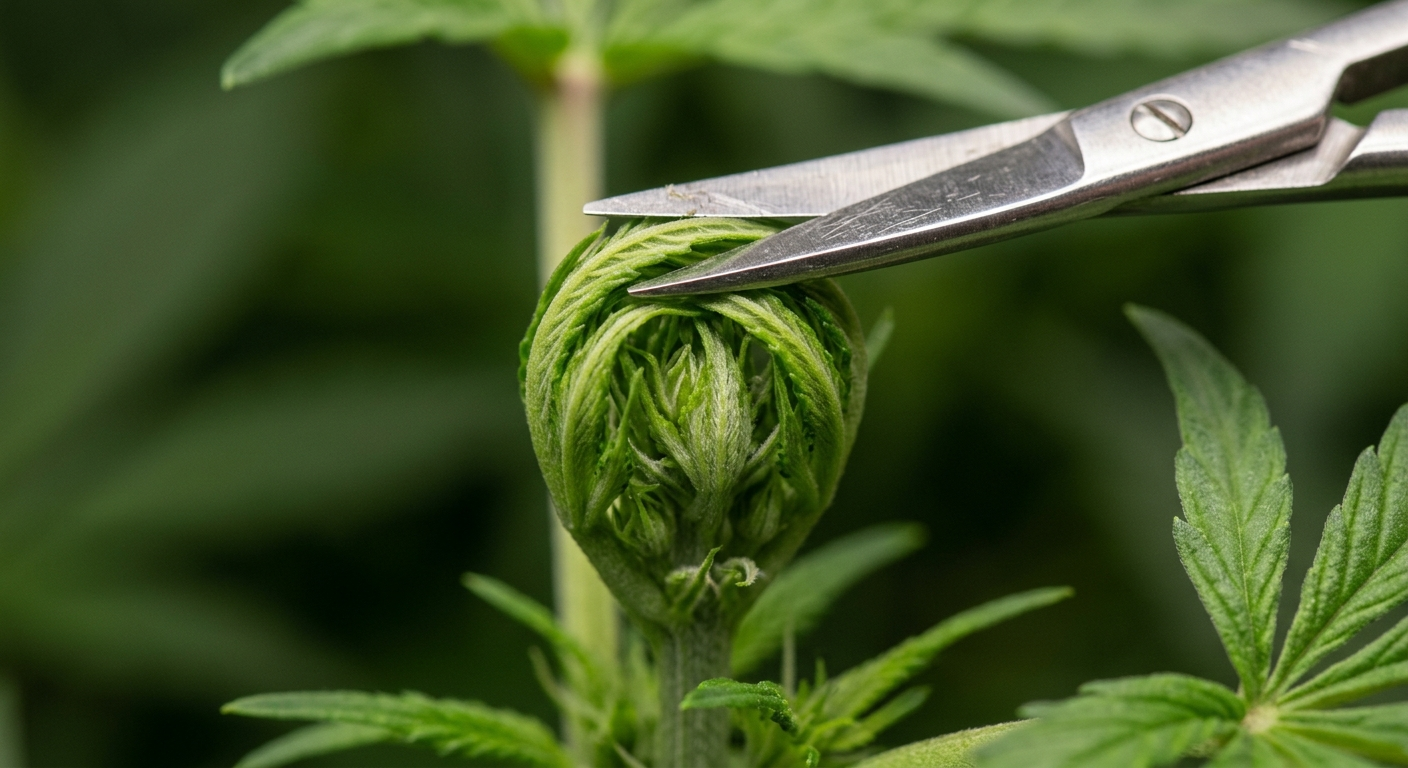
The FIM technique looks simple — and it is — but getting the cut right makes the difference between 4 new colas and a slightly sad plant that just heals over. Follow these steps precisely for the best results.
Sterilise Your Tools
Wipe your scissors or razor blade with 70% isopropyl alcohol and let it dry completely. A dirty blade introduces pathogens directly into fresh plant tissue. This single step prevents infections that can set your plant back by weeks.
Identify the Target Growth Tip
Find the newest, uppermost growth tip — the apical meristem. It should look like a tight cluster of tiny leaves just beginning to unfurl. This is your FIM zone. If the tip has already opened into a proper node, you've missed the ideal window for that particular shoot.
Pinch or Cut 75–80% of the Tip
This is the critical moment. You want to remove approximately 75–80% of that new growth tip — leaving the bottom 20–25% intact. Use your thumb and forefinger to pinch and twist, or make a clean diagonal cut with your scissors. The goal is a rough, uneven removal — not a clean, flat cut like topping.
Check Your Cut
Look down at what remains. You should see a small ragged stub of green tissue — the base of the growth tip — still attached to the plant. If you see a clean, empty node with two symmetrical side shoots already formed, you've topped the plant instead. Both are useful, but only one is FIMming.
Leave It Alone
Resist the urge to fiddle with the cut site. Don't apply anything to the wound — healthy cannabis heals well on its own in normal conditions. Keep the environment stable: 70–85°F, 50–70% relative humidity, and consistent light. Watch for new shoots to emerge from the cut site within 3–5 days.
Observe and Count New Shoots
Within 5–7 days, you should see between 2 and 8 new growth tips emerging from the FIM site. A successful FIM shows 4+ shoots. A partial success shows 2–3. If you see only 1 shoot growing back from the cut site, you likely topped the plant. Count your new colas and plan your next training moves accordingly.
Caution: Never FIM a plant that's already stressed. If your plant shows yellowing leaves, drooping, heat stress, or signs of pests, fix those issues first and wait for a full recovery before making any cuts. Stacking HST stress on top of existing stress can trigger hermaphroditism or stunted growth.
Precision vs Rough Cutting: Does It Matter?
One of the most debated aspects of fimming cannabis is whether to use a precise scissor cut or a rough pinch-and-twist with your fingers. The answer is more nuanced than most guides admit: both work, but they produce slightly different results.
Rough pinching (thumb and forefinger) tears the tissue rather than cutting it cleanly. This creates a more jagged wound, which some growers argue signals a stronger stress response and activates more lateral shoots. The technique is faster and doesn't require tools, making it useful for multiple plants.
Scissor or blade cutting gives you more control over exactly how much tissue you remove. A clean diagonal cut at the 75–80% mark is more repeatable across multiple plants and sessions. The downside is that too-clean a cut can sometimes behave more like topping if you accidentally hit the right angle.
Key takeaway: Rough pinching tends to activate more growth sites on average due to greater tissue disruption. Scissor cutting offers more control and consistency. For beginners, scissors are easier to calibrate. For experienced growers running many plants, fingertip pinching is faster and surprisingly effective.
The most important variable isn't the tool — it's the amount of tissue removed. Stay in the 75–80% range and you'll get a good FIM result regardless of your method. Remove 100% of the tip and you've topped. Remove less than 60% and the plant may just grow it back without producing extra colas.
Cannabis FIM Recovery Time: What to Expect Day by Day
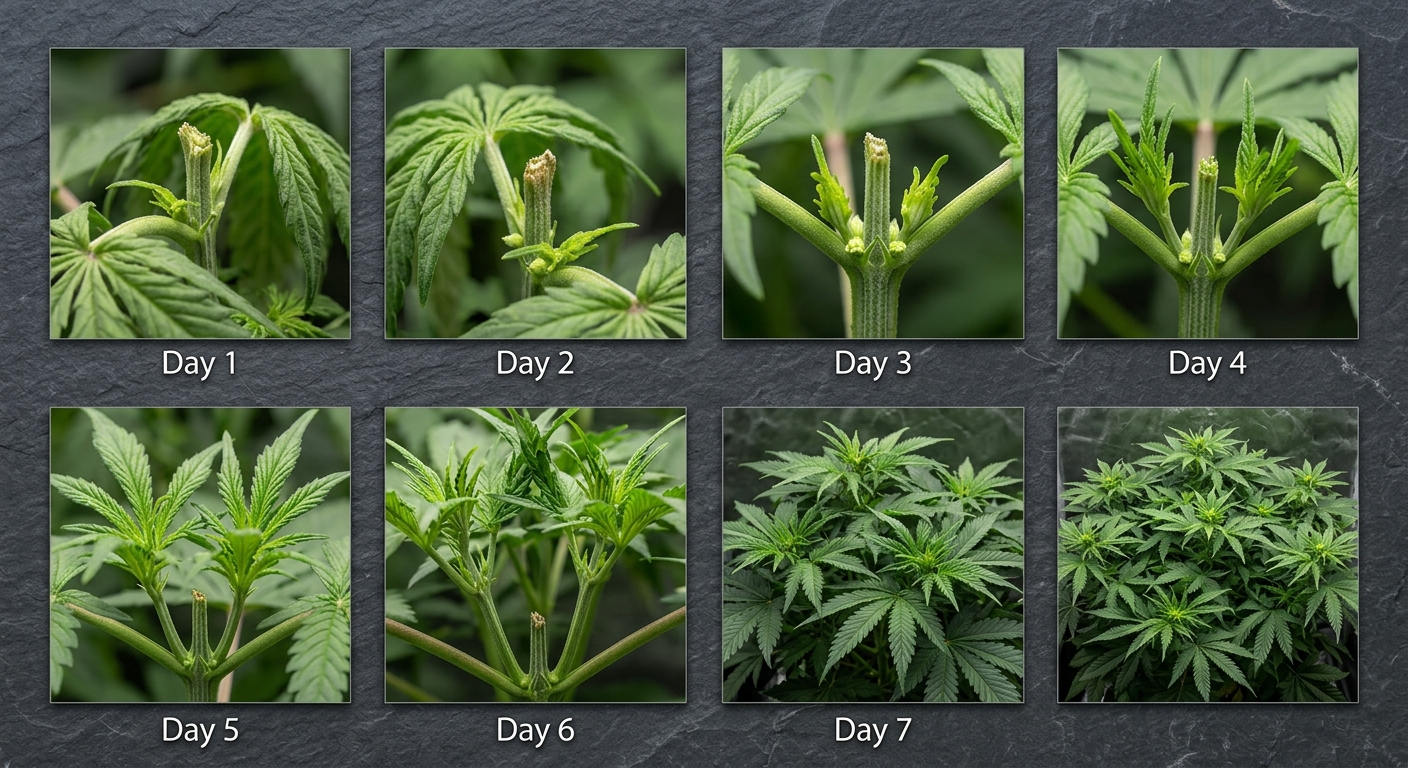
After fimming cannabis, your plant enters a brief recovery phase. During this window, above-ground growth slows as the plant redirects energy to process the stress signal and activate new growth sites. Understanding the recovery timeline helps you avoid panicking when growth stalls and helps you spot problems early.
Here's what the recovery timeline typically looks like:
- Day 1–2: Growth slows noticeably. The cut site may look slightly wilted or droopy. This is normal — the plant is processing the stress event.
- Day 2–3: The cut site starts to callus over. You may see tiny pinpoints of new green tissue beginning to emerge from the wound area.
- Day 3–5: New shoots become clearly visible — this is when you count your colas. A successful FIM shows 4+ distinct new growth tips emerging from a single site.
- Day 5–10: New shoots develop rapidly. The plant resumes vigorous upward and outward growth as the new colas compete for dominance.
- Day 10–14: Full recovery complete. The plant should look bushy and full, with multiple new nodes developing on each new shoot.
Pro tip: Support recovery by boosting your feeding slightly with a nitrogen-rich vegetative nutrient. Nitrogen drives new leaf and stem development — exactly what you need in the week after fimming. Don't overdo it, but a 10–15% nutrient increase for 5–7 days post-cut helps the new shoots develop faster.
If your plant shows no new growth after 7 days, check your environmental conditions. Low temperature, dry roots, or poor lighting all slow recovery. If growth still hasn't resumed after 10–14 days, the plant may have been overstressed — give it more time and avoid any additional training until it shows clear new growth. This recovery process ties closely to what's happening in the broader vegetative growth cycle.
FIMming Autoflowers: Proceed With Caution
Autoflowering cannabis is a different beast when it comes to training. Because autoflowers run on an internal clock — flowering automatically after 2–4 weeks of life regardless of light schedule — they have a very short vegetative window. This makes any form of HST, including fimming, genuinely risky on autoflowers.
The core problem is time. After fimming, a photoperiod plant needs 1–2 weeks to recover and then has weeks or months of veg remaining to develop the new colas. An autoflower may begin flowering before those new shoots have time to mature into productive bud sites. You can end up with a stressed plant that produces less than if you'd left it alone.
Caution: FIMming autoflowers is only advisable if the plant is growing vigorously, has at least 3 nodes developed, and you FIM before day 18–21 of its life. Later than this and the autoflower may already be transitioning to flower, and any stress will reduce your final yield rather than increase it.
If you do decide to FIM an autoflower, follow these guardrails:
- Only FIM plants with 3+ nodes showing clear, healthy growth
- Only FIM before day 18–21 of the plant's life
- Use the pinch method rather than scissors for a slightly lower stress impact
- Maintain perfect environmental conditions — 77°F, 60–65% RH, strong light
- Don't combine with any other HST techniques on autoflowers
Low-stress training (LST) — bending and tying branches rather than cutting — is almost always a better choice for autoflowers. Strains like Amnesia Haze Autoflower, Skywalker OG Autoflower, and Holy Grail Kush Autoflower respond well to gentle LST without the recovery time risk that FIMming carries.
FIMming Multiple Times: Stacking Colas for Maximum Yield
One of the underrated advantages of fimming cannabis is that you can do it more than once. Each time you FIM a new growth tip, you potentially multiply the cola count from that point. Done correctly, multiple FIM sessions can create a plant with 16–32+ individual bud sites — a genuine sea of buds that maximises every watt of your grow light.
The key to FIMming multiple times is giving the plant adequate recovery time between sessions. Wait until the new shoots from your first FIM have developed at least 2–3 nodes each before FIMming those shoots individually. Rushing into a second FIM while the plant is still recovering from the first multiplies stress and can push a plant into hermaphroditism.
A practical multi-FIM schedule for indoor photoperiod plants:
- FIM #1: Week 3–4 of veg (3–5 nodes on main stem)
- Recovery: 7–10 days
- FIM #2: Week 5–6 of veg (FIM the new shoots individually)
- Recovery: 7–10 days
- Flip to flower: Week 7–8 (after full recovery from FIM #2)
Key takeaway: Fimming 2–3 times on the same plant during vegetative growth can produce 16–32 main colas. Each session should be followed by a minimum 7-day recovery window before the next cut. Never FIM a plant that's within 2 weeks of your planned flip to 12/12 lighting.
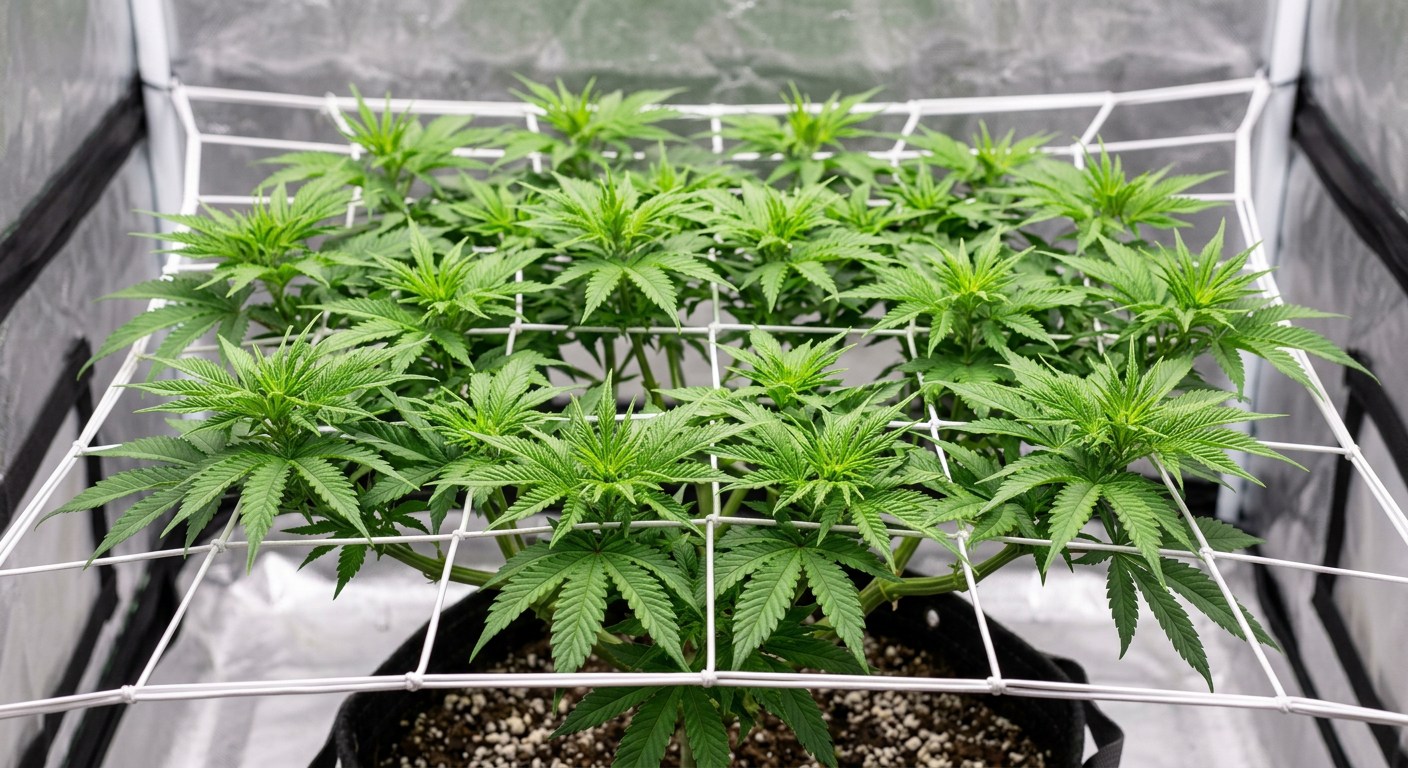
Multi-FIM plants pair exceptionally well with ScrOG nets. As the canopy fills in with multiple new shoots, you weave them through the screen to create an even, horizontal bud zone. Read our full ScrOG guide to combine these techniques for maximum yield.
FIM Cannabis Yield: What Are the Real Numbers?
Fimming cannabis can meaningfully increase your yield — but the numbers depend heavily on genetics, environment, and how well you execute the technique. Let's cut through the hype and look at realistic expectations.
A well-executed FIM on a healthy photoperiod plant in good conditions can increase yield by 20–30% compared to an untopped plant. That increase comes from two sources: more bud sites overall, and a more even canopy that allows light to reach lateral branches that would otherwise be shaded. The total cola count moves from 1 dominant main plus several smaller side branches, to 4–8 roughly equal main colas all receiving top-level light exposure.
Strains that tend to respond best to FIMming:
- Vigorous, fast-growing sativas and sativa hybrids — extra branching suits their naturally stretchy growth habit
- High-yielding indica-dominant hybrids — compact buds on multiple colas adds up fast
- Strains with strong inter-nodal spacing — gives new shoots room to develop fully
Some strains that are well-suited to FIMming and respond with excellent multi-cola growth include New York Power Diesel (24% THC), OG Kush Feminized (26% THC), White Widow Feminized (25% THC), and Super Lemon Haze Feminized (23% THC). Vigorous, high-THC cultivars with strong branching genetics like Sour Diesel Feminized (24% THC) and Northern Lights x Amnesia Haze Feminized (24% THC) are particularly rewarding to FIM.
Science insight: Yield increases from FIMming aren't purely about cola count. A wider, more horizontal canopy means more leaf area in the optimal light intensity zone (600–900 μmol/m²/s for most strains). This increases photosynthesis rate across the whole plant — meaning each gram of bud is supported by more efficient energy production.
FIMming Best Practices: Pro Tips for Beginners
Getting your first FIM right is mostly about preparation, patience, and keeping your expectations calibrated. Here's a consolidated checklist of the most important best practices for anyone new to fimming cannabis.
Before the cut:
- Always sterilise your tools with 70% isopropyl alcohol
- Confirm the plant has 3–5 healthy nodes and shows zero signs of stress
- Water the plant 12–24 hours before FIMming — a hydrated plant recovers faster
- FIM in the morning or at lights-on when plant metabolism is highest
- Have a magnifier or phone camera ready to check your cut closely
During the cut:
- Target only the newest, tightest growth tip at the apex
- Remove 75–80% of the tip — leave the bottom 20–25% intact
- Aim for a rough, angled cut rather than a flat, clean slice
- Don't second-guess yourself mid-cut — one confident motion works better than multiple hesitant snips
After the cut:
- Don't apply any sprays, gels, or substances to the wound
- Maintain stable temperature (70–82°F) and humidity (55–65%) during recovery
- Don't flush, repot, or change nutrients in the first 3 days post-FIM
- Watch for 4–8 new shoots within 5–7 days — this confirms success
- Keep a grow journal — noting which strains respond best helps you plan future grows
Pro tip: Take a photo immediately after your FIM cut, then again at day 3, day 5, and day 7. Comparing these images makes it much easier to count new shoots accurately and track recovery speed. Over multiple grows, these photos become invaluable reference points for dialling in your technique.
Starting with reliable, resilient genetics makes learning FIMming much less stressful. Strains bred for vigour and yield — like Northern Lights x Big Bud Feminized (20% THC), Wonder Woman Feminized (22% THC), or Super Skunk Feminized (20% THC) — bounce back quickly from training and reward your effort with heavy harvests. Make sure you have healthy seedlings to start with by following our cannabis seedling care guide, and get your fundamentals right with our complete beginner's indoor growing guide.
For growers who want to understand every aspect of their plant's growth before attempting HST, it's worth studying the full cannabis flowering stage timeline so you understand exactly what your plant will experience after the veg phase ends and the FIM shoots begin to form buds.
Frequently Asked Questions About FIMming Cannabis
Does fimming cannabis always produce 4 or more colas?
No — the FIM technique has a success rate of roughly 75–85%, and even successful FIMs produce variable numbers of new shoots. Most growers see between 4 and 8 new growth tips, but 2–3 is possible if the cut angle or percentage of tissue removed was off. A true topping (100% removal) will reliably produce exactly 2 new colas every time.
How long does a cannabis plant need to recover from FIMming?
Most plants show visible new growth within 3–5 days after fimming and are fully recovered within 10–14 days. Recovery speed depends on genetics, environmental conditions, and the overall health of the plant at the time of the cut. Keep temperature at 70–82°F, humidity at 55–65%, and provide adequate nitrogen during recovery to speed up the process.
Can you FIM cannabis during flowering?
No. Never FIM a cannabis plant once it has entered the flowering stage. Removing growth tissue during flower causes severe stress, wastes energy the plant needs for bud development, and can trigger hermaphroditism. All FIM cuts should be made during the vegetative stage, with at least 4 weeks of veg time remaining after the cut.
Is FIMming better than topping for beginners?
Topping is generally better for absolute beginners because it produces a predictable, consistent result — exactly 2 new colas — every single time. FIMming is slightly less predictable due to the importance of cutting the right percentage of tissue. However, FIMming is lower stress than topping and has a faster recovery time, making it worth learning once you've got one or two grows under your belt.
How many times can you FIM the same cannabis plant?
You can FIM the same plant 2–3 times during vegetative growth, targeting new shoot tips each session. Wait at least 7–10 days between each FIM to allow full recovery. Multiple FIM sessions can produce 16–32+ main colas on a single plant, which pairs powerfully with ScrOG training to fill a grow space efficiently.