Bruce Banner Autoflower Seeds
By Ivan K., DSS Genetics · Updated April 2026

Bruce Banner Autoflower Seeds
SKU: DSS-BRBA-AUTO-5PK
Pack Size
Quantity
Disclaimer: For informational purposes only — not medical advice. Consult a healthcare professional before use.
About This Strain
Bruce Banner Autoflower Seeds — Complete Strain Profile
Bruce Banner Autoflower Seeds – Strain Overview
Bruce Banner Autoflower carries some serious genetic pedigree — OG Kush crossed with Strawberry Diesel, then stabilized with Ruderalis to create a fast-finishing, light-cycle-independent powerhouse. The result is a 60% sativa / 40% indica hybrid that hits 18–23% THC while completing its entire life cycle in under nine weeks from seed. For a strain that doesn't need you to flip lights, those are remarkable numbers.
What sets this strain apart from other autoflowers isn't just the THC ceiling — it's the complexity underneath it. The OG Kush backbone brings structural resin production and a grounding body component, while the Strawberry Diesel lineage injects cerebral energy and that unmistakable fuel-meets-fruit aroma. If you've been looking for an autoflower that actually punches like a photoperiod, browse our best autoflower seeds and you'll quickly see why Bruce Banner stands out from the crowd.
Effects and Medical Benefits
The high opens fast — within minutes of the first exhale, a warm euphoric wave rolls across the forehead and settles behind the eyes. This is the sativa-forward OG influence asserting itself early, delivering clarity and upward momentum before the indica foundation catches up. Creative thought patterns accelerate, conversation flows easily, and tasks that felt heavy suddenly feel approachable.
By the 30-minute mark, the Kush genetics introduce a gentle body relaxation that softens the edges without pulling you toward the couch. This is the sweet spot most users chase — mentally energized, physically at ease, and notably happy. Higher doses compress that window significantly, so experienced smokers will find the ceiling, while newer users should treat 18–23% THC with appropriate respect.
Users consistently report these effects:
- Euphoria and happiness — an immediate mood elevation that arrives before the body even registers the session has started
- Creative and uplifting energy — sativa-dominant cerebral engagement that makes this ideal for artistic or problem-solving work
- Relaxed physical state — the indica 40% provides enough body calm to dissolve tension without sedating
- Sustained focus — at moderate doses, the high maintains coherence for 2–3 hours without the crashing mental fatigue common with pure sativas
On the medical side, Bruce Banner Autoflower is regularly sought out for:
- Chronic stress and persistent mental tension
- Anxiety — particularly social or situational anxiety at moderate doses
- Depression and low-mood conditions that benefit from euphoric uplift
- Pain relief — muscle spasms, general aches, and inflammation-related discomfort
- Nausea — the Diesel lineage contributes to appetite stimulation and stomach settling
The modest 0.1–1% CBD content works harder than the number suggests. Linalool at 2.03% carries documented anxiolytic and muscle-relaxing properties, effectively filling the therapeutic gap that the low CBD leaves open. Combined with Caryophyllene's direct interaction with CB2 receptors, this profile demonstrates why the entourage effect matters more than any single cannabinoid figure.
Aroma, Flavor and Terpene Profile
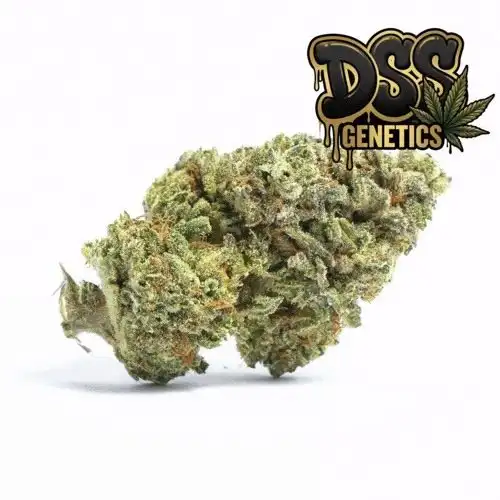
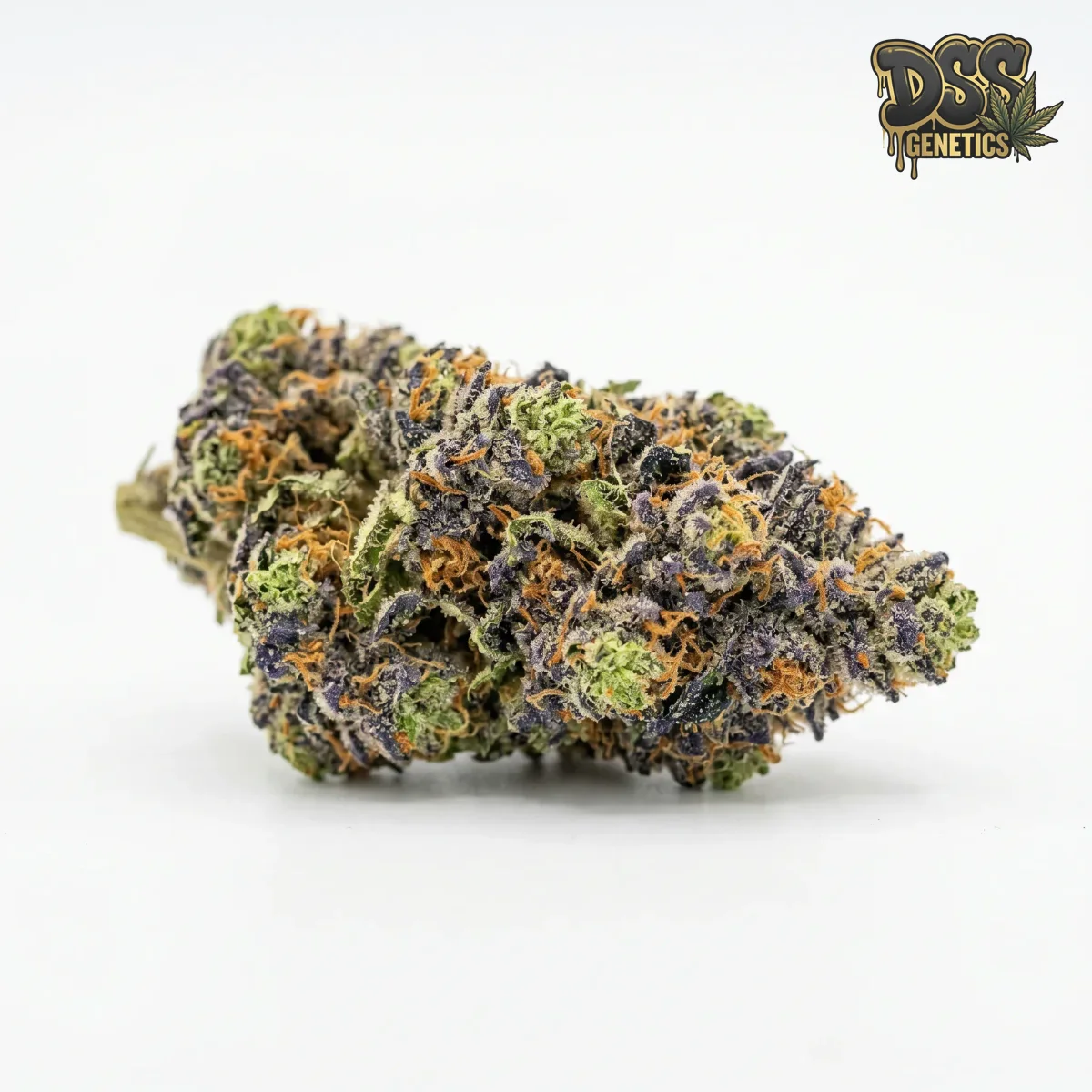
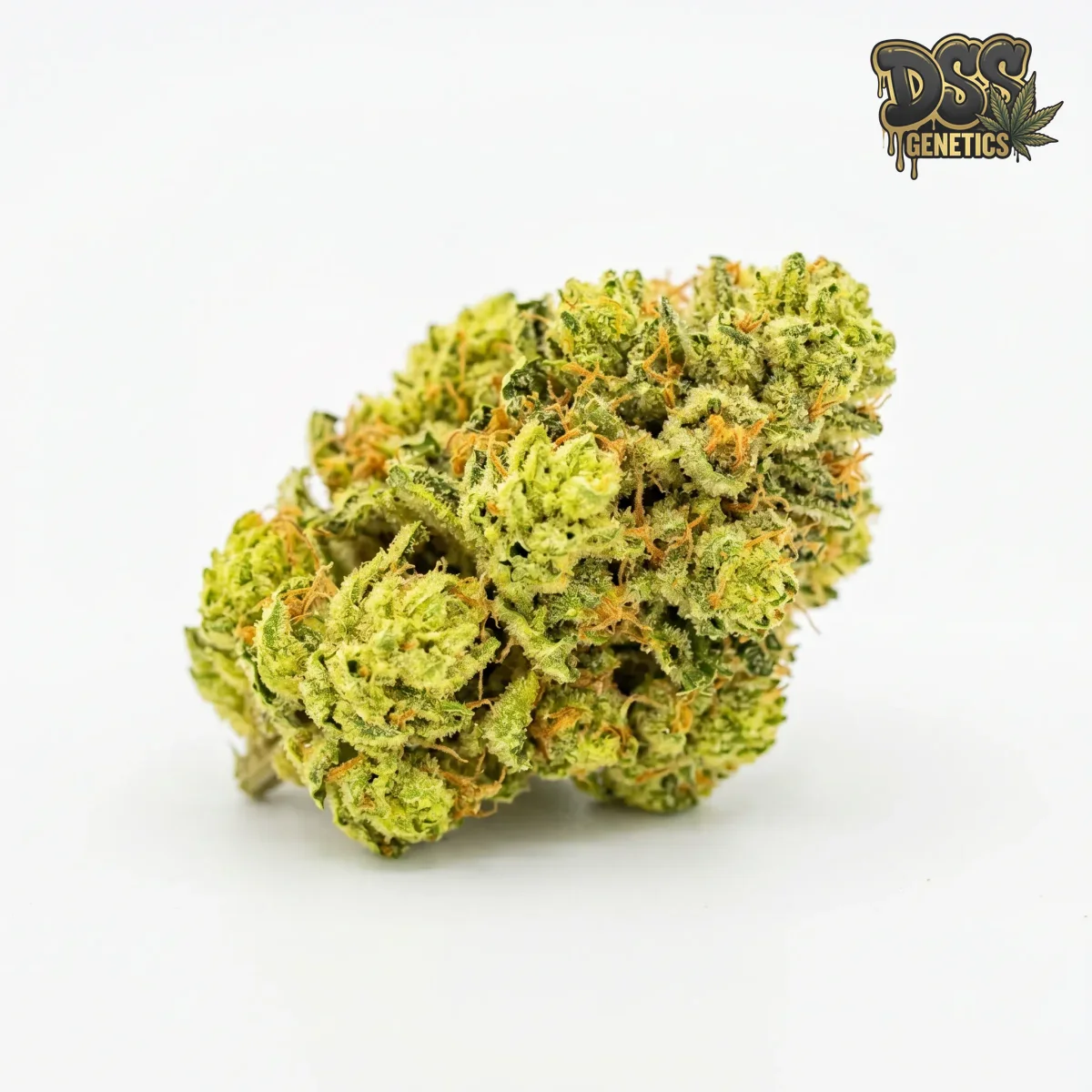
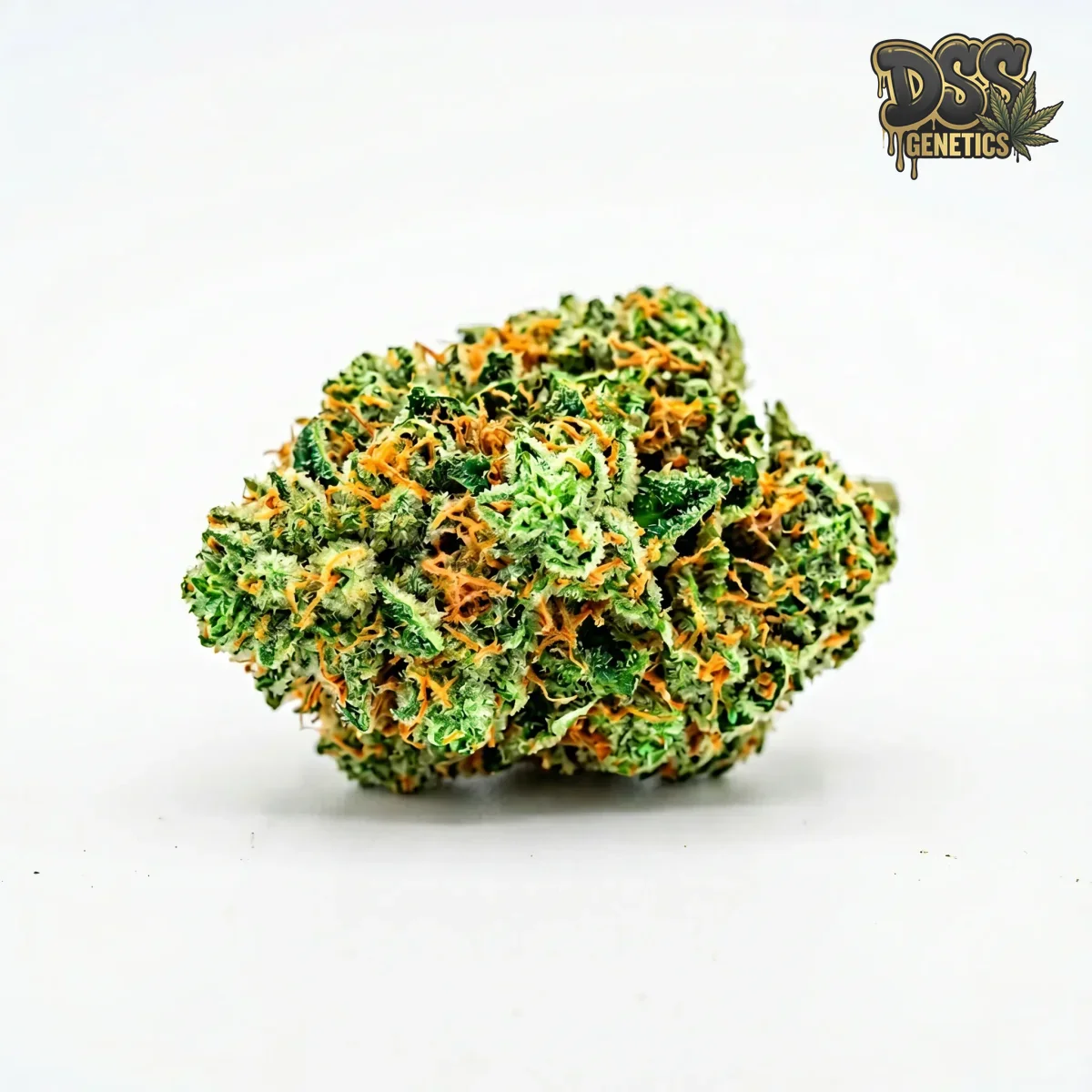
Crack open a jar of properly cured Bruce Banner and the room knows about it immediately. The first wave is sharp diesel fuel cut with fresh pine — aggressive, complex, and impossible to mistake for anything else. Let that settle for a moment and a sweet berry-like softness emerges from underneath, a direct inheritance from the Strawberry Diesel parent. On the exhale, spicy earthiness coats the back of the palate and lingers, with a faint skunky finish that reminds you exactly what you're smoking.
This isn't a strain that smells approachable or subtle. It's loud, resinous, and proud of it — and the flavor matches the aroma with unusual accuracy, which tells you the terpene retention during curing is doing exactly what it should.
The terpene that defines the therapeutic character of this strain is Linalool, present at a dominant 2.03% — far above average for a cannabis strain. Linalool is responsible for the floral, slightly lavender-like softness that rounds the otherwise sharp diesel-and-pine profile. More importantly, it carries significant research-backed anxiolytic and muscle-relaxant properties. This is the terpene doing most of the heavy lifting for the anxiety and spasm relief users report, and at 2.03% it's present in concentrations that actually matter.
At 0.63%, Caryophyllene delivers the spicy, peppery sharpness you taste on the back end of each hit. What makes Caryophyllene pharmacologically unique among all cannabis terpenes is its ability to bind directly to CB2 receptors in the endocannabinoid system — essentially functioning as a dietary cannabinoid. This binding contributes directly to the anti-inflammatory and analgesic effects users experience, making it especially relevant for the pain and muscle spasm relief this strain is sought out for. If you want to understand why Caryophyllene matters, our Caryophyllene terpene guide goes deep on the mechanism.
Myrcene at 0.22% sits as the quietest member of this terpene trio, but its role shouldn't be overlooked. The earthy, musky base note that grounds the entire aroma profile comes from Myrcene, and its ability to increase cell membrane permeability may enhance the rate at which THC crosses the blood-brain barrier — contributing to how quickly this strain's cerebral effects arrive. It also nudges the overall experience toward the relaxed end of the spectrum, softening the raw sativa energy of the Strawberry Diesel genetics into something more manageable.
Growing Bruce Banner Seeds
Bruce Banner Autoflower is rated difficult, and that rating is honest. This strain is not unforgiving in the way that punishes every small mistake — it's demanding in the way that rewards precision and punishes complacency. Growers who understand environmental control, nutrient timing, and the compressed autoflower growth window will get excellent results. Those expecting the hands-off experience some autoflowers provide will find themselves disappointed by mediocre yields and underdeveloped buds.
The autoflower window of 56–63 days is uncompromising. Unlike photoperiod strains, you cannot extend vegetative growth to recover from early stress. Root-bound seedlings, overwatering in week two, or a heavy-handed nutrient flush in week four will all cost you yield with no opportunity for recovery. What we've found over dozens of runs is that the growers who succeed with Bruce Banner Auto are the ones who get week one through week three exactly right — fast root development in a well-aerated medium, conservative nutrients until week three, and a stable environment from the first day of germination. Check our germination guide before popping these seeds.
Temperature sweet spot is 70–80°F (21–27°C) during the light period, dropping no lower than 62°F (17°C) during the dark period. Relative humidity should track the growth phase: 60–70% RH during early vegetative development, stepping down to 50–60% as canopy coverage fills in, and dropping to 40–45% RH during the final two weeks of flower to protect resin production and prevent botrytis on the dense OG-influenced buds. Bruce Banner Auto builds tighter, heavier colas than most autoflowers, which means airflow is non-negotiable — dead air pockets invite problems fast.
Indoors, 18 hours of light produces strong results, and the strain adapts well to both soil and coco coir. We've seen better terpene expression in organic soil runs, but faster development and higher absolute yields in well-managed coco with precise EC control. If you're running hydroponics, keep EC between 0.8–1.2 during vegetative and push to 1.6–2.0 during peak flower — consult our hydroponics guide for autoflower-specific feed scheduling. Outdoors, this strain performs best in climates with stable summer temperatures — the ruderalis genetics mean it will flower regardless of photoperiod, making it viable in regions where the season is too short for most photoperiod varieties.
Key growing tips for Bruce Banner Autoflower:
- Train early and gently: Low-stress training starting around day 14 dramatically increases canopy coverage and final yield — heavy HST techniques like topping are high-risk on autoflowers with a fixed growth window. Our training techniques guide covers the best LST approaches for auto genetics specifically.
- Nutrient timing is everything: Start at 25% of recommended doses in week one, ramp to full strength by week three, and begin the transition to bloom nutrients by day 28 whether or not pistils have appeared yet. Our nutrient guide has a full autoflower feed schedule worth bookmarking.
- Pot size matters: We recommend 3-gallon fabric pots indoors — large enough for root development, small enough to prevent overwatering. Transplanting is not recommended with autoflowers; go direct into the final container from germination.
- Outdoor timing: In the northern hemisphere, a late April or early May outdoor start gives this strain ideal conditions for peak terpene and resin development. Read our outdoor growing guide for climate-specific start windows by region.
- Vegetative stage discipline: The window between days 7 and 21 is the most critical period. A stable environment during this stretch determines how much structural foundation the plant builds before the flowering transition begins — our vegetative stage guide explains exactly what to monitor.
Yield and Flowering Time
Bruce Banner Autoflower flowers in 56–63 days from seed — a tight window that makes it one of the faster-finishing high-THC autoflowers in the fast-flowering collection. Indoor yields run 1.5 to 2 oz/ft² under optimized conditions, which is competitive for an autoflower at this potency level. Outdoor plants in warm, stable climates can produce 2 to 6 oz per plant depending on container size, training, and seasonal light hours.
The yield range is wide because this strain responds exceptionally well to good technique — and equally poorly to neglect. A grower who runs clean environmental controls, trains the canopy through weeks two and three, and nails the nutrient transition from veg to bloom can hit the top of those ranges consistently. A grower who treats this like a set-and-forget auto will land at the bottom. For growers targeting maximum output, pair these seeds with our high-yield collection research to understand what environmental inputs drive the biggest returns.
To maximize your harvest:
- Trichome monitoring: Begin checking trichome color under magnification at day 50 — harvest when 70–80% of trichomes are milky white with 10–20% amber for peak THC expression and balanced effect
- Late-flower humidity: Drop to 40–45% RH in the final 10–14 days to protect dense colas from botrytis and maximize resin density on the outer sugar leaves
- Flush protocol: Run plain pH-balanced water for the final 7–10 days in coco or hydro; in organic soil, begin backing off nutrients at day 45 to let the plant metabolize stored salts naturally
- Drying and curing: Hang-dry whole branches in 60°F / 60% RH conditions for 7–10 days before jarring — a slow dry and cure is what preserves the Linalool and Caryophyllene expression that makes this strain's aroma and medical profile so distinctive
Why Buy Bruce Banner Seeds from DSS Genetics?
Every Bruce Banner Autoflower seed ships with our full germination guarantee — if it doesn't sprout under proper conditions, we replace it. Orders ship discreetly in plain, discreet packaging with no indication of contents on the outside of the parcel.
- Germination guaranteed — every seed is backed by our replacement policy, no questions asked
- Discreet shipping — plain, unmarked packaging on every order
- Spend $100 or more — receive free premium seeds included with your order automatically
- Proper cold-chain storage — seeds are stored at optimal temperature and humidity from our facility to your door, protecting viability and germination rates
Frequently Asked Questions
Is Bruce Banner Autoflower hard to grow?
Yes — this strain is honestly rated difficult, and that's not a label we apply loosely. The compressed autoflower timeline means any significant stress in the first three weeks carries forward with no recovery window. If you're new to cannabis cultivation, we'd strongly recommend building your skills with an easy-to-grow strain first. Growers who have a few successful grows under their belt and understand environmental control will find Bruce Banner Auto rewarding and achievable — just not forgiving.
How much THC does Bruce Banner Autoflower have?
Bruce Banner Autoflower tests at 18–23% THC, placing it firmly among the highest-THC autoflowers available. That upper range is achievable under optimized conditions — dialed-in lighting, proper nutrient timing, and a slow cure all contribute to where individual harvests land within that window. New consumers should approach this strain with caution; the sativa-forward onset arrives quickly and the ceiling is real.
What does Bruce Banner Autoflower smell and taste like?
The aroma is loud and complex — sharp diesel and pine upfront, with a sweet berry softness inherited from the Strawberry Diesel parent, and a spicy, skunky earthiness on the back end. The flavor mirrors the aroma closely, with a peppery finish that lingers. This profile is driven by three terpenes: Linalool (2.03%), Caryophyllene (0.63%), and Myrcene (0.22%). The high Linalool concentration adds a subtle floral dimension that softens what would otherwise be a purely fuel-and-spice profile.
How long does Bruce Banner Autoflower take from seed to harvest?
Bruce Banner Autoflower finishes in 56–63 days from germination — no light-flip required. That makes the total seed-to-harvest timeline roughly 8–9 weeks. For context on how the flowering phase progresses week by week and what to look for at each stage, our flowering stage guide walks through the full development cycle. Indoor growers can expect 1.5–2 oz/ft² and outdoor growers 2–6 oz per plant when conditions and
Medical Disclaimer: This information is for educational purposes only and should not be considered medical advice. Always consult a healthcare professional before using cannabis for medical purposes. Individual results may vary.
Frequently Asked Questions
Bruce Banner — Common Questions Answered
What is Bruce Banner?
Bruce Banner is a balanced hybrid cannabis strain (60% Sativa / 40% Indica) bred from OG Kush x Strawberry Diesel x Ruderalis. It produces THC levels of 18–23% and CBD levels of 0.1–1%. Known for its relaxing, happy, euphoric effects and pine, sweet, earthy flavor profile.
Is Bruce Banner easy to grow?
Bruce Banner is considered an advanced-level strain that requires experience with training techniques, environmental control, and nutrient management for best results. Growing difficulty: Difficult. It thrives in temperate climates and reaches a medium plant size.
How long does Bruce Banner take to flower?
Bruce Banner has a flowering time of 56–63 days. Switch to a 12/12 light cycle to initiate flowering. Expected yields are 1.5 to 2 oz/ft² indoors and 2 to 6 oz/plant outdoors.
What are the effects of Bruce Banner?
Bruce Banner delivers relaxing, happy, euphoric, uplifting, creative, energetic effects. Many growers report it helps with muscle spasms, stress, anxiety, depression, pain, nausea. With THC levels of 18–23%, it provides a moderate to strong experience suitable for most users.
What does Bruce Banner smell and taste like?
Bruce Banner's dominant terpenes are Myrcene (0.22%), Caryophyllene (0.63%), Linalool (2.03%), which give it a pine, sweet, earthy, diesel, skunky, spicy flavor and aroma profile.
Can I grow Bruce Banner indoors and outdoors?
Yes, Bruce Banner performs well both indoors and outdoors. Indoor yields average 1.5 to 2 oz/ft², while outdoor grows can produce 2 to 6 oz/plant. It prefers temperate conditions. Its medium height is manageable in most indoor setups.
Grower Reviews
Real grow experiences from our community
Get 10% Off Your First Order
Join our newsletter for exclusive deals, growing tips, and new strain drops.