Pink Panther Feminized Seeds
By Ivan K., DSS Genetics · Updated April 2026

Pink Panther Feminized Seeds
SKU: DSS-PIPA-FEM-5PK
Pack Size
Quantity
Disclaimer: For informational purposes only — not medical advice. Consult a healthcare professional before use.
About This Strain
Pink Panther Feminized Seeds — Complete Strain Profile
Pink Panther Feminized Seeds – Strain Overview
Pink Panther is a boldly sativa-dominant hybrid, sitting at 85% sativa and 15% indica, with a THC ceiling of 22–24% that hits with speed and clarity rather than weight. While its precise lineage remains undisclosed, its terpene fingerprint — myrcene-forward with camphene and phellandrene in tow — points toward a genetics pool rich in tropical and resinous heritage. This is not a strain for the cautious grower or the casual consumer.
What makes Pink Panther stand apart is the rare combination of sativa-driven cerebral fuel and a surprisingly smooth landing — no jagged edges, no paranoid spike. Growers willing to invest the patience this strain demands are rewarded with medium-sized plants producing dense, aromatic buds dripping with a complex scent that defies easy categorization. If you're building a sativa-forward collection, Pink Panther belongs on your shortlist alongside our best sativa strains.
Effects and Medical Benefits
The high opens fast — within minutes of the first exhale, a warm cerebral pressure builds behind the eyes and expands outward into clean, uncluttered euphoria. This is the kind of focused energy that makes a Saturday morning feel full of possibility rather than obligation. Pink Panther doesn't bulldoze your day; it sharpens it.
As the session progresses, the indica underpinning emerges — not as sedation, but as a body calm that grounds the mental elevation without pulling you toward the couch. At moderate doses, this balance sustains for two to three hours. Push the dose higher and the relaxation deepens, though the sativa backbone keeps the experience uplifting even late into the effect window.
Users consistently report these four defining effects:
- Euphoria with genuine lift — not just a mood bump, but a sustained sense of optimism that makes social settings feel effortless
- Focused mental clarity — the kind that supports creative work, problem-solving, or simply being present in a conversation
- Energetic drive — physical motivation that pairs well with light exercise, hiking, or productive housework
- Soft-edged relaxation — a body calm that arrives without sedation, smoothing tension without erasing function
On the medical side, Pink Panther has built a reputation among patients who need relief without the mental fog that heavier indicas deliver. Its profile is particularly well-suited for:
- Chronic pain and muscle tension — the combined THC load and myrcene presence offer meaningful physical relief
- Inflammation — camphene contributes known anti-inflammatory pathways that complement the cannabinoid action
- Stress and mental fatigue — the euphoric onset dismantles accumulated tension rapidly
- Anxiety — at controlled doses, the focused calm can quiet racing thoughts without amplifying them
- Insomnia — higher evening doses leverage the indica undercurrent to ease the transition toward sleep
The 0.1–1% CBD range is modest, but it's not irrelevant. Even trace CBD interacts with the terpene matrix to modulate the psychoactive sharpness of 22–24% THC, a phenomenon well-documented through the entourage effect. Phellandrene — an underappreciated terpene in this profile — adds potential analgesic and antifungal properties that round out the therapeutic picture.
Aroma, Flavor and Terpene Profile
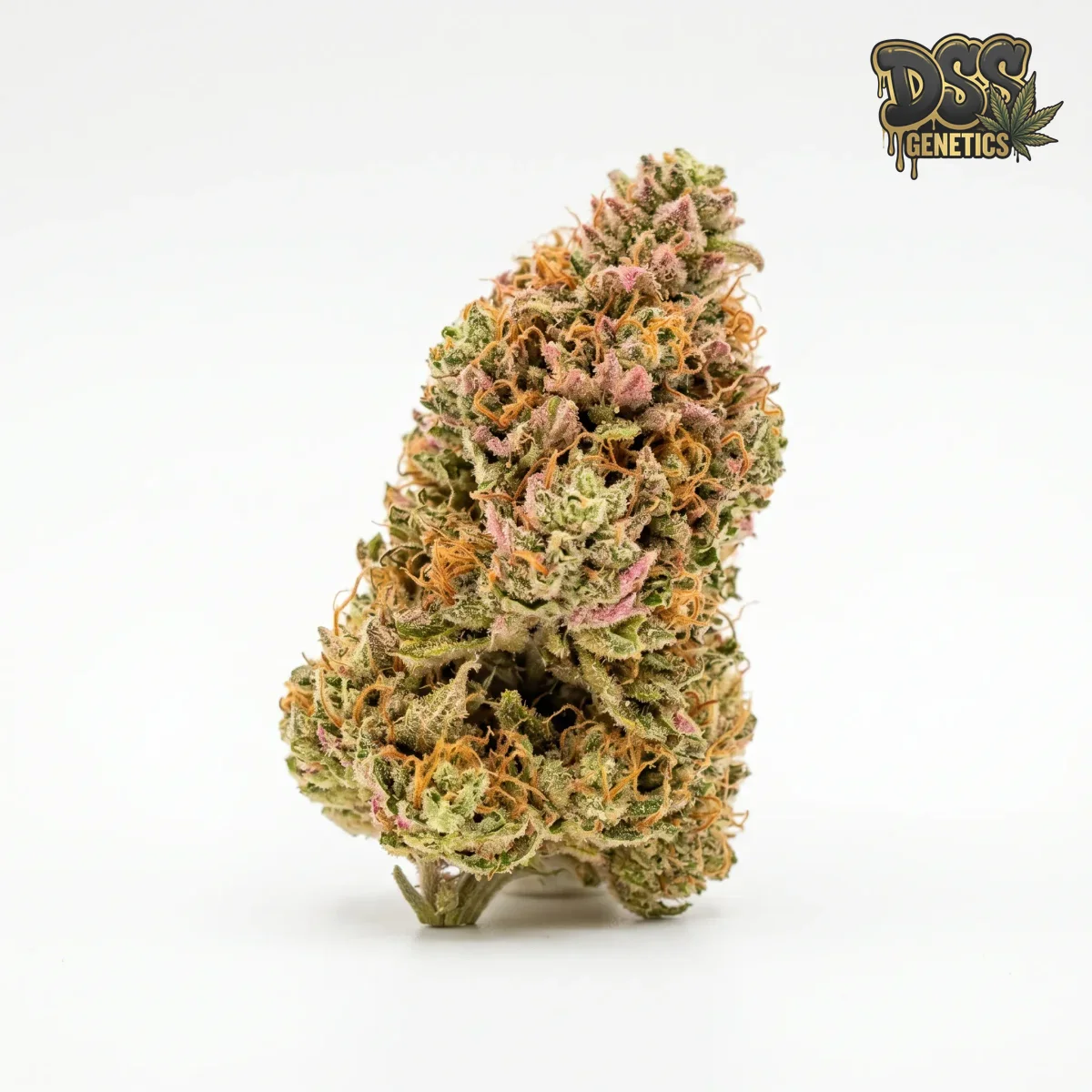
Crack a Pink Panther bud and the first impression is a contradiction that somehow makes sense — sharp pine and cool forest air, immediately chased by a wave of ripe blueberry and sweet vanilla. It smells simultaneously like a hike through a winter forest and a bowl of fruit on a summer table. There's a diesel bite underneath it all that keeps the sweetness honest and the nose alert.
On the inhale, the pine registers first, clean and resinous, followed by a fruity sweetness that reads as blueberry with vanilla softness behind it. The exhale opens up the diesel and a faintly earthy body that lingers on the palate. The aftertaste is where the magic lives — a long, sweet, slightly herbal finish that invites another draw.
Myrcene anchors this profile at 0.33%, the highest concentration in the blend and the terpene most responsible for the earthy, musky undertone that gives Pink Panther its depth. Myrcene is the most abundant terpene found in commercial cannabis, and at this concentration it plays a dual role — flavoring the experience with its tropical, slightly fruity musk while also acting as a permeability enhancer, potentially accelerating THC uptake across the blood-brain barrier. This may partly explain how quickly the cerebral onset arrives in this strain.
Camphene steps in as a secondary character that most consumers don't consciously identify but would immediately miss. Its contribution is subtle — a cool, faintly herbal, almost minty quality that cuts through the sweetness and keeps the aroma from becoming cloying. Beyond flavor, camphene carries meaningful antioxidant and anti-inflammatory properties, a scientific reality that adds functional depth to an already complex terpene picture. Pair that with phellandrene — a terpene more common in eucalyptus and water fennel than in cannabis — and you get a fresh, slightly citrusy brightness that lifts the entire aroma profile into something genuinely unusual.
Terpineol, the fourth terpene in the Pink Panther matrix, delivers a floral, lilac-tinged sweetness that explains the vanilla perception many users report on the exhale. Terpineol also carries sedative properties in isolation, and its interaction with the myrcene base may be part of why the body relaxation in Pink Panther feels so smooth despite the dominant sativa genetics. For growers and consumers who want to go deeper on individual terpene science, explore our full myrcene guide or the broader profiles for limonene, caryophyllene, and linalool — all of which share overlapping therapeutic territory with this strain's active compounds.
Growing Pink Panther Seeds
Pink Panther is rated difficult, and that rating is earned — not assigned arbitrarily to sound exciting. The challenge comes from a combination of sativa stretch, a long flowering window that demands sustained environmental discipline, and sensitivity to moisture fluctuations that can punish a grower who gets complacent in week seven. That said, experienced cultivators who understand sativa management will find this strain deeply satisfying to grow.
Indoors, temperature control is non-negotiable. Pink Panther performs best with daytime canopy temperatures between 75–82°F during the vegetative phase, dropping to 68–76°F during late flowering to encourage terpene preservation and resin density. Humidity should sit at 55–65% during vegetative growth, then step down aggressively to 40–50% at the onset of flower and to 38–42% in the final two weeks. Any sustained humidity above 50% in late flower risks bud rot on the denser colas — a catastrophic outcome after ten weeks of effort.
The sativa genetics drive significant vertical stretch during the early flowering transition — expect Pink Panther to double or even approach triple its vegetative height in the first three weeks of the flowering stage. Growers who don't account for this in their space planning will find themselves managing plants pressing against grow tent ceilings by week five. Height management must begin early and be maintained consistently throughout the grow.
What we've found over dozens of sativa-dominant grows of this type is that the plants respond exceptionally well to environmental consistency. Pink Panther does not forgive sudden pH swings, drastic nutrient changes, or significant temperature drops. Keep the inputs dialed and steady, and the plant returns the favor with exceptional terpene expression and tight, resinous bud structure in the final two weeks of flower.
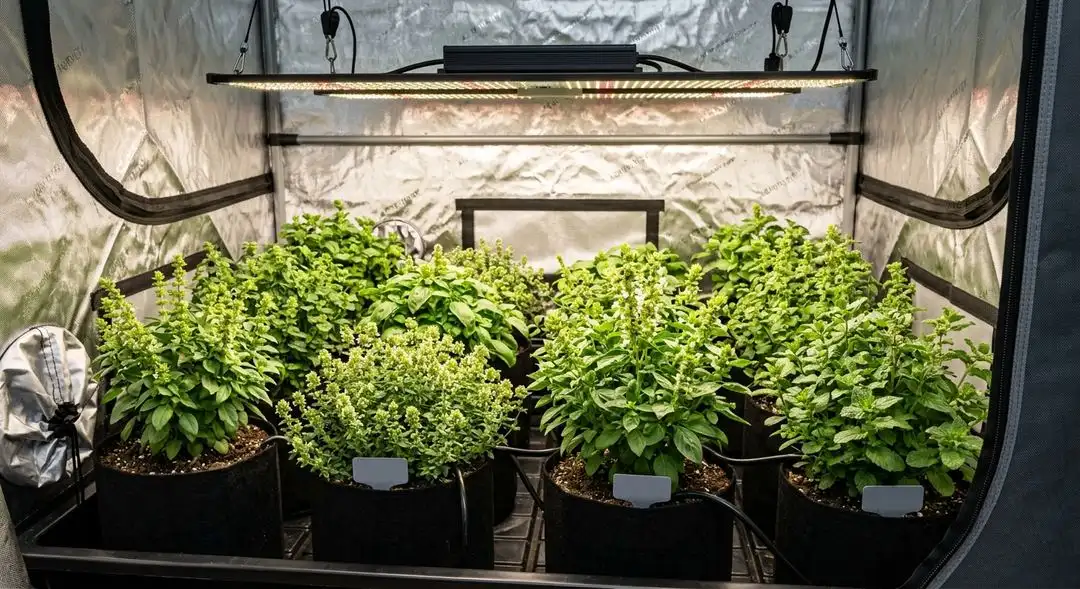
Five growing tips to get the most from Pink Panther feminized seeds:
- Apply SCROG early and commit to it: Pink Panther's sativa stretch makes it a natural candidate for Screen of Green. Begin weaving shoots through the net during late veg and flip to flower only once the canopy is 70–80% filled — visit our training techniques guide for a full SCROG walkthrough.
- Dial in your nutrient timing precisely: This strain is a moderate feeder in veg but responds aggressively to phosphorus and potassium increases in weeks three through seven of flower. Follow the nutrient guide for a week-by-week flowering feed schedule and avoid the common mistake of pushing nitrogen into the mid-flower window.
- Manage the stretch with environmental levers: Dropping nighttime temps to 65–68°F during the first two weeks of flower slows internodal elongation and tightens bud sites. This one adjustment can make the difference between a manageable canopy and a structural crisis.
- Run a dehumidifier in late flower without negotiation: Dense Pink Panther colas at this humidity sensitivity demand active moisture control, not passive ventilation. For indoor growers running sealed or semi-sealed rooms, consult our indoor growing guide for HVAC strategies that keep late-flower RH below 42%.
- Outdoor growers must time the finish carefully: Pink Panther's 56–70 day flowering window means outdoor plants in northern climates need to be harvested before sustained autumn rains arrive. Our outdoor growing guide covers climate timing by region — don't skip this if you're growing in a maritime or high-humidity environment.
Yield and Flowering Time
Pink Panther flowers in 56–70 days — that wide window reflects genuine phenotypic variation within the strain. Some phenos finish closer to eight weeks with tighter, faster bud development; others push toward ten weeks and reward the patience with larger, more aromatic colas. Indoor growers working smaller spaces should expect to manage the longer end of that window as the norm rather than the exception. Indoor yield lands at 0.9–1.1 oz/ft², which is respectable for a sativa-dominant strain of this complexity — sativas inherently sacrifice some raw weight for terpene richness and potency. Outdoor plants are another story entirely, with each plant capable of producing 10–12 oz under optimal conditions and a full season of sun. If maximizing outdoor weight is your primary goal, pair Pink Panther with strains from our high-yield collection for comparison before committing to a planting plan.
To maximize your harvest:
- Use a jeweler's loupe or digital microscope at week eight: Begin checking trichome development every 48 hours from day 56 onward — peak Pink Panther potency and terpene density arrive when trichomes show 75–80% milky white with 10–15% amber, and waiting beyond 20% amber shifts the experience toward sedation at the expense of the energetic sativa character
- Execute a 48–72 hour darkness flush before harvest: In our experience, this single step elevates the floral and fruity terpene expression in the final product more than almost any other pre-harvest intervention — particularly effective with terpineol-rich strains like Pink Panther
- Drop late-flower humidity to 38–42% in the final ten days: This stresses the plant slightly and triggers increased resin production as a natural defense response, visibly increasing trichome density on the surface calyxes
- Slow-dry at 60–65°F and 58–62% RH for a full 10–14 days: Pink Panther's terpene complexity — particularly the volatile phellandrene and terpineol content — evaporates rapidly in warm, fast drying conditions; follow our drying and curing guide to lock in the blueberry-vanilla finish that makes this strain worth growing
Why Buy Pink Panther Seeds from DSS Genetics?
Every order of Pink Panther feminized seeds ships with our full germination guarantee — if a seed fails to sprout under proper conditions, we replace it. No arguments, no hoops. Orders ship in discreet, plain packaging with no cannabis-related branding visible on the outside, and free shipping applies to all qualifying orders. We store every seed lot under controlled temperature and humidity conditions to protect viability from the moment of packaging to the moment it reaches your hands.
- Germination guarantee on every seed — if it doesn't pop, we make it right with a replacement, full stop
- Discreet shipping — plain, unmarked packaging that reveals nothing about the contents
- Free seeds on orders over $100 — premium bonus genetics added to every qualifying cart
- Proper cold-chain seed storage — controlled conditions from warehouse to your door protect germination rates and genetic integrity
Frequently Asked Questions
Is Pink Panther suitable for beginner growers?
Pink Panther is rated difficult and is genuinely best suited to growers who have already navigated at least two or three successful harvests. The sativa stretch, long flowering window, and sensitivity to humidity in late flower create a combination of challenges that can overwhelm first-time growers. If you're newer to cultivation, we recommend starting with a strain from our easy-to-grow collection to build your environmental management skills before taking on a demanding sativa like this one. Once you're comfortable controlling humidity, understanding stretch, and reading trichomes accurately, Pink Panther becomes a genuinely rewarding project.
What is the THC content of Pink Panther and how strong is the high?
Pink Panther tests at 22–24% THC, placing it firmly in the upper tier of potency among sativa-dominant strains — you can explore comparable options in our highest-THC strains collection. The high is powerful but not blunt: it leads with cerebral euphoria and focused energy before settling into physical relaxation. Consumers new to high-THC sativas should start with a small dose and wait a full 20–30 minutes before redosing. The fast onset driven by myrcene's permeability-enhancing properties means effects arrive quickly and can escalate unexpectedly if you've chased the first hit too soon.
How does Pink Panther perform in hydroponic systems?
Pink Panther responds very well to hydro setups, particularly deep water culture and recirculating drip systems that allow precise nutrient control and oxygenated root zones. The increased nutrient uptake efficiency in hydro tends to accelerate development and can push yields toward the top of the 0.9–1.1 oz/ft² range. pH management is critical — maintain the solution between
Medical Disclaimer: This information is for educational purposes only and should not be considered medical advice. Always consult a healthcare professional before using cannabis for medical purposes. Individual results may vary.
Frequently Asked Questions
Pink Panther — Common Questions Answered
What is Pink Panther?
Pink Panther is a sativa-dominant cannabis strain (85% Sativa / 25% Indica) bred from Unknown. It produces THC levels of 22–24% and CBD levels of 0.1–1%. Known for its relaxing, happy, euphoric effects and pine, sweet, blueberry flavor profile.
Is Pink Panther easy to grow?
Pink Panther is considered an advanced-level strain that requires experience with training techniques, environmental control, and nutrient management for best results. Growing difficulty: Difficult. It thrives in temperate climates and reaches a medium plant size.
How long does Pink Panther take to flower?
Pink Panther has a flowering time of 56–70 days. Switch to a 12/12 light cycle to initiate flowering. Expected yields are 0.9 to 1.1 oz/ft² indoors and 10 to 12 oz/plant outdoors.
What are the effects of Pink Panther?
Pink Panther delivers relaxing, happy, euphoric, energetic, focused effects. Many growers report it helps with pain, inflammation, stress, anxiety, insomnia. With THC levels of 22–24%, it provides a moderate to strong experience suitable for most users.
What does Pink Panther smell and taste like?
Pink Panther's dominant terpenes are Myrcene (0.33%), Terpineol, Camphene, Phellandrene, which give it a pine, sweet, blueberry, diesel, fruity, vanilla flavor and aroma profile.
Can I grow Pink Panther indoors and outdoors?
Yes, Pink Panther performs well both indoors and outdoors. Indoor yields average 0.9 to 1.1 oz/ft², while outdoor grows can produce 10 to 12 oz/plant. It prefers temperate conditions. Its medium height is manageable in most indoor setups.
What does "feminized" mean for Pink Panther seeds?
Feminized Pink Panther seeds are bred to produce only female plants, which are the ones that develop smokable buds. This eliminates the need to identify and remove male plants, saving time and maximizing your grow space. Over 99% of feminized seeds will produce female plants.
Grower Reviews
Real grow experiences from our community
Similar Strains
Get 10% Off Your First Order
Join our newsletter for exclusive deals, growing tips, and new strain drops.