Pink Plant Feminized Seeds
By Ivan K., DSS Genetics · Updated April 2026

Pink Plant Feminized Seeds
SKU: DSS-PIPL-FEM-5PK
Pack Size
Quantity
Disclaimer: For informational purposes only — not medical advice. Consult a healthcare professional before use.
About This Strain
Pink Plant Feminized Seeds — Complete Strain Profile
Pink Plant Feminized Seeds – Strain Overview
Pink Plant is a striking 85% sativa-dominant hybrid born from crossing a high-level Sativa with TNT Kush Indica — a pairing that threads sativa energy and creativity through a grounding indica backbone. The result is a strain that hits 17–21% THC while staying surprisingly nuanced, never steamrolling you the way blunt-force indicas can. If you're drawn to strains that engage the mind as much as the body, Pink Plant belongs in your garden.
What sets Pink Plant apart from the crowd of sativa-leaning hybrids is its terpene architecture — particularly an extraordinary linalool concentration of 3.39%, which is among the highest we've encountered in any feminized variety. That single terpene fingerprint shapes everything from the floral aroma to the calming edge of the high. Experienced growers who love a challenge and want something genuinely uncommon will find Pink Plant hard to forget. Browse our best sativa strains to see how she stacks up against the competition.
Effects and Medical Benefits
The Pink Plant high opens fast — within minutes you'll notice a lifted mental clarity and a spreading sense of happiness that doesn't feel forced or jittery. This is the sativa genetics doing their job cleanly, pushing euphoria and creative thinking to the front without the anxious edge that plagues lesser sativa crosses.
As the session deepens, the TNT Kush Indica heritage quietly enters the picture. A gentle tingle moves through the limbs, softening tension without pulling you toward the couch. The balance between focused mental energy and physical ease is where Pink Plant earns its reputation.
Users consistently report these effects in this order:
- Euphoria and happiness — an immediate cerebral lift that feels optimistic and clear-headed, not scattered
- Creative focus — heightened ideation and pattern recognition, ideal for artistic work or problem-solving sessions
- Full-body tingle — a warm, pleasant physical buzz that relaxes without sedating
- Sustained relaxation — the come-down is smooth and easy, leaving you calm rather than depleted
On the medical side, Pink Plant is frequently sought out for:
- Insomnia — linalool's sedative properties help quiet an overactive mind at the end of the day
- Chronic pain — caryophyllene's CB2 receptor activity provides anti-inflammatory support
- Stress and tension — the sativa euphoria interrupts stress loops while the indica body effect releases physical tightness
- Anxiety — at moderate THC doses, the linalool-laced profile promotes calm without paranoia
- Depression — the happiness and euphoria effects offer genuine mood elevation
With 0.05–0.4% CBD, the cannabinoid ratio here is THC-forward, but don't underestimate what the terpene stack contributes therapeutically. Linalool at 3.39% and caryophyllene at 0.44% interact synergistically with THC through the entourage effect, amplifying the calming and anti-inflammatory properties well beyond what the cannabinoid numbers alone suggest.
Aroma, Flavor and Terpene Profile
Crack open a jar of cured Pink Plant and the first wave is unmistakably floral — think fresh lavender blossoms layered over ripe stone fruit, with an earthy kush musk anchoring everything beneath. It's the kind of aroma that makes you pause. Where most kush crosses lean hard on the dank and diesel, Pink Plant takes a genuinely different path, elegant and almost perfume-like.
On the inhale, the flavor is candy-sweet with a fruity softness that dissolves into an earthy, floral mid-note. The kush genetics assert themselves on the exhale — a grounding, slightly spiced finish that lingers on the palate and reminds you exactly what you're smoking.
The terpene story here starts with Linalool, sitting at a remarkable 3.39% — a concentration that immediately sets Pink Plant in a class of its own. Linalool is the primary terpene in lavender and carries pronounced floral, slightly sweet aromas that define this strain's character. Beyond scent, linalool is backed by research suggesting anxiolytic and sedative properties, which explains much of Pink Plant's effectiveness against anxiety and insomnia. This is the terpene doing the heaviest lifting in the profile.
Myrcene at 0.64% adds the earthy, musky depth that gives the floral top notes somewhere to land. Without myrcene's grounding presence, the linalool would float without context. Myrcene also enhances THC uptake across the blood-brain barrier, which helps explain why Pink Plant's 17–21% THC feels notably effective relative to the percentage alone.
Caryophyllene at 0.44% introduces a subtle warmth and spice — the pepper note you catch on the back of the exhale. It's the only terpene known to act directly on CB2 receptors in the endocannabinoid system, adding genuine anti-inflammatory activity to the experience. This is the kush genetics speaking in chemical language.
Pinene adds a clean, sharp brightness to the aroma — a hint of fresh green pine that cuts through the floral sweetness and keeps the nose from feeling one-dimensional. Pinene may also counteract some short-term memory effects of THC, keeping the high clearer than the potency alone might suggest. Limonene rounds the profile with a citrus lift that amplifies the fruity and candy notes on the palate, contributing a mood-elevating dimension that pairs perfectly with the sativa character of this strain.
Growing Pink Plant Seeds
We'll be straight with you: Pink Plant is rated difficult, and that rating is honest. This strain demands grower attention, environmental precision, and patience — but for cultivators who can provide that, the results are extraordinary. What makes this strain challenging is the combination of its tall sativa stretch, its sensitivity to humidity swings, and its need for dialed-in nutrition during the transition to flower.
Indoor growers should target 72–80°F during the vegetative stage, dialing back to 68–76°F once flowering begins. Humidity needs active management — keep it at 55–65% through veg, then drop progressively to 40–50% during weeks 1–5 of flower, and push it down to 38–45% in the final two weeks before harvest. Pink Plant's dense floral buds are more susceptible to mold pressure than many sativa-dominant strains, and humidity spikes during late flower are the single most common mistake we see growers make with this variety.
The TNT Kush Indica genetics temper the sativa height somewhat, keeping the plant at a medium size overall — but expect significant stretch during the first two to three weeks of flowering, often 60–90% height increase from flip. Plan your vertical space accordingly, especially indoors. Outdoor growers in warm, dry climates with long summers will see Pink Plant truly express herself, producing enormous plants that require staking and support as bud weight accumulates.
Nutrient timing is critical here. Pink Plant responds well to a moderate nitrogen profile through vegetative growth, but the transition to flower needs to be managed carefully. Push phosphorus and potassium up sharply at the onset of flowering, and taper nitrogen by week two of flower. Overfeeding nitrogen into flower is a common error that mutes the terpene profile — particularly the linalool expression — and leads to airy, underdeveloped buds. Watch leaf color and don't over-correct: a slight yellowing in late flower is normal and healthy, not a deficiency crisis.
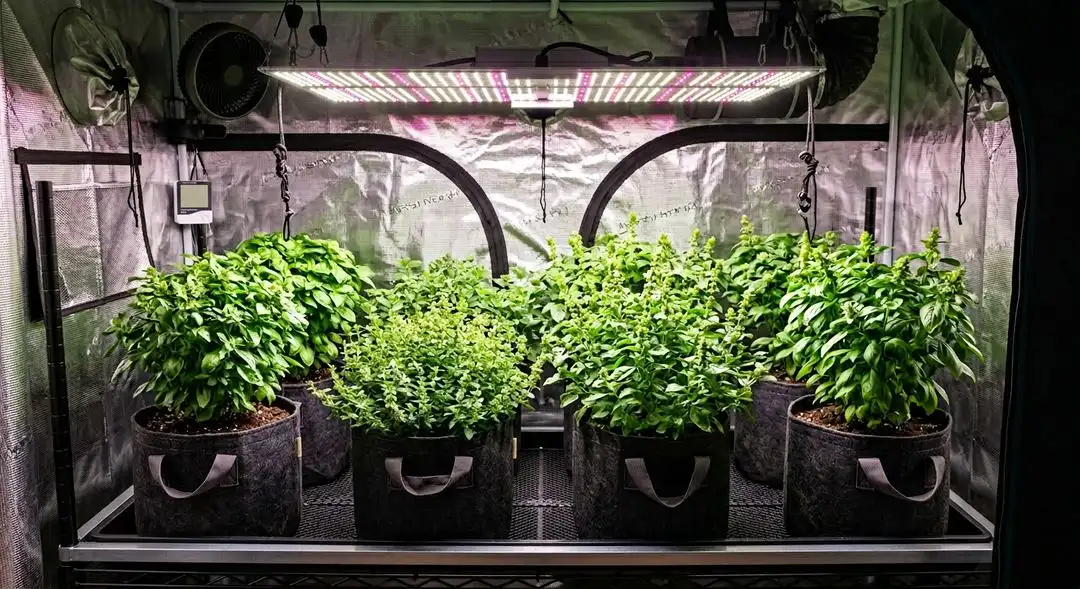
Key growing tips for Pink Plant:
- Top and train early: Apply LST and topping techniques during weeks 2–4 of veg to control the sativa stretch and build a wide, even canopy before flipping to flower
- Manage the nutrient transition: Follow a proper nutrient schedule — drop nitrogen sharply at week 2 of flowering and push P/K hard through week 6 to maximize bud density and terpene expression
- Dial your indoor environment: Consistent temperature and airflow are non-negotiable; read our indoor growing guide before starting your first run with this strain
- Plan for outdoor scale: Pink Plant's outdoor potential of 35–70 oz/plant requires proper staking infrastructure and dry-climate siting — see our outdoor growing guide for structural support strategies
- Watch the vegetative window: Don't rush the flip — a well-developed plant heading into flower pays dividends at harvest; review our vegetative stage guide to know when your plant is ready
Yield and Flowering Time
Pink Plant flowers in 55–60 days — a relatively compact window for a strain with this level of sativa dominance. Indoors, well-dialed grows produce 1.2–2 oz/ft², with the upper end achievable when training is executed correctly and environmental conditions stay consistent throughout flower. Outdoors in the right climate, Pink Plant is an absolute producer — 35–70 oz/plant is a genuine range that reflects what this strain can do when given space, sun, and a long growing season.
For growers chasing volume alongside quality, Pink Plant belongs in the conversation with our highest-yielding strains. The outdoor ceiling of 70 oz/plant is exceptional for a sativa-dominant feminized seed, made possible by the medium plant structure that still packs on bud mass efficiently. The 55–60 day flowering time also means you're not waiting out an interminable 70+ day sativa run — this is one of the reasons experienced sativa growers gravitate toward this cross.
To maximize your harvest:
- Trichome assessment: Harvest when 65–75% of trichomes are milky white with 15–25% amber — this timing captures peak linalool and myrcene expression before terpene degradation sets in
- Late-flower humidity: Drop to 38–42% relative humidity in the final 10–14 days to protect dense floral buds from botrytis and to concentrate resin production
- Flush timing: Begin flushing 10–14 days before anticipated harvest to clear residual nutrients and allow the candy-floral terpene profile to fully express in the final dried product
- Drying and curing: Slow dry for 8–12 days at 60–65°F with 55–60% RH — linalool is volatile and will dissipate rapidly in a fast, hot dry; patience here is the difference between exceptional and average
Why Buy Pink Plant Seeds from DSS Genetics?
Every Pink Plant feminized seed ships with our full germination guarantee — if it doesn't sprout under proper conditions, we replace it without question. Orders arrive in discreet, unmarked packaging, and every seed has been stored under optimal temperature and humidity conditions from production through to dispatch to protect viability and genetic integrity.
- Germination guaranteed — every seed backed by our replacement promise
- Discreet shipping — plain, unmarked packaging on every order
- Spend $100+ — receive premium bonus seeds included at no charge
- Seed quality assured — controlled storage from warehouse to your door preserves viability and terpene potential
Frequently Asked Questions
Is Pink Plant a good strain for beginner growers?
Pink Plant is rated difficult and we wouldn't recommend it as a first-time grow. The combination of humidity sensitivity, significant sativa stretch, and precise nutrient timing during flower creates multiple points where inexperienced growers can run into trouble. We suggest starting with an easy-to-grow strain to build your skills, then returning to Pink Plant once you've successfully completed two or three grows. Read our germination guide to give your seeds the best possible start regardless of experience level.
What makes Pink Plant's terpene profile unusual?
The standout is its linalool concentration at 3.39% — this is exceptionally high and gives Pink Plant its signature lavender-floral aroma and pronounced calming properties. Most cannabis strains carry linalool as a minor supporting terpene; Pink Plant makes it the lead actor. Combined with myrcene at 0.64% and caryophyllene at 0.44%, the overall profile is floral, earthy, and therapeutically rich through the entourage effect.
How long does Pink Plant take to flower and what yields can I expect?
Pink Plant completes flowering in 55–60 days — fast for its sativa genetics. Indoor yields run 1.2–2 oz/ft² with proper training and environmental management. Outdoor plants in warm, dry climates can produce 35–70 oz/plant, making this one of the more impressive outdoor producers in its class. For detailed guidance on timing your harvest correctly, see our flowering stage guide and harvest timing guide.
What medical conditions is Pink Plant best suited for?
Pink Plant is most frequently used for insomnia, stress, anxiety, depression, and pain. The linalool-dominant terpene profile contributes genuine sedative and anxiolytic properties, while caryophyllene adds anti-inflammatory support. At moderate doses the strain is suitable for daytime anxiety and mood management; at higher doses the relaxation and body tingle deepen, making it more appropriate for evening pain relief and sleep support.
Medical Disclaimer: This information is for educational purposes only and should not be considered medical advice. Always consult a healthcare professional before using cannabis for medical purposes. Individual results may vary.
Frequently Asked Questions
Pink Plant — Common Questions Answered
What is Pink Plant?
Pink Plant is a sativa-dominant cannabis strain (85% Sativa / 25% Indica) bred from High level Sativa x TNT Kush Indica. It produces THC levels of 17–21% and CBD levels of 0.05–0.4%. Known for its relaxing, happy, euphoric effects and earthy, fruity, floral flavor profile.
Is Pink Plant easy to grow?
Pink Plant is considered an advanced-level strain that requires experience with training techniques, environmental control, and nutrient management for best results. Growing difficulty: Difficult. It thrives in temperate climates and reaches a medium plant size.
How long does Pink Plant take to flower?
Pink Plant has a flowering time of 55–60 days. Switch to a 12/12 light cycle to initiate flowering. Expected yields are 1.2 to 2 oz/ft² indoors and 35 to 70 oz/plant outdoors.
What are the effects of Pink Plant?
Pink Plant delivers relaxing, happy, euphoric, creative, focused, tingly effects. Many growers report it helps with insomnia, pain, stress, anxiety, depression. With THC levels of 17–21%, it provides a moderate to strong experience suitable for most users.
What does Pink Plant smell and taste like?
Pink Plant's dominant terpenes are Myrcene (0.64%), Pinene, Caryophyllene (0.44%), Limonene, Linalool (3.39%), which give it a earthy, fruity, floral, candy, kush flavor and aroma profile. Limonene adds citrusy brightness and may elevate mood.
Can I grow Pink Plant indoors and outdoors?
Yes, Pink Plant performs well both indoors and outdoors. Indoor yields average 1.2 to 2 oz/ft², while outdoor grows can produce 35 to 70 oz/plant. It prefers temperate conditions. Its medium height is manageable in most indoor setups.
What does "feminized" mean for Pink Plant seeds?
Feminized Pink Plant seeds are bred to produce only female plants, which are the ones that develop smokable buds. This eliminates the need to identify and remove male plants, saving time and maximizing your grow space. Over 99% of feminized seeds will produce female plants.
Grower Reviews
Real grow experiences from our community
Similar Strains
Get 10% Off Your First Order
Join our newsletter for exclusive deals, growing tips, and new strain drops.