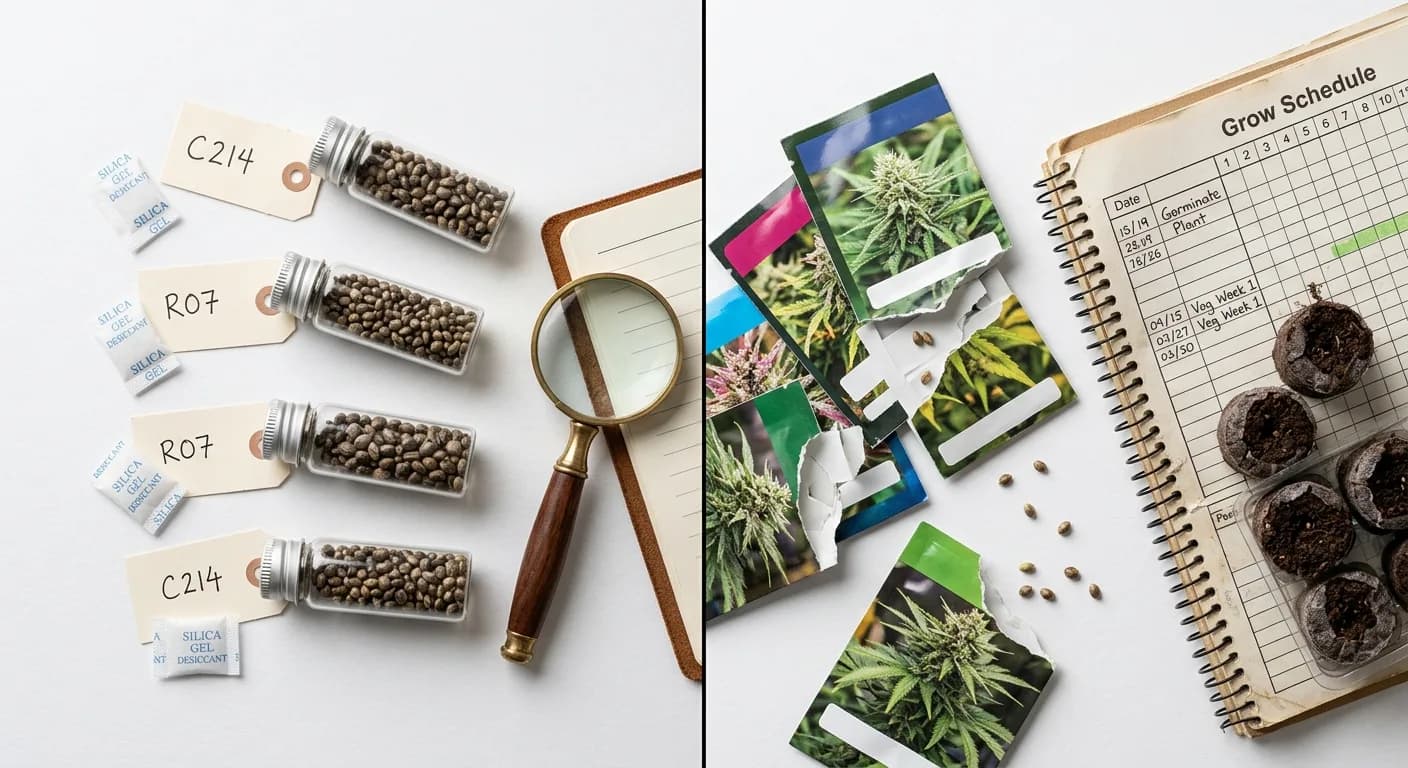
Here is a fact that most seed guides completely ignore: two people can visit the exact same seed bank, browse the exact same catalog, and need entirely different buying strategies. One is a cannabis seed collector vs home grower, and those two mindsets produce completely different decisions about what to buy, how much to spend, and how to store what arrives.
Collectors treat genetics like assets. Growers treat seeds like inputs. Both approaches are 100% valid, but mixing up the strategy leads to either a freezer full of seeds you never run, or a grow tent stocked with strains that weren't right for your space or goals.
This guide breaks both strategies apart, shows you exactly how each approach works, and explains the hybrid path that most serious home cultivators end up walking. Whether you are building a seed vault, planning your next harvest, or both: you will leave with a clear framework.
The Two Core Mindsets: Asset vs Input
The collector sees a seed pack and thinks: What is this genetics worth in five years? Will this strain still exist? The grower thinks: Does this fit my tent, my climate, my timeline, and what I want to smoke in 90 days? These are genuinely different questions, and they lead to genuinely different carts at checkout.
| Factor | Seed Collector | Home Grower |
|---|---|---|
| Primary goal | Preserve genetics, build a library | Produce a specific harvest |
| Seed type preference | Regular seeds, IBLs, limited drops | Feminized, autoflower, stable F1s |
| Decision driver | Breeder reputation, rarity, lineage | Yield, effect, space, grow cycle timing |
| Packaging importance | High, original pack = provenance | Low, packaging is discarded |
| Storage setup | Vacuum-sealed vials, catalogued vault | Cool dark drawer until planting |
| Budget pattern | Frequent small purchases, chasing drops | Periodic larger buys aligned to grow schedules |
| Relationship with stock | Accumulates intentionally over time | Buys close to when needed |
| Seeds opened vs stored | Majority stored; small % run | Almost all seeds are germinated |
The single biggest strategic mistake is applying a grower's buying logic to a collector's hobby, or vice versa. Buying rare regular seeds for an immediate grow wastes their genetic potential. Buying feminized multi-packs for long-term storage wastes your money on genetics you never needed to preserve.
The Collector's Approach: Buying Genetics as an Asset
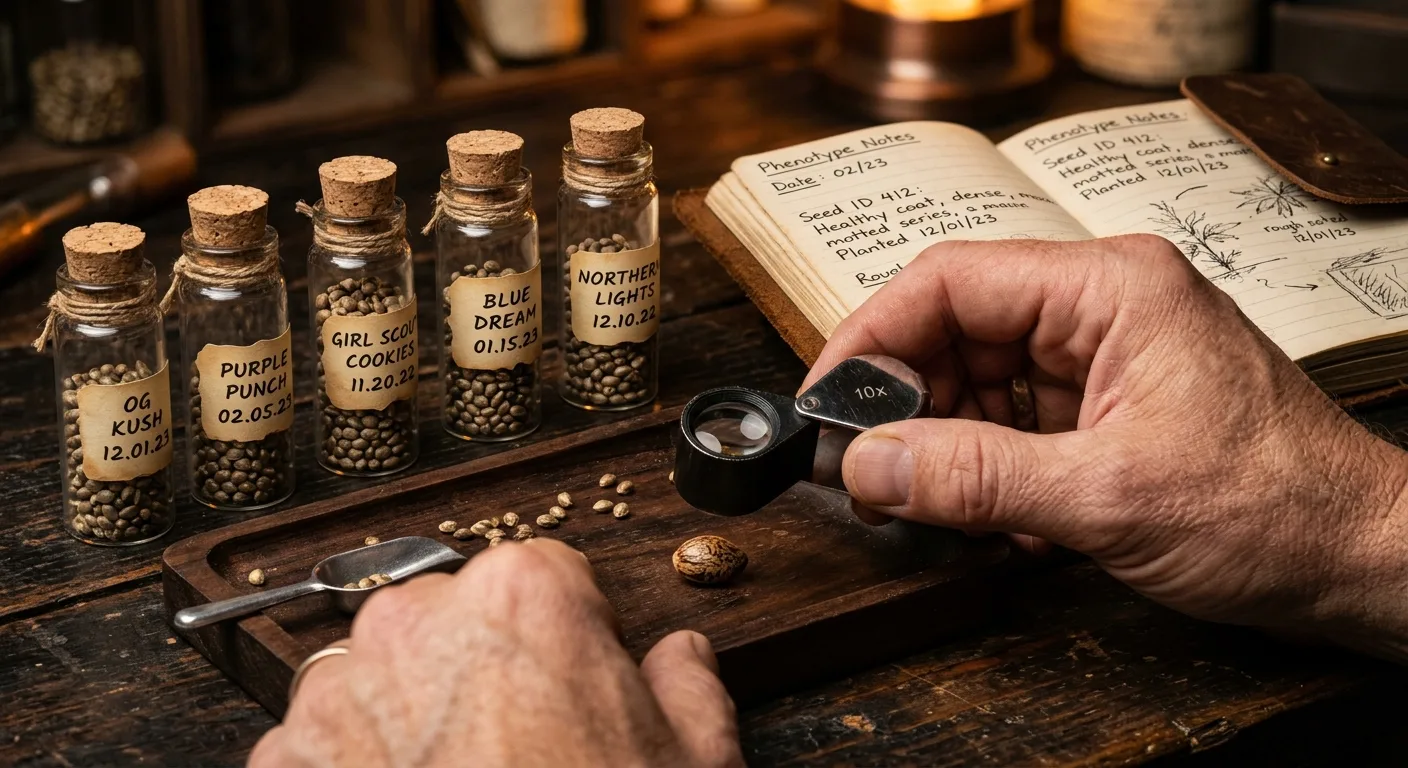
The cannabis seed collecting hobby is genuinely misunderstood, even inside the cannabis community. Collectors are not hoarders who forgot to plant. They are actively curating a living library of genetic diversity, often motivated by preservation ethics, breeding potential, or a deep appreciation for the history behind a lineage.
What Collectors Actually Buy, and Why
Serious collectors prioritize three categories above everything else:
- Heritage and heirloom genetics: Landrace strains and IBL varieties that represent decades of stable, unmodified breeding. These are finite. Once a breeder retires or a line is discontinued, those genetics may disappear forever. Our guide to heirloom cannabis strains covers exactly which lineages are considered irreplaceable.
- Small-batch limited releases: Breeders who produce 50–200 packs of a specific cross before moving on. Scarcity here is real, not manufactured. When a run sells out, it is often gone permanently.
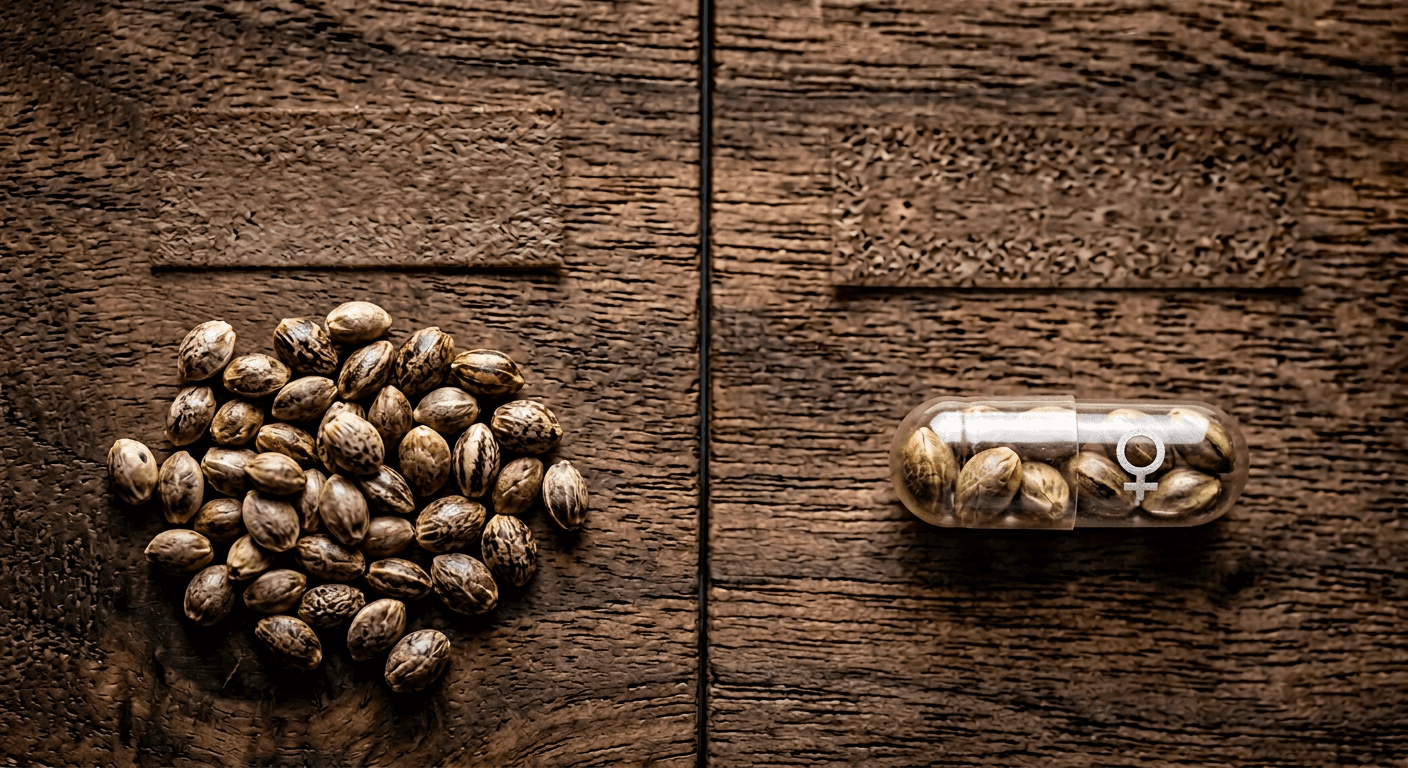
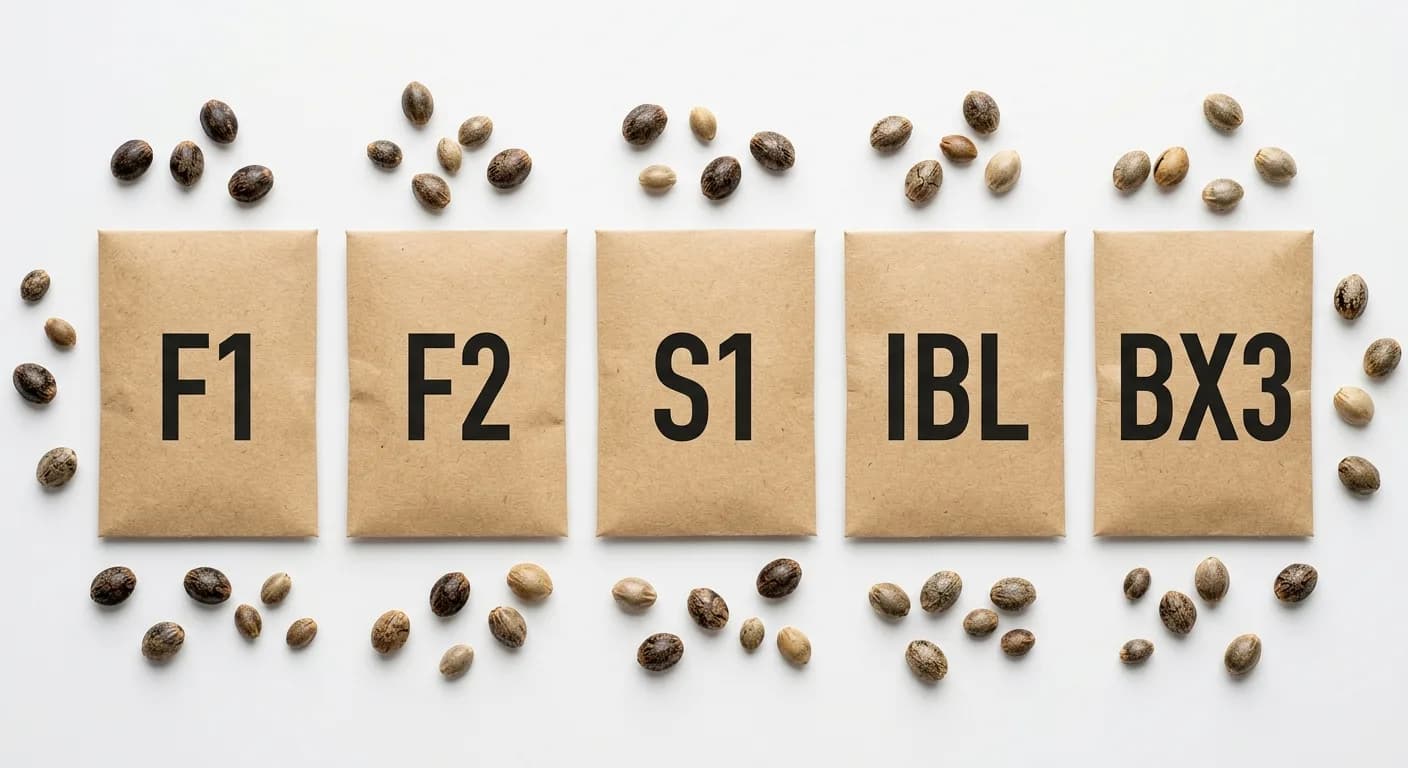
- Regular (non-feminized) seeds from proven breeders: Regular seeds carry both male and female genetics, preserving the full genetic diversity of the cross. For anyone planning future breeding projects, regular seeds are the only logical choice. Learn the difference between seed types in our breakdown of F1 hybrids, S1s, and IBLs.
How Collectors Decide What Has Lasting Value
Not every seed is worth preserving. Experienced collectors apply a mental checklist before adding a strain to their vault:
- Is this strain from a breeder with a documented history and stable genetics?
- Are these regular seeds (not feminized), preserving male genetics for future breeding?
- Is this a limited run or a perpetual catalog item? (Perpetual catalog = lower urgency)
- Does this lineage represent something genuinely distinct, not just another cookie cross?
- Is this strain or cross currently unavailable elsewhere in the market?
- Could this genetics serve as a foundation for a future breeding project?
- Is the seed condition and packaging good enough for multi-year storage?
Follow 3–5 breeders whose work you genuinely respect rather than chasing every hype drop on social media. Depth of knowledge about a specific breeder's phenotypic tendencies is far more valuable than breadth of random acquisitions.
Chasing Limited Drops: The Collector's Calendar
Limited drops function on a first-come, first-served basis. Collectors who successfully acquire rare packs treat it almost like a hobby within a hobby: monitoring breeder social accounts, joining mailing lists, and sometimes setting purchase alerts. Missing a drop rarely means you can grab it next week. It often means never.
The strategic move is to identify which breeders drop on predictable cycles vs which ones release with zero notice. Breeders with scheduled seasonal drops can be planned around. Breeders who announce a 48-hour window require active monitoring.
Seed Bank Features That Serve Collectors
Collectors should prioritize seed banks that offer:
- Single-seed options: Try a phenotype without committing to a full pack
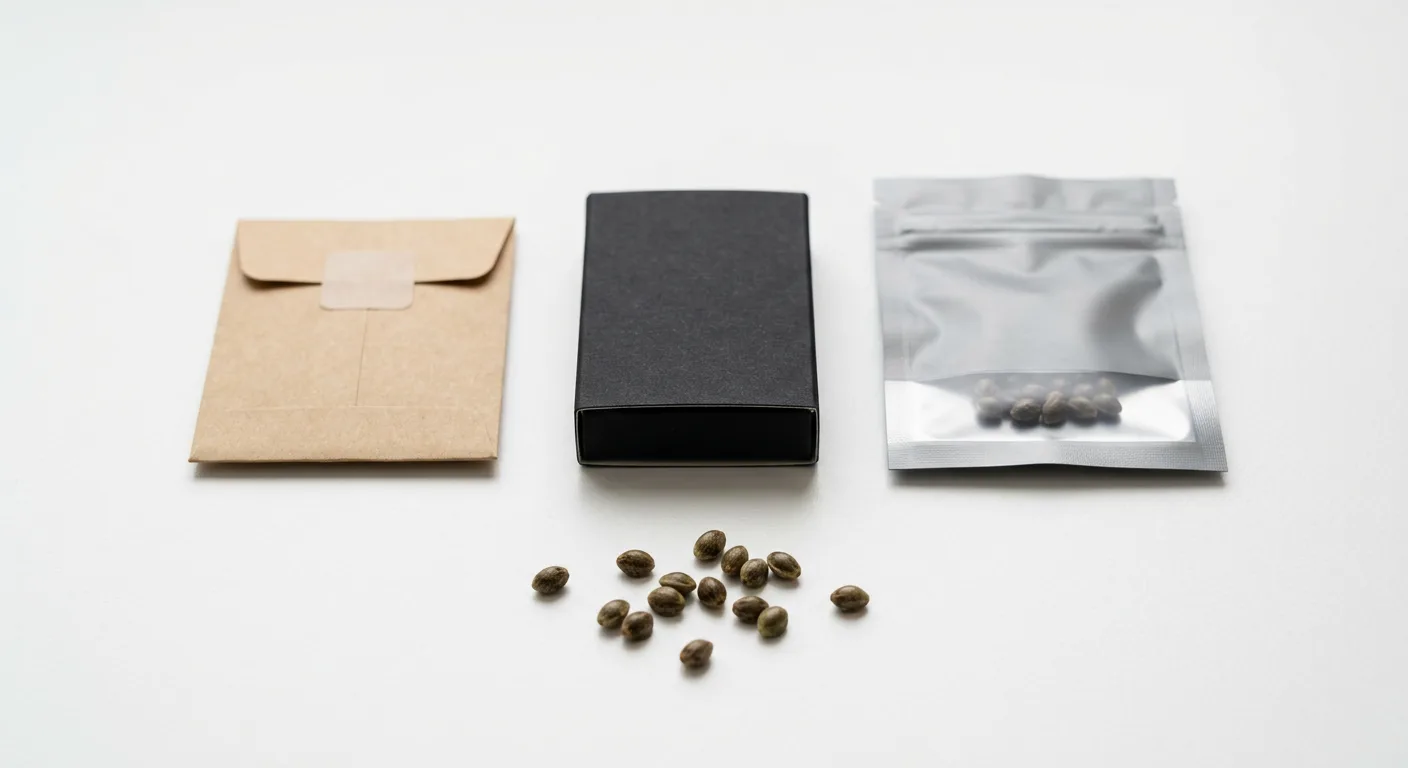
- Breeder packs (original packaging): Provenance matters for collectors; repackaged seeds lose traceability
- Detailed lineage information: Not just a strain name, but documented parent crosses
- Limited and collector-tier catalog sections: Banks that actively curate rare genetics vs mass-market filler
- Restock notifications: Email alerts when a sold-out strain returns
The Home Grower's Approach: Buying for the Next Harvest
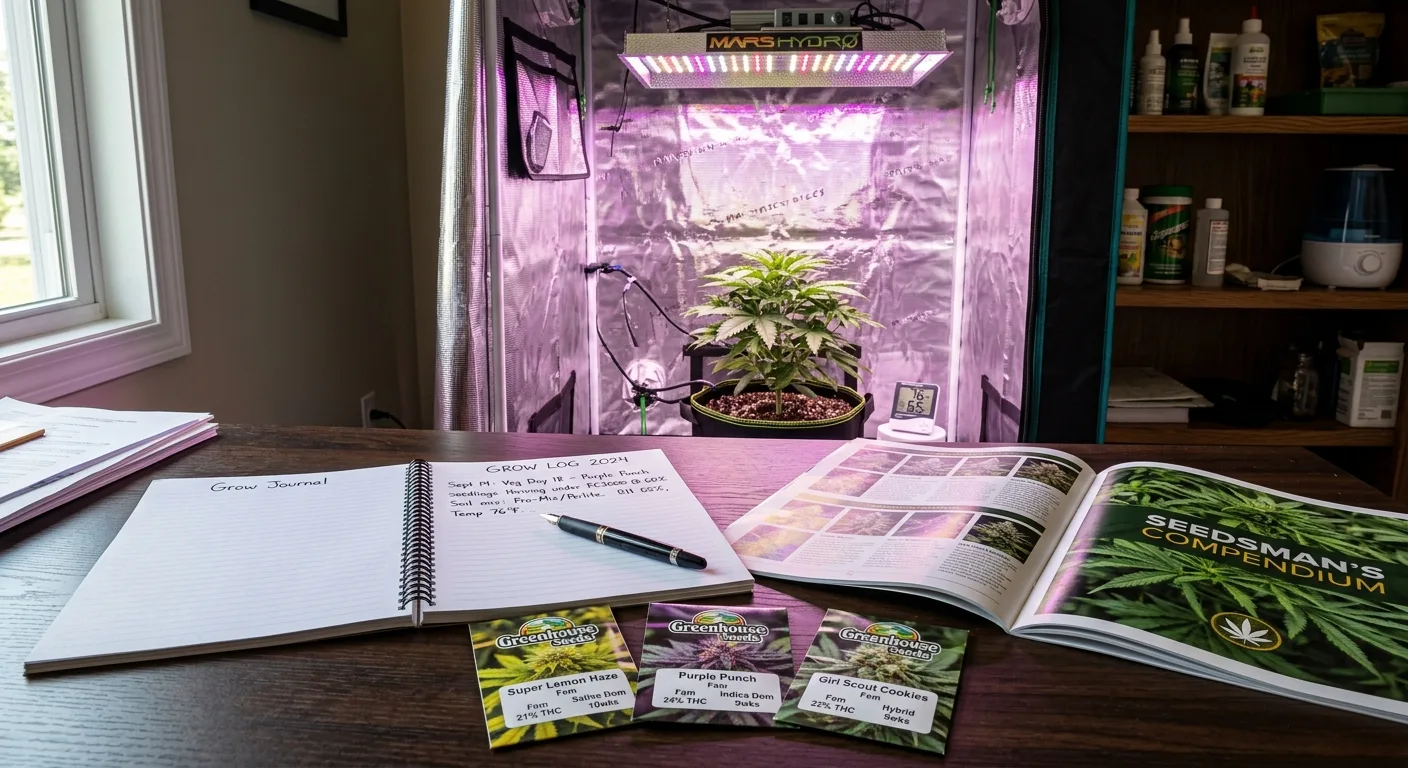
A home grower's buying strategy is entirely goal-driven. Every purchase decision maps back to a specific grow: the size of the space, the available light, the desired effect, and the harvest timeline. When growers buy with collector logic, chasing rare genetics instead of grow-appropriate ones, they often end up with a tent full of plants that don't match their setup.
The Grower's Decision Framework
Before purchasing any seeds, a grower should answer five practical questions:
What effect or cannabinoid profile do I want?
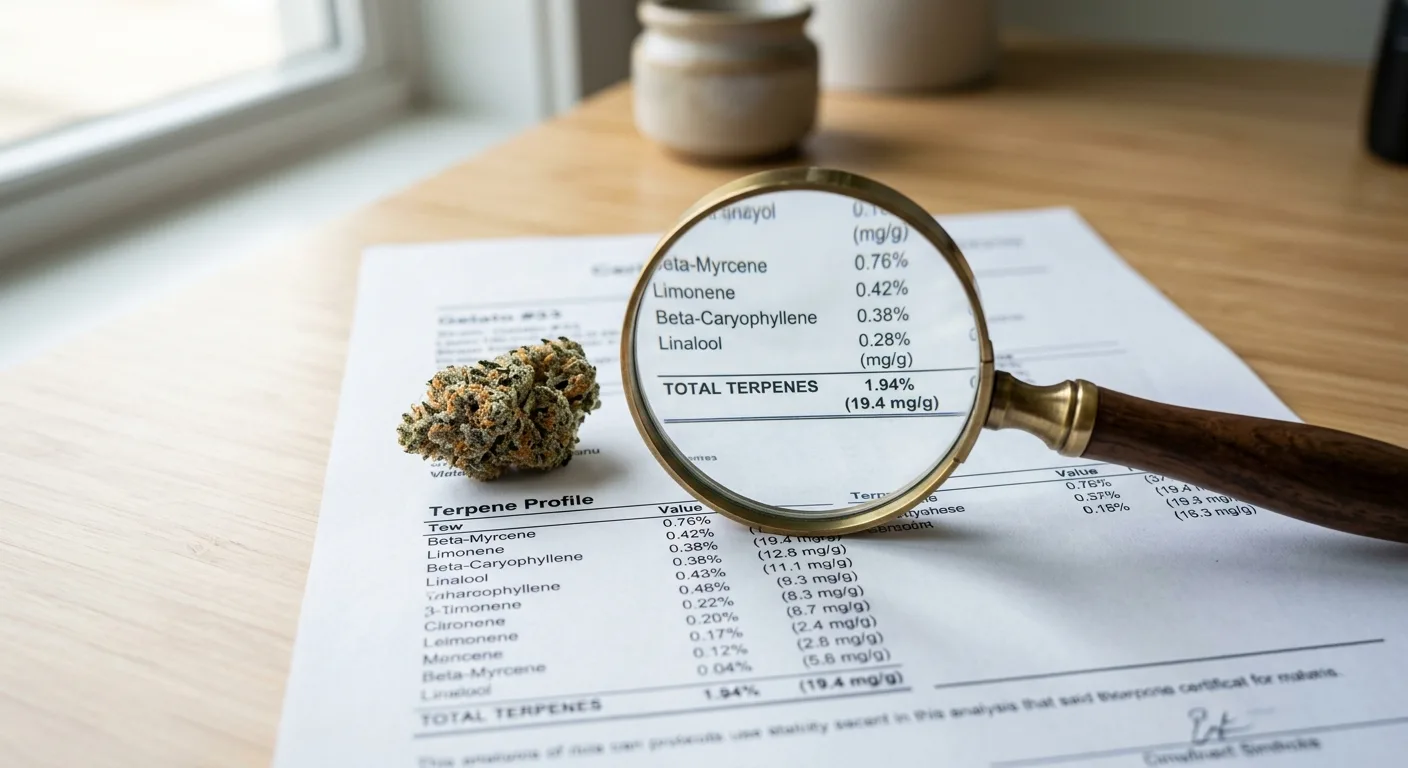
High-THC cultivars for recreational potency, balanced CBD:THC for wellness use, or specific terpene profiles for targeted effects. THC range varies enormously, from 13% in Malawi Gold Autoflower to 30% in Quantum Kush. Know what outcome you are growing toward.
Do I need feminized or autoflower seeds?
Feminized photoperiod seeds give you light-cycle control and typically larger yields. Autoflowers finish in 70–85 days regardless of light schedule, ideal for beginners or multiple harvests per year. See the full comparison at our autoflower vs feminized guide before deciding.
What is my grow timeline?
Align your seed purchase with your planting window. Buying seeds 8 weeks before you can start creates unnecessary storage risk. Buying them the week before germination leaves no buffer for shipping delays.
What is my experience level?
Beginners do better with forgiving, mold-resistant strains that tolerate minor mistakes. Advanced growers can handle more demanding genetics that reward precision cultivation, but the yield and quality payoff is real.
Best Seed Types for Home Growers by Goal
| Growing Goal | Best Seed Type | Example Strains | Why It Works |
|---|---|---|---|
| Maximum yield, indoor | Feminized photoperiod | Northern Lights x Big Bud (20% THC), Wonder Woman (22% THC) | Full veg period = larger plants, higher canopy output |
| Fast turnaround | Autoflower | Amnesia Haze Auto (17% THC), Skywalker OG Auto (23% THC) | Seed to harvest in 10–12 weeks regardless of light |
| Beginner-friendly | Feminized indica-dominant | Northern Lights x Amnesia Haze (24% THC), White Widow (25% THC) | Robust genetics, forgiving of minor environmental fluctuations |
| High potency focus | Feminized hybrid | OG Kush (26% THC), Black Widow (26% THC), Gorilla Glue #4 (28%+ THC) | Proven high-THC genetics with documented potency |
| Outdoor/climate variable | Autoflower or hardy feminized | Swazi (18% THC), Skunk Red Hair (18% THC), Durban Poison | Adapted to variable conditions, mold resistance |
| Flavor/terpene priority | Feminized hybrid | Super Lemon Haze (23% THC), Tangerine Haze (18% THC), Zkittlez | Terpene-rich profiles reward experienced palates |
Do not buy seeds more than 3–4 weeks before your planned germination date unless you have a dedicated storage setup. Seeds stored in non-optimal conditions (warm, humid, exposed to light) lose germination rates fast. Even 6 months in a kitchen drawer can drop viability from 95% to below 60%.
The Hybrid Approach: Most Serious Growers Are Both
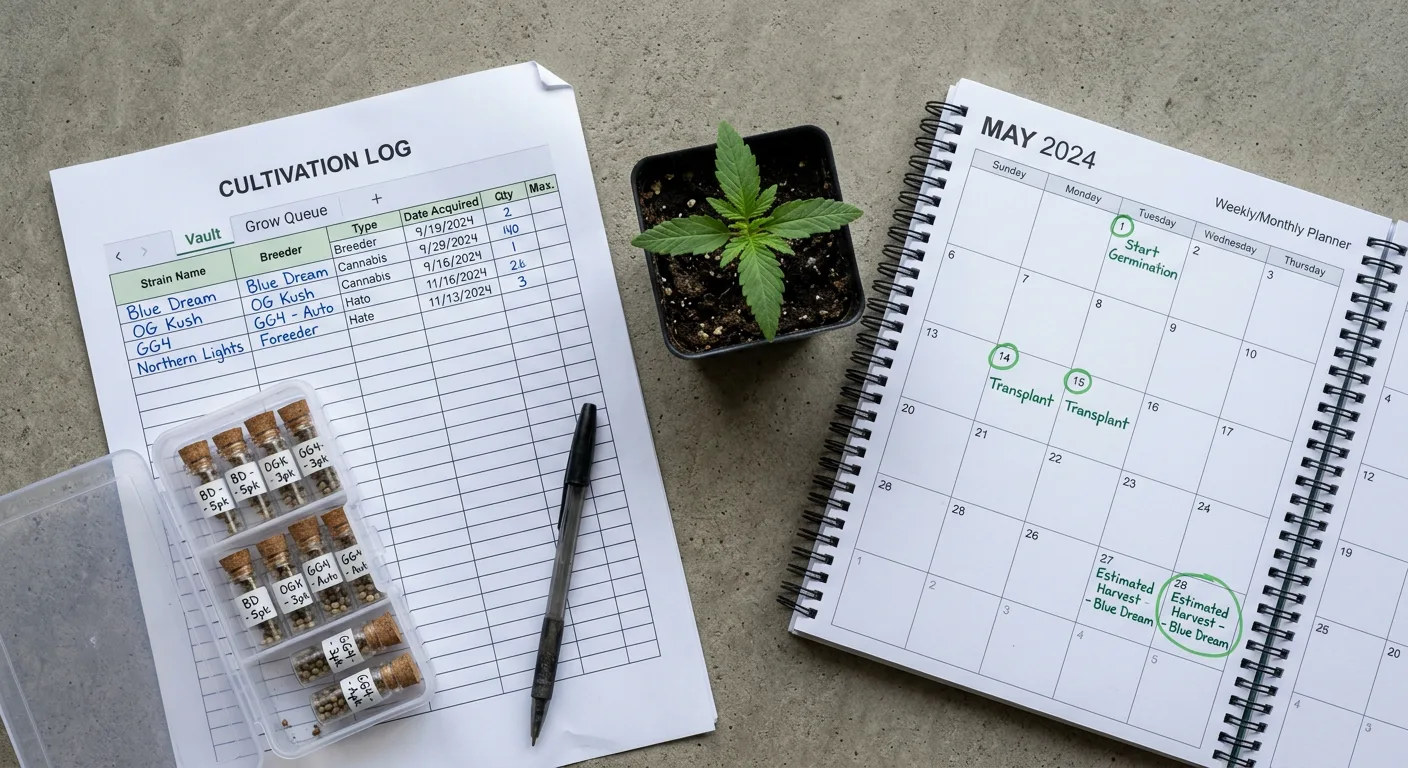
Once a home grower completes 3–4 successful grows, something shifts. They start noticing limited drops. They start reading about landrace genetics. They find a strain they love and want to preserve it, not just grow it once. This is the natural evolution into the hybrid collector-grower, and it is where most serious cannabis cultivators eventually land.
How to Allocate Your Seed Budget
The hybrid approach requires intentional budget splitting. Without a clear allocation, most people either spend everything on collector pieces they never run, or buy only grow-ready seeds and miss out on rare genetics they later regret not acquiring.
A practical framework used by experienced hobbyists:
- Beginners (0–2 grows): 90% grow-ready seeds / 10% collector or experimental. Focus on nailing the process before diversifying the vault.
- Intermediate (3–8 grows): 70% grow-ready / 30% collector-grade. Start actively identifying 2–3 breeders whose genetics you want to preserve.
- Advanced (8+ grows, breeding interest): 50–60% grow-ready / 40–50% collector and genetic preservation. At this stage, the vault is a genuine resource, not just accumulation.
The hybrid approach only works if you treat each allocation with its own logic. When you buy a collector piece, store it properly. When you buy a grow-ready pack, germinate it on schedule. Never let collector psychology delay a grow, and never let grow pressure push you to crack open seeds you intended to preserve.
Tracking Your Dual Inventory
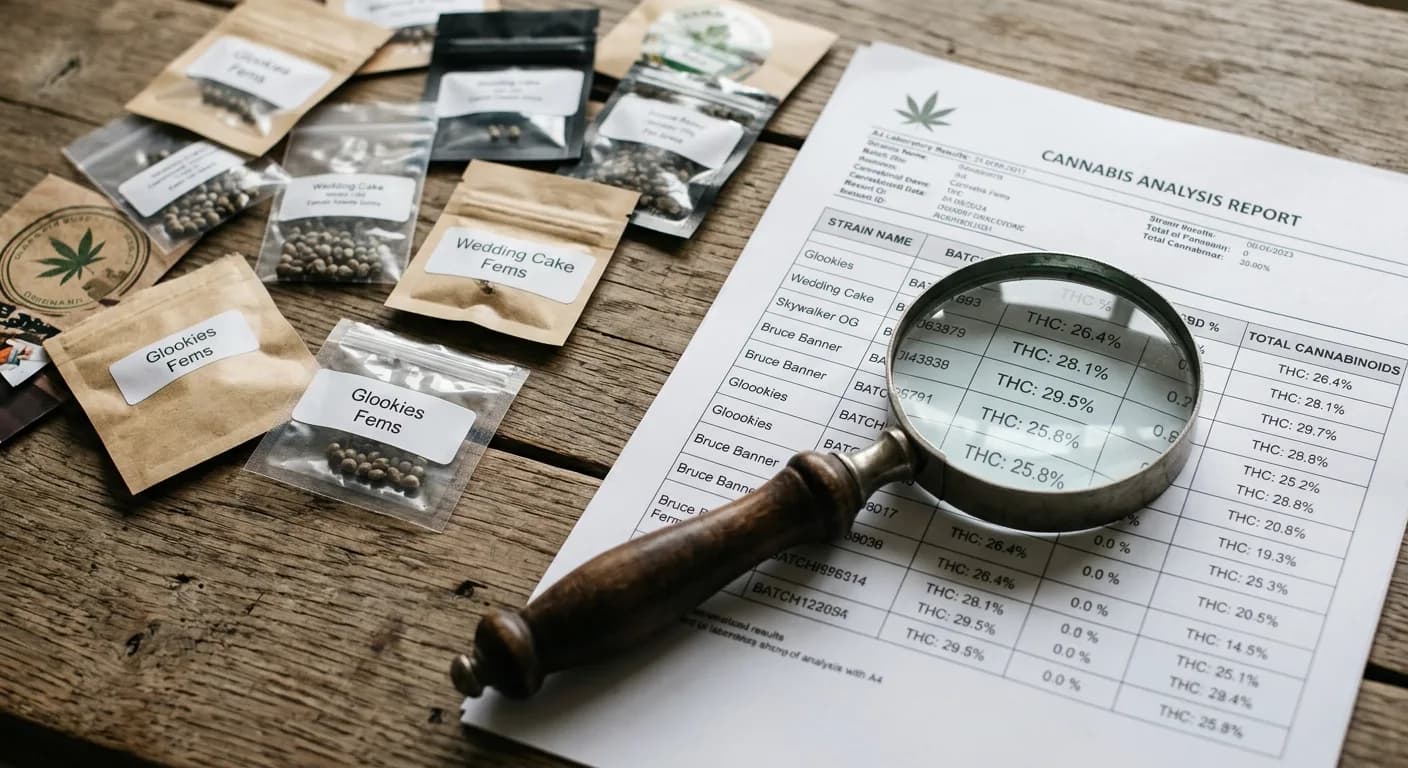
Growers who combine both strategies need a tracking system. A simple spreadsheet with two tabs, Vault and Grow Queue, prevents the chaos of discovering a pack you forgot about, already past its ideal storage window. The Vault tab logs breeder, strain, seed count, date acquired, and storage location. The Grow Queue tab logs planned germination date, grow space assigned, and estimated harvest window.
Use our grow planner tool to map out your entire growing calendar, including when to pull specific packs from your vault, when to start germination, and when each strain should reach harvest. It takes the guesswork out of timing your seed purchases to actual grow windows.
Seed Storage: What Collectors Need to Know That Growers Don't
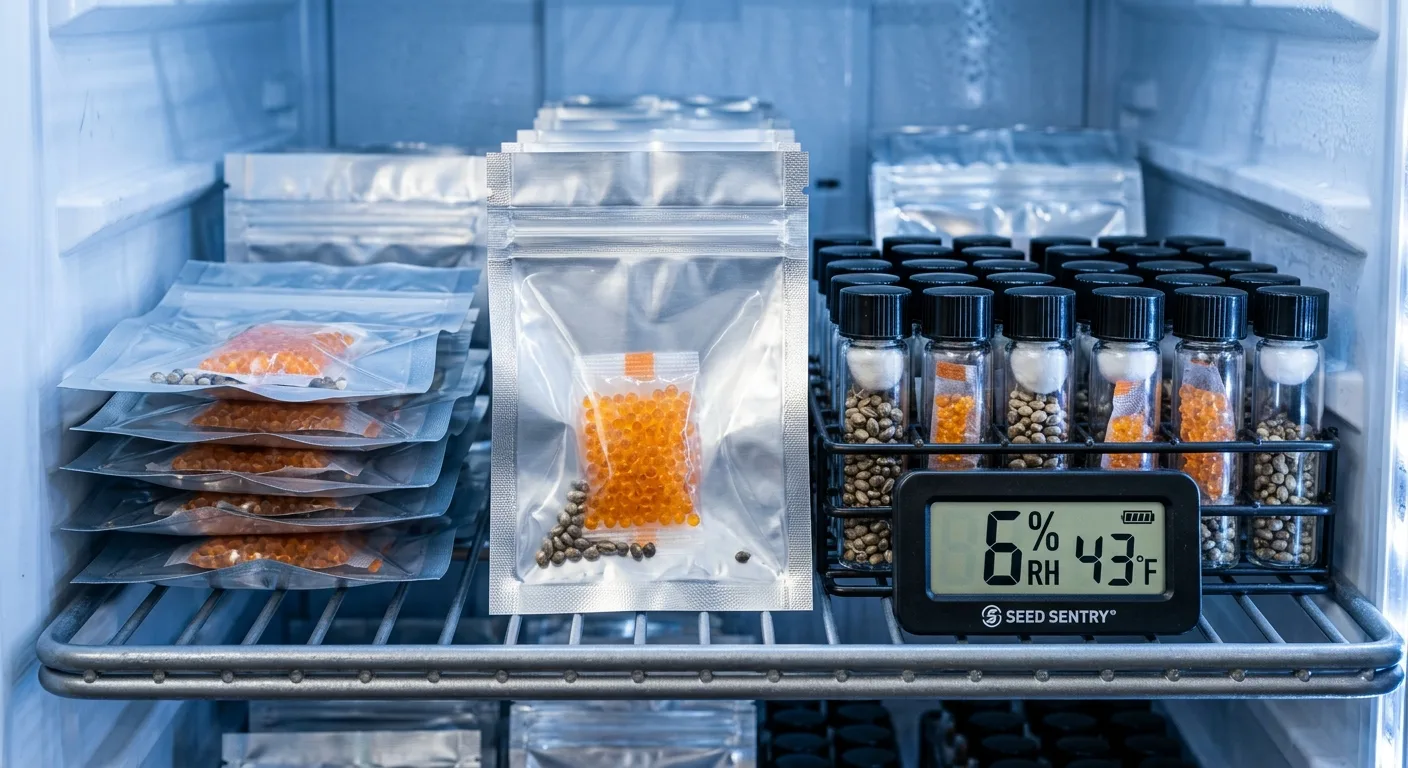
The difference between a grower's storage approach and a collector's storage approach is roughly the difference between putting leftover pizza in the fridge and operating a professional cold storage facility. Both work for their purpose. Neither works for the other's purpose.
Short-Term Grower Storage (Up to 6 Months)
Growers who buy seeds 2–8 weeks before a grow need minimal infrastructure:
- Cool, dark location, a drawer or cabinet away from heat sources
- Original packaging kept sealed until ready to germinate
- Avoid bathrooms or kitchens, humidity fluctuations degrade seeds faster than temperature
- Room temperature is acceptable short-term if humidity is stable below 60% RH
Long-Term Collector Storage (1–10+ Years)
Proper long-term storage for a seed vault is a genuine science. Our detailed guide on how to store cannabis seeds for 5+ years covers this in depth, but the essentials for collectors are:
- Temperature: 40–45°F (4–7°C), a dedicated mini fridge or the back of a regular fridge works well
- Humidity: 5–8% RH, silica gel desiccant packs inside each storage container, replaced or recharged every 6 months
- Light exposure: Zero, opaque containers or dark storage environments only
- Oxygen: Minimize it, vacuum sealing extends viability significantly
- Vibration: Avoid consistent vibration sources (top of appliances, washing machine areas)
Which Seeds Degrade Fastest in Storage?
Not all seeds age at the same rate. This matters enormously for collectors deciding which packs to run first vs which to preserve longest:
| Seed Type | Degradation Rate | Why | Collector Priority |
|---|---|---|---|
| Regular photoperiod seeds | Slowest: 8–10+ years optimal | Lower oil content, harder seed coat, stable genetics | Longest storage, preserve first |
| Feminized photoperiod seeds | Moderate, 5–7 years optimal | Standard oil content, slight genetic modification stress | Medium storage priority |
| Autoflower seeds (any) | Fastest, 3–5 years optimal | Higher oil content from ruderalis genetics, thinner seed coat | Run sooner; store last priority |
| F1 hybrid seeds | Moderate, 5–7 years | Hybrid vigor can mask early degradation in germination | Test germinate a sample at year 3 |
The high oil content in autoflower seeds, inherited from ruderalis genetics, is the primary reason they degrade faster in storage than regular photoperiod seeds. Oil goes rancid over time even in cold storage, damaging the embryo inside the seed coat. This does not mean autoflowers are inferior. It simply means collectors should prioritize running auto packs within 3–4 years of acquisition rather than vaulting them long-term.
Cataloguing Your Seed Vault
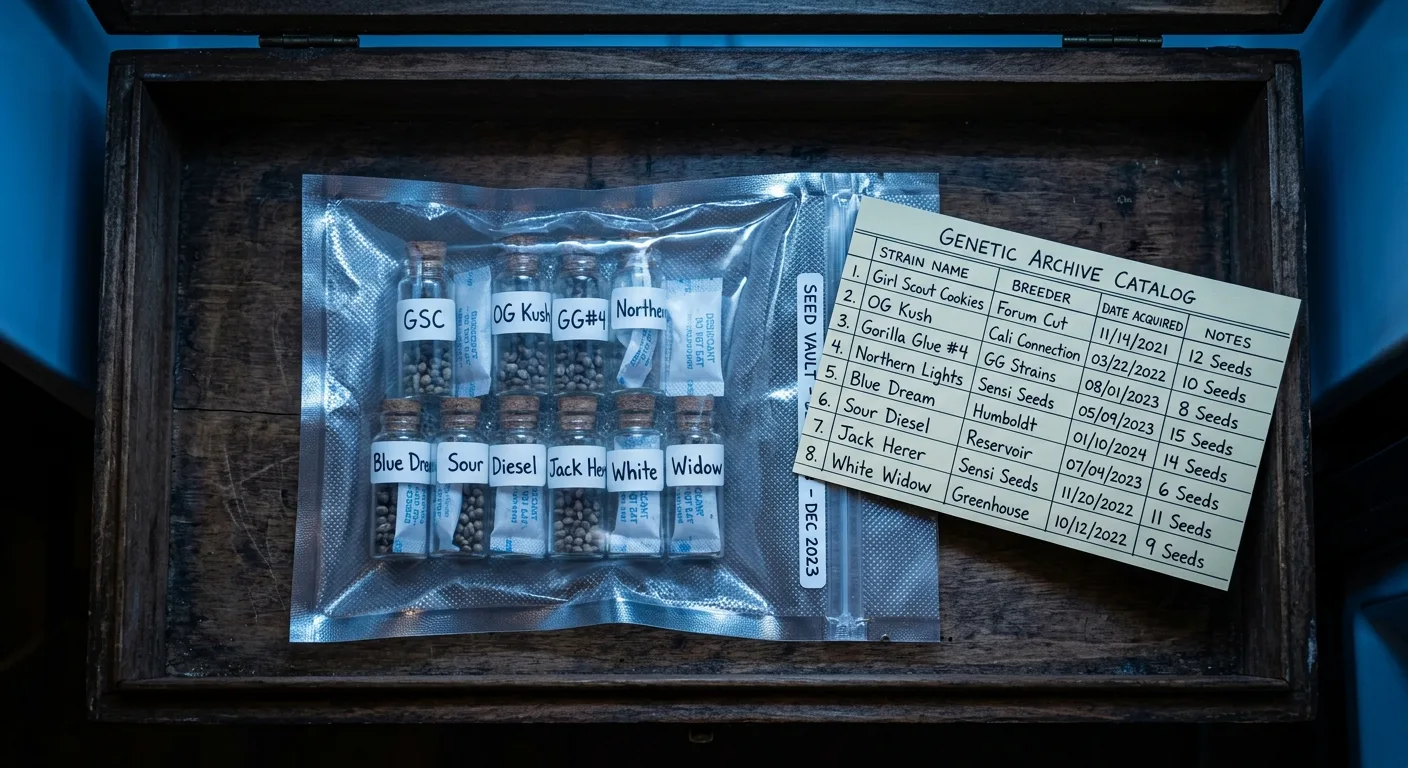
A seed vault without a catalogue is just a box of mystery seeds. Serious collectors maintain a catalogue that includes, at minimum:
- Strain name and breeder name
- Seed type (regular, feminized, autoflower)
- Lineage / parent cross (if documented)
- Date of acquisition
- Source / seed bank
- Number of seeds in pack (and how many remain after any test germinations)
- Storage location (which vial, which container, which shelf)
- Any germination test results and dates
- Notes on rarity status (limited run, discontinued, still available)
Cannabis Seeds Worth Collecting vs Growing in 2026
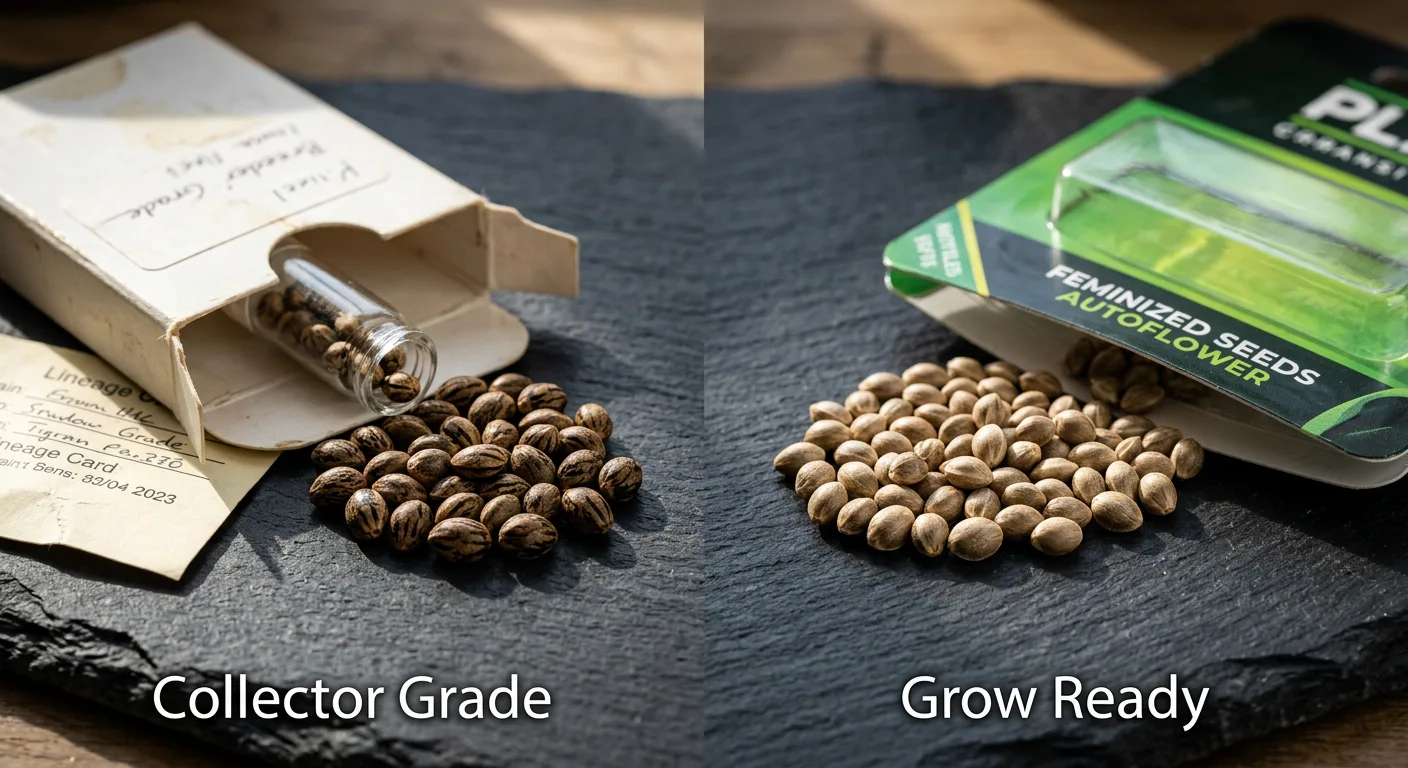
The line between collector-grade and grow-ready genetics is not about quality: it is about scarcity, genetic significance, and long-term value. Both categories can include exceptional cannabis. The question is whether the primary value is in the jar or in the vault.
Characteristics of Collector-Grade Seeds
- Documented IBL or landrace lineage with minimal commercial crossing
- Limited production run, under 500 packs globally
- Small-batch or craft breeder with a verifiable track record and phenotype documentation
- Discontinued status or at-risk availability
- Regular seed format preserving both male and female genetics
- Heritage varieties with pre-commercialization history (pre-2000 genetics especially)
Characteristics of Grow-Ready Seeds
- Stable F1 feminized genetics with predictable phenotypic expression
- Well-documented grow specs: height, flowering time, yield per m², and THC range
- Widely available multi-packs from established seed banks
- Proven mold, pest, and environmental resilience ratings
- Backed by grower reviews across multiple growing conditions
Examples of genetics that sit firmly in the grow-ready camp include well-documented staples like Sour Diesel Feminized (24% THC), Papaya Feminized (25% THC), and Wedding Cake, all widely available, stable, and optimized for consistent indoor production. Collector-grade territory includes original Afghan landraces, early Nevil's Haze lines, and documented old-school Skunk varieties before mass hybridization, genetics where the original source breeders are no longer active.
Be skeptical of seeds marketed as 'collector grade' or 'ultra rare' without documented lineage. True collector genetics come with verifiable breeding history. Rarity claims without provenance are a marketing tactic, not a reason to vault a pack indefinitely.
How Seed Banks Cater to Each Type of Buyer
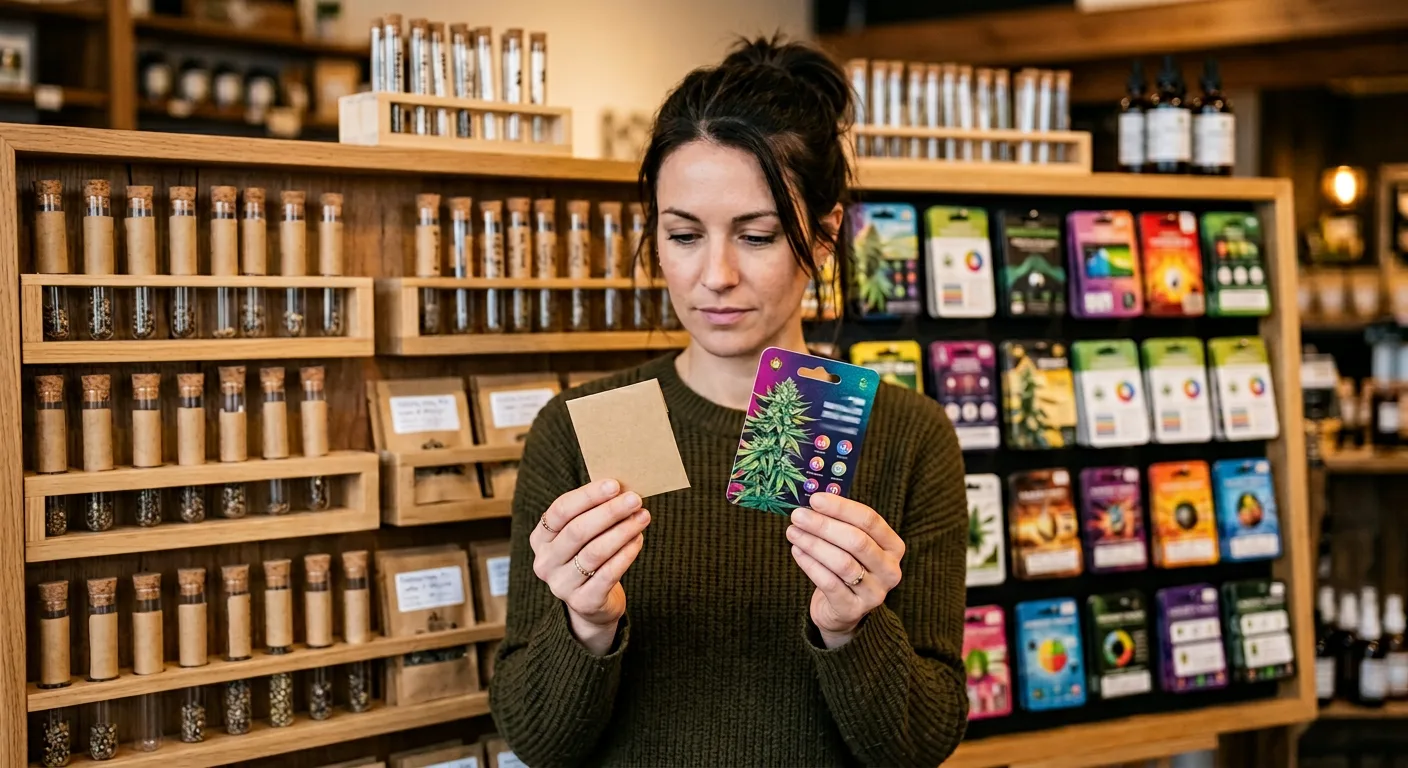
Modern seed banks have increasingly segmented their catalogs to serve both audiences, though few explicitly name the distinction. Understanding how banks structure their offerings helps both collectors and growers find exactly what they need without overpaying for the wrong thing.
Collector-Focused Offerings
- Single-seed purchases: Sample a phenotype from a rare pack without committing to 10+ seeds
- Original breeder packs: Unaltered packaging preserves provenance documentation
- Limited-edition drops: Time-sensitive, often announced via email list or social media only
- Breeder spotlight collections: Curated genetics from specific craft breeders, often with lineage notes
- Vintage or archive sections: Older genetics maintained specifically for preservation community
Grower-Focused Offerings
- Multi-packs (5, 10, 20 seeds): Volume pricing for strains you plan to run multiple times
- Feminized-only catalogs: Eliminates male plant risk for production growers
- Grow difficulty ratings: Easy/intermediate/advanced classifications for matching genetics to experience level
- Germination guarantees: Our germination guarantee ensures you are not starting a grow cycle with non-viable seeds
- Yield and grow spec documentation: Indoor m² yield, outdoor potential, height estimates, and flowering time
If you are buying seeds for a specific grow, always check the seed bank's germination guarantee policy before purchasing. A guaranteed germination rate matters far more for your immediate grow than it does for a collector piece going into long-term storage.
Building Your Strategy: A Step-by-Step Decision Framework
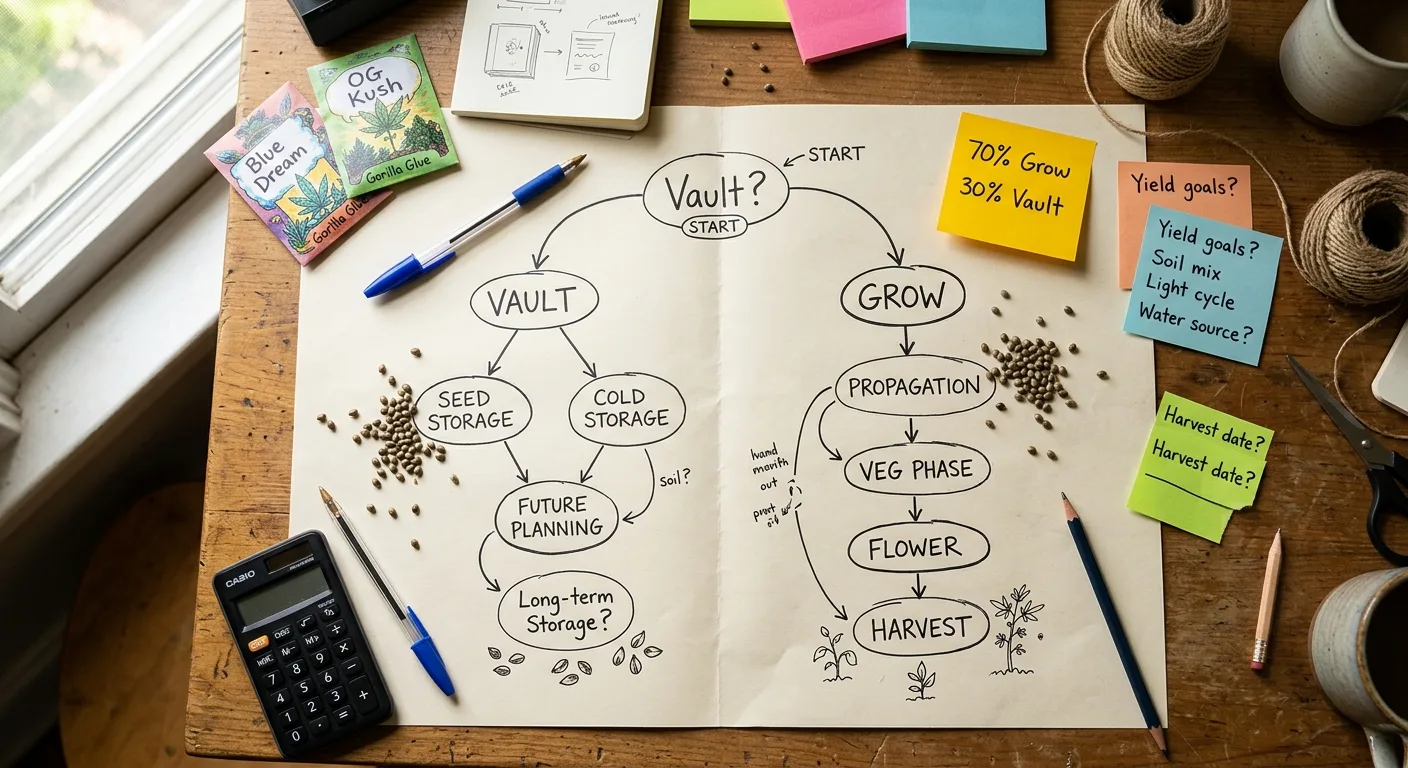
Whether you identify more as a collector, a grower, or the increasingly common hybrid of both, the following framework prevents the most common buying mistakes. Run through this before your next seed purchase.
Identify the Purchase Category
Is this seed going into a grow tent in the next 60 days, or into a vault? Decide before clicking 'add to cart.' The answer changes every other decision that follows.
Apply the Right Criteria
Grow-ready purchases: evaluate by yield, effect, space requirements, and grow difficulty. Collector purchases: evaluate by lineage authenticity, rarity, breeder track record, and seed type (regular preferred).
Check Your Storage Situation Before Buying Collector Pieces
There is no point acquiring rare genetics if you do not have a proper storage setup ready to receive them. Cold storage, desiccant, and a catalogue system should be in place before you vault anything valuable.
Time Your Grow Purchases to Your Grow Calendar
Work backward from your target harvest date. Factor in germination (5–10 days), seedling stage (2 weeks), veg period (4–8 weeks for photoperiods), and flowering time. Buy seeds accordingly, not 3 months early.
Allocate Budget Before Browsing
Decide your collector vs grower split before opening the catalog. Cannabis seed banks are deliberately well-merchandised. Without a pre-committed allocation, most people either spend everything on exciting collector drops and never grow, or buy only practical seeds and miss the genetics they genuinely wanted.
Collector and Grower Picks: Where Our Catalog Fits Both Strategies
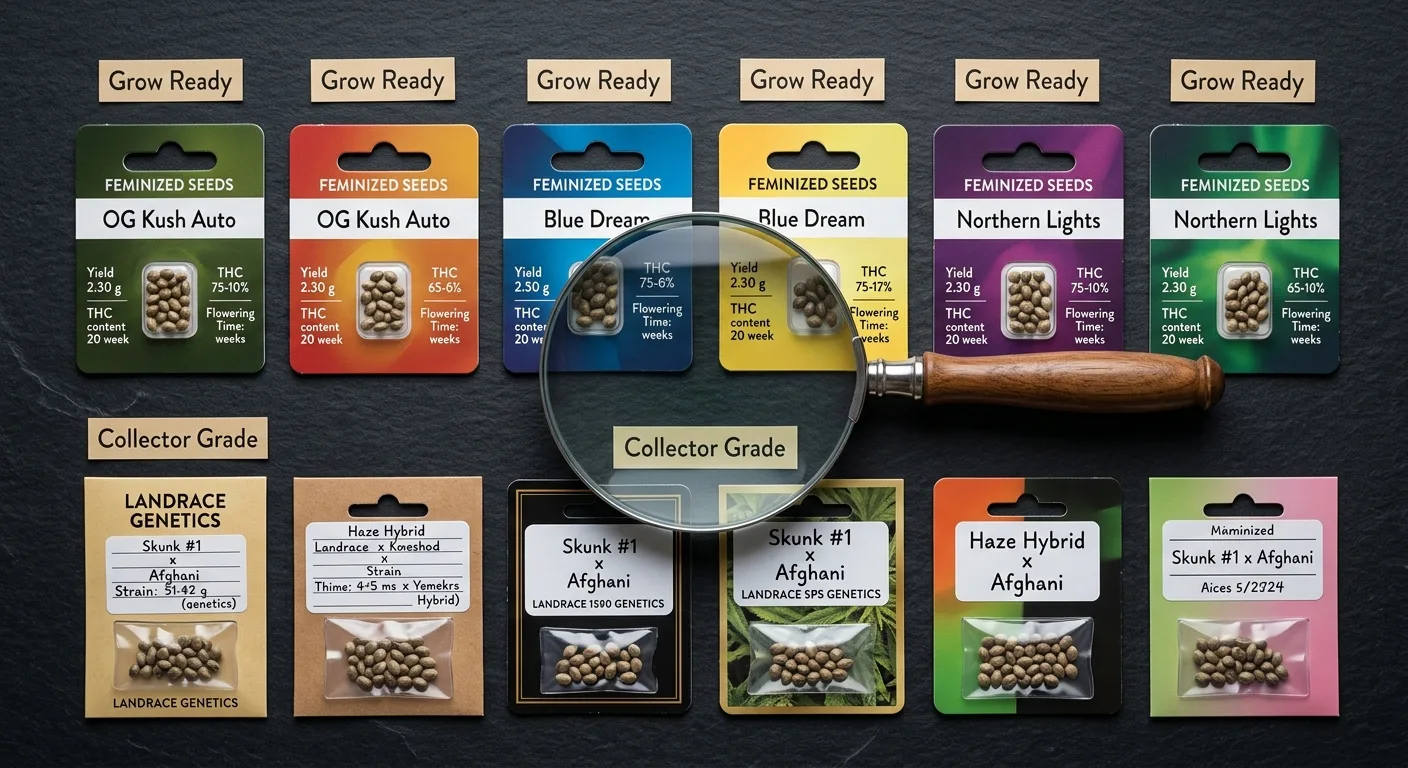
A seed catalog serves both audiences best when it includes stable workhorses for growers and distinct genetic expressions worth preserving for collectors. Here is how to read our catalog through both lenses:
Grow-Ready Picks for Immediate Harvests
These feminized strains offer predictable performance, documented yields, and proven indoor results, exactly what growers need when the goal is the next harvest, not the vault:
- Purple Kush Feminized: 27% THC, compact indica, reliable indoor performer and ideal for beginners stepping up to higher-potency genetics
- New York Power Diesel Feminized, 24% THC, fast-finishing, diesel-forward profile loved by experienced growers for its consistency
- Holy Grail Kush Autoflower, 20% THC, fast autoflower finish, OG Kush heritage in a low-maintenance format
- White Cookies Feminized, 22% THC, cookies lineage meets White Widow resilience, strong resin production
- Silver Pearl Feminized, 21% THC, Skunk × Early Pearl genetics, a genuinely distinct terpene profile worth running
Genetically Distinct Picks Worth Preserving
These strains represent lineages with specific genetic histories that make them worth cataloguing, not just consuming:
- Willie Nelson Feminized, 22% THC, Vietnamese Black × Nepalese genetics. Rare sativa lineage from non-Western origins increasingly hard to find in stable fem form.
- Quantum Kush Feminized, 30% THC, Sweet Irish Kush × Timewreck cross. One of the highest-THC documented feminized varieties with a distinct terpene divergence from standard OG lines.
- Swazi Feminized, 18% THC, African landrace heritage. Swazi genetics represent pre-commercialization African cannabis, a lineage with real preservation value as hybridization continues to dominate the market.
- Malawi Gold Autoflower, 13% THC, rare African sativa in autoflower format. Landrace-origin genetics with documented heritage and a terpene profile unlike most modern hybrids.
- Alien Rock Candy Feminized, 22% THC, Tahoe Alien × Sour Dubble cross. A distinct West Coast hybrid with limited wider availability in feminized form.
Reading a seed catalog through both collector and grower lenses reveals opportunities that single-strategy buyers miss. Growers notice the yield data. Collectors notice the lineage. Hybrids notice both, and buy accordingly.
For growers focused on specific effects, our curated guides can help narrow your selection: if relaxation is the goal, explore our picks for best strains for relaxation. For evening use and sleep support, see our guide to best strains for sleep. And if you need help estimating what your chosen strain will actually produce under your lights, use the yield estimator tool before committing to a full grow setup.
Frequently Asked Questions
What is the difference between a cannabis seed collector and a home grower?
A cannabis seed collector buys genetics as an asset: preserving rare, limited, or heritage strains for future use, breeding projects, or genetic diversity. A home grower buys seeds as an input for their next grow cycle, prioritizing reliability, yield, and effect. The buying strategy, preferred seed type, and storage approach differ completely between the two mindsets.
Do cannabis seed collectors buy regular or feminized seeds?
Collectors predominantly buy regular seeds because they contain both male and female genetics, offering the broadest genetic diversity for future breeding projects. Feminized seeds are less ideal for preservation since they lack the male chromosome needed for traditional breeding. That said, some collectors do vault feminized seeds when a specific phenotype or limited release is only available in feminized format.
How long can cannabis seeds last in a seed vault?
Properly stored cannabis seeds can remain viable for 5 to 10 years or longer. Vacuum-sealed seeds stored at 40–45°F with 5–8% relative humidity and in complete darkness achieve the best long-term viability. Regular seeds with lower oil content tend to outlast autoflower seeds in storage. Test a sample seed every 2–3 years to verify ongoing germination rates.
What percentage of my seed budget should go to collecting vs growing?
Most serious home growers allocate roughly 60–70% of their seed budget to strains they plan to grow immediately and 30–40% to genetic preservation and collector acquisitions. Beginners should focus 80–90% on grow-ready feminized seeds until they have consistent grows dialed in. The hybrid approach only works when each category is funded intentionally: not whatever is left over after impulse purchases.
Which cannabis seeds are worth collecting vs just buying to grow in 2026?
Seeds worth collecting include discontinued strains, small-batch limited releases, heritage or heirloom genetics, and IBL varieties from reputable breeders with documented lineages. Seeds better suited to buying-to-grow include feminized multi-packs, autoflowers, and stable F1 hybrids optimized for consistent indoor production. Landrace genetics like Swazi and Malawi Gold straddle both categories, worth growing and worth preserving.