Here's a fact that surprises most first-time growers: changing your light schedule from 18 hours to 12 hours is the single switch that tells a cannabis plant to stop growing and start producing buds. Your cannabis light schedule isn't just a timer setting — it's the master control for every stage of plant development, energy costs, and final yield.
Whether you're running photoperiod feminized strains or autoflowers, whether you're optimizing for maximum grams or minimum electricity bills, every decision traces back to how many hours of light your plants receive each day. This guide breaks down every major schedule — 24/0, 20/4, 18/6, 16/8, and 12/12 — with hard numbers, real trade-offs, and clear recommendations for every growing situation.
Let's go from seedling to harvest, one light cycle at a time.
How Cannabis Reads Light: The Science Behind Photoperiod Sensitivity
Cannabis light schedule decisions only make sense once you understand why plants respond to light the way they do. Cannabis is a photoperiod-sensitive plant, meaning it uses the ratio of light to darkness to detect the season and decide when to flower.
The key molecule is phytochrome — a light-sensitive protein that exists in two interchangeable forms. During light hours, phytochrome converts to its active form (Pfr). During darkness, it slowly reverts to its inactive form (Pr). When nights become long enough, the plant registers the change and begins producing flowering hormones.
Cannabis doesn't actually measure how many hours of light it receives — it measures the length of the dark period. Most indica-dominant strains require at least 12 consecutive hours of darkness to trigger flowering. Even a brief flash of light during the dark period can reset this clock and cause serious problems like hermaphroditism or re-vegging.
This is why a 12/12 split (12 hours light, 12 hours dark) reliably triggers flowering indoors. In nature, that ratio signals late summer — the plant's biological cue to reproduce before winter arrives. Autoflowering strains bypass this system entirely, flowering based on age rather than light duration, which opens up entirely different scheduling strategies covered later in this guide.
Understanding this biology makes every schedule decision logical rather than arbitrary. You're not just setting a timer — you're speaking the plant's native language.
The 5 Core Cannabis Light Schedules at a Glance
Before diving deep into each schedule, here's the full comparison. These numbers assume a 600W HPS grow light running at the UK average electricity rate of approximately £0.29/kWh (adjust for your local rate).
| Schedule | Light Hours | Dark Hours | Best Stage | Daily kWh (600W) | Monthly Cost (approx.) |
|---|---|---|---|---|---|
| 24/0 | 24 | 0 | Veg (some strains) | 14.4 kWh | ~£125 |
| 20/4 | 20 | 4 | Veg / Autoflower | 12.0 kWh | ~£104 |
| 18/6 | 18 | 6 | Veg (standard) | 10.8 kWh | ~£94 |
| 16/8 | 16 | 8 | Late Veg / Transition | 9.6 kWh | ~£83 |
| 12/12 | 12 | 12 | Flowering | 7.2 kWh | ~£62 |
The jump from 24/0 to 18/6 cuts your lighting energy by exactly 25%. Switching from 18/6 to 12/12 for flowering cuts it by another 33%. Over a full grow cycle, smart scheduling can save hundreds of pounds in electricity without sacrificing meaningful yield.
The 5 core cannabis light schedules — 24/0, 20/4, 18/6, 16/8, and 12/12 — each serve a specific purpose in the grow cycle. Choosing the right one for each stage directly affects plant health, energy costs, and final yield. No single schedule works best for every situation.
Step-by-Step: Light Schedules From Seedling to Harvest
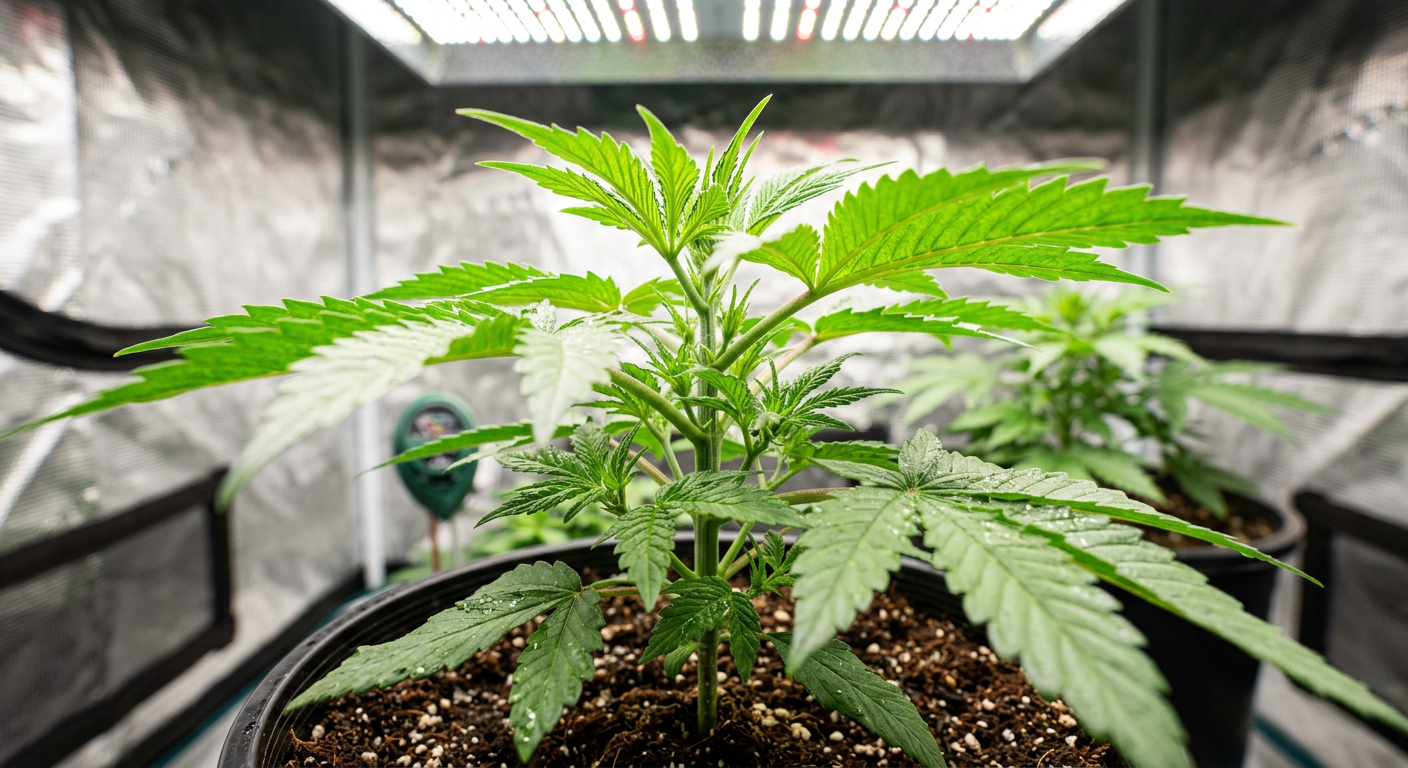
The following progress tracker walks you through exactly which light schedule to use at each stage of a photoperiod grow, from the moment seeds crack open to the day you flip to 12/12.
Germination (Days 1–5): No Direct Light Needed
Seeds germinate in darkness or very dim indirect light. If using a propagator or paper towel method, keep seeds in a warm, dark space at 22–26°C. Once the taproot is 1–2cm long, it's ready to plant. No grow light schedule is required at this stage.
Seedling Stage (Days 5–21): 18/6 or 20/4
Once seedlings break the surface and show their first true leaves, introduce gentle light. An 18/6 schedule at reduced intensity (around 200–300 PPFD) is ideal. Avoid 24/0 for seedlings — the lack of a dark period can cause mild stress before roots are established. Keep lights 40–60cm above seedlings to prevent light burn.
Early Vegetative (Weeks 3–5): 18/6 Standard
This is the workhorse phase of veg growth. An 18/6 schedule provides plenty of light for vigorous node development, strong root expansion, and healthy canopy formation. Target PPFD of 400–600 µmol/m²/s. Most growers run 18/6 from seedling through the entire veg stage without any issues.
Late Vegetative / Training Phase (Weeks 5–8): 18/6 Continued
Continue 18/6 through all training techniques — topping, FIMming, LST, and ScrOG work. Check out our complete topping guide and ScrOG growing guide for timing details. Increase PPFD to 600–800 µmol/m²/s as plants mature. Hold this schedule until you're ready to trigger flowering.
Flip to Flowering: Switch to 12/12
When plants have reached roughly half your desired final height (they'll stretch 50–100% after the flip), switch your timer to 12/12. Do this on the same day — don't taper down gradually. The abrupt change to 12 hours of darkness is what triggers the hormonal cascade that begins budding. Most photoperiod strains show first pistils within 7–14 days.
Full Flower (Weeks 2–10 of 12/12): Maintain 12/12 Strictly
Hold 12/12 without interruption for the entire flowering stage — typically 8–12 weeks depending on strain. Increase PPFD to 800–1,000+ µmol/m²/s in peak flower. Never allow light leaks during the 12-hour dark period. Use our cannabis flowering stage timeline guide to track weekly bud development milestones.
Pre-Harvest (Final 2 Weeks): Optional Dark Period Extension
Some experienced growers extend the dark period to 13/11 or even 11/13 in the final 2 weeks to simulate deep autumn and push resin production. The evidence is anecdotal, but it costs nothing to try with strains known for heavy trichome production. Learn exactly when to cut in our harvest timing guide.
24/0 vs 18/6 for Cannabis Veg: Which Actually Grows Faster?
The debate between 24/0 and 18/6 for vegetative cannabis growth is one of the most discussed topics in indoor growing — and the answer is more nuanced than most forums suggest. Running lights 24 hours a day does produce slightly faster early growth, but not by as much as you'd expect from 33% more light hours.
Multiple grower comparisons show that 24/0 plants typically grow 10–15% faster than 18/6 plants in the first 3 weeks. However, that advantage narrows significantly by week 6. The leading theory is that cannabis, like most plants, benefits from a period of darkness to complete metabolic processes — including the mobilization of sugars produced during photosynthesis.
If you want the speed of 24/0 without the downsides, run 20/4 instead. The 4-hour dark period is enough for basic metabolic recovery, and you'll see growth rates nearly identical to 24/0 at roughly 17% less electricity cost. It's the sweet spot many commercial veg rooms use.
Here's the practical breakdown of each veg schedule option:
- 24/0: Maximum speed for first 2–3 weeks, but higher stress risk, higher energy bill, and some strains show signs of fatigue (pale, slightly bleached new growth) after prolonged use
- 20/4: Near-maximum growth with a small rest period; excellent for growers who want speed without full 24-hour energy costs
- 18/6: Industry standard for good reason — robust growth, lower heat output, clear day/night temperature differential that strengthens cell walls, and significant energy savings
- 16/8: Valid for growers in warm climates managing heat, or when running lights at night to use off-peak electricity tariffs; growth is slightly slower but plant health is excellent
18/6 vs 24/0 cannabis veg growth comes down to your priorities. For pure speed, 24/0 has a slight early edge. For balanced growth, energy efficiency, and long-term plant health, 18/6 wins. Most experienced growers choose 18/6 as their permanent veg standard.
Strains with strong Sativa genetics — like Sour Diesel or Super Lemon Haze — tend to thrive under 18/6 and show vigorous, healthy veg growth without any need for 24/0. Heavy Indica strains like OG Kush (26% THC) and Purple Kush (27% THC) also perform excellently under standard 18/6 schedules.
The 12/12 Flowering Light Schedule: Everything You Need to Know
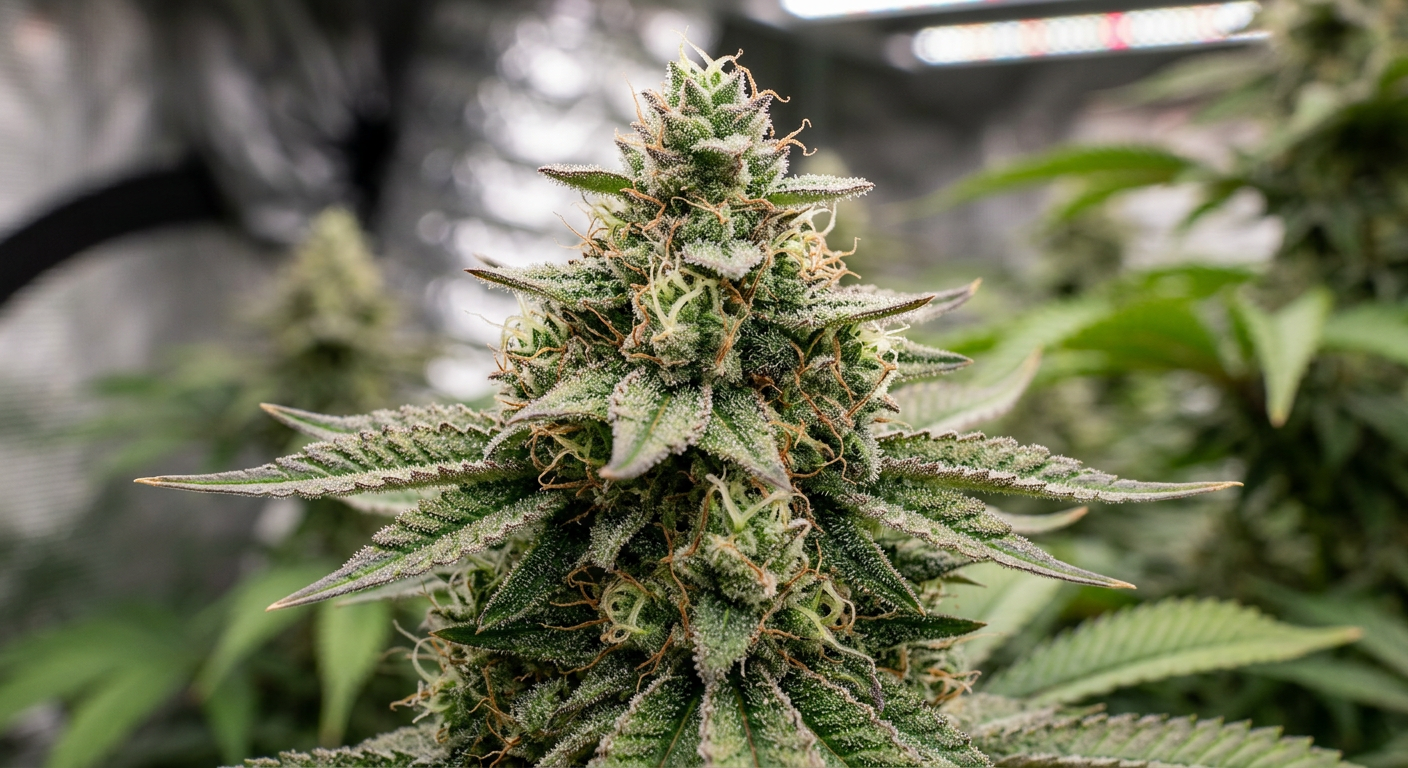
The 12/12 flowering light schedule is the cornerstone of indoor cannabis production. It replicates the autumn equinox — equal parts day and night — which signals to photoperiod cannabis plants that it's time to reproduce. Understanding how to implement and protect this schedule is non-negotiable for a successful harvest.
When you flip to 12/12, the plant undergoes a dramatic hormonal shift over the first 1–2 weeks, commonly called the