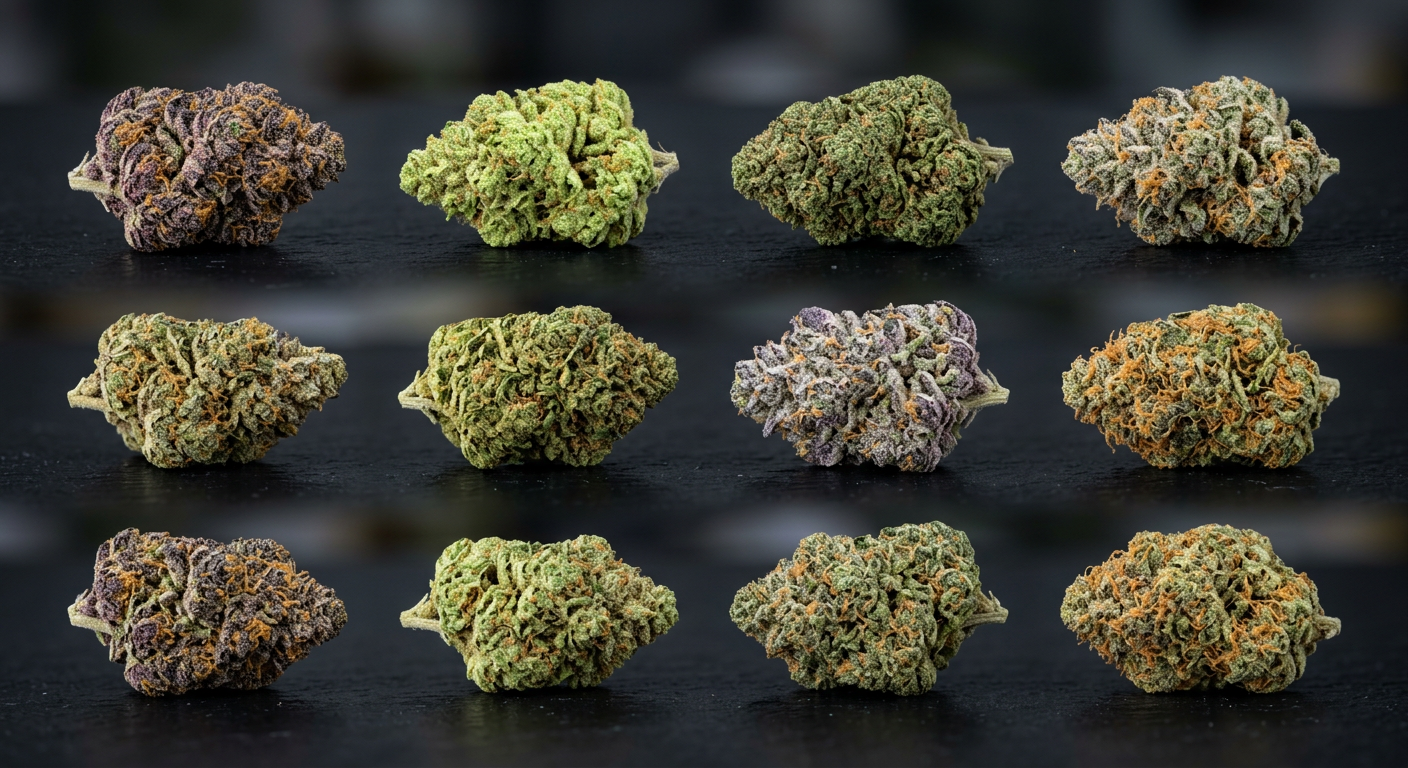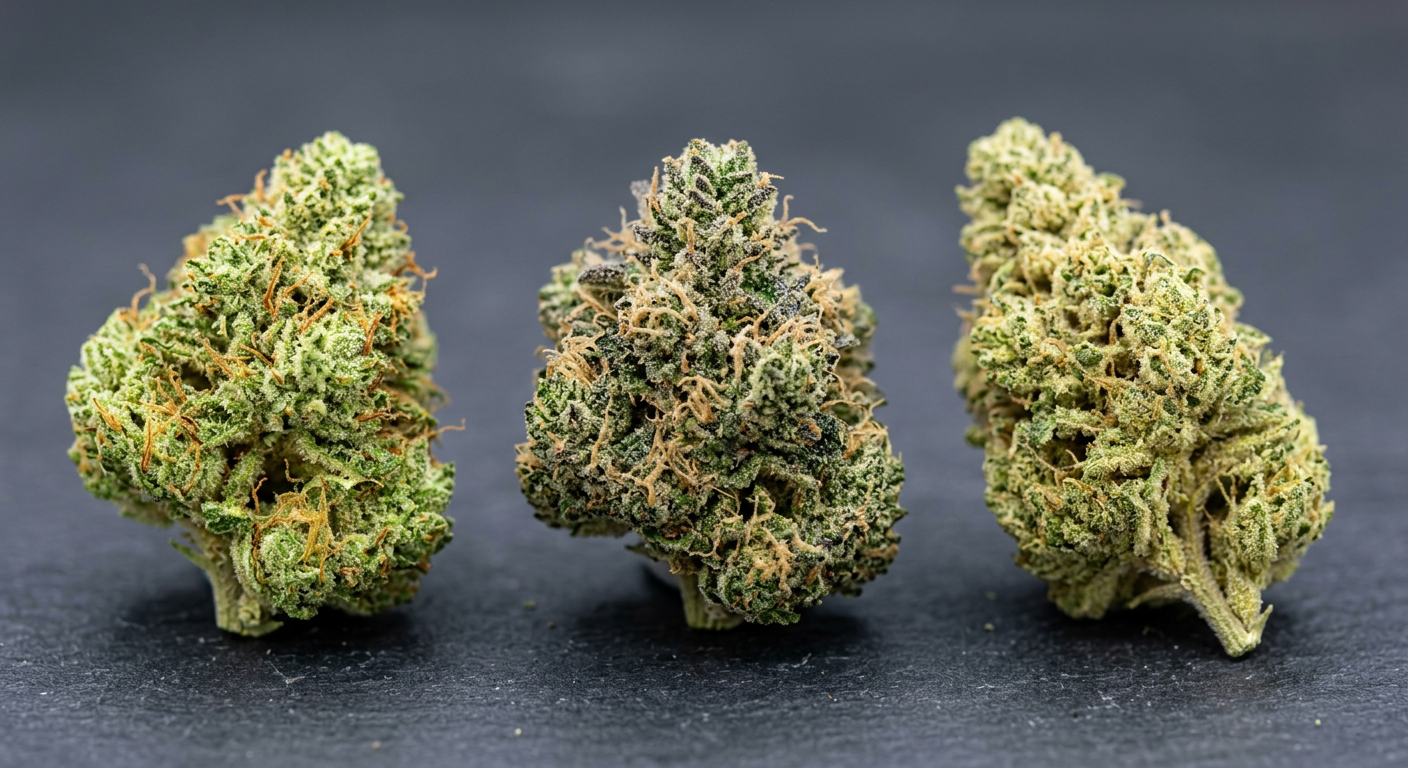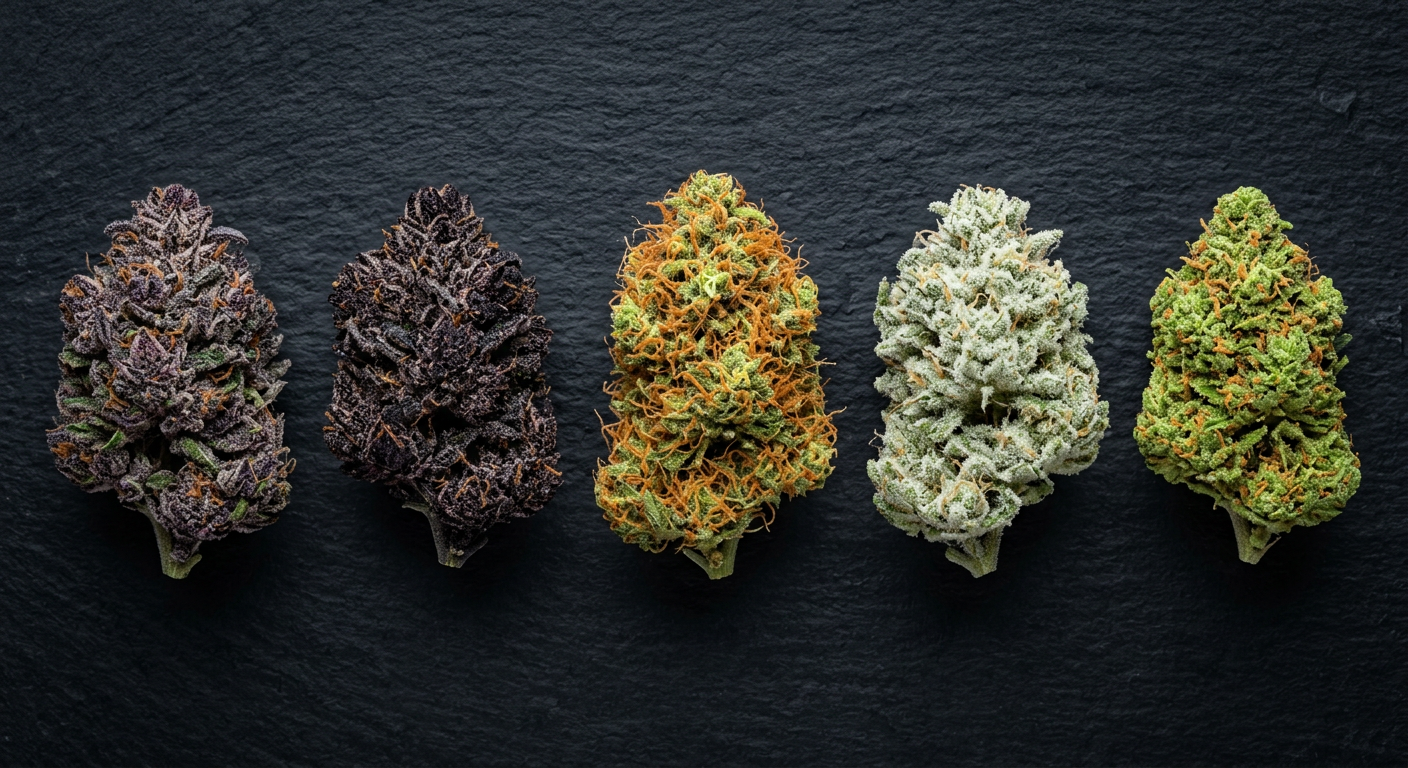
Every grower has asked it at least once: why does the same strain grow completely differently in two different gardens? The answer lives inside the plant's DNA. Understanding cannabis strain genetics unlocks the ability to predict how a plant will grow, what it will yield, how it will taste, and what kind of experience it will deliver — before you ever drop a seed into soil.
This guide covers everything from the ground up: the difference between genotype and phenotype, how indica and sativa genetics actually differ at a biological level, what F1 and F2 hybrids mean in practice, and how backcrossing creates the stable, consistent strains you rely on. Whether you're a first-time grower selecting seeds or an aspiring breeder hunting elite phenotypes, this is the complete resource you need.
For a broader overview of how genetics connect to every aspect of strain selection and cultivation, visit our Cannabis Genetics pillar guide — the hub resource this article supports.
Genotype vs. Phenotype: The Foundation of Cannabis Strain Genetics
Cannabis strain genetics come down to two core concepts: genotype and phenotype. The genotype is the plant's complete DNA blueprint — the inherited instruction set passed down from parent plants. The phenotype is what that blueprint actually produces when it interacts with a specific environment. Same genes, different grow room, different result.
Understand What Genotype Controls
A plant's genotype determines its potential ceiling — maximum THC production, terpene family, flowering speed, and structural traits like node spacing and leaf shape. Genotype is fixed at fertilization and cannot be changed by environment.
Recognize How Phenotype Expresses
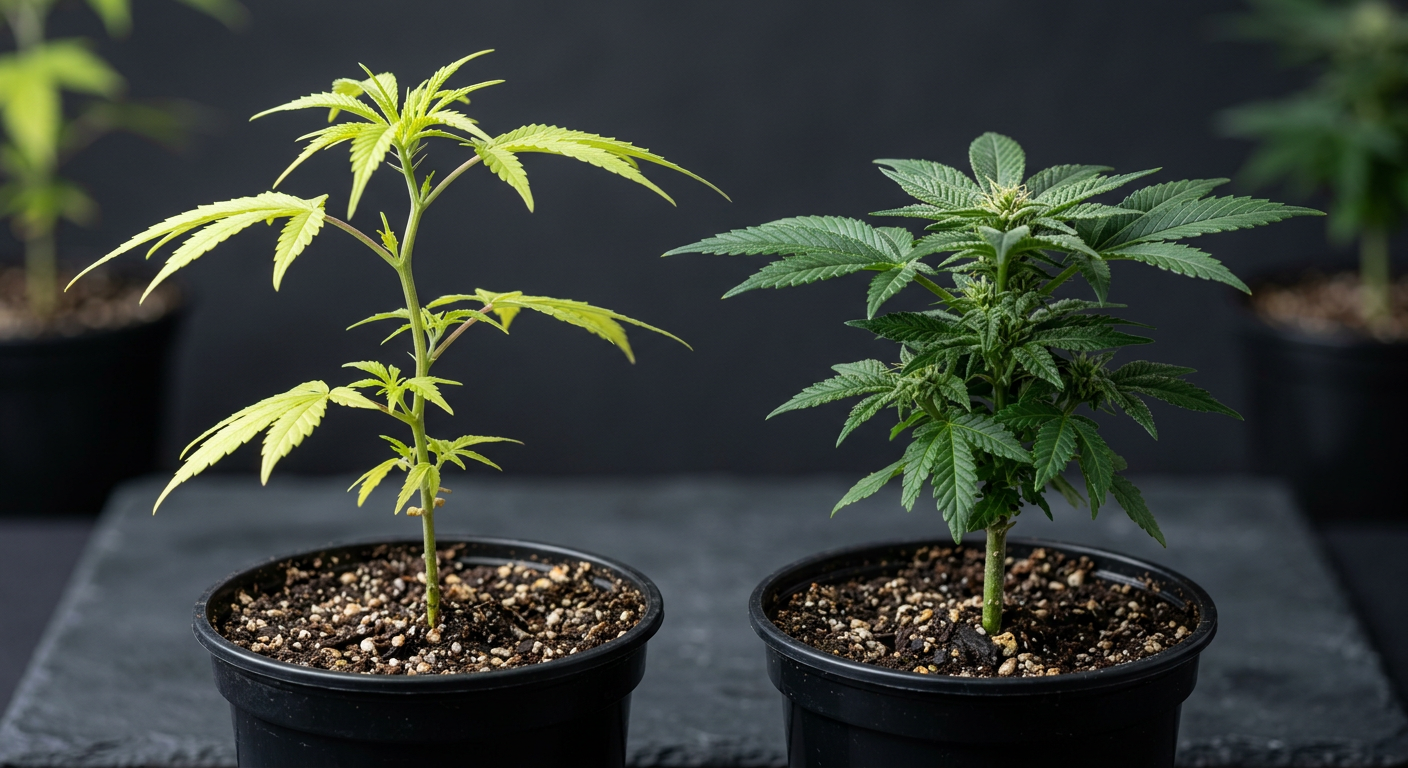
Phenotype is genotype in action. Temperature, light intensity, humidity, nutrients, and training methods all influence how a plant's genes express. Two clones from the same mother can look and smell different if grown under different conditions.
Apply This to Seed Selection
When you buy seeds labeled as a specific strain, you're purchasing a genotype — a range of possible expressions. Feminized seeds from stabilized lines narrow that range significantly, which is why OG Kush Feminized Seeds (26% THC) will deliver far more consistent results than unstabilized open-pollinated stock.
Genotype = potential. Phenotype = expression. The environment is the translator between the two. Elite genetics in a poor environment still underperform — and stable genetics in an optimized grow room consistently hit their ceiling.
Homozygous vs. Heterozygous Genetics
A plant is homozygous for a trait when both copies of a gene (one from each parent) are identical. It is heterozygous when the two copies differ. Homozygosity breeds true — every seed produces near-identical plants. Heterozygosity creates variation, which is why seeds from many commercial hybrids produce a mixed bag of phenotypes.
Breeders spend years selectively inbreeding lines to increase homozygosity for desired traits — a process called stabilization. When a breeder says a strain is "stable," they mean its genotype is predominantly homozygous for the traits they care about: potency, structure, flavor, flowering time.
Polyploidy: The Advanced Exception
Most cannabis plants are diploid — they carry two copies of each chromosome (2n). Some breeders now work with triploid plants (3 chromosome sets), which are sterile and tend to produce larger, heavier flowers. Triploid cannabis cannot reproduce sexually, which eliminates seed development and redirects all energy into trichome and resin production. This is cutting-edge work still entering the mainstream market.
Indica vs. Sativa Genetics: What the Science Actually Says
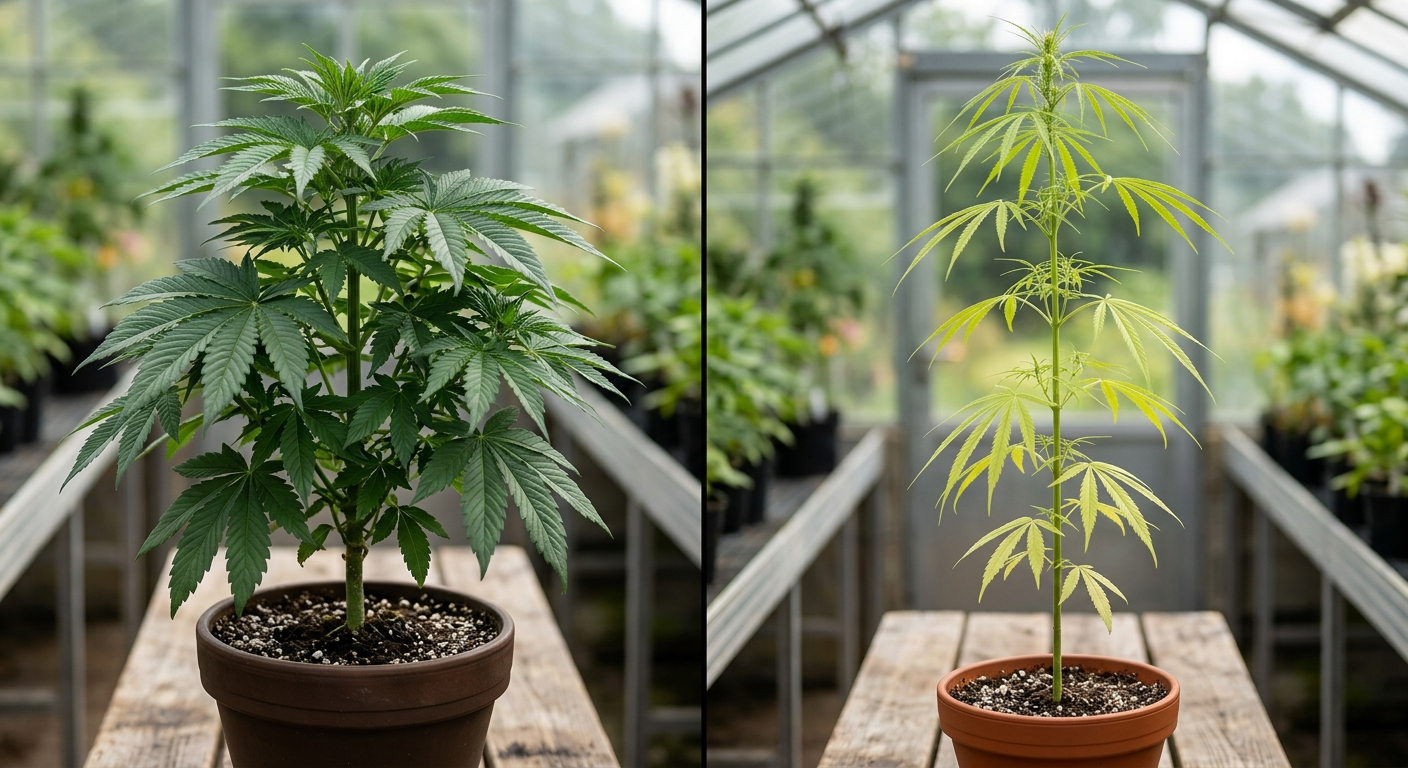
The indica vs. sativa framework describes two broad genetic lineages with real, measurable differences in plant morphology, terpene profiles, and cannabinoid ratios. Indica-dominant genetics produce compact, fast-finishing plants with broad leaves and dense buds. Sativa-dominant genetics grow tall and open-structured with narrow leaves and longer flowering cycles. These are observable genetic realities — but the effects story is more nuanced than most seed catalogs admit.
The Biological Differences Are Real
Cannabis indica originated in the Hindu Kush mountain region spanning Afghanistan, Pakistan, and northern India. These plants evolved in harsh, cold, high-altitude environments with short growing seasons — which explains their genetic programming for fast flowering (8-9 weeks), compact structure, and high resin production as protection against cold and UV radiation.
Cannabis sativa landrace strains originated near the equator — Thailand, Colombia, Jamaica, and Africa — where long seasons and consistent light allowed plants to grow for 12-16+ weeks before flowering. Their genetic programming optimized for height, stretch, and late-finishing buds.
| Trait | Indica Genetics | Sativa Genetics | Hybrid (50/50) |
|---|---|---|---|
| Plant height | 60–120 cm | 150–300+ cm | 90–180 cm |
| Flowering time | 7–9 weeks | 10–16 weeks | 8–11 weeks |
| Leaf width | Broad, fat fingers | Narrow, long fingers | Intermediate |
| Bud density | Dense, compact | Airy, elongated | Moderate |
| Typical dominant terpenes | Myrcene, linalool | Limonene, terpinolene | Varies by cross |
| Indoor grow suitability | High | Moderate (needs height) | High |
| Yield potential (indoor) | 400–550 g/m² | 300–450 g/m² | 400–600 g/m² |
Why "Indica = Sedating, Sativa = Energizing" Isn't the Full Story
The effects commonly attributed to indica and sativa genetics — relaxing vs. energizing — are more accurately explained by terpene profiles and cannabinoid ratios than by species classification alone. A high-myrcene indica and a high-myrcene sativa may produce similar relaxing effects, while two indicas with different terpene profiles can feel very different.
Research from ethanobotanist Dr. Ethan Russo and others confirms that the entourage effect — the combined interaction of cannabinoids and terpenes — drives subjective effects far more than indica/sativa labels. When selecting for specific effects, look at lab-verified terpene data alongside THC and CBD percentages rather than relying solely on species classification.
That said, genetics do influence which terpenes a plant tends to express. Indica-leaning lineages more frequently produce myrcene-dominant profiles. Sativa-leaning lineages more frequently express limonene, terpinolene, and pinene. So while the label is a shortcut rather than a guarantee, it remains a useful starting point for growers and consumers learning to navigate strain choices.
Strains like Northern Lights x Amnesia Haze Feminized Seeds (24% THC) illustrate this perfectly — the Northern Lights indica backbone gives it compact structure and resin density, while the Amnesia Haze sativa lineage stretches the flowering time and lifts the terpene profile toward cerebral citrus notes.
Dominant and Recessive Genetic Traits in Cannabis

Cannabis genetics follow Mendelian inheritance principles — the same laws that govern pea plant color or human eye color. Each trait is controlled by one or more gene pairs, and each gene comes in different versions called alleles. Dominant alleles express even when only one copy is present. Recessive alleles only express when both copies match.
Key Dominant Traits in Cannabis
Dominant traits appear reliably across generations and are relatively easy for breeders to work with because a single copy is enough to produce the visible trait. Common dominant genetic traits in cannabis include:
- High resin production — tends to dominate over low-resin genetics in most crosses
- Fast flowering initiation — indica-type early flowering response often dominates in crosses
- Purple/anthocyanin expression — dominant in many Kush and purple-lineage strains when triggered by temperature drop
- Disease resistance — powdery mildew resistance genes are often dominant
- Broad leaf morphology — indica leaf shape tends to be dominant over sativa narrow leaves
When you see a strain marketed as "Purple Kush" or similar, look for genetics that carry at least one dominant anthocyanin allele. Strains like Purple Kush Feminized Seeds (27% THC) reliably express purple coloration when nighttime temps drop below 15°C during late flowering — that's dominant genetics doing predictable work.
Key Recessive Traits in Cannabis
Recessive traits are trickier — they disappear in F1 crosses but re-emerge in F2 generations when two carriers breed together. Classic recessive cannabis traits include:
- Autoflowering — the ruderalis day-length-independent flowering trait is recessive, which is why first-generation crosses with ruderalis don't autoflower
- Albinism — white or pale foliage caused by recessive pigmentation genes
- High CBD expression — in many high-THC lines, the gene variant for CBD production is recessive
- Certain flavor compounds — some rare terpene expressions (e.g., heavy tropical fruit notes) appear only when homozygous recessive
Using Punnett Squares to Predict Outcomes
Breeders use Punnett squares to predict the statistical probability of offspring expressing a given trait. In a simple single-gene cross, crossing two heterozygous parents (Aa × Aa) produces a 3:1 ratio of dominant to recessive phenotypes — 75% show the dominant trait, 25% show the recessive. In practice, most cannabis traits are polygenic (controlled by multiple genes), making real-world ratios more complex, but the principle holds.
Don't assume a trait is gone just because it doesn't appear in F1 offspring. Recessive traits hide in heterozygous carriers and re-emerge in the F2 generation. Breeders tracking recessive traits must test F2 populations — sometimes hundreds of plants — to find the homozygous recessives they're selecting for.
Reading a Cannabis Strain Pedigree: A Step-by-Step Tutorial
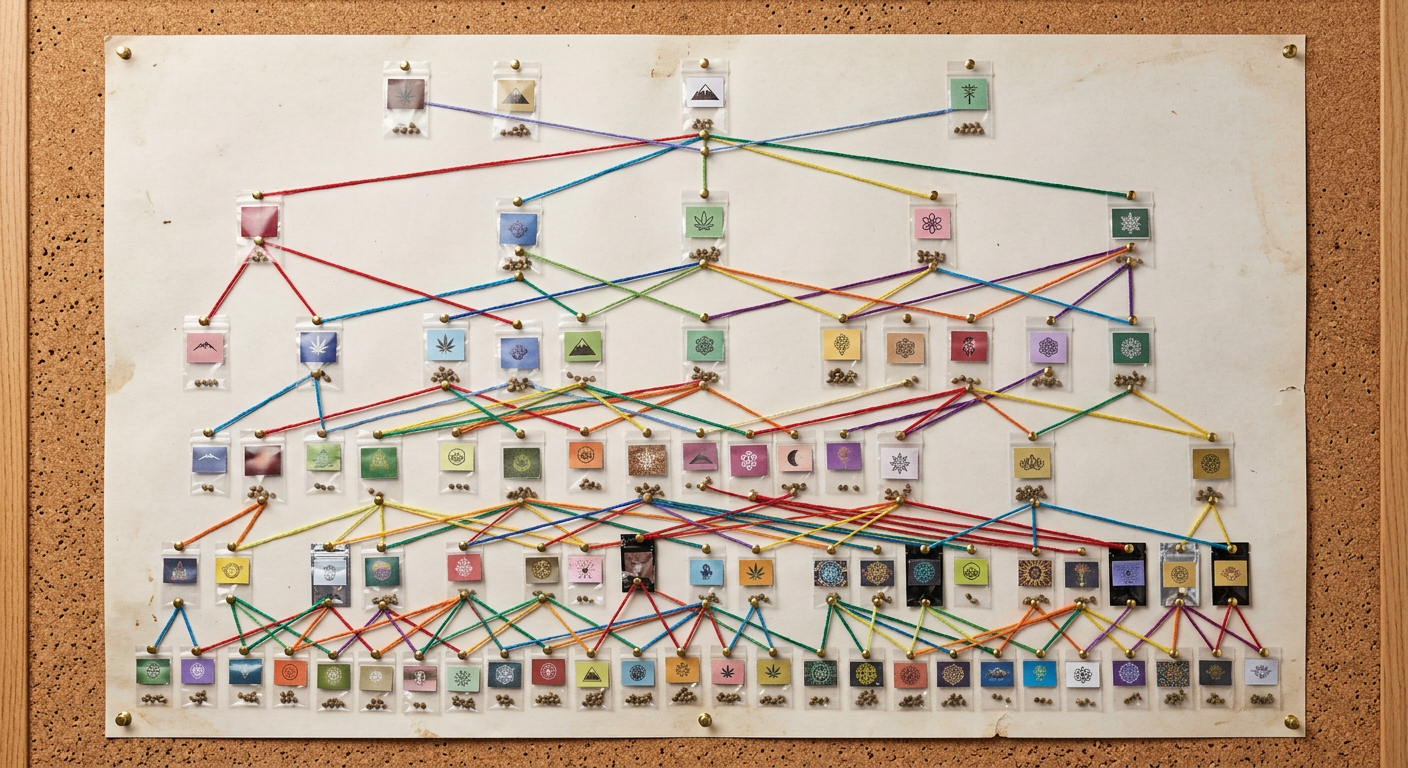
A strain pedigree is the documented family tree of a cannabis variety — showing which strains were crossed, in which order, and over how many generations. Reading a pedigree tells you what genetic traits a strain is likely to carry, which effects and growth patterns to expect, and how stable the genetics are likely to be. Here's how to decode one in five steps.
Identify the Landrace or IBL Foundations
Every pedigree traces back to either a landrace (geographically isolated wild strain) or an inbred line (IBL). Names like Afghani, Skunk #1, Thai, Colombian Gold, and Haze are foundational lines that appear in hundreds of modern strains. These are your genetic bedrock. See our Landrace Cannabis Strains Guide for deep profiles of each origin.
Read Left to Right (or Top to Bottom)
Most pedigree charts place the oldest ancestors at the top or left, with each cross moving toward the right or bottom. The final strain name sits at the end of the chain. A notation like "Skunk #1 × Northern Lights" means Skunk #1 is the female (seed) parent and Northern Lights is the male (pollen) parent — though some breeders reverse this notation.
Count the Crosses to Estimate Stability
A strain that is one cross deep (P1 × P2 = F1) will be highly variable. A strain backcrossed 3-4 times to a stable parent is far more predictable. The more generations of inbreeding or backcrossing in the history, the more uniform the seeds will grow.
Look for Repeated Ancestors
When the same strain appears multiple times in a pedigree, it means that ancestor's genetics are heavily represented. If Skunk #1 appears on both the maternal and paternal sides, the offspring is essentially a line-bred Skunk — expect very Skunk-forward traits in growth, smell, and effect.
Cross-Reference with Known Trait Profiles
Once you identify the key ancestors, cross-reference their known traits. Afghani genetics bring resin, density, and body effect. Haze genetics bring sativa stretch, long flowering, and cerebral terpenes. Northern Lights brings vigorous growth and calming myrcene expression. Build a mental or written map of what each ancestor contributes to the final profile.
A strain pedigree is like a recipe card for genetic traits. The more you recognize the founding varieties and their characteristic contributions, the more accurately you can predict how any cross will grow, smell, and perform before you ever germinate a seed.
Real Pedigree Example: White Widow
White Widow traces its lineage to a Brazilian sativa landrace (female) crossed with a South Indian indica (male). The Brazilian parent contributes the electric, resin-triggering sativa genetics responsible for its famous white trichome coating and energetic effect profile. The South Indian indica parent brings structure, density, and the resin-producing genetics that make White Widow one of the most recognizable strains in the world.
That cross explains why White Widow Feminized Seeds (25% THC) finish relatively quickly for a sativa-influenced strain, produce dense resin-coated buds, and deliver the balanced effect — clear-headed but physically relaxing — that its hybrid lineage predicts.
F1, F2, F3 Hybrids Explained: What Generation Means for Growers
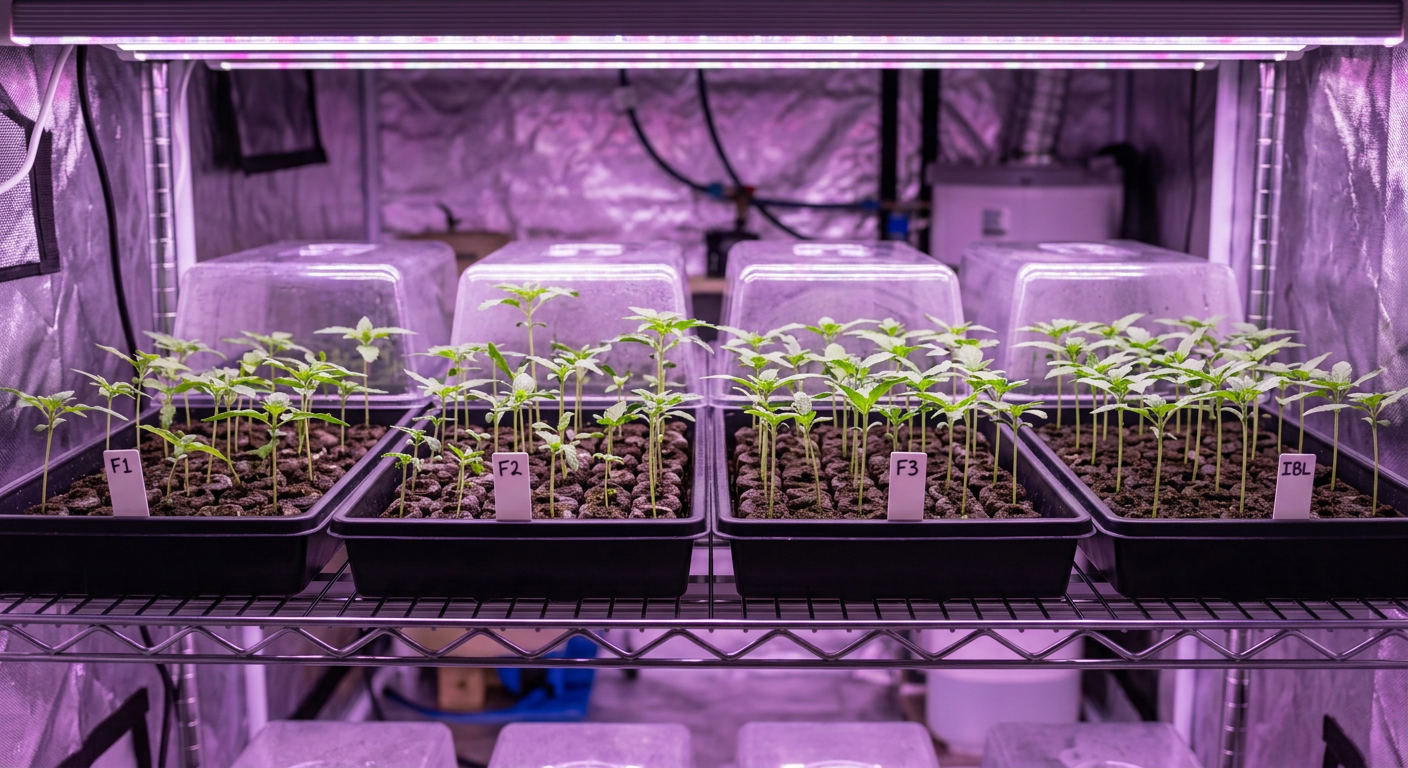
The generation label on a cannabis strain — F1, F2, F3, and beyond — tells you exactly how many times the line has been bred since the original cross. Each generation behaves differently in terms of uniformity, vigor, and predictability. Understanding these labels helps you choose the right seeds for your goals and avoid surprises at harvest.
F1 Hybrids: Maximum Vigor, Maximum Variation in Offspring
An F1 (first filial generation) hybrid is the direct offspring of two genetically distinct parent lines — typically two IBLs or stable varieties. F1 plants are celebrated for hybrid vigor, a phenomenon where the first-generation cross outperforms both parents in growth rate, yield, resilience, and often potency. This happens because the heterozygosity of F1 plants masks deleterious recessive alleles and maximizes gene expression.
- F1 plants grow fast, yield heavy, and often hit above their parents' THC average
- Within a batch, F1 seeds from two stable parents are very uniform
- Saving seeds from F1 plants produces F2 offspring with wide variation — not more F1 plants
- Most commercial feminized seeds are effectively F1 or stabilized hybrids
When a seed bank describes a strain as a cross of two well-known stable varieties (e.g., OG Kush × Durban Poison), that's an F1 cross. Buy fresh F1 seeds rather than saving seeds from your harvest if you want to replicate the vigor. Saved F2 seeds will show much wider variation — sometimes useful for phenotype hunting, but not for consistent production growing.
F2 Generation: The Genetic Lottery
F2 seeds are produced by crossing two F1 siblings. The result is a genetically diverse population where recessive traits that were hidden in the F1 generation now appear in roughly 25% of plants. An F2 population from a good F1 cross contains enormous genetic potential — breeders love F2 populations for phenotype hunting because elite recessives surface for the first time.
For production growers, though, F2 seeds are a gamble. You may pop 10 seeds and get 10 distinctly different plants — some expressing the ideal traits you wanted, others showing unwanted recessives. If you're hunting phenotypes for cloning, this is exciting. If you need consistency for a commercial grow, F2s are the wrong tool. Explore the full process in our Cannabis Phenotype Hunting Guide.
F3 and Beyond: The Path to Stabilization
Each subsequent generation of selfing or sibling crossing progressively increases homozygosity. By F4-F6, many traits are fully fixed and the population breeds true. The resulting line is called an IBL (inbred line) and produces seeds nearly as uniform as clones. True IBLs like Skunk #1 and Northern Lights are legendary precisely because decades of breeding have locked in their genetics with remarkable consistency.
| Generation | Genetic Diversity | Hybrid Vigor | Uniformity | Best Use |
|---|---|---|---|---|
| F1 | Low-Moderate | Maximum | High (if parents stable) | Production growing |
| F2 | High | Moderate | Low | Phenotype hunting |
| F3 | Moderate | Low-Moderate | Moderate | Selection breeding |
| F4-F6+ | Low | Low | Very High | Stabilizing a new IBL |
| IBL | Very Low | Low | Excellent | Commercial seed production |
BX (Backcross) Notation
You'll often see notation like BX1, BX2, or BX3 alongside strain names. BX stands for backcross — more on this in the next section — and the number indicates how many times the hybrid has been crossed back to the original parent. BX3 means three rounds of backcrossing have occurred, representing a high degree of genetic contribution from the original parent line. Strains labeled BX3 or BX4 are among the most stable hybrids available as seeds.
Backcrossing Basics: How Breeders Lock In Elite Traits
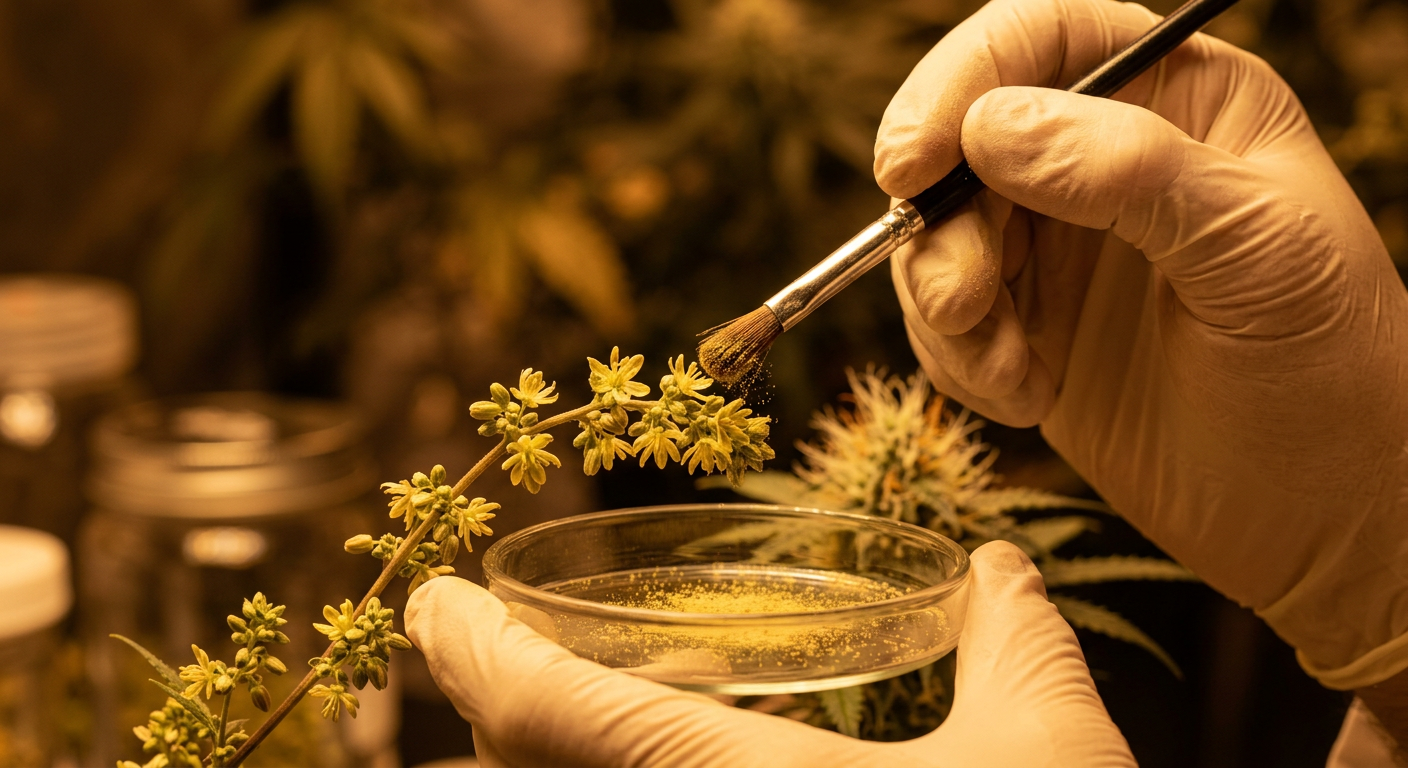
Backcrossing is the technique breeders use to stabilize desirable traits and increase genetic consistency over successive generations. It involves crossing a hybrid offspring back to one of its parent plants — or more commonly, to a preserved clone of the original parent. Done correctly over 3-6 generations, backcrossing produces seeds that express the target parent's traits with near-clone-like reliability.
Why Breeders Backcross
Imagine you cross Strain A (exceptional resin, great flavor) with Strain B (huge yield, fast flowering) to create an F1 hybrid that combines both. The F1 is excellent, but saving seeds produces wildly variable F2 offspring. Backcrossing the F1 back to Strain A (the resin/flavor parent) shifts the genetic ratio — the offspring receive 75% of Strain A's genes and 25% of Strain B's — bringing the line closer to Strain A's consistency while retaining Strain B's yield contributions.
- BX1: Cross F1 hybrid back to original parent → ~75% parent genetics
- BX2: Cross BX1 offspring back to original parent → ~87.5% parent genetics
- BX3: Cross BX2 offspring back to original parent → ~93.75% parent genetics
- BX4: Cross BX3 offspring back to original parent → ~96.9% parent genetics
- Select only the best phenotypes at each generation for further breeding
- Test for target traits (potency, structure, terpenes) at each BX stage
Selfing: The Feminized Seed Alternative
Selfing (S1, S2, S3) is a related technique where a plant is crossed with itself — typically by stressing a female plant to produce male flowers through colloidal silver or STS (silver thiosulfate) treatment. The pollen from these stress-induced male flowers contains only female chromosomes, producing near-100% female seeds. S1 seeds are slightly less stable than traditional backcrosses but allow breeders to preserve exceptional female phenotypes without a male plant.
This is the primary mechanism behind feminized seeds. Strains like Super Lemon Haze Feminized Seeds (23% THC) and Sour Diesel Feminized Seeds (24% THC) are produced through feminization processes that ensure you get female plants from virtually every seed — a massive practical advantage for home and commercial growers alike.
Selfing concentrates both positive and negative recessive genes. S1 seeds from an elite mother will produce some plants very similar to that mother — but also plants that express previously hidden negative recessives. Always grow at least 4-6 S1 seeds and select your keeper through phenotype hunting rather than assuming they'll all match the mother.
Cubing: Locking In a Clone's Genetics
"Cubing" is a slang term for a breeding strategy where a clone-only variety is backcrossed to itself or its S1 offspring three or four times, theoretically recovering 97%+ of the original clone's genetics in seed form. The goal is to produce seeds that reliably grow near-identical plants to the original clone, making a prized clone-only variety accessible to growers who can't acquire cuts. True cubing is rare and technically demanding but represents one of cannabis breeding's most ambitious goals.
How Cannabis Genetics Affect Growth, Yield, and Flavor
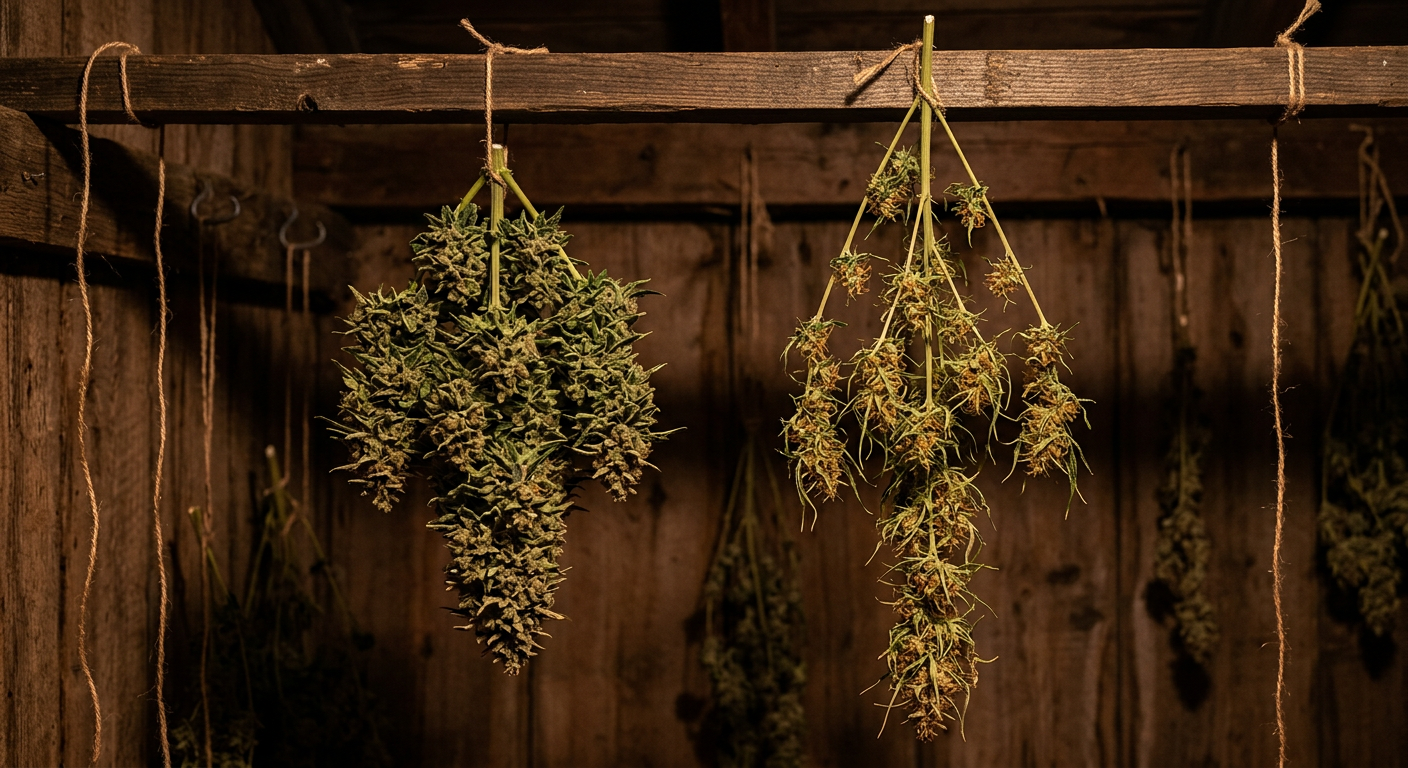
Cannabis strain genetics directly determine the three traits every grower cares most about: how the plant grows, how much it produces, and how the final product tastes and smells. Understanding these connections lets you select strains strategically based on your grow space, goals, and preferences — rather than guessing from marketing descriptions.
Genetics and Growth Structure
Internode spacing, branching pattern, and canopy structure are almost entirely genetically determined. Indica-dominant genetics produce plants with tight internodes (short spaces between branches) and wide lateral branching — naturally suited to ScrOG training where a horizontal canopy maximizes light exposure. Sativa-dominant genetics stretch aggressively during the first 2-3 weeks of flowering (the "stretch"), sometimes doubling or tripling in height, which demands either significant vertical space or aggressive training like topping or LST.
- Indica-dominant: Short internodes, lateral spread, manageable height, excellent for indoor growing under 2.4m ceilings
- Sativa-dominant: Long internodes, vertical growth, extended stretch — needs height management or outdoor space
- Hybrid: Moderate stretch (20-60% height increase at flower), balanced branching — most versatile for indoor setups
Genetics and Yield Potential
Yield is a polygenic trait influenced by dozens of gene combinations — bud site density, calyx-to-leaf ratio, resin gland size, branching architecture, and root efficiency all contribute. Indica genetics tend toward dense, compact buds that weigh more per volume. Sativa genetics produce airier, elongated buds that weigh less but cover more branch length. Heavy-yielding hybrids like Northern Lights x Big Bud Feminized Seeds (20% THC) combine the bud density of Northern Lights indica genetics with Big Bud's legendary weight-per-branch breeding — a deliberate genetic stacking of yield-positive traits.
If maximum yield is your primary goal, look for strains with both Skunk and Afghani or Big Bud in the lineage — these foundational genetics were specifically selected for production output over decades of commercial breeding. Strains like Super Skunk Feminized Seeds (20% THC) carry this high-output genetic heritage.
Genetics and Terpene/Flavor Profiles
Terpene synthesis pathways are genetically encoded. The specific enzymes a plant produces — and in what quantities — are written into its DNA. While environment (temperature during late flowering, UV light, harvest timing) influences final terpene concentration, the type of terpenes a strain produces is fundamentally genetic. This is why:
- Diesel genetics (New York City Diesel, Sour Diesel) consistently produce fuel-forward caryophyllene/limonene profiles
- Haze genetics reliably generate sweet-spicy terpinolene and ocimene expressions
- Kush genetics reproducibly deliver earthy myrcene and woody pinene notes
- Skunk genetics carry the characteristic sulfurous thiol compounds alongside myrcene
Strains like New York Power Diesel Feminized Seeds (24% THC) carry forward those fuel-forward diesel terpene genetics specifically because the New York City Diesel and Power Plant parents both encode for similar terpene synthesis pathways — a genetic double-down on the diesel flavor profile.
When you want a specific flavor profile, trace the genetics back to the founding lines known for producing it. The terpene profile of any strain is a direct expression of the enzymatic pathways encoded in its DNA — which means lineage is the most reliable flavor predictor available before you harvest.
Genetics and Potency
THC production is governed by enzyme genes in the cannabinoid biosynthesis pathway — specifically the THCA synthase enzyme. Plants that produce high levels of this enzyme convert more CBGA (the cannabinoid precursor) into THCA, which becomes THC after decarboxylation. The THCA synthase gene comes in high-producing and low-producing variants, and strains with multiple copies or high-efficiency variants of the high-producing allele consistently test above 25% THC.
This is why potency stacks predictably in breeding: cross two high-THC parents and the majority of offspring will carry at least one high-efficiency THCA synthase allele. Cross two exceptional 25-28% THC parents from complementary lineages, and you can push offspring averages above 28-30%. Strains like Quantum Kush Feminized Seeds (30% THC) and Purple Kush Feminized Seeds (27% THC) represent what multiple generations of selecting for high THCA synthase expression actually produces.
Autoflowering Genetics: Ruderalis and the Time-Independent Trait
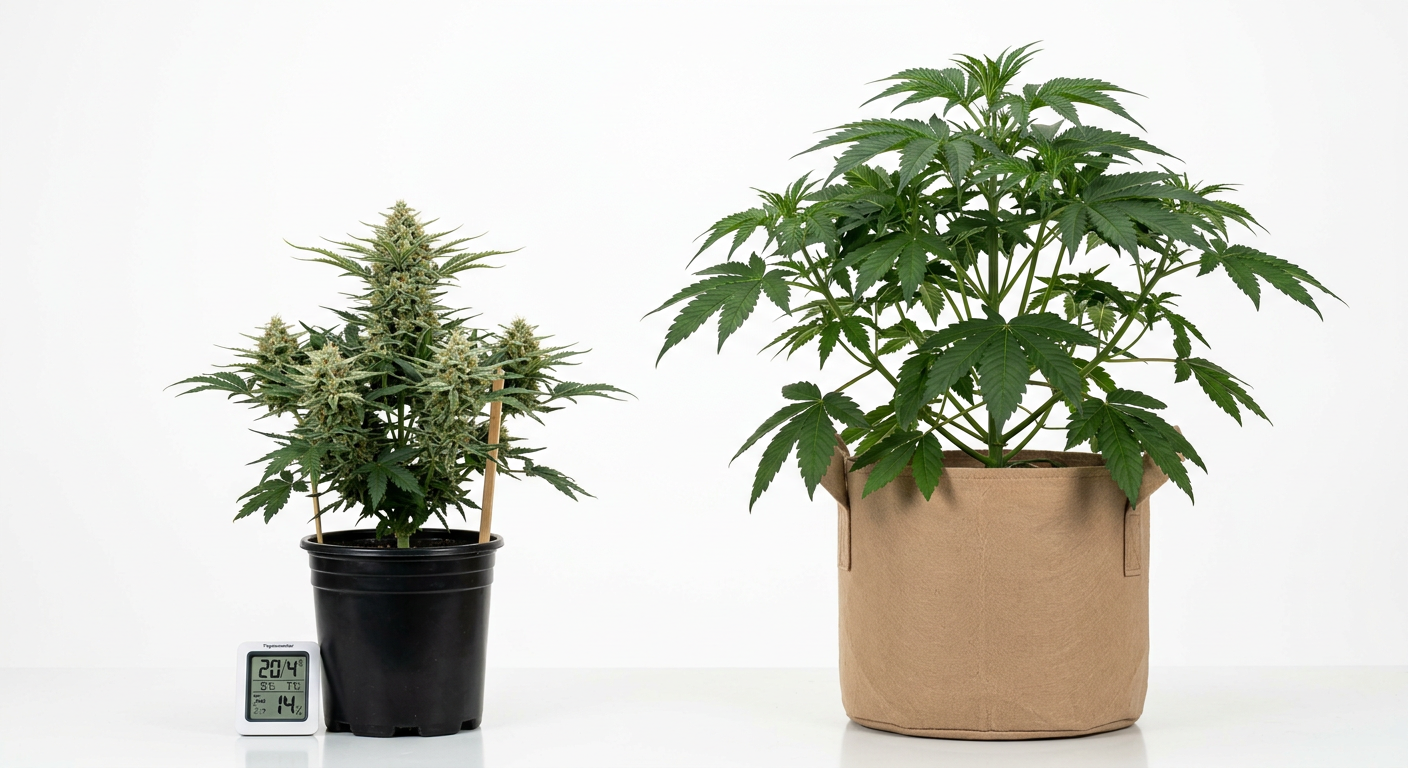
Autoflowering genetics introduce a third cannabis species — Cannabis ruderalis — into the equation. Ruderalis plants evolved in Siberia and Central Asia, where summers are short and unpredictable. To survive, they developed the ability to flower based on age rather than photoperiod — regardless of light schedule. This autoflowering trait is recessive and requires both copies of the relevant gene to be present, which is why first-generation ruderalis crosses don't autoflower.
How Autoflowering Genetics Work
Ruderalis carries a recessive mutation in the genes that control photoperiod flowering response — specifically in the circadian rhythm and light-sensing pathway. When a ruderalis is crossed with a photoperiod strain, F1 offspring all photoperiod flower (the dominant trait wins). To produce auto-flowering seeds, breeders must take the F1 offspring and either self them or cross two F1 siblings — this produces F2 offspring where 25% will be homozygous recessive for the auto trait and will flower automatically.
Professional auto breeders then select the best F2 autos and backcross them repeatedly to high-quality photoperiod strains to improve potency and flavor while maintaining the auto trait. Each backcross generation requires re-selecting for the autoflowering phenotype in subsequent populations. After 4-6 generations of this work, the result is a stabilized autoflowering strain with excellent potency, flavor, and yield — a far cry from the early ruderalis-influenced autos that barely reached 10% THC.
Modern autoflowering options like Skywalker OG Autoflower Seeds (23% THC), Holy Grail Kush Autoflower Seeds (20% THC), and Amnesia Haze Autoflower Seeds (17% THC) demonstrate how far autoflowering genetics have advanced through dedicated breeding work.
Autoflowering plants cannot be cloned in the traditional sense — because their flowering is age-triggered rather than light-triggered, a clone taken from a mature auto will continue aging toward harvest on the same timeline as its mother. This means every auto grow starts from seed. Stable auto genetics are therefore critically important for consistency, since you can't preserve an elite pheno via cloning the way you can with photoperiod strains.
For a complete comparison of autoflowering and photoperiod genetics in practice, see our Autoflower vs. Photoperiod Cannabis: Complete Growing Guide.
Choosing Strains Based on Genetic Lineage: A Practical Checklist
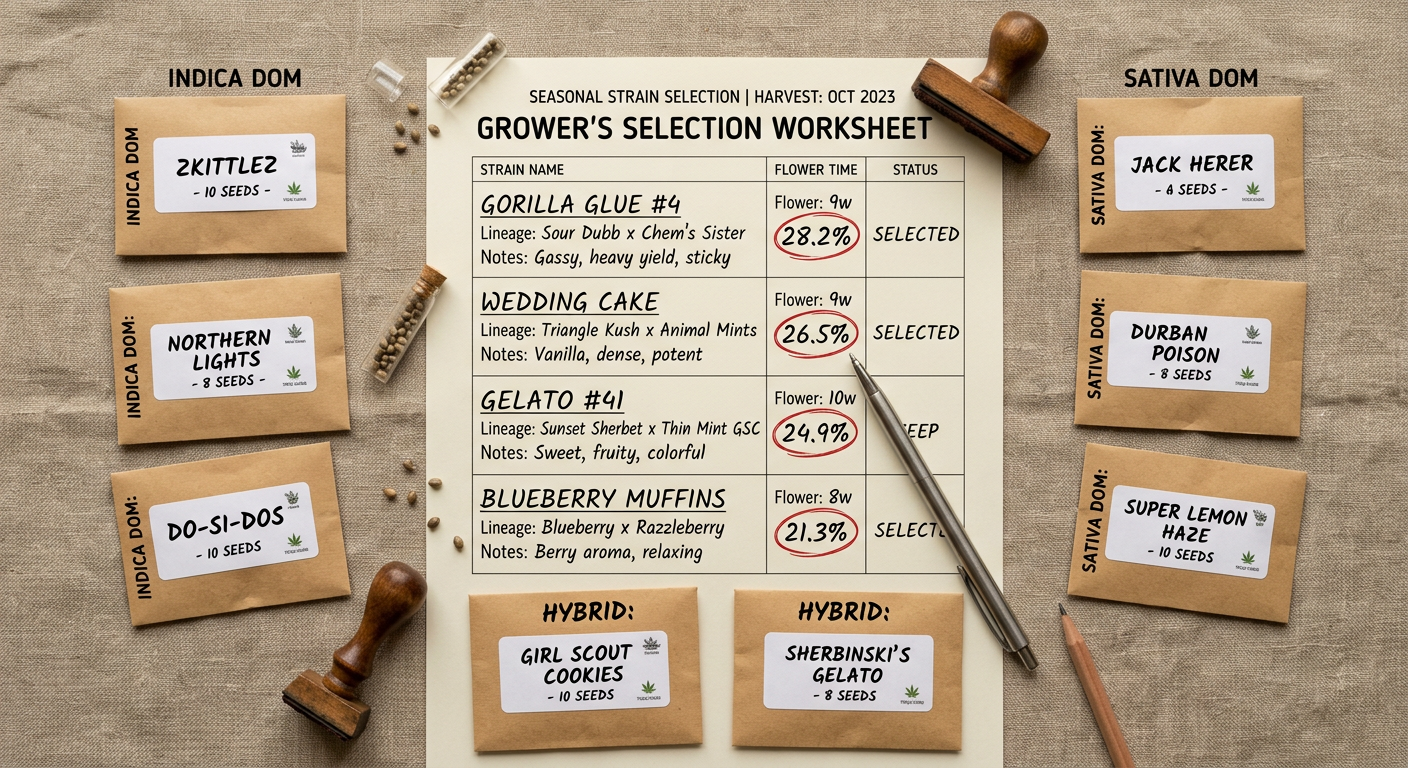
Armed with a working understanding of cannabis strain genetics, you can now make smarter seed choices by matching genetic lineage to your specific grow situation and goals. The checklist below gives you a systematic framework for evaluating any strain's genetics before you buy seeds.
- Identify the primary genetic heritage (indica-dominant, sativa-dominant, hybrid, or auto)
- Check the pedigree for recognizable foundational lines (Afghani, Skunk, Haze, Kush, etc.)
- Match flowering time to your grow window (indoor schedule or outdoor season)
- Match plant height to your grow space ceiling or outdoor structure
- Identify the likely dominant terpenes based on lineage (diesel, kush, haze, fruit)
- Check generation stability: are these F1 seeds from stable parents, or open-pollinated F2+?
- Confirm feminized vs. regular — do you need guaranteed female plants?
- Check whether the lineage carries known disease resistance (mold, powdery mildew)
- Verify whether genetics are photoperiod or autoflowering for your light setup
- Research breeder reputation for phenotypic consistency in the specific cross
Matching Genetics to Grow Environment
Your physical grow space should be a primary filter for genetic selection. A 1.2m × 1.2m grow tent with a 2m ceiling height rules out full sativa-dominant genetics — but opens the door for any indica-dominant or indica-leaning hybrid. A greenhouse with unrestricted height and outdoor supplemental light accommodates long-season sativa genetics that would be unmanageable indoors.
For beginner growers especially, starting with indica-dominant or stable hybrid genetics significantly reduces the complexity of managing growth. Our Best Cannabis Strains for Beginners: 12 Forgiving Picks guide recommends strains whose genetics favor resilience, fast flowering, and forgiving growth — traits encoded in their indica-leaning lineages.
Genetics for Specific Goals
Different breeding goals call for different genetic backgrounds:
- Maximum THC: Look for multi-generational Kush, Cookies, and OG lineages — try OG Kush Feminized Seeds (26% THC) or Black Widow Feminized Seeds (26% THC)
- Exceptional flavor: Haze, Diesel, or fruit-forward genetics — Super Lemon Haze (23% THC) or Tangerine Haze Feminized Seeds (18% THC)
- Heavy yield: Skunk, Big Bud, and Northern Lights lineages — Northern Lights x Big Bud (20% THC)
- Fast harvest: Indica-dominant or autoflowering genetics — Banana Kush Autoflower Seeds (18% THC)
- Visual appeal: Purple and Kush lineages carrying anthocyanin expression — Purple Power Feminized Seeds (10% THC) for color, Purple Kush Feminized Seeds (27% THC) for potency combined
- Balanced hybrid experience: Old-school hybrid crosses — White Widow Feminized Seeds (25% THC) or Silver Pearl Feminized Seeds (21% THC)
When choosing between two strains with similar lineage descriptions, dig into the specific phenotype percentages: a strain listed as "70% indica / 30% sativa" will grow meaningfully different from one listed as "60% indica / 40% sativa" — especially in how much it stretches at flower initiation. This ratio is a genetic summary of what traits are most strongly represented in the cross.
Genetics and Grow Technique Compatibility
Certain training techniques work best with specific genetic profiles. Topping and FIM techniques are most effective on genetics with strong lateral branching drive — typically indica or indica-leaning hybrid genetics. Apical dominance (the tendency to grow one dominant main stem) is a sativa trait, which makes sativas excellent candidates for single-cola training but less naturally productive with multi-top techniques unless you intervene aggressively early.
ScrOG training works best with genetics that produce many side branches at similar heights — again pointing toward indica-dominant or hybrid genetics. See our FIMming Cannabis Guide and ScrOG Guide for technique-specific advice that pairs with specific genetic types.
Verifying Genetics: DNA Testing and Strain Authentication

Modern cannabis DNA testing has transformed what growers can know about their plants' genetics. Instead of relying on breeder claims or physical traits alone, you can now send a small tissue sample to a laboratory and receive a genetic fingerprint — a unique SNP (single nucleotide polymorphism) profile that identifies the strain and verifies its lineage claims. This is particularly valuable for commercial operations, breeders, and anyone investing in high-value genetics.
What DNA Testing Reveals
Cannabis genetic testing can verify species classification, confirm the presence of specific parent strains in a lineage, identify mislabeled or counterfeit genetics, and — in advanced applications — predict cannabinoid and terpene potential from young plant tissue before flowering even begins. This last application is transformative for breeders: instead of waiting 12 weeks to evaluate a pheno, a tissue test at week 3 can indicate which plants carry the high-THCA synthase alleles worth keeping.
For full detail on how this works, what to expect, and how to interpret results, see our Cannabis Genetics Testing: DNA Analysis & Strain Authentication Guide.
Physical Trait Indicators of Lineage
While DNA testing is definitive, experienced growers use physical observation to identify genetic heritage throughout the grow cycle. These observable indicators reliably signal the dominant genetic contribution:
- Leaf width and finger count: Broad 7-9 finger leaves → strong indica heritage; narrow 11-13 finger leaves → strong sativa heritage
- Internode spacing: Less than 5cm between nodes → indica dominant; 10cm+ → sativa dominant
- Flowering stretch: Under 30% height increase → indica dominant; over 100% → strong sativa
- Calyx-to-leaf ratio: Very leafy buds → older or unstabilized genetics; near-pure calyx stacking → modern high-selection breeding
- Stigma color: Early orange/red stigmas at 6-7 weeks → indica timing; still white at 10 weeks → sativa timing
- Resin distribution: Heavy trichomes on leaves and sugar leaves → Kush or Skunk heritage; trichomes concentrated only on calyxes → some haze or sativa lines
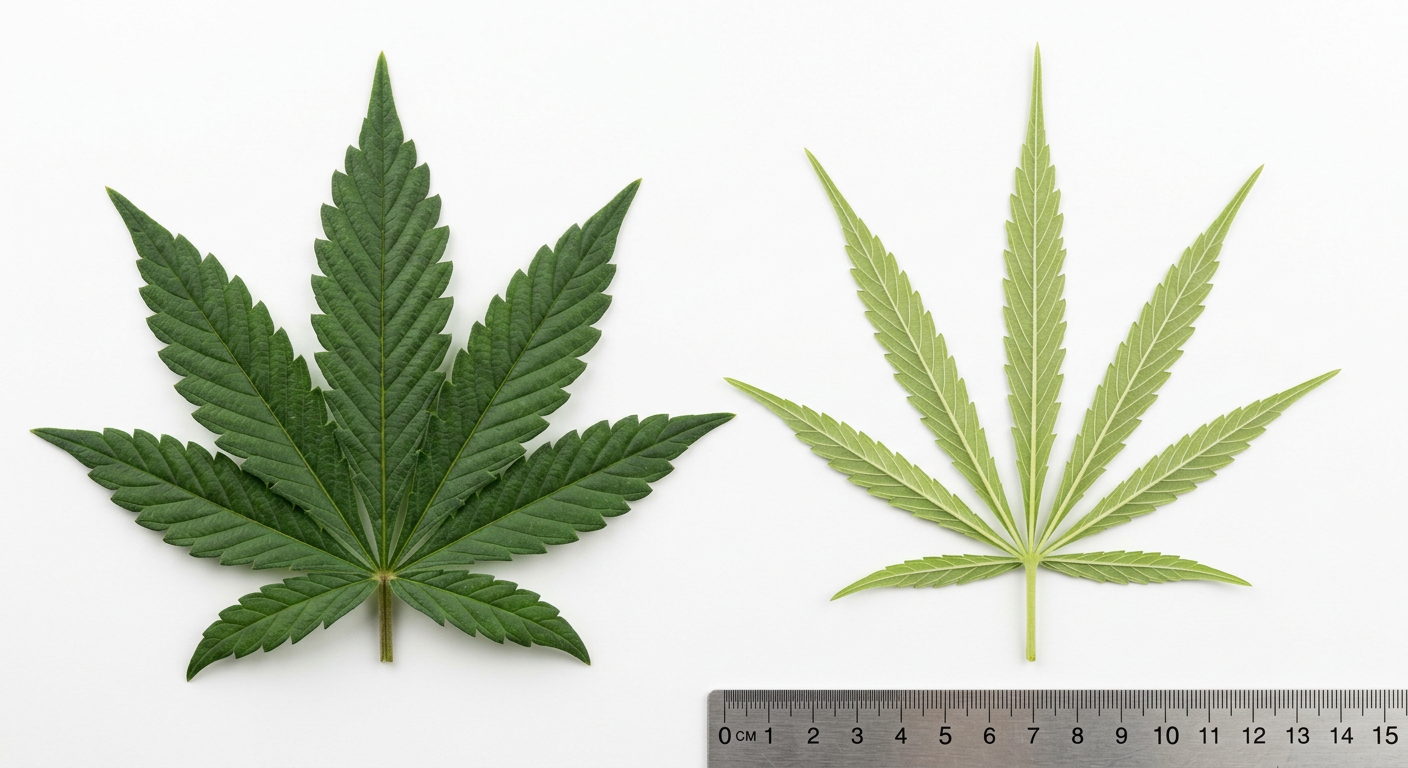
Physical trait observation gives you directional clues about genetic heritage, but DNA testing gives you certainty. For casual home growers, observation is sufficient. For breeders investing in selection projects or commercial growers licensing specific genetics, laboratory verification is worth every penny.
Preserving and Documenting Cannabis Genetics
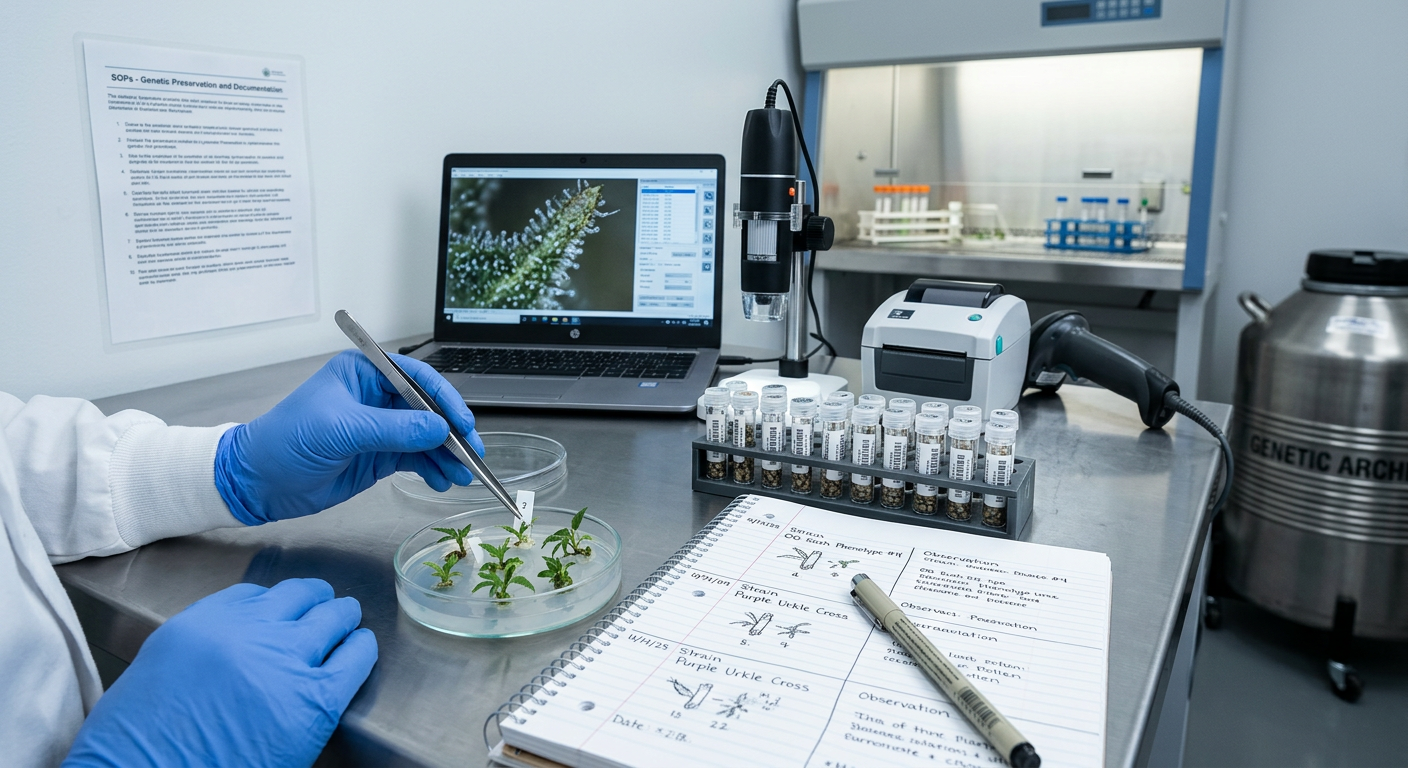
The final dimension of cannabis strain genetics is preservation — ensuring that elite genetics aren't lost as strains go out of production, seed banks close, or clone-only varieties become unavailable. Cannabis genetics preservation is both a practical cultivation skill and a contribution to the broader genetic diversity of the plant.
Seed Storage Best Practices
Cannabis seeds can remain viable for 5-10+ years when stored correctly. The enemies of seed viability are heat, humidity, light, and oxygen. Professional seed banks store seeds at temperatures between 4°C and 8°C with relative humidity below 8% in vacuum-sealed, opaque containers. Home growers can approximate this by placing seeds in an airtight capsule with a small silica gel desiccant packet inside a dark jar in the refrigerator's vegetable drawer.
- Store seeds in airtight, lightproof containers (amber glass or black plastic)
- Add food-grade silica gel desiccant to maintain under 8% RH
- Keep temperature stable between 4-8°C (refrigerator is ideal)
- Avoid the freezer unless vacuum-sealed — freeze-thaw cycles damage seeds
- Label every container with strain, source, date, and generation
- Germination test a sample every 2-3 years to verify viability
Clonal Preservation and Tissue Culture
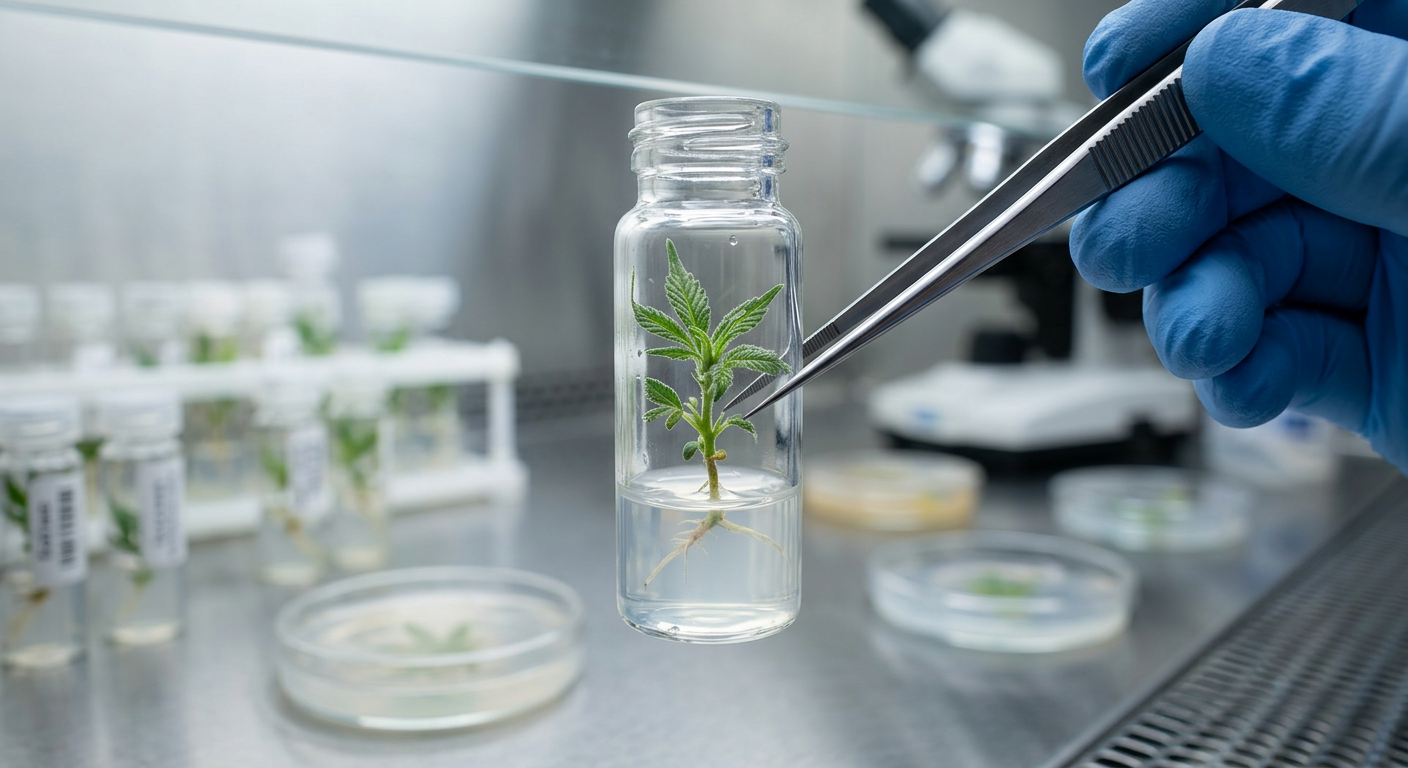
For clone-only genetics or elite phenotypes you've hunted from a seed population, clonal preservation is essential. A mother plant maintained under 18+ hours of light will never flower and can provide cuttings indefinitely. For long-term preservation without maintaining live mother plants, tissue culture (meristem culture) allows plant material to be stored in sterile nutrient gel at very small size, viable for years with minimal maintenance.
This connects directly to the wider world of heirloom and heritage cannabis genetics. See our Heirloom Cannabis Strains: History, Genetics & Preservation guide for a deep dive into why genetic preservation matters and which founding strains are most worth protecting.
Always document your phenotype hunting selections in writing. Record the seed batch, germination date, observed growth traits at each stage, final height, yield weight, dry/cure terpene observations, and effect notes. This documentation becomes the foundation of a breeder's selection history and is invaluable if you later want to reproduce or stabilize your elite finds.
Frequently Asked Questions: Cannabis Strain Genetics
What does cannabis strain genetics mean?
Cannabis strain genetics refers to the inherited DNA blueprint of a plant — including its species origins (indica, sativa, ruderalis), dominant and recessive trait combinations, and breeding history — that determines its growth pattern, potency, flavor, and effects. Understanding genetics lets you predict plant behavior before germination.
What is an F1 hybrid in cannabis?
An F1 hybrid is the first-generation offspring of two genetically distinct parent strains. F1 plants exhibit hybrid vigor, meaning they often outperform both parents in growth speed, yield, and potency. However, saving seeds from F1 plants produces highly variable F2 offspring — not more F1s — which is why commercial F1 seeds should be repurchased rather than saved.
How does indica vs. sativa genetics affect effects?
Indica-dominant genetics typically produce compact plants with faster flowering and terpene profiles dominated by myrcene, which is associated with relaxing physical effects. Sativa-dominant genetics tend toward taller plants with longer flowering and more energizing terpene profiles heavy in limonene and terpinolene. That said, terpene ratios and cannabinoid profiles matter more than species labels alone for predicting effects.
What is backcrossing in cannabis breeding?
Backcrossing means crossing a hybrid offspring back with one of its original parent plants (or a genetic equivalent) to reinforce specific desirable traits. After 3-4 rounds of backcrossing — labeled BX1 through BX4 — offspring carry 93-97% of the target parent's genetics, producing highly stable, predictable seeds that closely replicate the original parent's expression.
Can you tell a strain's genetics from how it grows?
Yes, with reasonable accuracy. Leaf width and finger count, internode spacing, flowering stretch, bud density, and resin distribution all reflect genetic heritage. Broad-leafed, short-internode plants with dense buds signal strong indica heritage; narrow-leafed, long-internode, stretchy plants signal sativa dominance. For certainty, laboratory DNA testing is the definitive method for verifying genetic lineage.