The Indica vs Sativa Debate Is More Complex Than You Think
Walk into any dispensary and you'll hear it instantly: indica for sleep, sativa for energy. But is that the full story? The indica vs sativa distinction dates back to the 1700s — yet modern cannabis science has flipped much of what we thought we knew completely on its head.
Here's the surprising truth: the words "indica" and "sativa" were originally botanical classifications describing where a plant grew, not how it made you feel. Today, those labels still carry enormous practical value for growers and consumers — but only when you understand what they actually mean.
This guide breaks down the real differences between indica and sativa across effects, chemistry, growing traits, and genetics — with honest context about when the labels matter and when they don't.
Indica vs Sativa: Origins and Botanical History
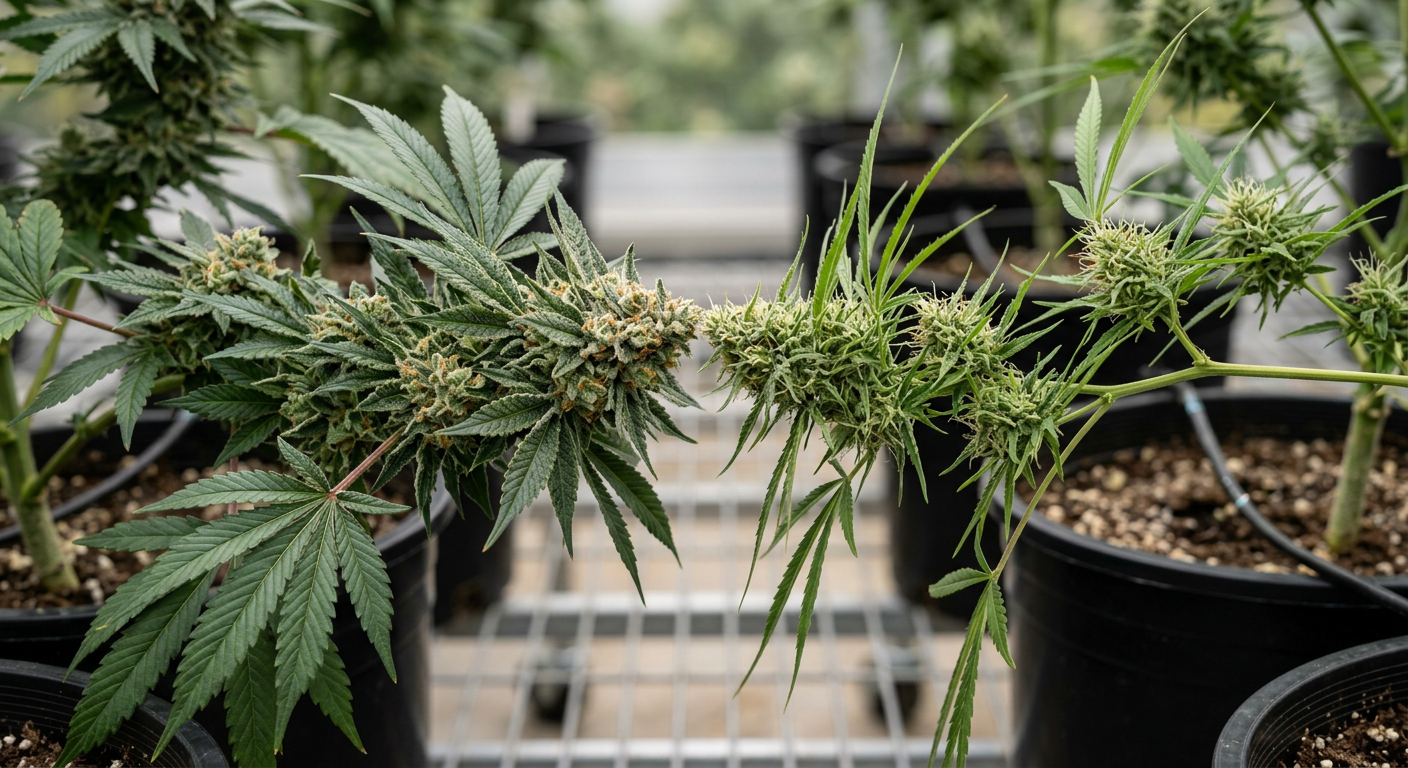
The indica vs sativa difference starts with geography, not pharmacology. Swedish botanist Carl Linnaeus first described Cannabis sativa in 1753 — a tall, fibrous European hemp plant. French biologist Jean-Baptiste Lamarck named Cannabis indica in 1785 after specimens collected in India with notably different intoxicating properties.
A third subspecies, Cannabis ruderalis, was identified in Russia in 1924. It flowers based on age rather than light cycles — a trait modern breeders have used to create autoflowering strains. These three botanical categories form the genetic foundation behind every strain on the market today.
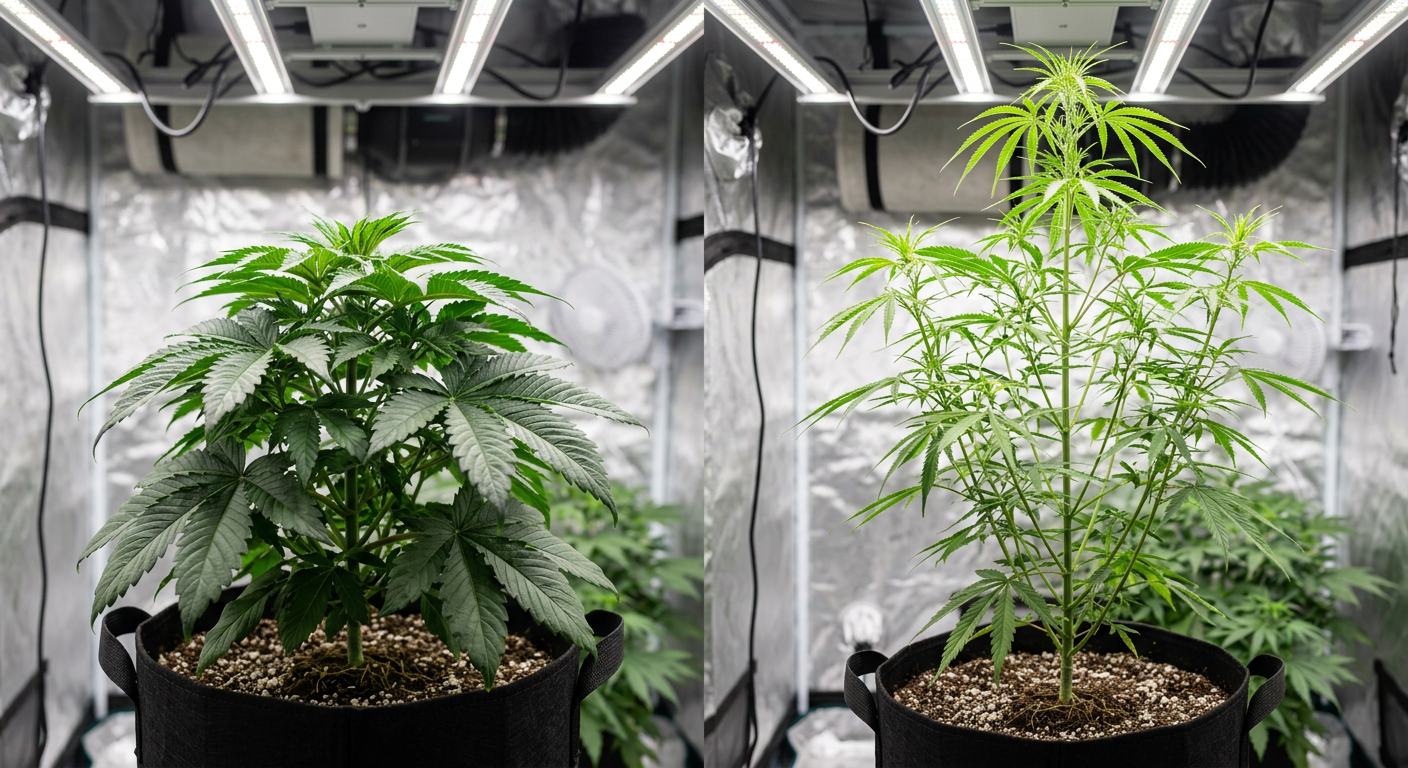
- Cannabis sativa L. — originated in equatorial regions: Central America, Southeast Asia, Africa
- Cannabis indica Lam. — originated in the Hindu Kush mountains of Afghanistan, Pakistan, India
- Cannabis ruderalis — originated in Russia and Central Asia, very short with minimal THC
The sativa/indica split is a botanical classification system from the 18th century. Modern genetics research shows nearly all cultivated cannabis is heavily hybridized — but the labels still reliably predict plant structure, flowering speed, and growing behavior.
Indica vs Sativa Effects: What the Science Actually Says
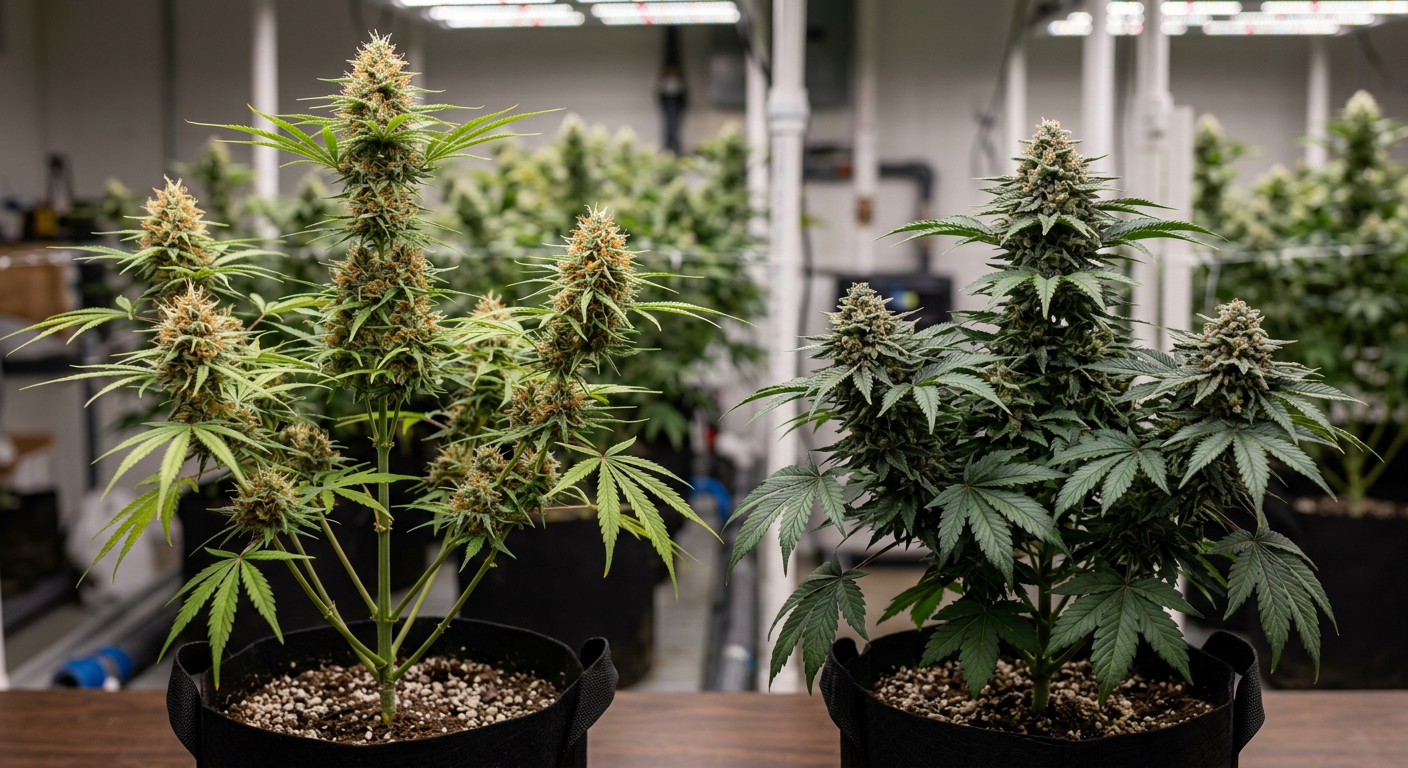
The popular shorthand — "indica = in-da-couch, sativa = energizing" — contains a kernel of truth wrapped in significant oversimplification. While pure landrace indicas and sativas do tend to produce different experiences, the effects of any given strain are driven primarily by its cannabinoid profile, terpene content, and your individual biochemistry — not the label alone.
That said, patterns do exist. Indica-dominant strains frequently contain higher levels of myrcene, a terpene associated with sedative, muscle-relaxing qualities. Sativa-dominant strains tend toward higher limonene and pinene concentrations, linked to uplifting, alert effects. These terpene tendencies reflect the plants' evolutionary environments.
| Effect Category | Indica-Dominant | Sativa-Dominant |
|---|---|---|
| Physical sensation | Full-body relaxation, heavy limbs | Mild body buzz, energetic |
| Mental state | Calming, sedating, introspective | Uplifting, creative, focused |
| Common terpenes | Myrcene, linalool, caryophyllene | Limonene, pinene, terpinolene |
| Best time of day | Evening, night | Morning, afternoon |
| Common uses | Relaxation, sleep, pain relief | Creativity, socializing, focus |
| Typical onset | Slower, builds gradually | Fast, cerebral rush |
A 2021 study published in Drug and Alcohol Dependence found users reported different subjective effects from sativa vs indica strains — but researchers couldn't consistently link those differences to THC/CBD ratios alone. Terpene interactions (the "entourage effect") likely explain the experiential gap between strain types.
Indica vs Sativa for Sleep
Indica-dominant strains are the go-to recommendation for sleep, and there's reasonable evidence behind the tradition. High-myrcene cultivars paired with moderate-to-high THC consistently produce the heavy, sedating effect users associate with sleep support. Strains like Purple Kush (27% THC) and OG Kush (26% THC) exemplify the classic indica sleep profile.
Sativas, by contrast, are poor sleep companions for most people — their uplifting, sometimes racey effects can make falling asleep harder. For sleep specifically, indica-dominant or indica-hybrid strains win clearly.
Indica vs Sativa for Anxiety
Anxiety is where the indica/sativa divide gets complicated. High-THC sativas can dramatically worsen anxiety in sensitive users due to their fast-acting, cerebral stimulation. Indica strains are generally gentler on the nervous system thanks to their calming terpene profiles and slower onset.
However, CBD-rich strains of either type may be more appropriate for anxiety-prone users than simply choosing "indica." Strains with balanced THC:CBD ratios or dominant caryophyllene (a terpene that binds CB2 receptors) often provide the most anxiety-friendly experience regardless of indica/sativa designation.
Indica vs Sativa Growing: Plant Structure & Appearance
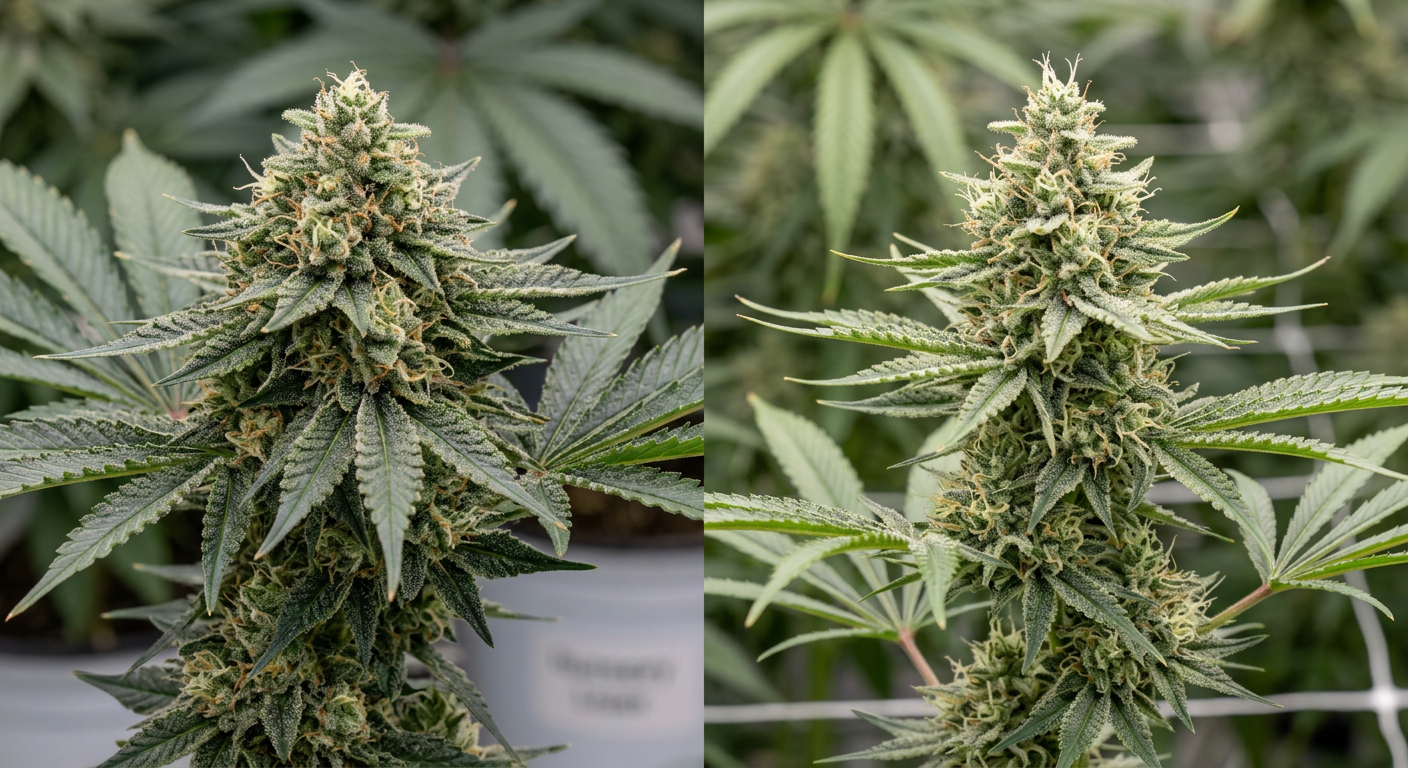
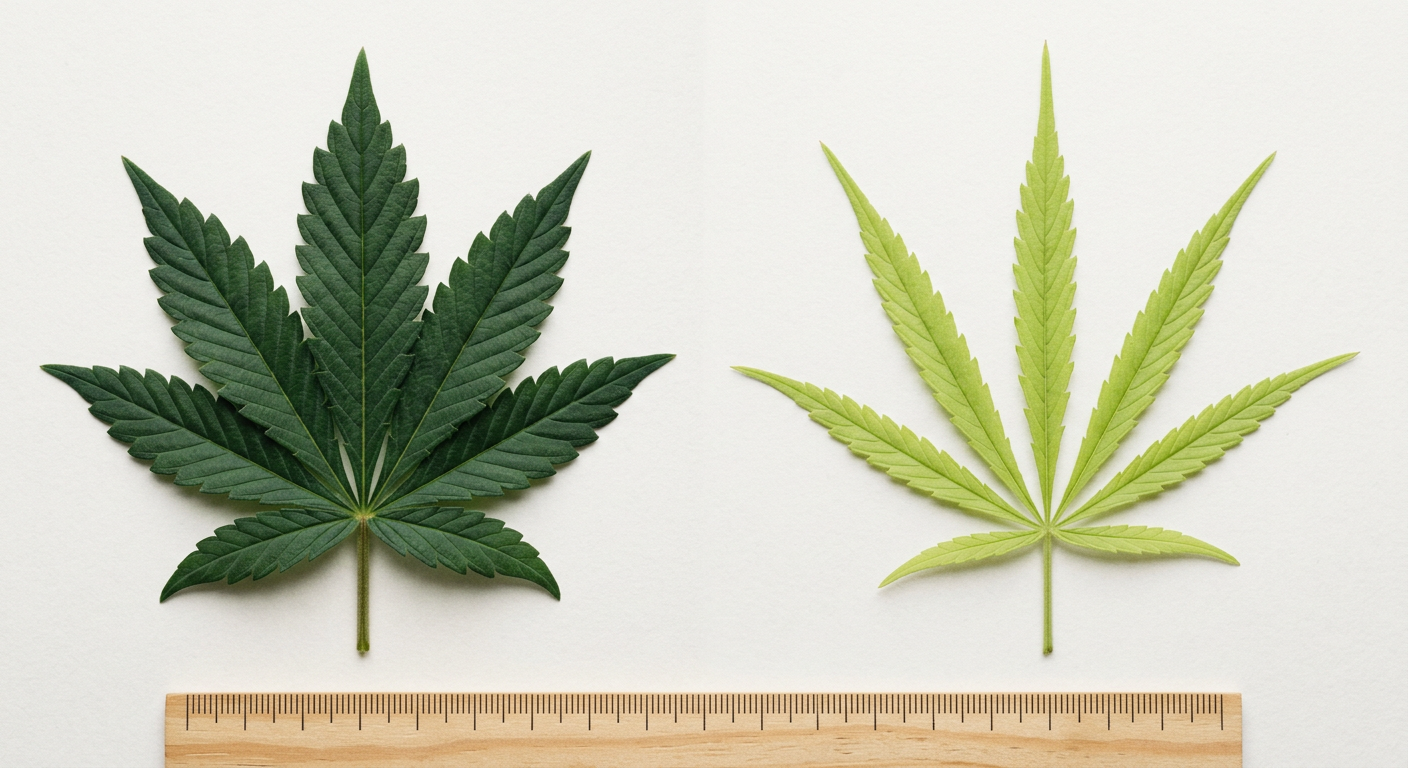
This is where the indica vs sativa difference is most reliable and practically useful — especially for growers. Decades of selective breeding have reinforced distinct structural traits that hold remarkably consistent across genetics. When you're planning a grow, these physical differences directly impact your setup, space requirements, and yield strategy.
| Growing Trait | Indica | Sativa |
|---|---|---|
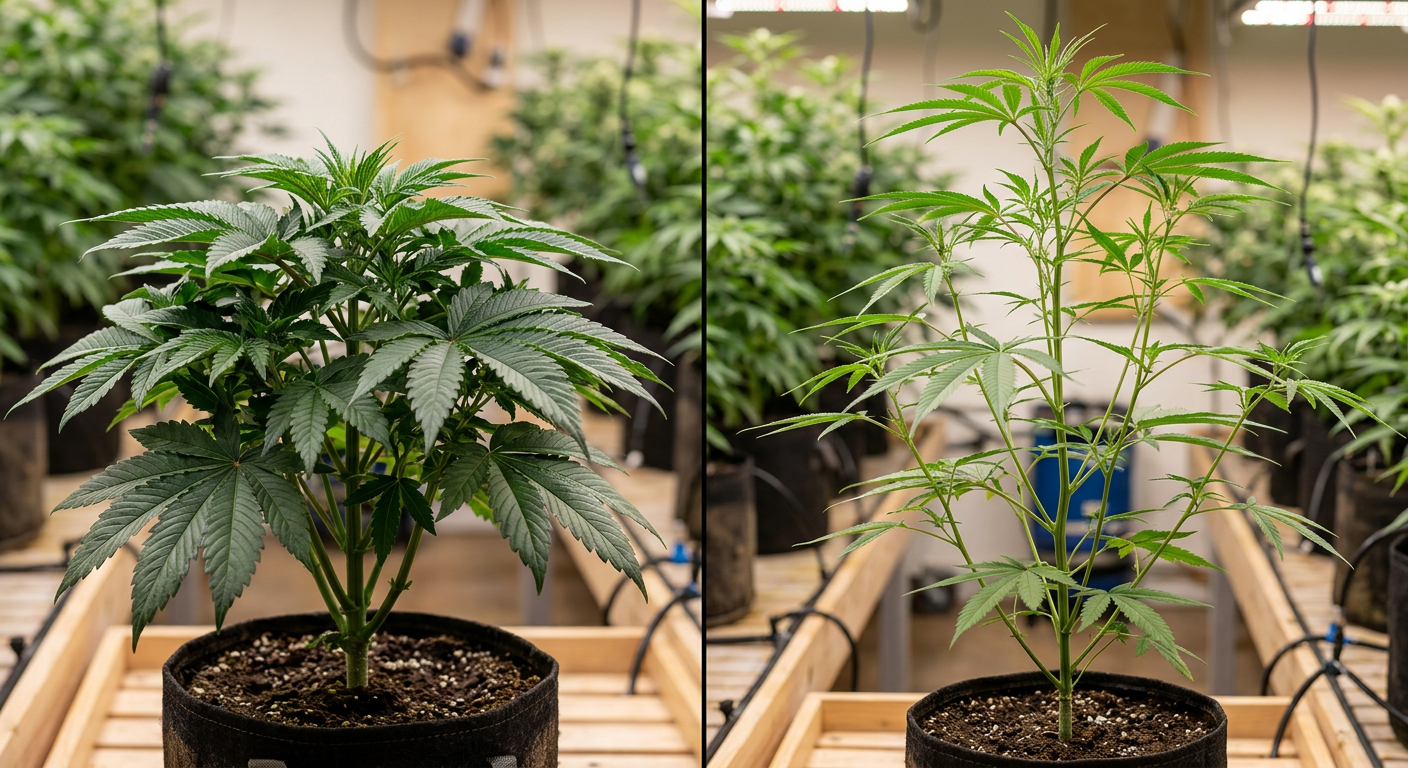
| Plant height | 60–120 cm (2–4 ft) | 150–400 cm (5–13 ft) |
| Leaf shape | Wide, fat, dark green blades | Narrow, elongated, lighter green |
| Node spacing | Short internodal gaps, dense | Long internodal gaps, open structure |
| Branch structure | Wide, bushy, lateral branching | Tall, narrow, Christmas-tree shape |
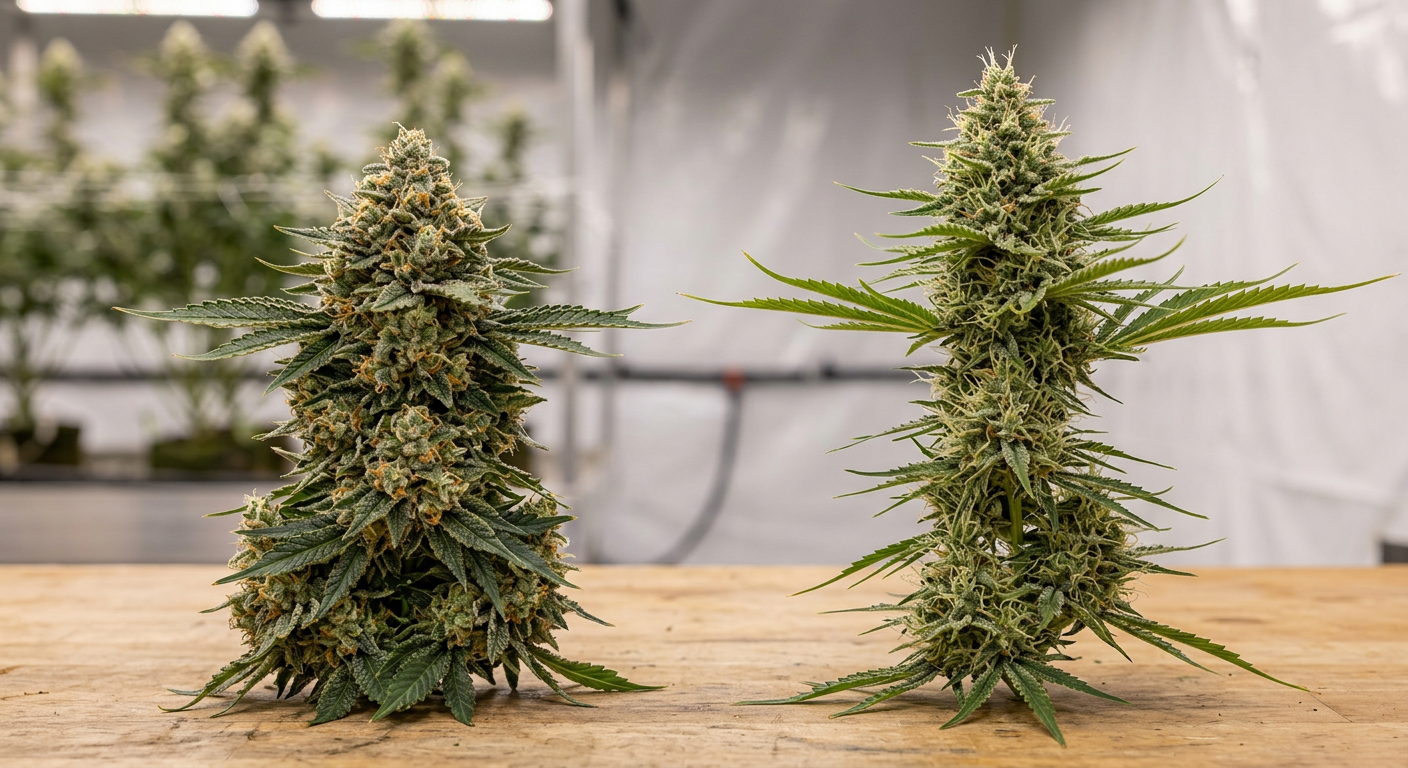
| Bud density | Dense, compact, tight nugs | Airy, elongated, wispy buds |
| Root system | Compact, easier to manage | Expansive, needs larger containers |
| Stretch during flower | 50–75% height increase | 100–200% height increase |
Sativa plants can double or even triple in height during the first 3 weeks of flowering — a phase growers call "the stretch." If you're growing sativas indoors, switch to 12/12 light when plants are half the maximum height you can accommodate. Indoor growers rarely get away with less than a 3-meter ceiling for true sativas.
The compact structure of indicas makes them ideal for indoor grows with limited vertical space. Their dense branching responds exceptionally well to training techniques like ScrOG (Screen of Green) and topping, which maximize lateral spread and bud sites without height penalties.
Indica vs Sativa Growing: Flowering Time & Yield
Flowering time is the single most impactful practical difference between indica and sativa for cultivators. This affects everything from harvest scheduling to light electricity costs to the number of annual outdoor harvests possible in your climate.
Indicas evolved in the harsh, unpredictable mountain climates of the Hindu Kush — where short growing seasons rewarded plants that flowered fast and finished before early frosts. Sativas evolved near the equator with consistent 12/12 light year-round, giving them no evolutionary pressure to rush.
| Growing Metric | Indica | Sativa | Hybrid (50/50) |
|---|---|---|---|
| Flowering time | 8–9 weeks | 10–16 weeks | 9–11 weeks |
| Outdoor harvest (N. Hemisphere) | Late September–October | November–December | October–November |
| Indoor yield (per m²) | 350–500g | 300–500g | 400–600g |
| Outdoor yield (per plant) | 500–1,000g | 1,000–3,000g | 500–2,000g |
| Vegetative time needed | 4–6 weeks | 6–10 weeks | 5–8 weeks |
True sativa strains (especially pure Southeast Asian or African landraces) can flower for 16+ weeks. Unless you're growing outdoors in a tropical climate or have unlimited vertical indoor space, stick to sativa-dominant hybrids rather than pure sativas. Strains like Sour Diesel (24% THC) and Super Lemon Haze (23% THC) deliver the sativa experience without the extreme growing challenges of pure landraces.
Outdoor growers in northern latitudes (above 50°N) face genuine challenges with sativas finishing before the first frost. Indicas and indica-dominant hybrids are almost always the safer outdoor bet for growers in the UK, northern Europe, Canada, and the Pacific Northwest.
For indoor growers wanting maximum efficiency, indica-dominant strains offer faster turnaround and more harvests per year. Sativa-dominant strains demand more time and space but can produce dramatically larger individual plants outdoors in warm climates.
Indica vs Sativa Growing: Climate, Environment & Difficulty
Every plant trait you see in indica and sativa connects back to the climate where each subspecies evolved. Understanding those origins directly informs how to grow each type successfully — and which one suits your local environment or indoor setup.
Hindu Kush indicas evolved to handle cold nights, low humidity, and short seasons. That heritage makes them naturally more resilient to temperature swings and mold pressure — a significant advantage for beginners and outdoor growers in temperate climates. Learn more about managing humidity in our cannabis mold prevention guide.
| Environmental Factor | Indica Preference | Sativa Preference |
|---|---|---|
| Ideal temperature | 18–26°C (65–79°F) | 24–30°C (75–86°F) |
| Relative humidity (flower) | 40–50% | 50–60% |
| Cold tolerance | Good (can handle near-frost) | Poor (sensitive below 15°C) |
| Mold resistance | Good (dense buds need monitoring) | Better (airy buds dry faster) |
| Best climate | Temperate, continental | Tropical, subtropical |
| Beginner-friendly? | Yes | Moderate to challenging |
The dense bud structure that makes indicas look so impressive also makes them more susceptible to bud rot in high-humidity conditions. If you're growing indicas outdoors in a damp climate, check our mold prevention guide and consider strategic defoliation during weeks 4–6 of flowering to improve airflow through the canopy.
Sativas need sustained warmth and a long season to reach their potential. Their airy bud structure is actually a functional adaptation — open buds dry quickly in humid equatorial climates, resisting mold. Optimizing your environment for either type means understanding and replicating the conditions that shaped them over thousands of years. See our VPD (Vapor Pressure Deficit) guide to dial in the perfect humidity-temperature balance for your specific strain type.
Indica vs Sativa Genetics: The Hybrid Reality
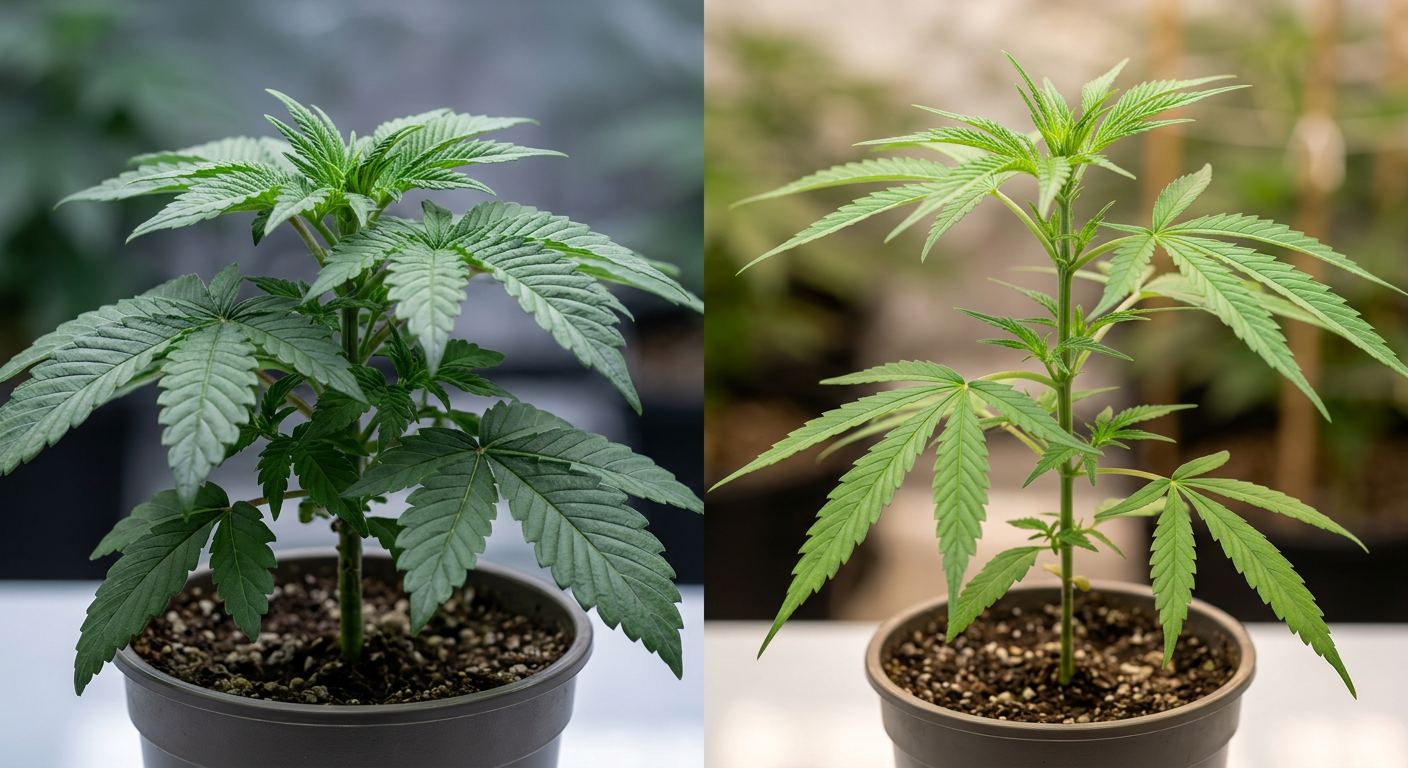
Here's the uncomfortable truth the cannabis industry rarely advertises: almost no commercially available strain is a true pure indica or pure sativa. Decades of selective breeding by cultivators seeking specific traits have produced a global gene pool that is overwhelmingly hybridized. When a dispensary labels something "indica" or "sativa," they're describing the dominant tendency, not a genetically pure subspecies.
True landrace strains — original, regionally isolated genetics like Afghani, Thai, or Colombian Gold — are the closest thing to "pure" indica or sativa that exists. Everything else is a hybrid, placed somewhere on a spectrum. The practical labels we use reflect which end of that spectrum a given strain leans toward.
- Indica-dominant hybrids (70–100% indica): Compact, fast-flowering, body-heavy effects. Examples: Purple Kush, OG Kush, Northern Lights x Big Bud
- Sativa-dominant hybrids (70–100% sativa): Tall, longer-flowering, cerebral effects. Examples: Sour Diesel, Super Lemon Haze, Tangerine Haze
- Balanced hybrids (40–60% either way): Best of both worlds in effects and growing. Examples: White Widow, Northern Lights x Amnesia Haze
Cannabis geneticist Dani Levi's research at the Hebrew University of Jerusalem has shown that indica/sativa designations from dispensaries correlate poorly with actual genetic ancestry when sequenced — but they correlate reasonably well with terpene profiles. This supports the idea that the labels are more useful as effect predictors than as precise taxonomic categories.
The rise of autoflowering genetics adds another layer. Autoflowers inherit their light-independent flowering from Cannabis ruderalis — a third subspecies — crossed with indica or sativa genetics. An Amnesia Haze Autoflower delivers a sativa-dominant experience in the compact, fast-finishing package of a ruderalis-influenced plant. For a deep dive into how terpene genetics shape the cannabis experience, see our guides on humulene and pinene — two of the key terpenes that differentiate strain types.
Indica vs Sativa: Which Is Right for You as a Grower?
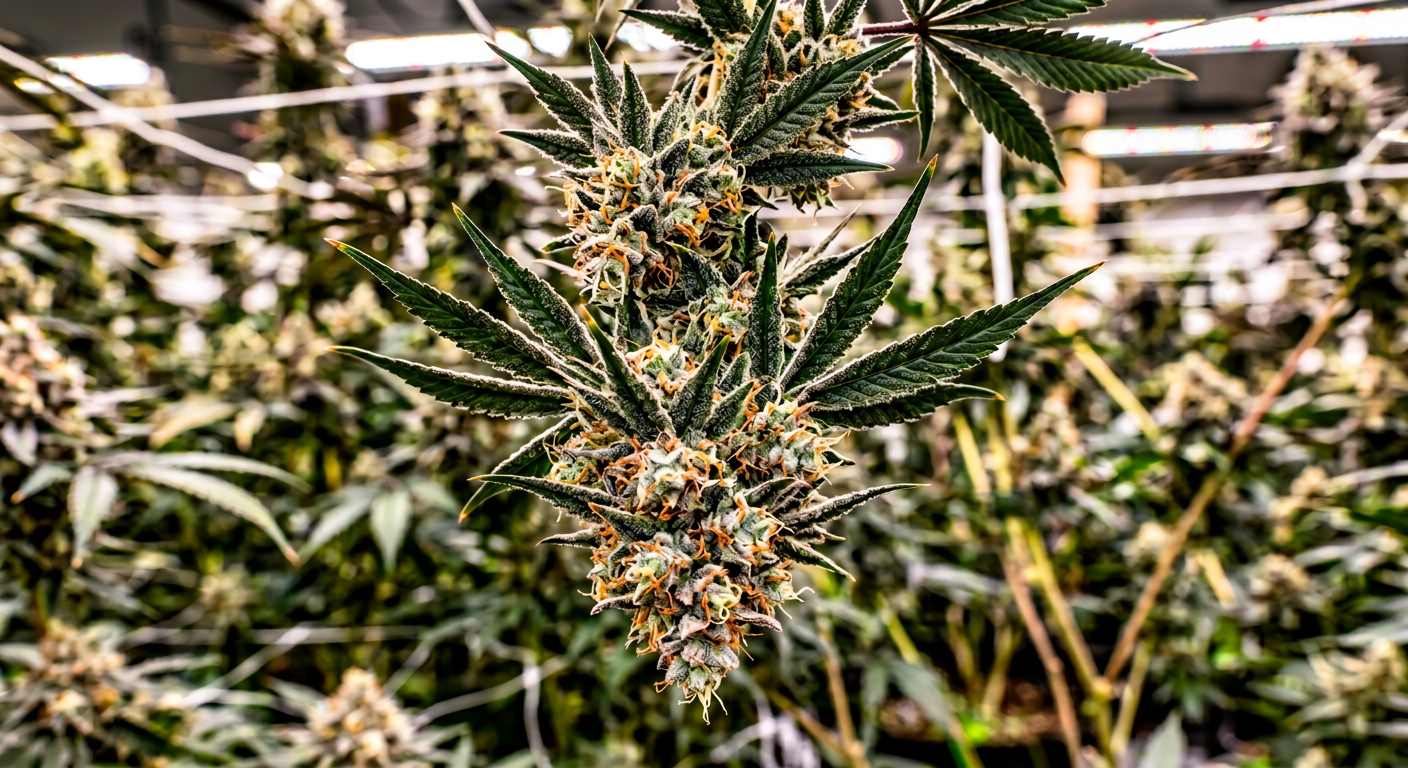
Choosing between indica and sativa genetics starts with honest answers to three questions: How much space do you have? How long can you wait? And what experience do you want from the final product? Every other consideration flows from those fundamentals.
Assess Your Space
Indoor growers with ceilings under 2.5m should default to indica-dominant strains or indica-heavy hybrids. Sativas can realistically need 3–4m of vertical clearance to express their genetics fully indoors.
Consider Your Climate
Outdoor growers above latitude 45°N should prioritize indica-dominant genetics with sub-10-week flowering times to guarantee harvest before autumn frosts. Growers in Spain, California, or Australia have much more flexibility to run sativas.
Match Effects to Purpose
Define your end goal before you plant. Evening relaxation and sleep? Go indica-dominant. Daytime creativity, social energy, or functional productivity? Sativa-dominant strains deliver. For versatility across both contexts, balanced hybrids are the best of both worlds.
Match Experience to Skill Level
Beginners almost always have a better first grow with indica-dominant genetics. Shorter plants, faster flowering, more forgiving of environmental swings, and harder to overgrow a space. Our complete beginner's indoor growing guide covers everything you need to get started.
Top Strain Picks: Indica vs Sativa vs Hybrid Recommendations
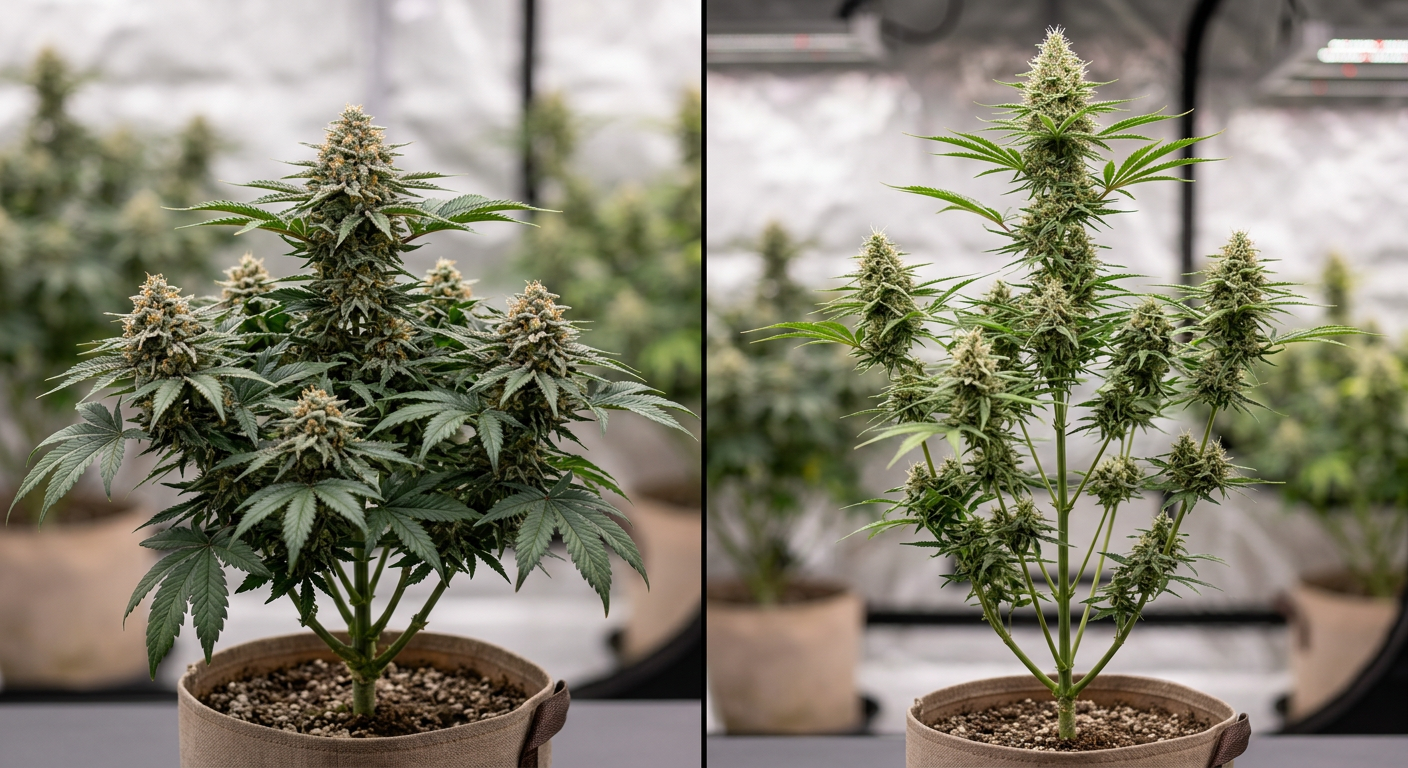
Theory is only useful when it connects to actual seed choices. Below are curated recommendations across all three categories — each selected for a specific grower profile or use case, with honest notes on what makes each one a standout pick.
Best Indica-Dominant Strains
| Strain | THC | Best For | Flowering Time |
|---|---|---|---|
| Purple Kush | 27% | Sleep, deep relaxation | 8 weeks |
| OG Kush | 26% | Stress relief, evening use | 8–9 weeks |
| Northern Lights x Big Bud | 20% | High yields, beginner-friendly | 8 weeks |
| Papaya | 25% | Exotic terpenes, body effect | 9 weeks |
| Cookies Kush | 18% | Moderate potency, balanced body | 8 weeks |
Best Sativa-Dominant Strains
| Strain | THC | Best For | Flowering Time |
|---|---|---|---|
| Sour Diesel | 24% | Daytime energy, creative focus | 10–11 weeks |
| Super Lemon Haze | 23% | Social, uplifting, citrus profile | 10 weeks |
| New York Power Diesel | 24% | Hybrid vigor, sativa effects | 9–10 weeks |
| Tangerine Haze | 18% | Moderate potency, fruity sativa | 10 weeks |
| Swazi | 18% | Landrace African sativa experience | 10–12 weeks |
Best Balanced Hybrids
| Strain | THC | Best For | Flowering Time |
|---|---|---|---|
| White Widow | 25% | Classic, versatile, all-day | 8–9 weeks |
| Northern Lights x Amnesia Haze | 24% | Balanced effect, heavy resin | 9–10 weeks |
| Blueberry Haze | 20% | Fruity, relaxed but functional | 9 weeks |
| Wonder Woman | 22% | Easy grow, well-rounded effects | 9 weeks |
If you can't decide between indica and sativa effects, start with a balanced hybrid like White Widow. Its iconic 50/50 heritage gives you reliable growing behavior, respectable yield, and an effect that works morning or evening — perfect for gauging where your personal preferences actually land.
Indica vs Sativa: The Honest Verdict
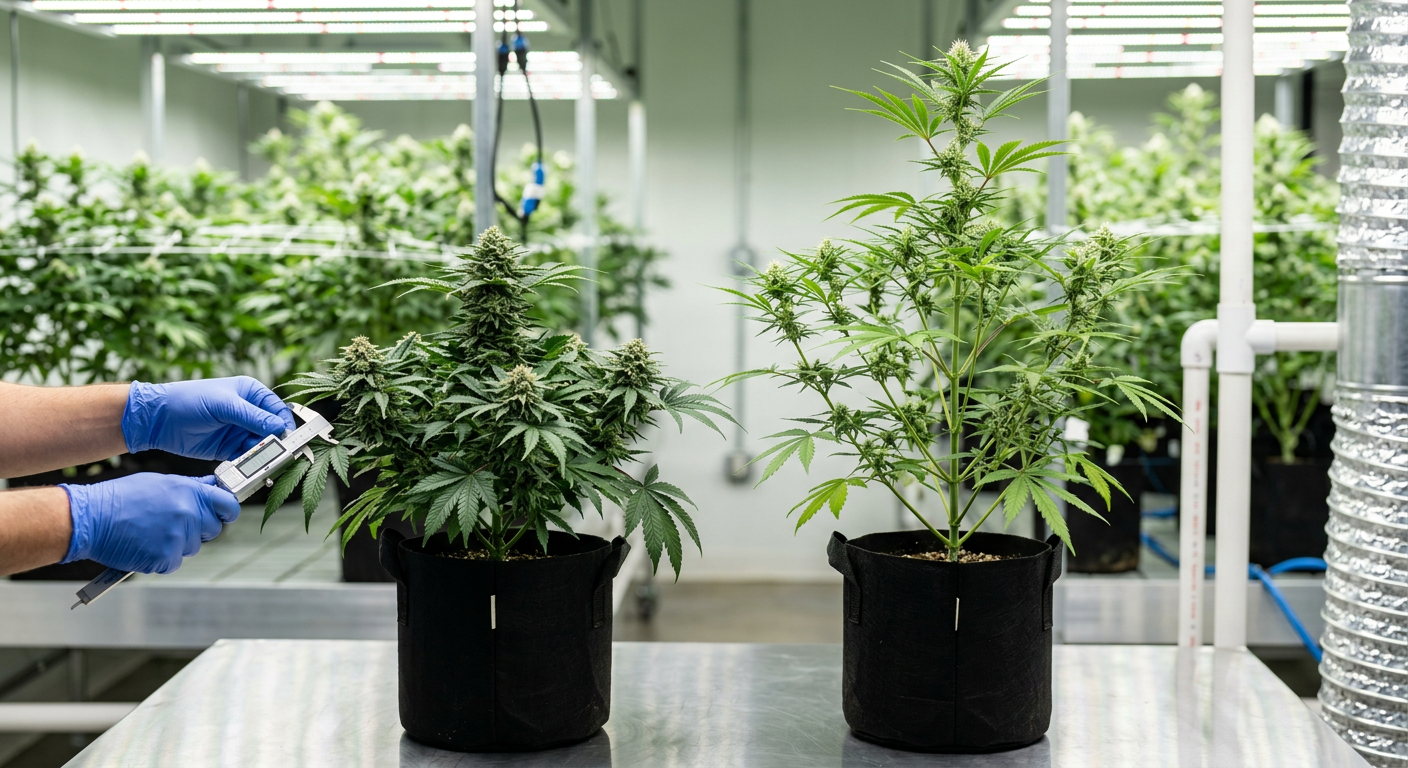
After breaking down genetics, effects, and growing behavior side by side, here's the bottom line: the indica vs sativa distinction is imperfect but genuinely useful — as long as you understand what it predicts reliably and what it doesn't.
| Question | Does Indica/Sativa Label Help? | More Reliable Factor |
|---|---|---|
| Will it make me sleepy? | Partially — indica tends that way | Myrcene + linalool content |
| Will it be cerebral/energizing? | Partially — sativa tends that way | Limonene + pinene content |
| How tall will it grow? | Yes — very reliable predictor | Indica/sativa ratio |
| How long will it flower? | Yes — highly reliable | Indica/sativa ratio |
| How potent will it be? | No — not reliably | Specific THC% of strain |
| Will it suit my climate? | Yes — strong predictor | Regional origin of genetics |
For growers, indica vs sativa labels are highly reliable guides to plant structure, height, flowering time, and climate tolerance. For consumers, they're a useful starting point for effect expectations — but terpene profiles and cannabinoid ratios are more precise predictors of the actual experience you'll have.
The most practical approach in 2024 is to use the indica/sativa classification as a first filter, then drill deeper into the specific terpene and cannabinoid data of individual strains before making your final choice. Understanding your vegetative stage planning and flowering stage management for each plant type will set you up for the best possible harvest.
Whether you're chasing the deep body stone of a classic indica like Purple Kush, the soaring cerebral lift of Sour Diesel, or the best-of-both-worlds balance of White Widow — understanding the real science behind these plant types puts you in control of your grow and your experience.
Frequently Asked Questions
What is the main difference between indica and sativa?
The main indica sativa difference lies in plant structure and growing behavior: indica plants are short, bushy, and flower in 8–9 weeks, while sativa plants are tall and narrow and take 10–16 weeks to flower. In terms of effects, indicas tend toward body relaxation and sedation while sativas lean toward cerebral, energizing experiences — though these effect differences are driven by terpene content, not the label alone.
Is indica or sativa better for sleep?
Indica-dominant strains are generally better for sleep. They typically contain higher levels of myrcene and linalool — terpenes associated with sedative, muscle-relaxing effects. High-THC indicas like Purple Kush (27% THC) and OG Kush (26% THC) are among the most popular choices for evening and sleep use. Sativa strains, with their stimulating cerebral effects, generally make sleep more difficult.
Do indica and sativa plants grow at the same rate?
No — indica and sativa grow at noticeably different rates. Indicas complete their flowering stage in 8–9 weeks, while sativas typically need 10–16 weeks. Sativas also grow much faster vertically, often doubling or tripling in height during the first 2–3 weeks of flowering. For most indoor growers, indica-dominant strains are more practical due to their compact size and faster harvest cycle.
Is indica or sativa better for anxiety?
Indica-dominant strains are generally considered more suitable for anxiety-prone users. Their slower onset, calming terpene profile (high in myrcene and caryophyllene), and full-body relaxation effects are less likely to trigger the racing thoughts some users experience with potent sativas. However, for anxiety, individual response varies significantly — starting with lower THC strains and higher CBD content is often more important than the indica/sativa distinction.
Are there any true pure indica or pure sativa strains available?
Almost all commercially available cannabis strains are hybrids. True "pure" indica or sativa genetics exist primarily in landrace strains — original regional varieties like Afghani (indica) or Thai (sativa) that developed in geographic isolation. Even strains marketed as "pure indica" or "pure sativa" typically have some degree of hybridization. Landrace-influenced strains like Swazi come closest to authentic sativa genetics available today.