Here's a number that stops most regular cannabis users in their tracks: after just 28 days of daily use, CB1 receptor density in key brain regions can drop by up to 20%. That single statistic explains why your once-perfect strain now barely moves the needle — and why a proper cannabis tolerance break is one of the most evidence-backed tools in any consumer's toolkit.
This isn't about quitting. It's about understanding the neuroscience, respecting the biology, and returning to cannabis with a system that actually responds to it. Whether you're chasing that first-session magic or simply trying to manage costs and consumption, this guide gives you the research-grounded reset protocol you need.
The Science of Cannabis Tolerance: What's Actually Happening in Your Brain
A cannabis tolerance break works because tolerance itself is a measurable, biological event — not just a feeling. Understanding the mechanism makes the protocol make sense, and it all starts with two letters: CB1.
CB1 receptors are the primary targets for THC in the human brain. They're densest in the prefrontal cortex, hippocampus, basal ganglia, and cerebellum — regions governing mood, memory, movement coordination, and reward. When THC binds to these receptors repeatedly, your brain initiates a self-protective response called receptor downregulation.
Downregulation: Your Brain's Defensive Play
Receptor downregulation happens through two distinct mechanisms operating simultaneously. First, the brain physically internalizes CB1 receptors — literally pulling them off the cell surface and trafficking them into the cell interior where THC cannot reach them. Second, it reduces the synthesis of new receptors, shrinking the total receptor population over time.
A landmark 2012 study in Molecular Psychiatry by Hirvonen et al. used PET imaging to quantify this effect in living human brains. Heavy daily users showed CB1 receptor availability reduced by 11–20% across regions, compared to non-users. Critically, after 4 weeks of abstinence, receptor density recovered to near-normal levels in almost all measured regions — proving that downregulation is fully reversible.
Science Insight: Downregulation isn't simply about fewer receptors. Research also shows reduced receptor coupling efficiency — meaning even receptors that remain on the cell surface respond less powerfully to THC. This dual mechanism (fewer receptors + reduced sensitivity) explains why tolerance feels so profound even before total receptor loss becomes extreme.
Why Higher THC Accelerates Tolerance
Modern cannabis is not what it was in the 1990s. Average THC concentrations have climbed from roughly 4% in 1995 to over 12% in flower and up to 80%+ in concentrates. This matters enormously for tolerance development speed.
Higher THC concentrations drive faster and more severe receptor downregulation because the signal intensity at CB1 receptors is proportionally greater. A daily user consuming a 26% THC strain like OG Kush will develop tolerance significantly faster than someone using an 18% strain like White Berry or a 13% variety like Malawi Gold Autoflower. This is why post-break strain selection matters — more on that below.
For a deeper understanding of how THC interacts with your endocannabinoid system at a molecular level, see our complete THC effects guide — the biological foundation for everything covered in this article.
CB1 Receptor Reset Timeline: The Data Behind the Break

CB1 receptors begin recovering within 48 hours of stopping cannabis use, with significant upregulation measurable by day 7. Full recovery to near-baseline sensitivity takes approximately 21–28 days for most daily consumers, though heavy, long-term users may need up to 6 weeks.
Here's what the research and clinical observation tell us happens at each stage of a tolerance break:
| Break Duration | CB1 Recovery Estimate | Subjective Experience | Withdrawal Symptoms |
|---|---|---|---|
| Days 1–2 | 0–5% (baseline clearing) | Heightened cravings, restlessness | Peak intensity begins |
| Days 3–7 | 15–30% upregulation | Sleep disruption, vivid dreams begin | Peak and start to ease |
| Days 8–14 | 40–60% recovery | Mood stabilizing, appetite returning | Mostly resolved |
| Days 15–21 | 65–85% recovery | Notable sensitivity improvement | Largely absent |
| Days 22–28 | 85–100% recovery | Near-baseline responsiveness | None for most users |
| Days 29–42 | 100%+ (heavy users) | Fully reset, sometimes hypersensitive | None |
Key Insight: The 2-week mark is where most casual to moderate users experience their first meaningful recovery. But if you've been using high-potency cannabis daily for over a year, a 4-week minimum gives your receptors the time they neurologically require for a genuine reset.
THC Clearance vs. Receptor Recovery: Two Different Clocks
One of the most misunderstood aspects of tolerance breaks is confusing THC clearance with receptor recovery. They operate on entirely separate timelines. THC and its metabolites (particularly THC-COOH) are stored in fat tissue and clear slowly — potentially taking 30+ days to fall below detection in heavy users.
Receptor recovery, however, begins independently of THC clearance. Your brain starts rebuilding CB1 receptor density as soon as the chronic stimulation signal decreases, regardless of whether metabolites are still present. This means you will start feeling the benefits of your break — increased sensitivity, better sleep, improved mood — well before your system is technically THC-free.
How Long Should Your Cannabis Tolerance Break Be?

The optimal cannabis tolerance break duration is 2–4 weeks. Two weeks provides meaningful receptor recovery for moderate users, while 4 weeks achieves the most complete reset documented in human neuroimaging studies. Heavy daily users consuming concentrates may need 6 weeks for full baseline restoration.
There's no single universal answer because tolerance accumulation is individual — it depends on frequency of use, potency consumed, body composition, genetics, and how long you've been using. But the following framework gives you a data-backed starting point:
Matching Break Length to Use Pattern
- Occasional users (2–3x per week): 1 week is often sufficient to restore meaningful sensitivity
- Regular users (daily, moderate potency, under 1 year): 2 weeks delivers significant CB1 recovery
- Heavy users (multiple times daily, high potency): 4 weeks minimum, 6 weeks ideal
- Concentrate users (dabs, vape carts, 70%+ THC): 4–8 weeks due to the intensity of receptor suppression
- Long-term daily users (5+ years): 4–6 weeks, with gradual reduction preferred over cold turkey
Pro Tip: Schedule your tolerance break around a naturally low-stress period. The first week involves real discomfort for heavy users. Starting a T-break during a vacation, holiday, or work slowdown dramatically improves completion rates.
The "Does Tolerance Break Work" Question: What Users Actually Report
Beyond the neuroscience, does it work in practice? Survey data from cannabis users consistently shows that 85–90% of people who complete a break of 2+ weeks report needing substantially less cannabis to achieve their desired effects afterward. Many report that strains they had written off as "too weak" became potent again after a reset.
The economic argument is equally compelling. If a daily consumer spending $200/month on cannabis completes a 4-week break, they save $200 and return to a tolerance state where they need 30–50% less product to achieve equivalent effects. That's potentially $60–100/month in ongoing savings from a single break.
Cold Turkey vs. Gradual Reduction: Which Method Wins?
Cold turkey abstinence resets CB1 receptors faster because the receptor-stimulating signal stops immediately. Gradual reduction eases withdrawal symptoms and has higher completion rates among heavy users. The right method depends on your use pattern and psychological profile — neither is universally superior.
The Case for Cold Turkey
Abrupt cessation is scientifically more efficient. The receptor downregulation signal (sustained THC binding) stops on day one, and upregulation begins immediately. You experience the most uncomfortable days up front, but the receptor recovery clock starts ticking at full speed. For users with strong willpower and moderate use patterns, cold turkey is simply faster.
Cold turkey also removes the decision fatigue of managing a tapering schedule. There's no negotiation, no "just a small hit" justification, no daily calculation of how much less to use. The rule is binary: zero.
Caution: Heavy daily users who stop abruptly can experience significant sleep disruption, intense irritability, and appetite loss for 5–7 days. If you're managing a condition where cannabis affects your daily function — pain, anxiety, nausea — consult a healthcare provider before attempting cold turkey cessation.
The Case for Gradual Reduction
Tapering over 7–10 days before full abstinence significantly reduces the intensity of withdrawal symptoms. A structured reduction — cutting use by 25% every 2–3 days — lets your brain adapt incrementally rather than facing a sudden signal dropout. Completion rates are higher for heavy users using this approach.
A practical tapering schedule for a heavy daily user might look like this:
- Days 1–3: Reduce to 75% of normal consumption (cut one session per day)
- Days 4–6: Reduce to 50% (eliminate daytime use entirely)
- Days 7–9: Reduce to 25% (evening only, minimal amount)
- Day 10+: Full abstinence begins, withdrawal symptoms are significantly mitigated
Key Insight: Gradual reduction doesn't mean prolonging your break. The total break duration should still be calculated from the point of full abstinence. Factor in 7–10 days of tapering before your 21–28 day abstinence window if you're choosing the gradual approach.
Managing Withdrawal Symptoms During Your Break

Cannabis withdrawal symptoms are real, clinically recognized, and temporary. They peak around days 2–4 and resolve for most users within 1–2 weeks. The primary symptoms — sleep disruption, irritability, reduced appetite, anxiety, and mild sweating — each have targeted, evidence-backed management strategies.
Sleep Disruption: The Hardest Part
THC suppresses REM sleep. When you stop, REM sleep rebounds dramatically — often resulting in vivid, sometimes intense or unsettling dreams. This is physiologically normal and resolves within 1–3 weeks as your sleep architecture renormalizes. It's one of the most frequently reported tolerance break symptoms, but it's also a sign that your brain is actively healing.
Strategies that help with sleep during a tolerance break:
- Maintain a strict, consistent sleep/wake schedule (even weekends)
- Keep the bedroom cool (65–68°F / 18–20°C) and fully dark
- Melatonin 0.5–3mg, 30 minutes before bed (low doses are more effective than high doses)
- Magnesium glycinate 300–400mg before sleep reduces anxiety-driven insomnia
- Avoid screens 60 minutes before bed — blue light suppresses the melatonin your brain is trying to produce naturally
- Chamomile tea, lavender aromatherapy, or L-theanine (200mg) may reduce nighttime restlessness
Mood and Irritability Management
Cannabis use upregulates dopamine and serotonin system interactions. During a break, these neurotransmitter systems recalibrate, which can manifest as irritability, low mood, or mild anxiety. These are neurochemical adjustment effects — not evidence that you "need" cannabis to feel normal.
Proven mood-stabilizing practices during a break:
- Daily aerobic exercise: Even 20–30 minutes of moderate cardio significantly increases endogenous endocannabinoid production (anandamide), providing natural mood elevation
- Mindfulness meditation: Reduces withdrawal-related anxiety; 10 minutes daily shows measurable cortisol reduction
- Social engagement: Isolation amplifies cravings; structured social plans fill the time and boost mood naturally
- Omega-3 supplementation: DHA supports neurological function during the receptor recovery period
Science Insight: Exercise is arguably the most powerful tolerance break support tool. A 2021 study in Drug and Alcohol Dependence found that aerobic exercise reduced cannabis craving scores by up to 50% in the post-exercise window, while simultaneously increasing anandamide levels — your body's own endocannabinoid that binds CB1 receptors with much lower affinity than THC, providing gentle receptor engagement without downregulation.
Appetite Loss and Nutrition
THC stimulates appetite via CB1 receptors in the hypothalamus. When you stop, appetite regulation shifts back to baseline, which often feels like reduced hunger initially. Don't fight it — eat smaller, nutrient-dense meals more frequently rather than forcing large meals.
- Prioritize protein-rich foods to stabilize blood sugar and reduce mood crashes
- Ginger and peppermint tea help with any nausea in the first few days
- Stay hydrated — dehydration amplifies headaches and fatigue during the first week
- Avoid excessive alcohol or caffeine, which can amplify anxiety and disrupt sleep recovery
Step-by-Step T-Break Protocol: A 28-Day Reset Plan

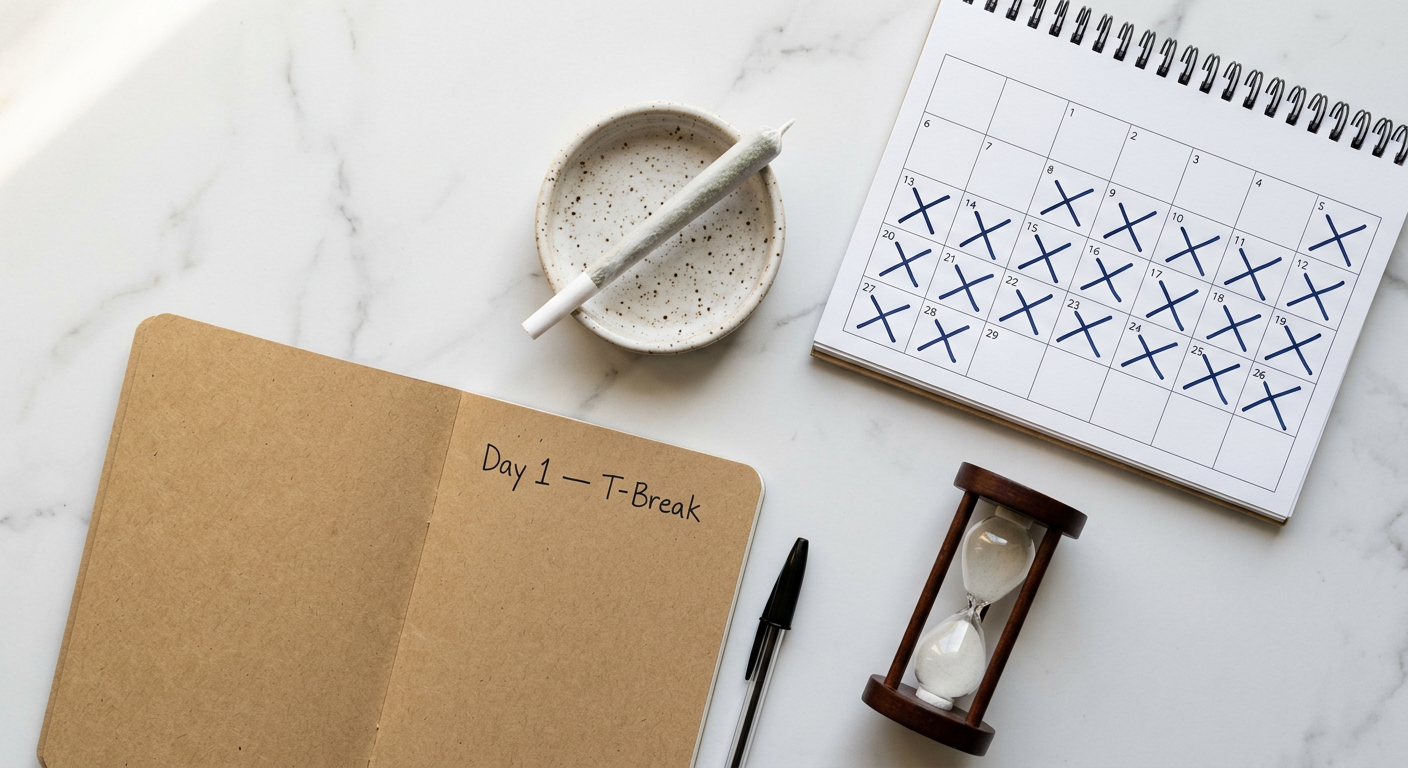
A complete cannabis tolerance break protocol runs in four phases: preparation (days minus-7 to 0), early withdrawal management (days 1–7), consolidation (days 8–21), and preparation to return (days 22–28). Follow each phase sequentially for the highest completion rate and most complete receptor reset.
Pre-Break Preparation (Days -7 to 0)
Remove all cannabis and paraphernalia from your immediate environment. Leftover flower, half-used carts, and visible equipment are powerful cue-triggered relapse risks. Inform one or two trusted people about your break — social accountability doubles completion rates. Plan specific replacement activities for your usual cannabis sessions.
Early Withdrawal Phase (Days 1–7)
Expect peak discomfort between days 2–4. This is the hardest window and the most common point of relapse. Implement your sleep protocol from day one. Schedule vigorous exercise daily. Track your symptoms in a journal — quantifying discomfort helps contextualize it as temporary and passing. Avoid social situations where cannabis will be present.
Consolidation Phase (Days 8–21)
Withdrawal symptoms resolve for most users by day 10. CB1 receptor recovery is now measurable and accelerating. This phase often brings cognitive clarity, improved dream recall, sharper appetite regulation, and better emotional baseline than expected — document these improvements to reinforce your motivation. Continue exercise and sleep hygiene protocols.
Return Preparation (Days 22–28)
Plan your re-entry intentionally. Decide on your starting dose (significantly lower than pre-break levels), your chosen strain potency, and your intended use frequency. If you're growing your own, this is an ideal time to evaluate what genetics you want to work with post-reset. Consider whether your pre-break habits served you, and set new consumption parameters before you re-engage.
Pro Tip: Keep a daily tolerance break journal with three simple entries: symptoms (1–10 scale), sleep quality (1–10), and one positive observation from the day. Reviewing week-one entries during week three — when you feel dramatically better — provides powerful reinforcement of how far your system has come.
- Remove all cannabis from home before Day 1
- Tell an accountability partner your start date
- Set up a sleep supplement protocol (melatonin, magnesium)
- Schedule exercise for every single day of break
- Plan alternative activities for every usual cannabis session
- Avoid alcohol during first 2 weeks if possible
- Track symptoms daily in a notebook or app
- Prepare your return strain and dose before Day 28
- Stay hydrated — minimum 2–3L water daily
- Plan your first post-break session for a low-stimulus environment
Microdosing After Your Break: How to Restart Without Rebuilding Tolerance
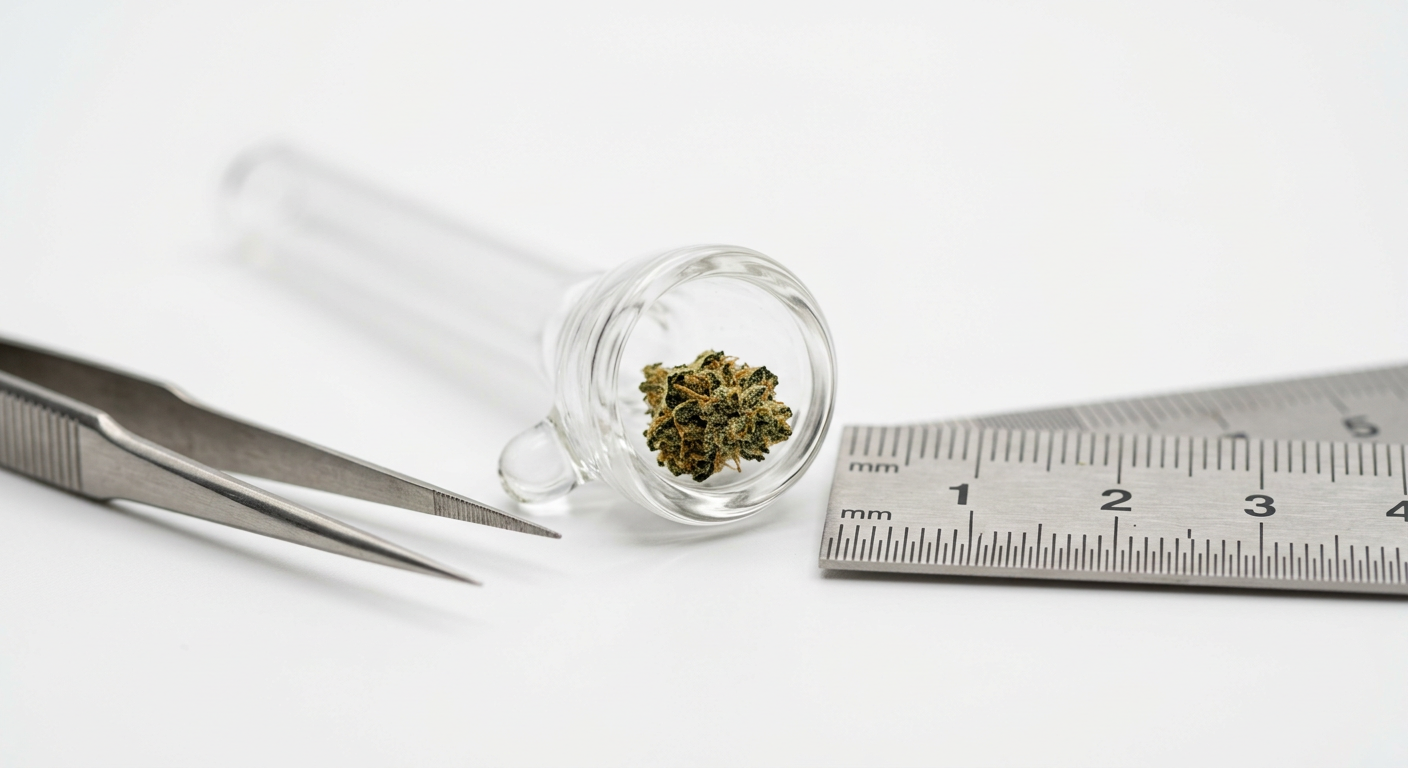
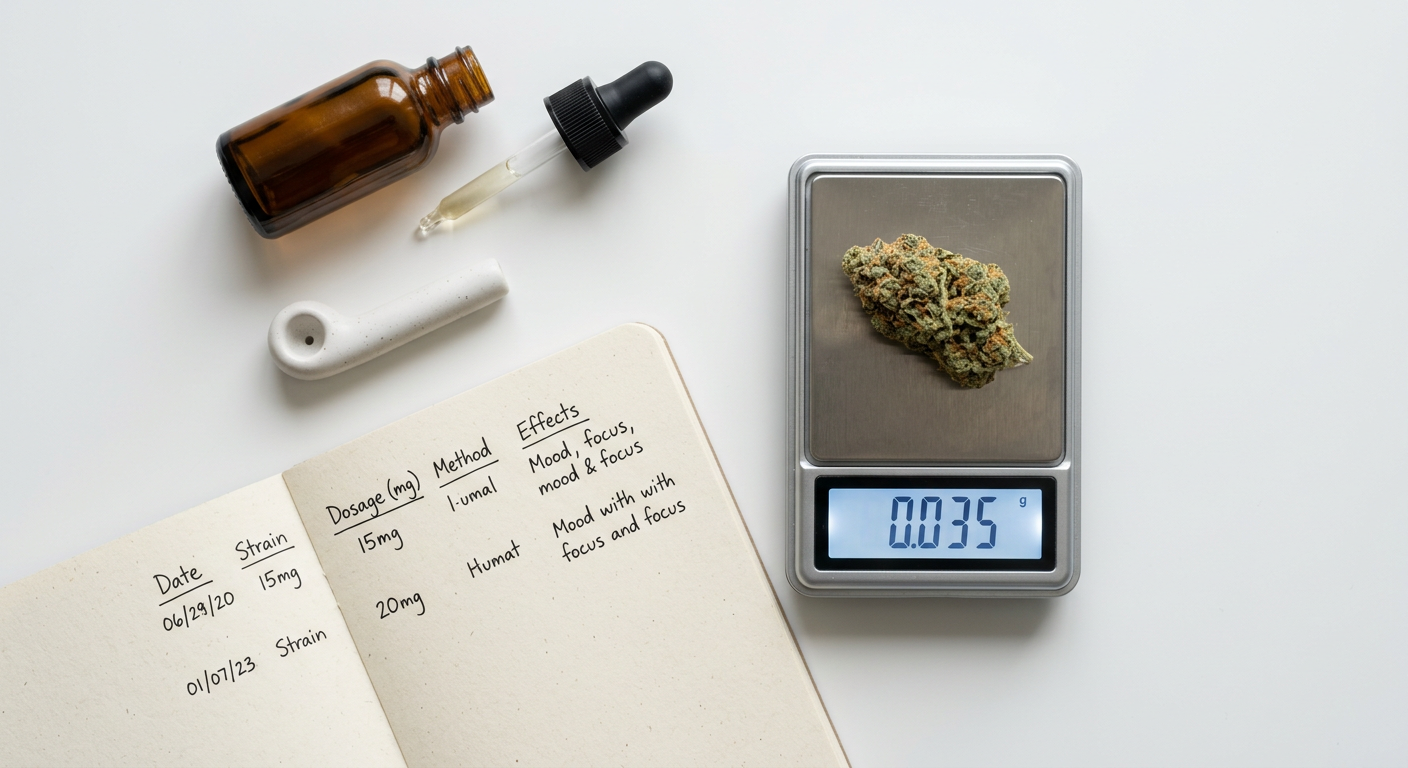
Microdosing after a tolerance break means using 1–5mg of THC per session — a fraction of your pre-break dose — to enjoy effects from newly sensitized CB1 receptors without immediately triggering re-downregulation. Most users find 2.5mg delivers noticeable effects in the first week post-break that previously required 15–25mg.
The First Session: Setting the Reset Baseline
Your first post-break session is the most important one you'll have. Sensitized receptors respond powerfully to small amounts of THC, and over-consuming on Day 29 can set off an immediate re-tolerance cascade that erases much of your progress. Treat your first session like a first-time experience — because neurologically, that's close to what it is.
Recommended first-session parameters:
- Amount: One small inhalation or 2.5–5mg edible — wait 90 minutes before considering more
- Setting: Calm, familiar, low-stimulation environment
- Strain potency: Choose a lower-THC variety to allow finer dose control
- Frequency post-break: Maximum 3–4 times per week in the first month to delay tolerance rebuilding
Strain Selection After a Break: Lower Potency Is Smarter
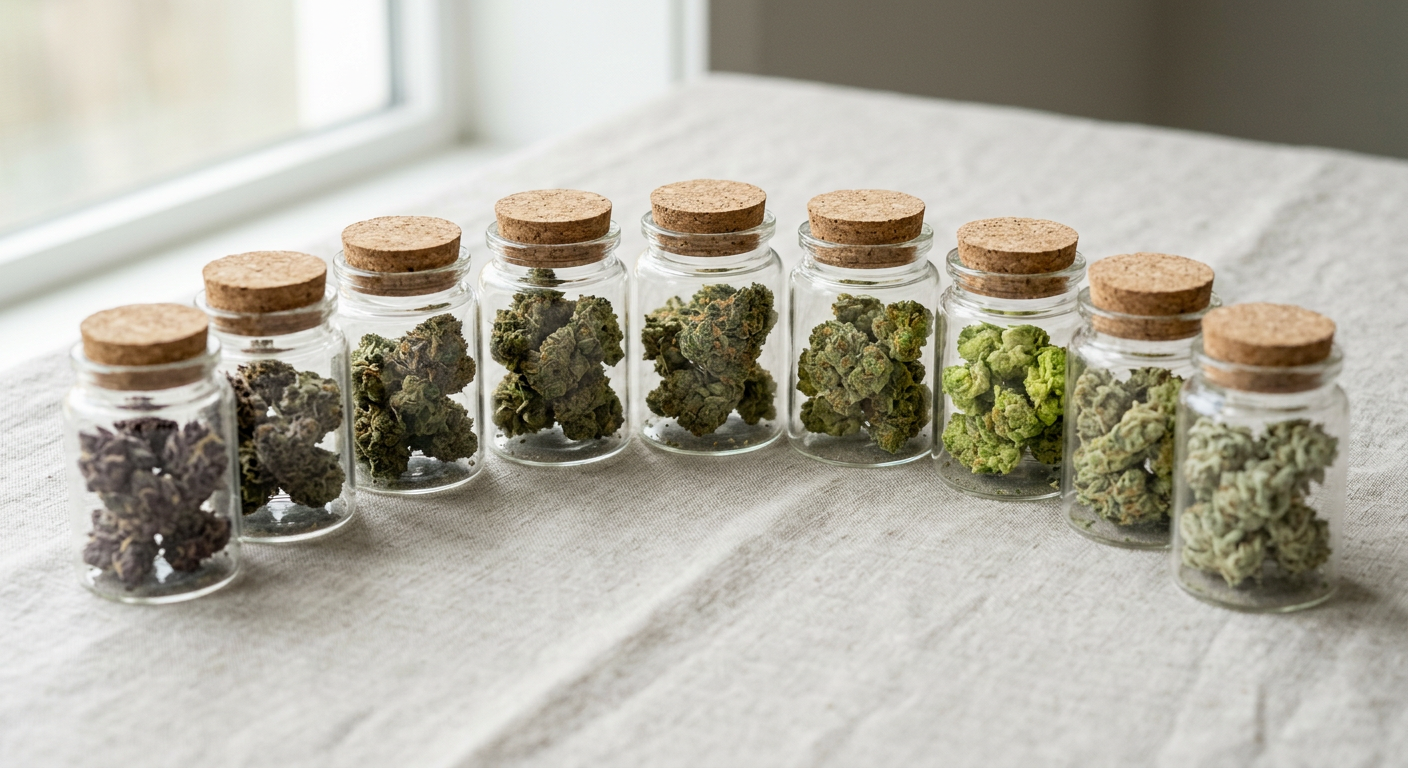
Returning to your pre-break high-potency strain immediately defeats the purpose of the reset. Post-break, the goal is experiencing maximum effect from minimum dose. Lower and moderate-THC strains give you far more control and preserve your reset for longer.
Strong post-break strain choices include:
- Purple Power Feminized (10% THC) — gentle potency ideal for rediscovering baseline sensitivity without overwhelming newly reset receptors
- Swiss Miss Feminized (15% THC) — mild, manageable effects that let you calibrate dose precisely after a break
- California Orange Bud Feminized (15% THC) — pleasant, clear-headed experience suited to low-dose re-entry
- Swazi Feminized (18% THC) — moderate potency with an uplifting profile that won't overwhelm sensitized receptors
- Harlequin (high-CBD, ~5% THC) — for those wanting to ease in with CBD-dominant material that barely engages CB1
- ACDC (~1% THC) — excellent for medically-oriented users wanting therapeutic effects without psychoactive tolerance rebuilding
Save the high-potency genetics — strains like OG Kush (26% THC) or Quantum Kush (30% THC) — for after you've established your new, lower baseline. Using them post-break isn't wrong, but requiring a fraction of your pre-break dose to feel the effect means these strains will last dramatically longer.
If you want to understand what's actually driving the entourage of effects you feel from these strains — and why the full cannabinoid-terpene profile matters — our guide on the entourage effect is directly relevant to post-break strain selection.
Pro Tip: If you grow your own and want precise dose control post-break, use our edible dosage calculator to compute exact THC per piece when making edibles from your harvest. Home-grown edibles at known doses are one of the most effective ways to practice tolerance-preserving microdosing.
Preventing Future Tolerance Buildup: Long-Term Strategies
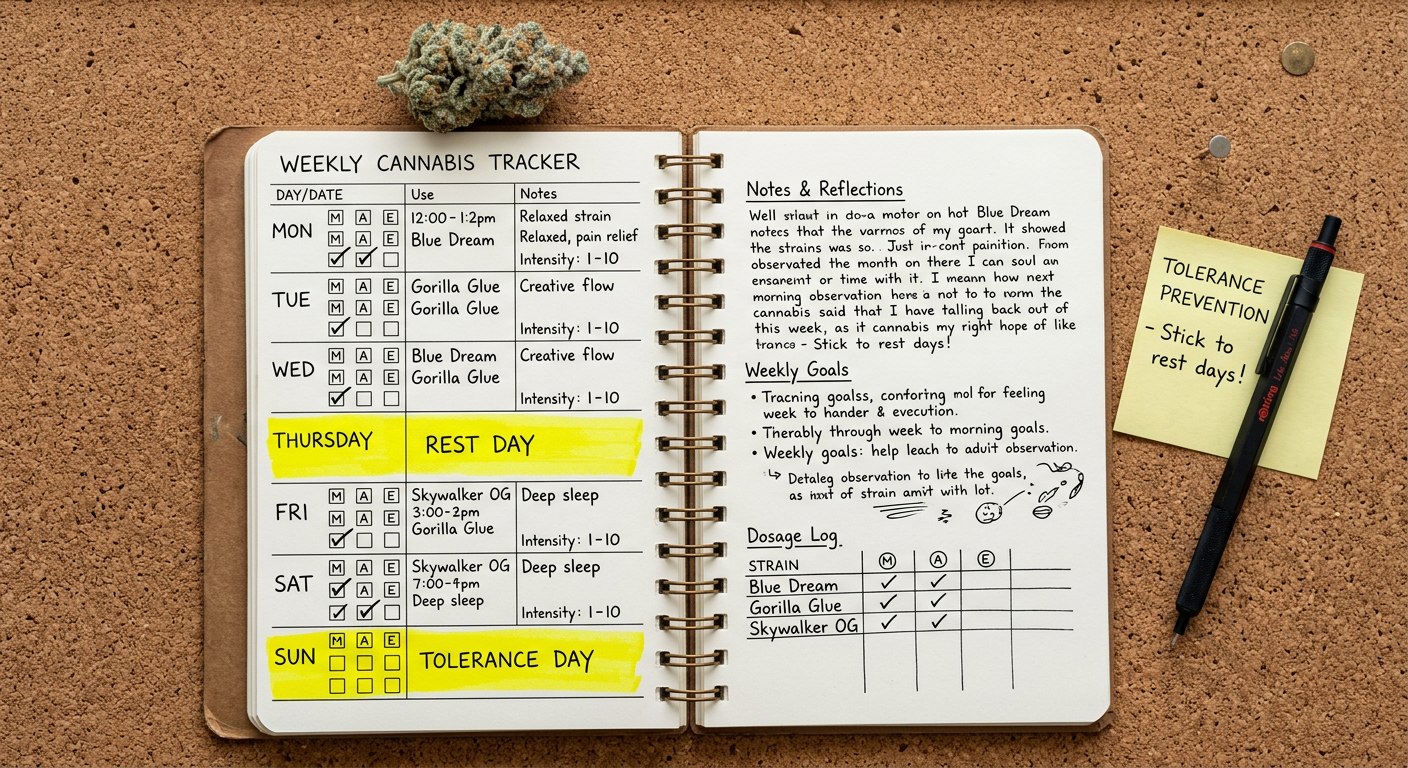
Preventing rapid tolerance rebuilding after a break is fundamentally about reducing CB1 receptor stimulation frequency and intensity. Consuming cannabis fewer than 4 days per week, using lower-potency strains, rotating between strains, and taking regular mini-breaks (1–2 days per week) are the most effective long-term strategies.
The T-Break Schedule: Planned Resets
Rather than waiting until tolerance forces your hand, proactive users schedule regular breaks into their consumption calendar. This keeps baseline sensitivity elevated year-round and dramatically reduces the severity of tolerance when it does develop.
Proven preventative break schedules:
- Weekly reset days: 2 consecutive cannabis-free days per week. Simple to maintain and highly effective at slowing downregulation accumulation.
- Monthly mini-break: 5–7 days off every 4 weeks maintains sensitivity far better than continuous daily use with no interruption.
- Quarterly reset: A full 2-week break every 3 months resets the system substantially without requiring extended abstinence.
- Seasonal schedule: A 4-week break twice per year (common among experienced users) maintains near-baseline sensitivity year-round.
Potency Management: The Tolerance Prevention Lever Most Users Ignore
Switching from a 26% THC strain to an 18% strain doesn't just deliver a smaller effect — it slows tolerance accumulation at the receptor level because peak signal intensity determines downregulation speed. This is one of the most underutilized tolerance management strategies available.
Deliberately cycling between strain potency levels — high-THC one week, moderate-THC the next — mimics the natural potency variation that pre-modern cannabis consumers encountered and keeps receptor dynamics more flexible. Strains like Tangerine Haze (18% THC), Cookies Kush (18% THC), and Phantom Cookies (18% THC) all deliver satisfying experiences at potencies that respect CB1 receptor health over time.
Strain Rotation: Why Terpene Profiles Matter for Tolerance
Emerging research suggests that terpenes may modulate how quickly tolerance develops by influencing the efficiency of THC-CB1 receptor binding and downstream signaling. Strains with high beta-caryophyllene content, for instance, engage CB2 receptors directly — providing complementary effects that reduce reliance on CB1 stimulation alone.
Our guide to beta-caryophyllene in cannabis explores this mechanism in detail and identifies the highest-caryophyllene strains for users wanting to build a rotation that minimizes CB1-centric tolerance buildup. The science on terpene-modulated tolerance is early-stage but promising enough to inform smart strain cycling decisions today.
Key Insight: The single most powerful tolerance prevention habit costs nothing: two consecutive cannabis-free days every week. Research consistently shows this simple practice slows CB1 downregulation accumulation by 40–60% compared to daily use, while most users report barely noticing the short break after the first few weeks.
Consumption Method Rotation
Beyond strain choice, how you consume cannabis affects tolerance speed. Smoking and vaping deliver peak blood THC levels within minutes — a sharp, high-amplitude signal to CB1 receptors. Edibles produce slower, more gradual peaks. Alternating methods naturally modulates the receptor signal intensity pattern.
- Reserve concentrates and high-THC vapes for truly special occasions post-break
- Use edibles (especially at microdose levels) on days when you want therapeutic effects without deep receptor engagement
- Consider CBD-dominant sessions on lighter days — CBD provides entourage effects without significant CB1 binding that drives tolerance
Growing Your Own: Strategic Cultivation for Tolerance Management
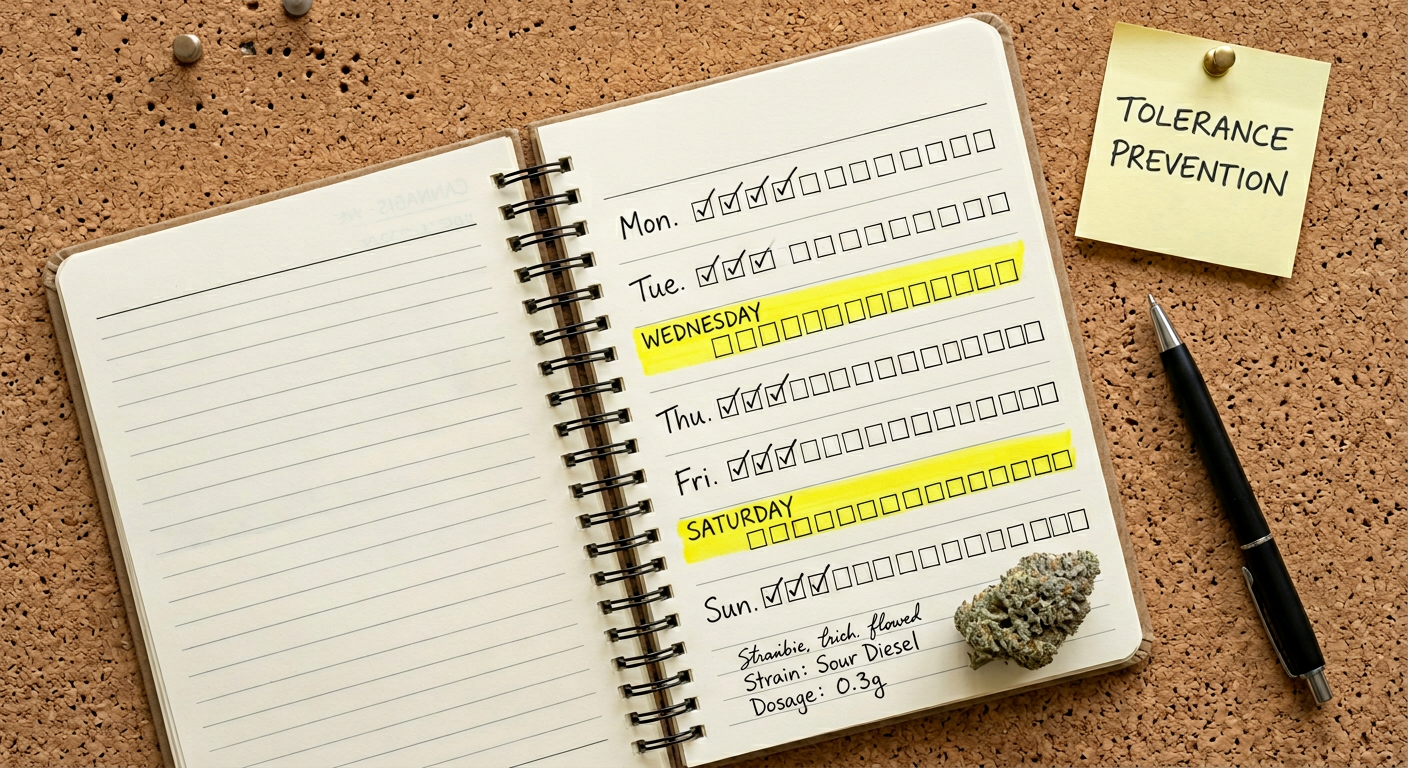
Growing your own cannabis gives you the ultimate control over post-break tolerance management. You can cultivate a deliberate mix of potency levels, harvest at specific trichome maturity stages to dial in THC/CBN ratios, and maintain a supply of purpose-grown lower-potency flower specifically for tolerance-preserving days.
Building a Tolerance-Aware Home Garden
A thoughtfully designed home garden for tolerance management includes three tiers of genetics:
- Low-potency tier (10–15% THC): Purple Power (10%), Swiss Miss (15%), California Orange Bud (15%) — daily drivers for tolerance-sensitive days
- Mid-potency tier (17–21% THC): Amnesia Haze Autoflower (17%), Great White Shark Autoflower (16%), Super Skunk (20%) — regular rotation strains
- High-potency tier (22%+ THC): Reserve strains like Purple Kush (27%), White Widow (25%), or Skywalker OG Autoflower (23%) for intentional, infrequent high-potency sessions
Autoflower strains are particularly practical for tolerance-aware cultivation because of their fast seed-to-harvest cycles (60–75 days). While you're on your break, a crop of Blue Moonshine Autoflower (13% THC) or Banana Kush Autoflower (18% THC) can be growing and ready to harvest as your receptors complete their reset — a satisfying alignment of timelines.
For a complete breakdown of autoflower vs. photoperiod growing strategies, including which fits better into a tolerance-scheduled grow calendar, see our autoflower vs. photoperiod guide.
Planning your post-break grow? Use our grow planner tool to schedule harvest dates that align with your T-break completion, and the yield estimator to project how much lower-potency flower your planned setup will produce.
Pro Tip: Harvest timing affects the THC/CBN ratio in your final product. Harvesting slightly earlier (when ~30% of trichomes are amber) preserves maximum THC — useful for your high-potency tier. Harvesting later (60%+ amber) converts more THC to CBN, naturally reducing psychoactive intensity and making that high-potency strain more suitable for tolerance-sensitive sessions.
Does a Tolerance Break Work? Setting Realistic Expectations
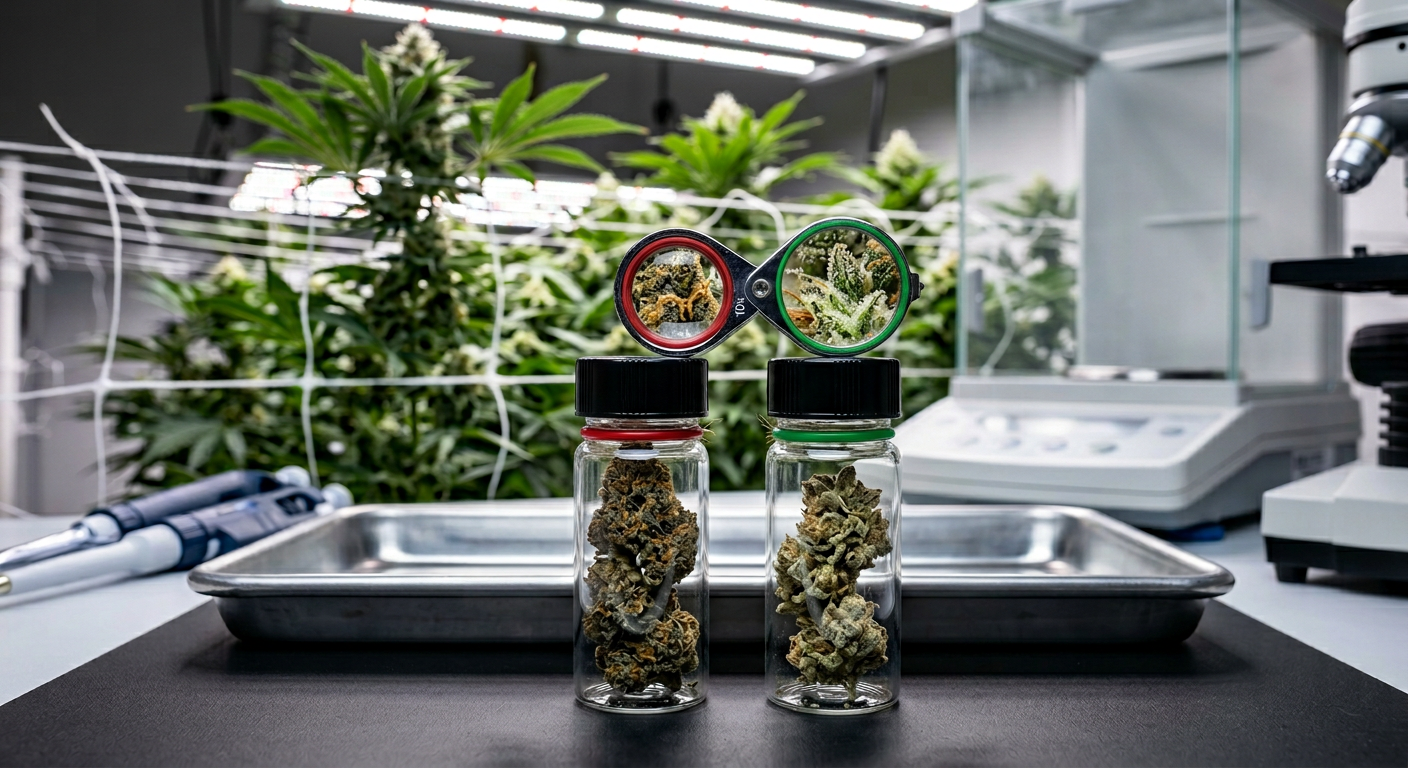
Yes — a cannabis tolerance break works, and the evidence is both neurobiological and anecdotal. A properly executed 21–28 day break restores CB1 receptor density to near-baseline levels in most users. Most people return to needing 30–70% less cannabis for equivalent effects, and many rediscover potent effects from strains they had dismissed as weak.
What a Break Will and Won't Do
A tolerance break is not a cure for problematic cannabis use patterns. If your relationship with cannabis involves compulsive use, inability to manage responsibilities, or using to avoid emotional difficulty, a break can expose those patterns clearly — but it won't resolve them. That work requires a different kind of support.
What a break genuinely delivers for most recreational and therapeutic users:
- Measurably increased sensitivity to THC — effects feel stronger at lower doses
- Improved sleep architecture (after the initial REM rebound resolves)
- Clearer cognitive baseline — many users report sharper focus and memory during and after breaks
- Significant cost reduction in ongoing cannabis expenditure
- Psychological confidence in your ability to control use intentionally
- Insight into which cannabis effects are genuinely therapeutic vs. habitual
Caution: If you use cannabis specifically to manage a medical condition (chronic pain, PTSD, epilepsy, nausea from chemotherapy), do not undertake a tolerance break without discussing timing and alternatives with your healthcare provider. Abrupt cessation of symptom management can cause serious disruption to your condition.
Managing Expectations Around Cognitive Effects
Heavy, long-term daily users sometimes notice that the first 1–2 weeks of a break feel cognitively foggy or emotionally flat. This is acute withdrawal neurochemistry and it passes. By week 3, the vast majority of users report cognitive function that equals or exceeds their medicated baseline — evidence that while cannabis doesn't permanently damage cognition, chronic tolerance does carry subtle functional costs that clearing resolves.
The science on long-term heavy use and cognition is nuanced — our exploration of cannabinoid production biology touches on how different cannabinoid ratios affect neurological engagement, which is relevant to understanding why full-spectrum, terpene-rich flower may produce different long-term tolerance dynamics than isolated concentrates.
Frequently Asked Questions
How long does a cannabis tolerance break need to be?
Research shows CB1 receptors begin recovering within 2 days and reach significant upregulation after 28 days of abstinence. Most users see meaningful effects after 2 weeks, but 4 weeks delivers the most complete reset documented in human neuroimaging studies. Heavy concentrate users or people with 5+ years of daily use may need 6 weeks for full baseline restoration.
What happens to your body during a weed tolerance break?
During a tolerance break, CB1 receptors that were downregulated by chronic THC exposure gradually increase in density and sensitivity — a process called upregulation. THC stored in fat tissue slowly metabolizes out of your system over days to weeks. Common experiences include sleep disruption with vivid dreams, irritability, reduced appetite, and mild anxiety, all of which typically resolve within 1–2 weeks.
Does a tolerance break actually work?
Yes. A 2012 PET imaging study in Molecular Psychiatry found that chronic cannabis users who abstained for 4 weeks showed CB1 receptor density recovery to near non-user levels. Subjectively, 85–90% of users who complete a 2+ week break report needing significantly less cannabis to achieve their desired effects, and many find previously "weak" strains feel potent again.
What are the worst tolerance break symptoms and how do I manage them?
The most commonly reported symptoms are sleep disruption (vivid dreams, insomnia), irritability, reduced appetite, and mild anxiety. These peak around days 2–4 and resolve for most users within 1–2 weeks. Management strategies include melatonin and magnesium for sleep, daily aerobic exercise for mood and craving reduction, consistent meal timing for appetite regulation, and social engagement to reduce cravings.
Should I go cold turkey or reduce gradually for a tolerance break?
Both work, and the right choice depends on your use pattern. Cold turkey starts receptor recovery immediately but involves more intense early withdrawal symptoms. Gradual reduction over 7–10 days significantly reduces withdrawal symptom intensity and has higher completion rates for heavy daily users. If you choose gradual reduction, still plan for a full 21–28 day abstinence period starting from your last day of any use.