What Is Microdosing Cannabis? The Science Behind Less Being More
Microdosing cannabis means consuming the smallest amount of THC — typically 1–5 mg — that produces a therapeutic or functional benefit without triggering noticeable intoxication. It flips the traditional consumption model on its head: instead of chasing a high, the goal is to stay completely functional while tapping into cannabis's subtler effects on mood, focus, and physical comfort.
The concept isn't new. Pharmacology has long recognised the principle of hormesis — the idea that low doses of a substance can produce beneficial effects that higher doses actually reverse. With cannabis, this shows up clearly in the dose-response relationship between THC and anxiety: small amounts calm, large amounts can amplify.
The Endocannabinoid System and Dose Sensitivity
Understanding microdosing starts with the CB1 and CB2 receptors that make up the endocannabinoid system (ECS). CB1 receptors are concentrated in the brain and nervous system. When THC binds to them at low concentrations, it modulates neurotransmitter release in ways that can improve mood and reduce pain signals without overwhelming the system.
At high doses, CB1 receptors become temporarily downregulated — they internalise and reduce in number, which explains tolerance and the cognitive fog associated with heavy use. Microdosing keeps receptor activity in a narrow, productive band. For a deeper breakdown of how THC interacts with the ECS, our guide on THC explained covers the full receptor science.
What Happens in the Brain at Sub-Threshold Doses?
At 1–5 mg of THC, plasma concentrations remain well below the threshold (roughly 10 ng/mL) associated with measurable impairment in most studies. Research published in the Journal of Pain (2012, Wilsey et al.) found that low-dose vaporised cannabis (1.29% THC) significantly reduced neuropathic pain without significantly impairing cognition compared to medium or high doses.
Serotonin pathways are also influenced at sub-intoxicating THC levels. THC's partial agonism at 5-HT1A receptors may explain the anxiolytic effect seen at low doses — a mechanism shared with CBD, which makes minor cannabinoids relevant additions to a microdosing protocol.
Receptor Science: CB1 receptor sensitivity varies significantly between individuals based on genetics (specifically the CNR1 gene), prior cannabis exposure, and baseline endocannabinoid tone. This is why one person's microdose is another person's functional dose — and why personalised titration is essential, not optional.
Optimal Dosing Ranges: How Much Is a True Microdose?
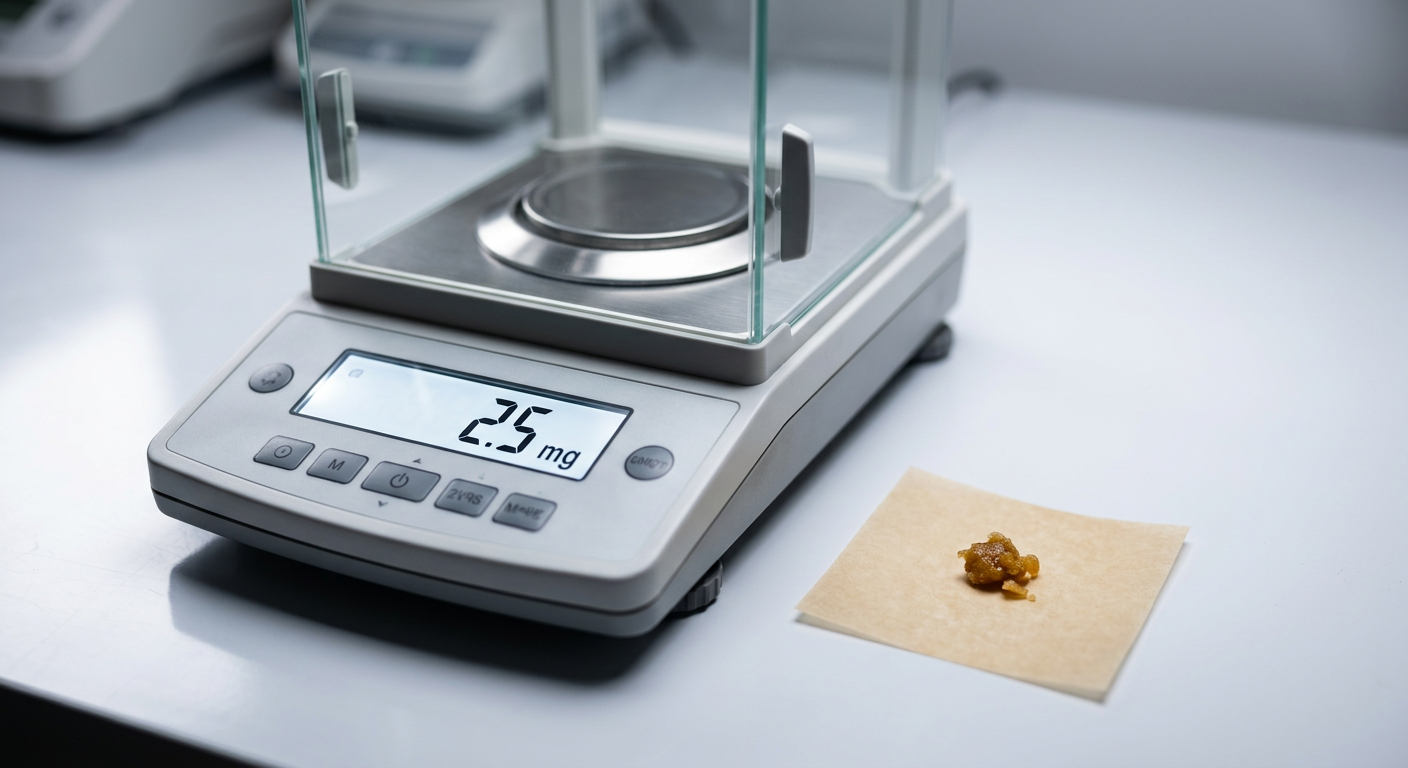
A microdose of cannabis sits between 1 mg and 5 mg of THC per session, with 2.5 mg widely cited as the ideal entry point for most adults. This range is small enough to avoid psychoactive effects in the majority of users while being large enough to interact meaningfully with the endocannabinoid system.
Dose ranges shift depending on tolerance, body weight, metabolism, and the specific goal — pain relief, focus, sleep, or creativity each occupy a slightly different part of the low-dose spectrum.
Dosing by Goal: A Practical Reference
| Goal | Suggested THC Range | CBD Addition | Frequency |
|---|---|---|---|
| Anxiety relief | 1–2.5 mg | 5–10 mg CBD (1:4+ ratio) | Once daily or as needed |
| Focus & productivity | 2.5–5 mg | Optional (1:1 to 2:1 THC:CBD) | Morning, once daily |
| Creativity | 2.5–5 mg | Low or none | Before creative sessions |
| Pain management | 2.5–5 mg | 10–20 mg CBD | Twice daily max |
| Sleep support | 2.5–5 mg | 10–15 mg CBD + CBN if available | 60–90 min before bed |
| Cannabis-naive users | 1 mg | 5 mg+ CBD recommended | Every other day initially |
The Biphasic Effect: Why Less Really Is More
THC's biphasic dose-response is one of the most important concepts in cannabis science. At low doses, THC tends to reduce anxiety, increase sociability, and sharpen mild focus. At high doses, it can cause the opposite: anxiety, paranoia, cognitive slowing, and sedation.
A 2017 study from the University of Illinois (Childs et al.) demonstrated this clearly. Participants who received 7.5 mg of THC reported lower stress reactivity in a social task, but those who received 12.5 mg reported heightened anxiety and more negative mood. The microdose group — not the higher-dose group — showed benefits.
The therapeutic sweet spot for most cannabis users lies below 5 mg of THC per session. Crossing above 10 mg — especially without CBD as a buffer — begins to reverse many of the benefits that microdosing is specifically designed to capture.
The Benefits of Microdosing Cannabis: What Research Shows

Microdosing cannabis at 1–5 mg THC may offer benefits including anxiety reduction, mild pain relief, improved mood, enhanced creative thinking, and better sleep onset — all without the cognitive impairment associated with recreational doses. CBD-rich formulations amplify these effects while reducing unwanted psychoactivity.
Mood and Anxiety
Low-dose THC activates the same 5-HT1A serotonin receptors targeted by many pharmaceutical anxiolytics. At sub-threshold concentrations, this produces a calming, mood-lifting effect that can last 2–4 hours depending on consumption method. Users report feeling more socially at ease and less reactive to stress — without the sedation or dependency risk of benzodiazepines.
CBD in combination magnifies this benefit. At doses of 5–20 mg, CBD has well-documented anxiolytic properties that complement low THC rather than competing with it. A 1:1 or 1:2 THC:CBD ratio gives most beginners the anxiety-reduction benefits while keeping psychoactivity minimal.
Chronic Pain and Inflammation
The Wilsey et al. study (2012) remains a landmark: low-dose vaporised cannabis at 3.53% THC reduced neuropathic pain scores by approximately 30% without significantly impairing cognitive function. This is a key distinction — traditional opioids and many pain pharmaceuticals carry significant cognitive and addiction risk, while carefully dosed cannabis can offer meaningful analgesia with a more manageable side-effect profile.
The entourage effect matters here too. Terpenes like beta-caryophyllene (a CB2 agonist) and myrcene (muscle relaxant properties) can extend and deepen the pain-relieving effects of a low THC dose, making whole-plant products preferable to isolates for this application.
Sleep Quality
At 2.5–5 mg THC taken 60–90 minutes before bed, many users report faster sleep onset and reduced nighttime waking. THC suppresses REM sleep at higher doses, which is often undesirable, but at very low doses this effect is minimal. Pairing a small THC dose with 10–15 mg of CBD and the terpene myrcene appears to produce a relaxing, sleep-conducive effect without the morning grogginess of traditional sleep medications.
Neurological and Cognitive Benefits
Emerging preclinical research suggests low-dose THC may support neuroplasticity. A 2014 study in Philosophical Transactions of the Royal Society B (Bhattacharyya et al.) noted that sub-intoxicating THC enhanced pattern recognition and divergent thinking — both measures of creative cognitive function — while higher doses impaired the same tasks.
This aligns with anecdotal reports from artists, writers, and designers who use cannabis microdosing specifically to access creative states without losing executive function. The pinene terpene, found in many sativa-leaning varieties, may further support alertness and memory retention within this low-dose creative context.
Best Product Types for Microdosing: From Tinctures to Flower
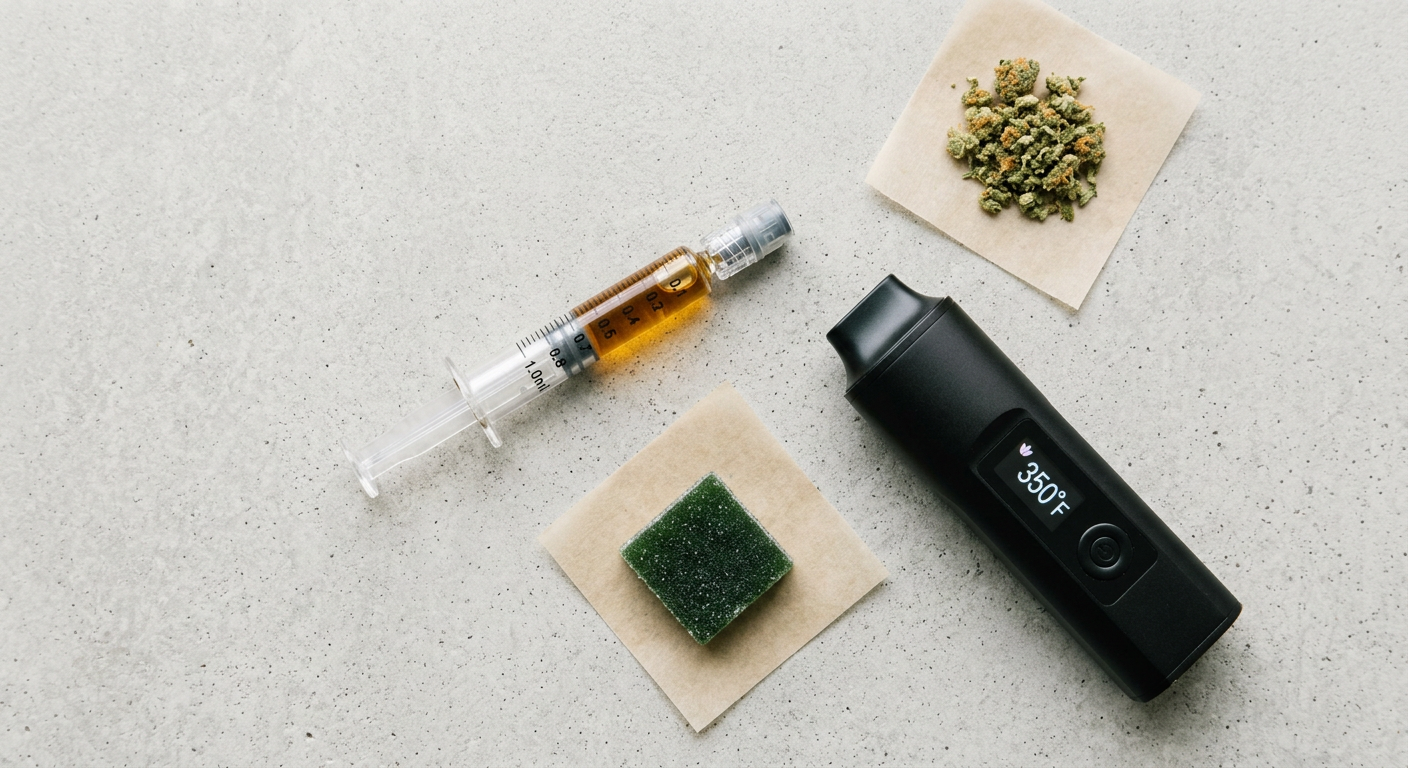
The best products for microdosing cannabis are those that allow precise, repeatable dose measurement. Tinctures with calibrated droppers, low-dose edibles, and dry herb vaporizers at low temperature settings all offer the control microdosing demands. Smoking whole joints makes accurate dosing nearly impossible.
Tinctures and Sublingual Oils
Tinctures are the gold standard for microdosing because they allow milligram-level precision. A tincture labelled at 300 mg THC per 30 mL bottle delivers exactly 10 mg per 1 mL. Using a 0.25 mL dose gives 2.5 mg — a perfect starting microdose. Sublingual absorption (holding under the tongue for 60–90 seconds) produces effects in 15–45 minutes, making it easier to gauge response before redosing.
Low-Dose Edibles
Pre-dosed edibles at 2.5 mg or 5 mg THC per piece make microdosing straightforward. The challenge is onset time: edibles can take 45–120 minutes to produce effects, and first-pass liver metabolism converts THC to 11-hydroxy-THC, which is more potent and longer-lasting. This means the same 2.5 mg THC delivers a stronger subjective effect as an edible than as a sublingual or inhaled dose — beginners should account for this. Our edible dosage calculator helps you work out the right serving size based on your tolerance and body weight.
Dry Herb Vaporizers
Vaporizing allows inhalation-speed feedback (effects in 5–15 minutes), which makes it easier to stop at the right moment. The key is using a low-temperature setting — 170–185°C (338–365°F) — and taking a single, small draw from a measured portion of flower. At these temperatures, you're capturing THC and terpenes while avoiding combustion byproducts.
Microdosing with Flower: What to Know
If you're growing your own or using dried flower, a one-hitter or small pipe loaded with a fraction of a gram is the standard approach. The challenge is calculating mg of THC from flower percentage. A 0.1 g portion of 10% THC flower contains 10 mg THC, but bioavailability via inhalation is roughly 30–50%, meaning the effective dose is approximately 3–5 mg — squarely in microdose range.
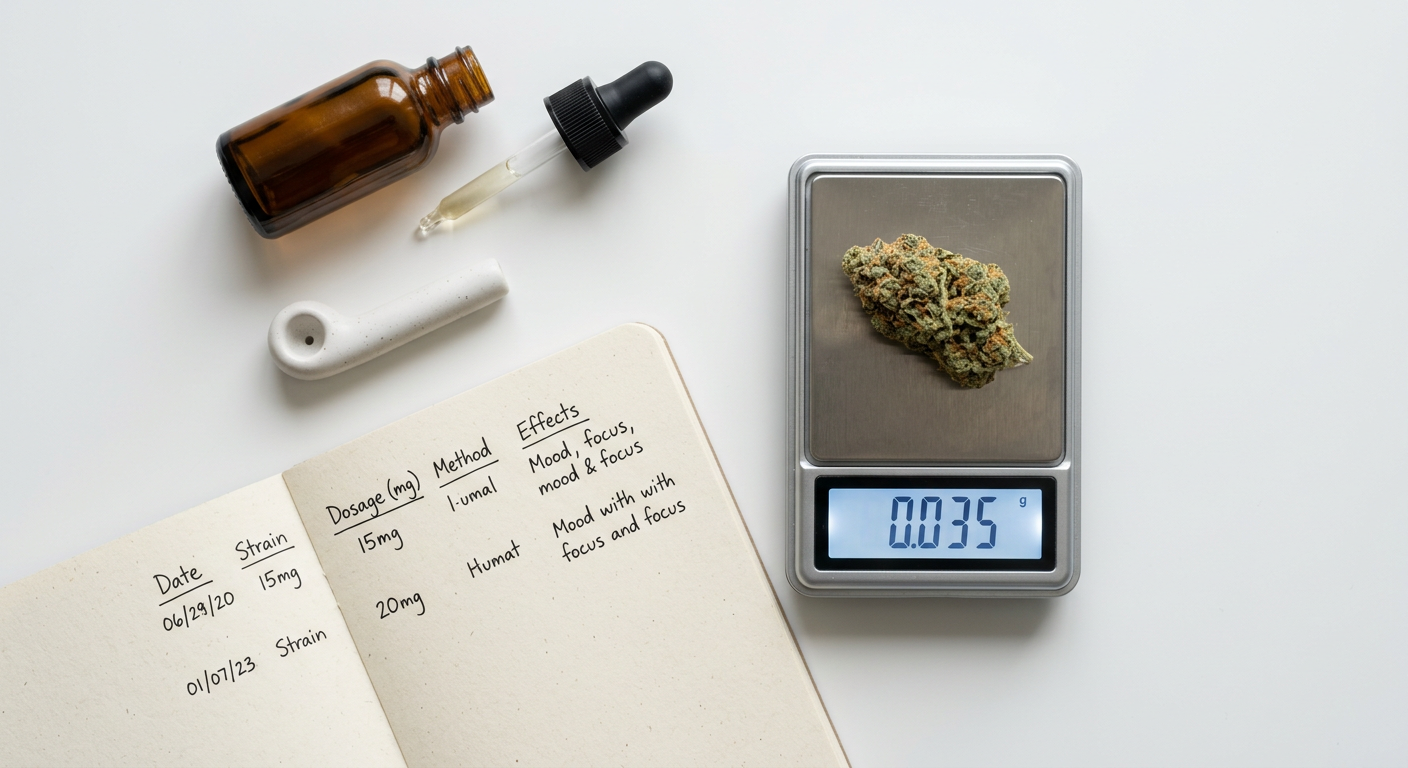
Pro Tip: When using flower for microdosing, weigh your portions with a 0.01g precision digital scale rather than eyeballing. A single large draw from a bong can deliver 5–10x more THC than intended — precision tools matter just as much as low-THC genetics.
Choosing the Right Strain for Your Microdose Protocol
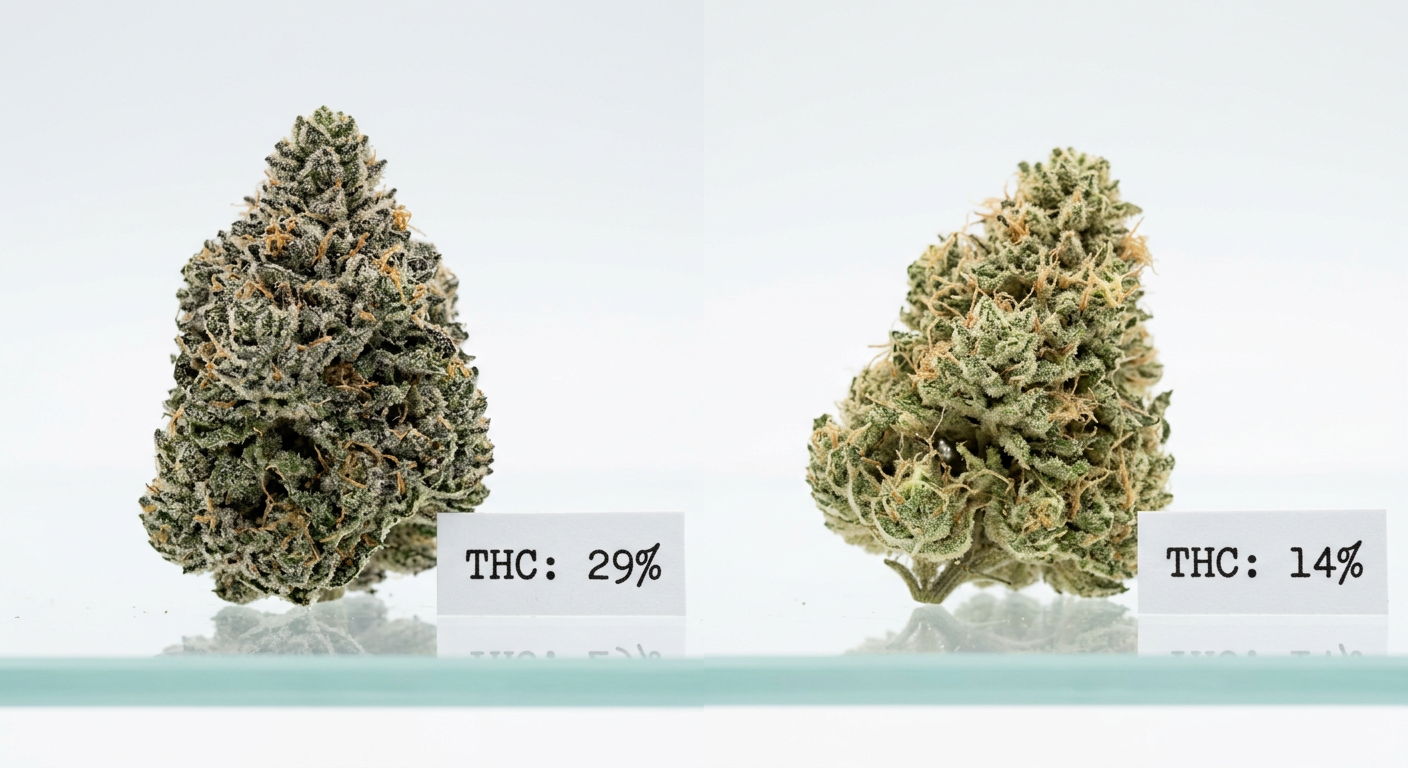
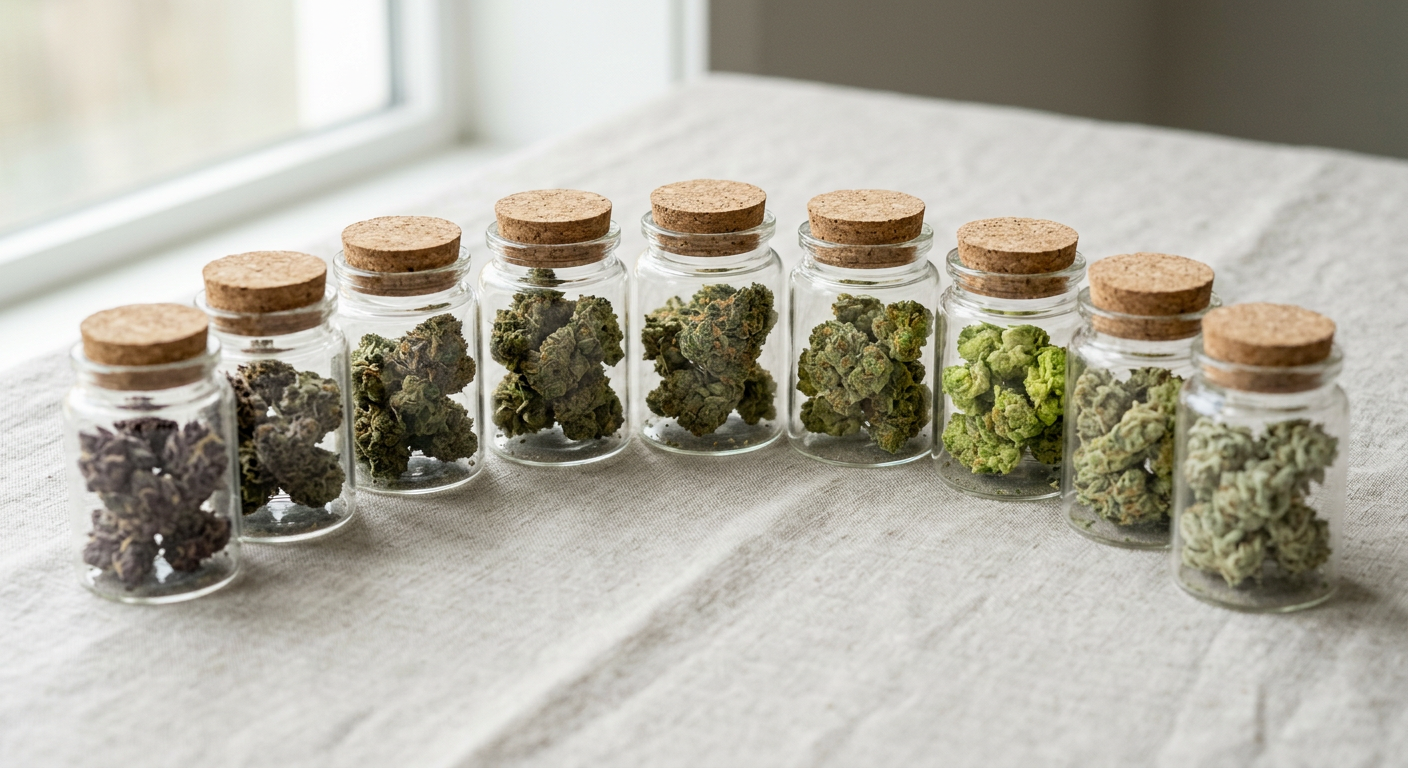
The best strains for microdosing cannabis are moderate-to-lower THC varieties (10–20% THC) with balanced or CBD-rich terpene profiles. High-THC cultivars above 25% require even smaller portions to stay in the microdose range, which makes them harder to control without a milligram scale.
Lower-THC Strains for Beginners
Strains with 10–18% THC give you more margin for error when measuring portions by weight. A 0.1 g portion of a 10% strain delivers roughly 3–5 mg effective THC via inhalation — sitting right in the therapeutic window without demanding jeweller-grade precision.
- Purple Power (10% THC) — One of the lowest-THC options available, this sativa-leaning strain produces uplifting, clear-headed effects ideal for daytime microdosing. Its naturally modest potency gives beginners significant room to work with.
- Malawi Gold Autoflower (13% THC) — An authentic landrace-derived sativa with gentle, energetic effects and a long-established low-intoxication profile. Good for creative microdosing sessions.
- Blue Moonshine Autoflower (13% THC) — Relaxing indica-leaning genetics at a manageable potency. Useful for evening microdoses targeting sleep or body comfort.
- Swiss Miss (15% THC) — A balanced hybrid at a forgiving potency level, suitable for first-time microdosers who want a moderate, predictable experience.
- Harlequin — An industry-favourite high-CBD, low-THC strain (roughly 8–10% THC, 10–12% CBD) widely used for medical microdosing. Its near 1:1 ratio makes it ideal for anxiety-focused protocols.
- ACDC — Another CBD-dominant cultivar with THC often below 5% and CBD at 15–20%. Virtually non-psychoactive, making it suitable for people who need the therapeutic benefits without any euphoric effect.
Moderate-THC Options for Experienced Microdosers
Once you've established your dose-response baseline, moderate-THC strains (18–22% THC) can be used in even smaller measured portions. These strains often carry richer terpene profiles that enhance the entourage effect at low doses.
- Tangerine Haze (18% THC) — A citrus-forward sativa with limonene and terpinolene terpenes that support energy and mood. A 0.05–0.07 g portion keeps it firmly in microdose territory.
- Jillybean (18% THC) — A playful, uplifting hybrid popular among creative professionals. Its balanced genetics prevent the sedation that can derail daytime productivity.
- Skunk Red Hair (18% THC) — Classic genetics with an approachable potency. The earthy, skunky terpene profile delivers grounding effects without heavy sedation.
- Pennywise — A 1:1 THC:CBD strain (approximately 12–15% each) highly regarded in medical cannabis circles for precise, balanced microdosing. Minimal psychoactivity with strong therapeutic feedback.
- Cannatonic — Another 1:1 standby. Often used as a reference strain for calibrating microdose protocols due to its consistent and predictable effects.
High-THC Strains: Can They Be Microdosed?
Technically yes — but only with a milligram scale and extreme portion discipline. A 0.03 g portion of a 25% THC strain like White Widow (25% THC) delivers approximately 3.75 mg effective THC via inhalation — a legitimate microdose. The problem is that at this scale, any measurement error has outsized effects. High-THC strains are best left for experienced microdosers who are already comfortable with their personal dose-response curve.
Caution: Never assume a high-THC strain like Quantum Kush (30% THC) can be microdosed the same way as a 10% strain. At 30% THC, a 0.1 g portion contains 30 mg THC — potentially 6x a standard microdose. Precision measurement tools are non-negotiable with high-potency cultivars.
How to Measure Accurately: Tools and Techniques
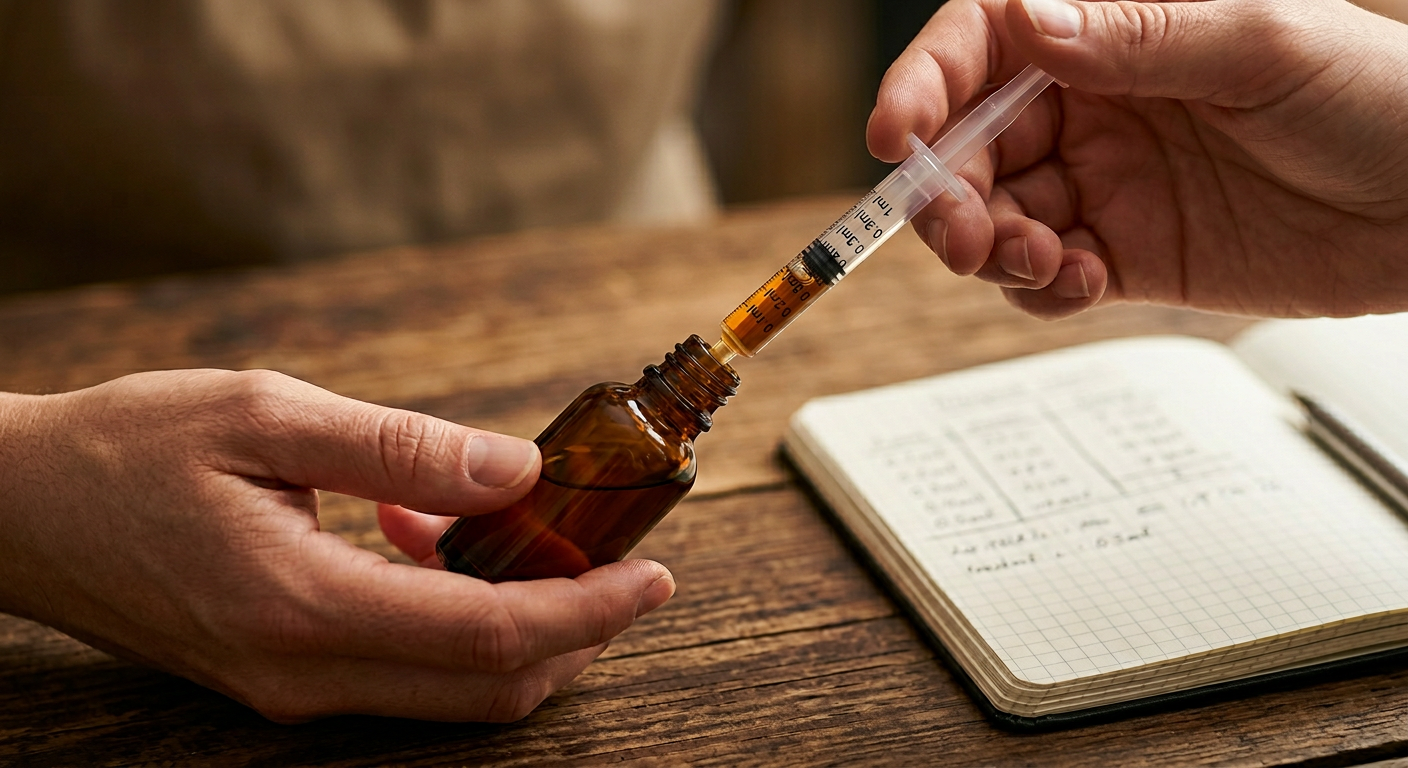
Accurate microdosing requires a 0.01g precision digital scale for flower, a calibrated oral syringe or dropper for tinctures, and reliable product lab testing. Without these tools, consistent dosing is impossible and the risk of accidentally overshooting the microdose threshold increases significantly.
Essential Measurement Tools
- 0.01g digital milligram scale (for weighing flower portions)
- Calibrated 1 mL oral syringe (for tincture precision)
- Lab-tested products with accurate cannabinoid percentages
- Microdosing journal or tracking app
- Timer for tracking onset and duration
- Temperature-controlled dry herb vaporizer (if inhaling)
- COA (Certificate of Analysis) from the supplier for all products
Calculating THC per Dose from Flower
The formula is straightforward: THC (mg) = flower weight (g) × THC% × 1000 × bioavailability factor. For inhalation, bioavailability sits at 30–50% — use 40% as a middle estimate. So 0.1 g of 15% THC flower = 0.1 × 0.15 × 1000 × 0.40 = 6 mg effective THC.
For a 2.5 mg target dose from the same 15% THC flower, you'd need approximately 0.042 g — roughly 42 milligrams by weight. That's a tiny amount, which underscores why lower-THC strains like Purple Power (10% THC) are practically much easier to microdose from flower.
Pro Tip: Use our edible dosage calculator not just for edibles, but as a quick THC mg estimator for any cannabis product — enter your flower's THC% and portion weight to get an estimated dose in seconds.
Step-by-Step Microdosing Protocols: Building Up and Down
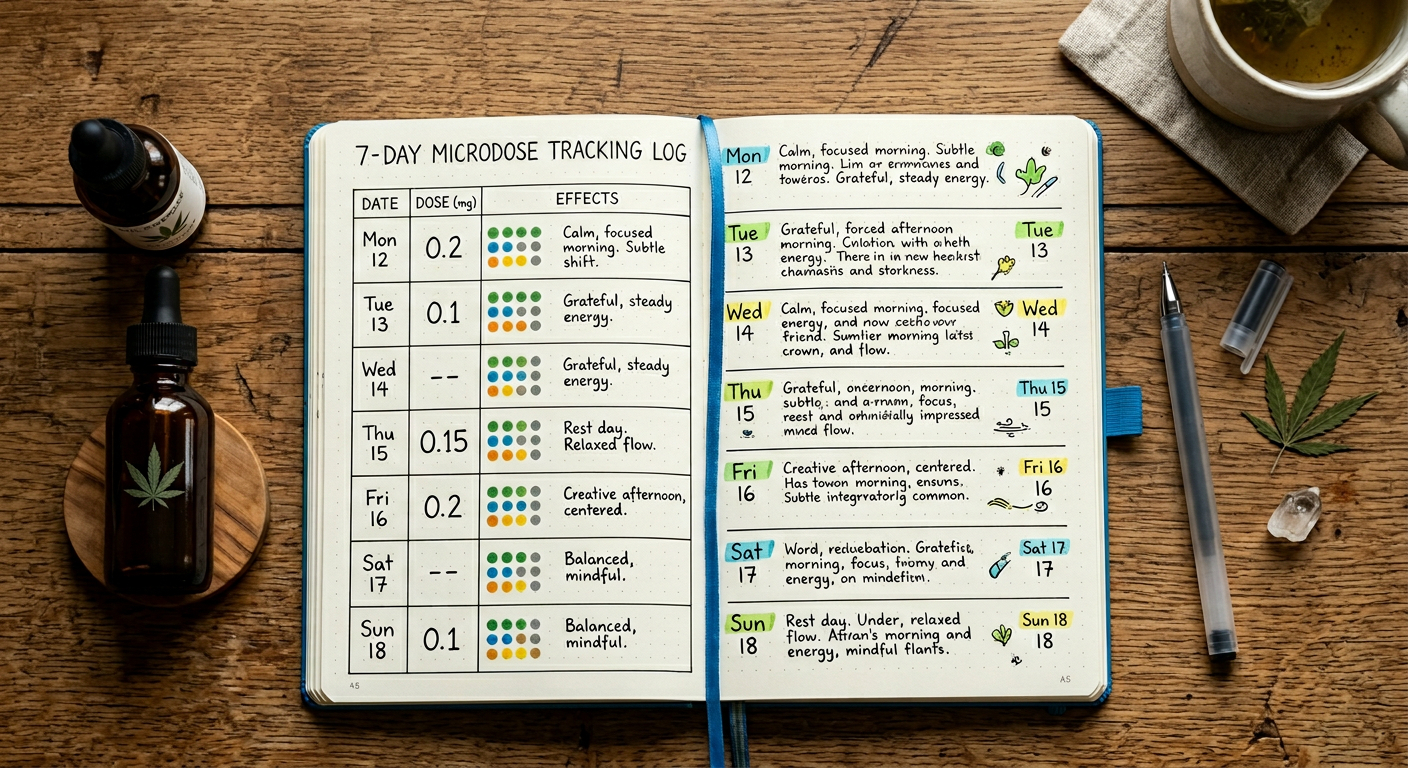
A structured microdosing protocol starts at the lowest possible effective dose (1–2.5 mg THC), holds that dose for 3–5 days while tracking effects, then adjusts upward by 1 mg increments only if needed. The goal is to find the minimum effective dose — the smallest amount that produces noticeable benefit — and stay there.
The Titration Protocol: Finding Your Personal Minimum Effective Dose
Start at 1 mg THC
On day one, take exactly 1 mg of THC via your chosen method. Use a tincture or pre-dosed edible for precision. Note the time, your baseline mood and energy level, and any effects over the next 2–4 hours in your journal.
Hold for 3 Days
Take the same 1 mg dose at the same time for 3 consecutive days. Record effects, mood, productivity, sleep quality, and any side effects each day. Consistency in timing helps establish a reliable baseline.
Evaluate and Adjust
After 3 days, review your journal. If you noticed zero effect, increase to 2.5 mg for the next 3-day block. If you felt mild benefit, stay at 1 mg. If you felt any intoxication — stop, rest for 48 hours, and try a smaller dose or add CBD.
Find Your Floor
Continue increasing in 1–2.5 mg steps every 3 days until you find the dose that produces consistent, noticeable benefit without any impairment. This is your Minimum Effective Dose (MED). For most people it falls between 2.5 mg and 5 mg.
Maintain and Monitor
Once at your MED, maintain it for 2–4 weeks while continuing to journal. Schedule mandatory off-days (2 days per week minimum) to slow tolerance accumulation and preserve receptor sensitivity.
Tracking and Journaling: The Non-Negotiable Habit
A microdose journal doesn't need to be complex. Track these six data points for each session:
- Date and time of dose
- Product used (strain or product name, THC/CBD mg)
- Dose amount (mg THC, mg CBD)
- Pre-dose baseline (mood, energy, pain level 1–10)
- Peak effect (mood, energy, focus, any intoxication — 1–10)
- Duration and any notable observations
After 2–3 weeks, patterns emerge: which time of day works best, whether CBD improves outcomes, how consistent the effects are, and whether tolerance is building. This data is what separates disciplined microdosing from casual low-dose use.
Journaling is the single most important habit in a microdosing protocol. Without data, you're guessing. With 2 weeks of consistent tracking, you'll know your exact optimal dose, timing, and strain profile — and you'll be able to detect tolerance drift before it undermines the protocol.
Microdosing for Productivity and Creativity: Real-World Applications

Microdosing cannabis for productivity works best at 2.5–5 mg THC from sativa-leaning, terpene-rich strains taken in the morning. The result is a subtle lift in motivation, reduced mental friction on creative tasks, and improved mood without cognitive impairment. It pairs well with focused work sessions of 90–120 minutes.
The Creativity Connection
Cannabis's effect on divergent thinking — the ability to generate multiple solutions to an open-ended problem — has been studied with interest. A 2012 paper in Consciousness and Cognition (Schafer et al.) found that cannabis users scored higher on measures of creative thinking, with effects strongest in low-openness-to-experience individuals. The key caveat: these effects correlate more strongly with low doses than high ones.
Sativa-leaning strains with significant limonene and pinene content appear most useful for this application. The pinene terpene supports memory retention — a critical counterbalance to THC's tendency to impair short-term recall at higher doses. Strains like Tangerine Haze (18% THC) and Jillybean (18% THC) combine citrus-forward terpenes with moderate THC in a profile well-suited to creative work.
Focus-Specific Protocols
For pure focus tasks — coding, writing, analytical work — a slightly different approach works best. Keep THC at or below 2.5 mg and consider adding 5–10 mg CBD to reduce any residual anxiety. Time the dose 30–45 minutes before the work session (using tincture sublingually) and work in a structured Pomodoro-style block: 25 minutes focused, 5-minute break, repeat.
The endocannabinoid system's role in flow states is increasingly being studied — for more on how cannabis chemistry interacts with physical and mental performance, see our guide on the endocannabinoid system and exercise. The neurochemical overlap between runner's high and low-dose cannabis effects is striking and scientifically validated.
What to Avoid: Mistakes That Kill Productivity
- Using high-THC strains above 24% without precise milligram measurement
- Smoking a full joint — impossible to control dose and produces sedation
- Redosing before the first dose has fully peaked (typically before 90 min for edibles)
- Microdosing before tasks requiring reaction time, driving, or heavy machinery operation
- Skipping off-days and allowing tolerance to erode the effect
Pro Tip: Track your creative output alongside your microdose log — word count, tasks completed, ideas generated. After 3 weeks you'll have concrete personal data on whether microdosing improves your productivity, what your optimal dose is, and whether it's working better on specific types of tasks.
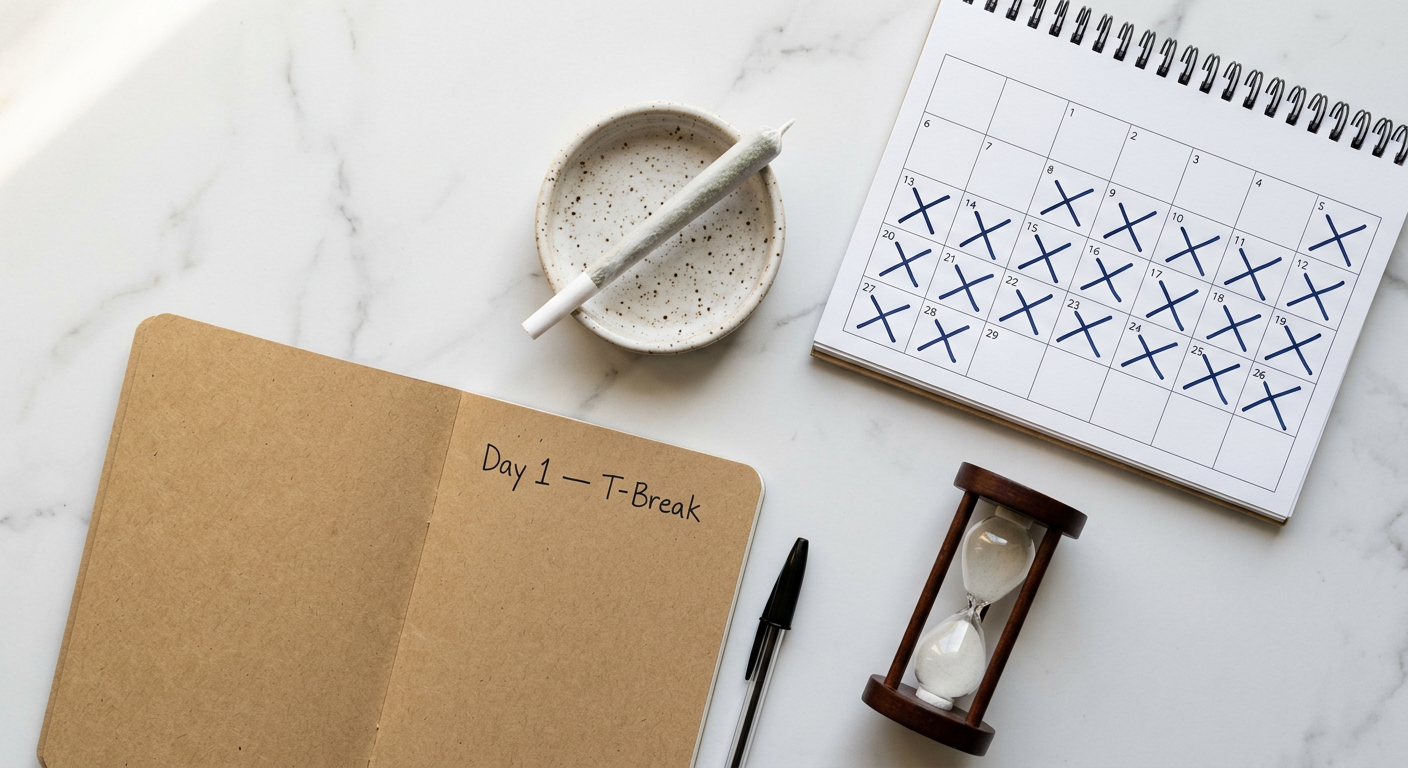
Microdosing Tolerance Breaks: Resetting Your Endocannabinoid System
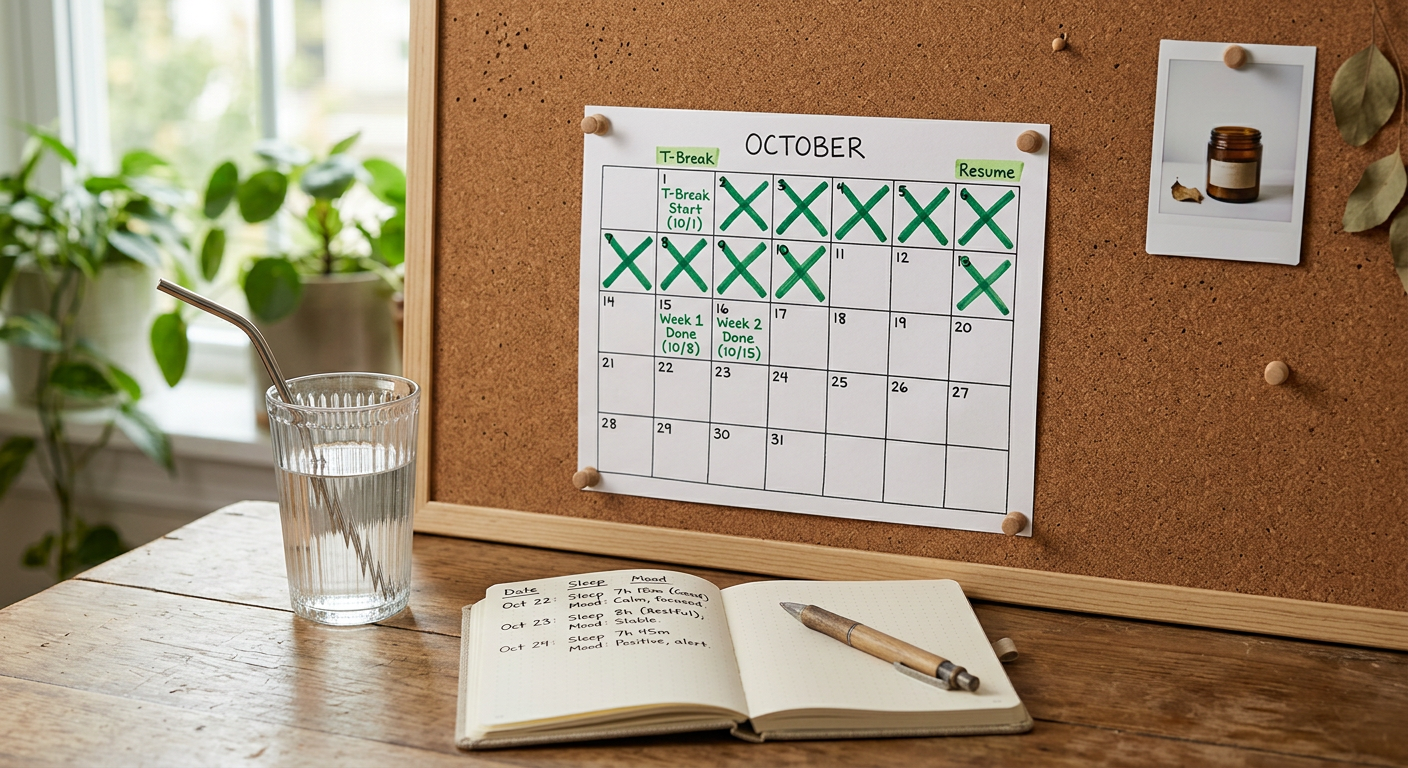
A microdosing tolerance break involves stopping all cannabis use for 2–7 days to allow CB1 receptor density and sensitivity to recover. Even at sub-intoxicating doses, daily THC use can gradually downregulate receptors over 2–4 weeks. Strategic breaks restore responsiveness and prevent dose creep.
How Tolerance Builds at Microdose Levels
CB1 receptors downregulate in response to THC exposure through a process called receptor internalisation. This happens faster at high doses, but it still occurs at microdose levels — just more slowly. Research from Washington State University (2012) showed measurable CB1 receptor recovery after just 48 hours of abstinence, with full restoration in most subjects by 4 weeks.
At microdose levels, you'll typically notice tolerance creeping in when your usual 2.5 mg dose stops producing the same effect after 3–6 weeks of daily use. This is the signal to take a structured break rather than increase the dose.
The 2-Day Weekly Rest Protocol
The simplest approach: choose two consistent days per week (e.g., Saturday and Sunday, or Monday and Friday) as zero-dose days. This prevents receptor downregulation from accumulating week over week. Most users find this sufficient to maintain dose effectiveness indefinitely.
The Extended Reset: 5–14 Day Break
When tolerance has already built up, a longer break is more effective. A 5–7 day abstinence period restores most users to near-baseline CB1 receptor density. During this period:
- Increase hydration and sleep quality — both support ECS recovery
- Exercise daily — endogenous endocannabinoid production (anandamide) supports receptor sensitivity
- Consider CBD-only use to support the system without adding THC burden
- Continue journaling mood, sleep, and any withdrawal symptoms (typically mild at microdose levels)
- Resume at your original starting dose after the break — not at the last dose you were using
After a tolerance break, always restart your microdosing protocol at 1–2.5 mg rather than where you left off. Your receptor sensitivity will be higher, meaning your original effective dose is once again active — and the temptation to return to a higher dose risks overshooting the therapeutic window immediately.
Risks, Limitations & Who Should Approach Microdosing With Caution
Microdosing cannabis is generally considered low-risk, but it carries real limitations: it is not appropriate for everyone, cannabis remains legally restricted in many jurisdictions, it can interact with certain medications, and it is not a clinically validated treatment for any condition. Careful consideration is essential before starting any protocol.
Known Side Effects at Low Doses
Even at 1–5 mg THC, some individuals experience mild side effects. These are more common in cannabis-naive users, those with high anxiety sensitivity, or people with certain genetic receptor variants.
- Mild dry mouth and increased thirst
- Slight elevation in heart rate (particularly in the first 15–30 min after inhalation)
- Mild temporary memory retrieval difficulty
- Heightened sensory sensitivity (colours, sounds may feel slightly more vivid)
- Drowsiness in indica-dominant strains even at low doses
Who Should Avoid or Limit Microdosing
- Pregnant or breastfeeding individuals — no safe dose of THC has been established during pregnancy
- Under 25 years of age — developing brains show heightened sensitivity to cannabinoids; risks outweigh benefits for recreational or non-prescribed use
- Personal or family history of psychosis — THC can be a trigger even at low doses in genetically predisposed individuals
- Current use of CYP450-metabolised medications — both THC and CBD inhibit certain liver enzymes, potentially altering blood levels of medications including warfarin, SSRIs, and some seizure medications
- Occupational restrictions — any role where drug testing is performed, or where impairment liability exists, including driving
Legal Considerations
Cannabis remains a controlled substance in many countries and US states. Microdosing does not exempt a user from legal consequences where cannabis is prohibited. Always verify local laws before beginning any cannabis protocol, including CBD-dominant products, which may still carry THC above the 0.3% threshold in some jurisdictions.
Caution: Drug testing does not distinguish between microdosing and recreational use. Even 2.5 mg of THC daily will produce detectable urine metabolites. THC-COOH can remain detectable for 3–10 days in infrequent users and potentially 30+ days in daily users. If your employment or legal situation involves drug testing, consult a legal or medical professional before starting a microdosing protocol.
The Science Still Has Gaps
It is important to state clearly: most research on cannabis microdosing is observational, survey-based, or uses dose ranges slightly above true microdose territory. Randomised controlled trials specifically studying 1–5 mg THC in human populations are limited. The field is progressing, but microdosing should not be treated as clinically proven therapy for any specific condition at this stage.
For growers interested in producing strains best suited for low-dose applications — particularly landrace and heritage genetics with naturally moderate THC — our guide to heirloom cannabis strains covers the genetics that have historically been used in moderate-potency cultivation. And if you're thinking about growing your own supply to maintain consistent, measured microdose material, see our best strains for beginner growers for easy-to-cultivate options at manageable potency levels.
Frequently Asked Questions
What is a standard microdose of cannabis?
A standard microdose of cannabis is typically 1–5 mg of THC, with 2.5 mg considered the most widely recommended starting point. The goal is to feel subtle effects — improved focus or mood — without noticeable intoxication. Always start at the lower end and titrate upward slowly over several days.
How often should you microdose cannabis?
Most protocols suggest microdosing once or twice daily, with at least 6–8 hours between doses. Taking regular 2-day breaks each week helps prevent tolerance buildup and keeps the endocannabinoid system responsive. Avoid daily dosing without planned off-days, even at very low THC amounts.
Can you microdose cannabis for anxiety?
Low doses of THC at 1–5 mg may help reduce anxiety by activating CB1 receptors at a level that calms rather than overwhelms the nervous system. Higher doses can worsen anxiety, which is why micro-level control matters. A 1:1 THC:CBD ratio is often best for anxiety-focused protocols. Always consult a healthcare professional for anxiety treatment guidance.
What is the best THC:CBD ratio for microdosing?
A 1:1 THC:CBD ratio is popular for beginners because CBD moderates THC's psychoactive effects. More experienced users sometimes prefer 2:1 or 3:1 THC:CBD depending on their goals — higher THC ratios for creativity, balanced ratios for calm focus and anxiety management. High-CBD strains like Harlequin or ACDC are excellent starting points.
Does microdosing cannabis build tolerance?
Yes, daily microdosing can gradually build tolerance over 2–4 weeks as CB1 receptors downregulate in response to regular THC exposure. Taking planned tolerance breaks of 2–7 days every 2–4 weeks resets CB1 receptor sensitivity and keeps low doses effective. Always restart at your original starting dose — not your last dose — after a break.