CB1 vs CB2 Receptors at a Glance: The 40-Word Answer
CB1 receptors sit in the brain and central nervous system, driving psychoactive effects, mood, and pain. CB2 receptors concentrate in immune tissue and peripheral organs, governing inflammation and immune response. THC activates CB1 strongly; CBD modulates both with lower binding affinity.
Most guides about CB1 CB2 receptors cannabis either read like a pharmacology PhD thesis or stop at 'CB1 gets you high, CB2 helps inflammation.' Neither is good enough if you're choosing seeds, planning a grow, or trying to dial in a specific effect profile. This guide fixes that.
We'll walk through the biology in plain English, map every major cannabinoid to its receptor targets, build a full comparison table, and connect it all to real strain selection decisions. By the end, you'll understand exactly why a 26% THC OG Kush hits differently than a balanced CBD strain — and how to choose the right seeds for your goal. For the broader picture of how this fits into your body's own signalling network, see our deep-dive on the endocannabinoid system.
Where CB1 and CB2 Receptors Live in Your Body
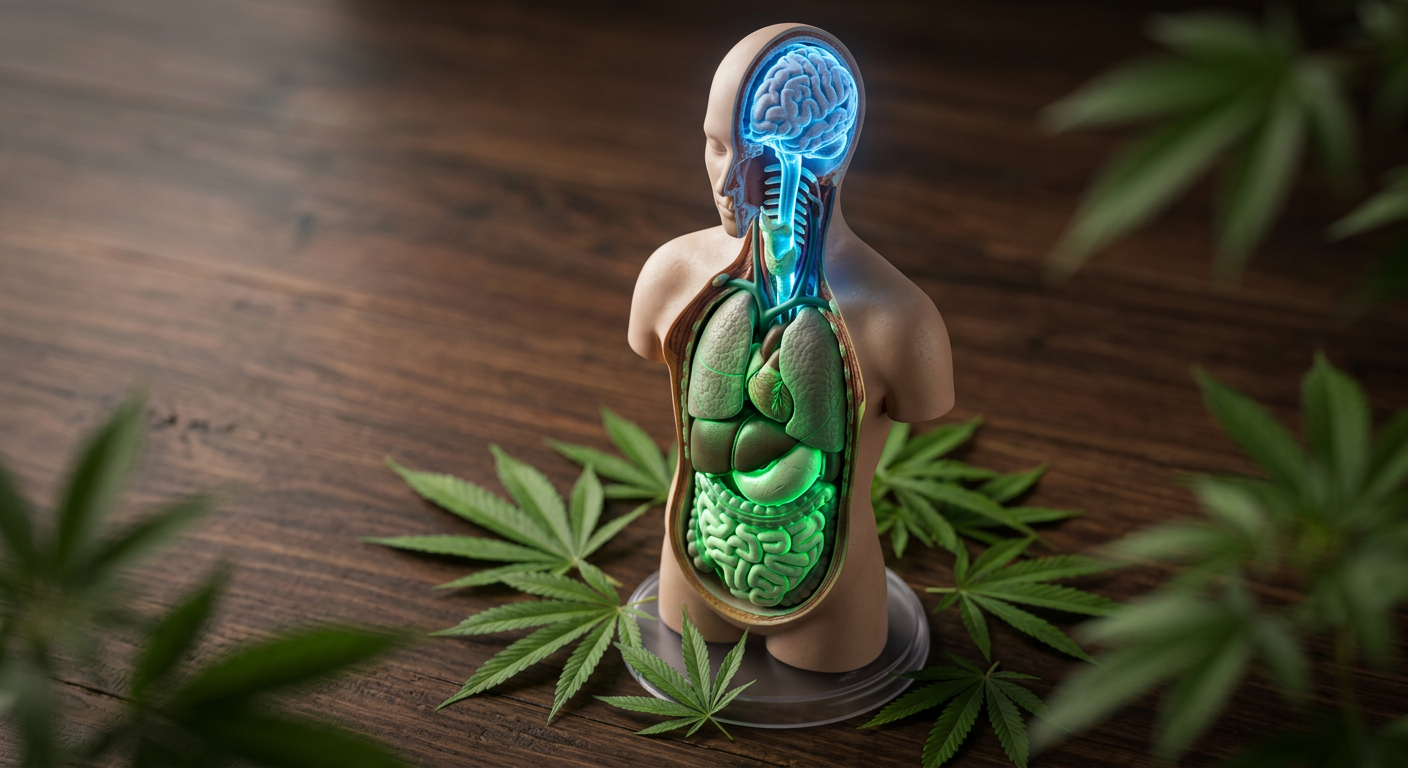
CB1 and CB2 receptors are G-protein-coupled receptors — molecular locks embedded in cell membranes. When the right cannabinoid key slides in, the receptor changes shape and triggers a cascade of chemical signals inside the cell. Understanding where each type lives explains everything about the effects you feel.
CB1 Receptor Locations
CB1 receptors are among the most abundant receptors in the entire human brain. They cluster densely in areas responsible for memory (hippocampus), movement coordination (cerebellum), decision-making (prefrontal cortex), and pain processing (periaqueductal grey). This is why cannabis affects all of those functions simultaneously.
CB1 receptors also appear outside the brain:
- Spinal cord (pain relay)
- Peripheral nervous system (nerve endings)
- Liver and pancreas (metabolism signalling)
- Gastrointestinal tract (appetite, nausea control)
- Reproductive organs
The concentration of CB1 receptors in the brain's reward and pain centres is precisely why high-THC cannabis produces euphoria, reduces pain perception, and triggers the munchies — all at once.
CB2 Receptor Locations
CB2 receptors were originally considered exclusively peripheral — found outside the brain entirely. More recent research has found low-level CB2 expression in some brain regions (particularly during neuroinflammation), but their primary home is the immune system and surrounding tissue.
CB2 receptor hotspots include:
- Immune cells (B-cells, T-cells, macrophages, natural killer cells)
- Spleen and tonsils
- Bone marrow
- Peripheral sensory nerve endings
- Skin (relevant for topical applications)
- Liver and gut wall (during inflammatory states)
CB2 receptors upregulate — meaning more of them appear — in areas of active inflammation or tissue damage. This is why cannabinoids with CB2 affinity can be more effective when inflammation is present: there are literally more receptors available to bind.
How Cannabinoids Bind to CB1 and CB2 Receptors
Not all cannabinoids bind receptors the same way. Some are full agonists (they activate the receptor strongly), some are partial agonists (weaker activation), some are antagonists (they block the receptor), and some are allosteric modulators (they change how other molecules bind without directly activating the receptor themselves). Knowing the difference explains why a CBD-rich strain can take the edge off a high-THC experience.
THC and CB1: A High-Affinity Match
Delta-9-THC is a partial agonist at both CB1 and CB2, but its binding affinity for CB1 is far greater. When THC locks into a CB1 receptor, it mimics anandamide — your body's own 'bliss molecule' — but does so more intensely and for much longer. The result: euphoria, sensory amplification, altered time perception, appetite stimulation, and pain relief.
THC also partially activates CB2 receptors, contributing a degree of anti-inflammatory effect even in high-THC strains. But the CB1 binding dominates the experience at typical consumption doses.
CBD: The Modulator
CBD does not bind cleanly to either CB1 or CB2 as a direct agonist. Instead, it acts as a negative allosteric modulator at CB1 — it physically changes the receptor's geometry, making it harder for THC to bind effectively. At CB2, CBD behaves more like an inverse agonist or weak partial agonist depending on dose and tissue context.
The practical takeaway for growers: strains with significant CBD content will soften THC's CB1-driven psychoactive effects while adding a layer of CB2-mediated anti-inflammatory action. This is the pharmacological basis of the entourage effect.
If you want the mental clarity of CBD without eliminating the THC effect entirely, look for a 2:1 or 3:1 THC:CBD ratio rather than a pure high-CBD strain. This preserves meaningful CB1 activation while bringing in CB2 benefits.
Terpenes and Receptor Signalling
Beta-caryophyllene — one of the most common cannabis terpenes — is the only terpene known to directly bind CB2 receptors as a full agonist. Strains rich in this terpene (many Kush and Diesel varieties) deliver CB2 activity through an entirely different molecular pathway. Our guide to beta-caryophyllene in cannabis covers this in full detail.
The Full Comparison Table: Receptors, Cannabinoids & Strain Types
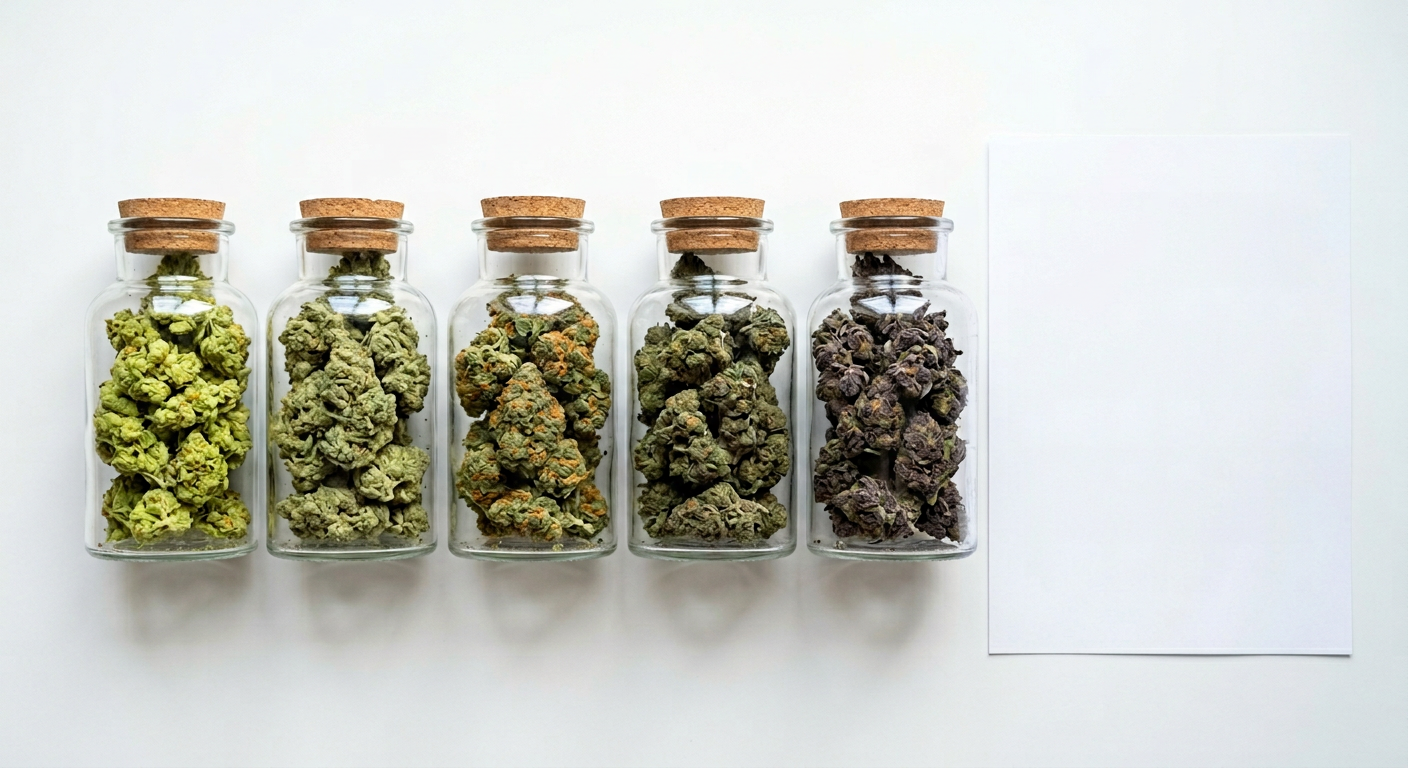
Here's the complete breakdown you won't find anywhere else in one place — receptor location, what activation does, which cannabinoids trigger it, and which strain categories deliver those cannabinoids in meaningful concentrations.
| Receptor | Primary Location | Effect When Activated | Key Cannabinoids That Bind It | Strain Types That Deliver It |
|---|---|---|---|---|
| CB1 | Brain, CNS, spinal cord, GI tract | Euphoria, pain relief, appetite stimulation, memory alteration, motor effects | THC (strong), CBN (weak), THCV (antagonist at low dose), anandamide (endogenous) | High-THC sativas, high-THC indicas, balanced hybrids |
| CB2 | Immune cells, spleen, bone marrow, peripheral nerves, skin | Anti-inflammatory, immune modulation, pain relief (peripheral), tissue repair signalling | CBD (indirect/inverse), CBG (partial agonist), CBC (indirect), beta-caryophyllene (full agonist via terpene) | High-CBD strains, CBG-rich strains, balanced 1:1 strains |
| CB1 + CB2 | Both systems simultaneously | Broad-spectrum: mild psychoactivity + anti-inflammatory + pain relief | THC + CBD combined, CBG, full-spectrum extracts | Balanced THC:CBD hybrids (1:1 to 3:1 ratios) |
| CB1 (antagonist) | Brain | Appetite suppression, alertness, reduced psychoactivity | THCV (at low doses blocks CB1) | African landrace sativas, some Durban-lineage strains |
The CB1/CB2 split is not binary — most cannabis experiences involve both receptors to varying degrees. What changes between strains is the ratio of activation, which is determined by cannabinoid profile, terpene content, and your individual receptor density.
Minor Cannabinoids and the CB1/CB2 Equation: CBG, CBN & CBC
THC and CBD get all the attention, but the minor cannabinoids play meaningful roles in shaping which receptors get activated and how strongly. Understanding them helps you read lab reports and seed descriptions with far more precision.
CBG (Cannabigerol): The Precursor with Real Receptor Activity
CBG is the precursor molecule from which THC, CBD, and CBC are all biosynthesised. In most mature cannabis strains, CBG converts almost entirely into other cannabinoids, leaving only trace amounts. But CBG-enriched strains (harvested earlier or bred for high CBG retention) carry meaningful concentrations.
At the receptor level, CBG acts as a partial agonist at both CB1 and CB2. Its CB2 activity is particularly relevant — research suggests CBG has meaningful anti-inflammatory potential through CB2 pathways. It also interacts with alpha-2 adrenoceptors and serotonin receptors, adding to its complex effect profile. Read our full breakdown in the CBG guide.
CBN (Cannabinol): The Degradation Product
CBN forms when THC oxidises — it's what THC becomes when cannabis ages or is exposed to heat and oxygen over time. CBN is a weak CB1 agonist (roughly 10% the potency of THC) and has mild CB2 affinity. It's most associated with sedative effects, though research suggests the sedation may come from terpene co-presence rather than direct receptor binding.
For growers, CBN levels are primarily a harvest timing and curing variable. Late harvests and improperly stored dried cannabis will be higher in CBN and lower in active THC — meaning weaker CB1 activation and a heavier, more sedative experience. Our guide on when to harvest for maximum potency covers the trichome timing in detail.
If your cured cannabis smells more hay-like or has turned from clear/milky trichomes to fully amber across the board, significant THC-to-CBN conversion has likely occurred. The CB1 potency will be lower than the original THC% suggests.
CBC (Cannabichromene): Quiet but Relevant
CBC has low binding affinity for both CB1 and CB2 directly. It works primarily by increasing endocannabinoid levels — specifically anandamide — which then activates CB1 and CB2 receptors indirectly. Think of it as a receptor system amplifier rather than a direct binder.
CBC also activates TRPV1 and TRPA1 channels, which are involved in pain and inflammation signalling outside the classical cannabinoid receptor system. Strains with notable CBC content add a dimension of pain modulation that standard CB1/CB2 analysis doesn't fully capture.
THCV: The CB1 Antagonist at Low Doses
THCV (tetrahydrocannabivarin) is structurally similar to THC but behaves very differently at low doses — it actually blocks CB1 receptors rather than activating them. This makes it an appetite suppressant and produces a clear-headed, alert effect without classic THC psychoactivity. At higher doses it can partially activate CB1. Our dedicated THCV guide covers which strains carry it in meaningful amounts.
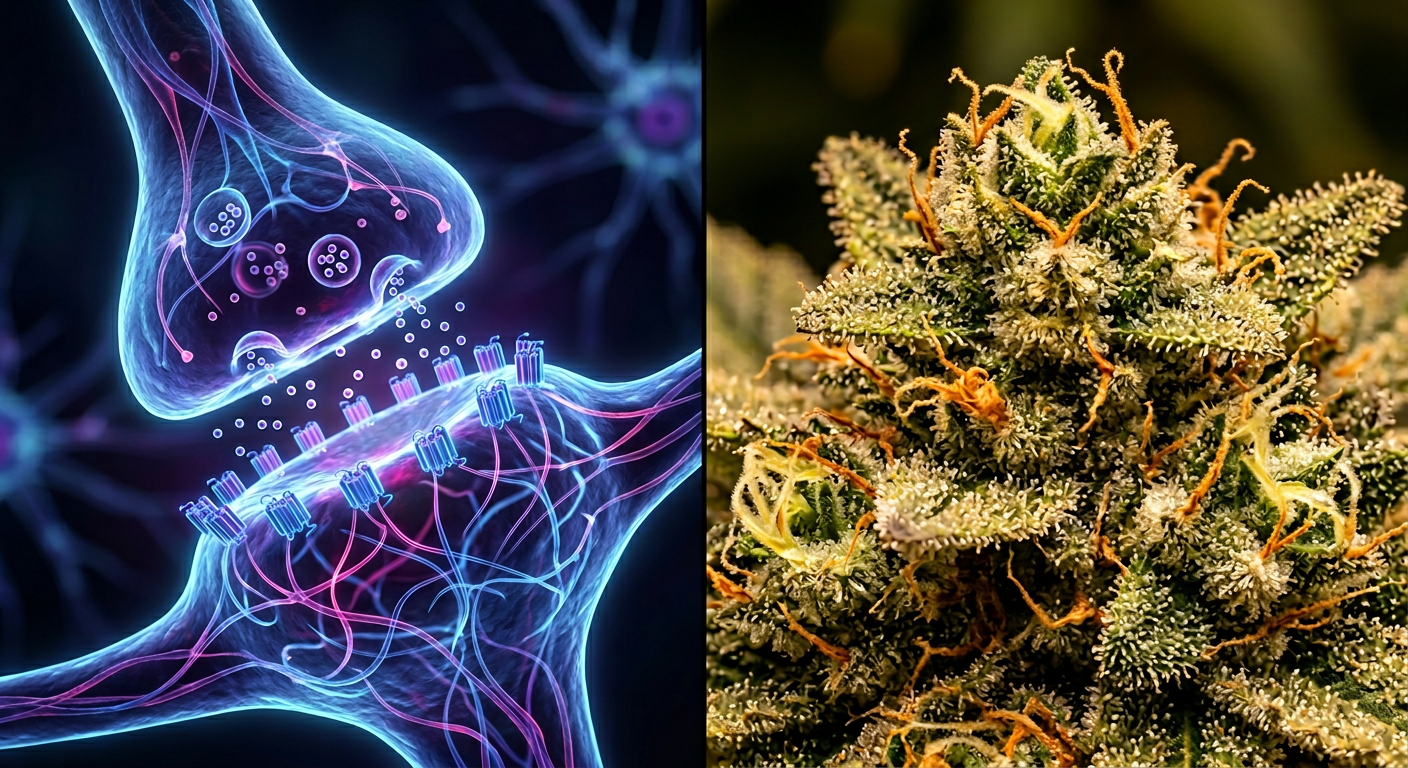
The endocannabinoid system operates on a principle of retrograde signalling — cannabinoids travel backwards across synapses, modulating how much of other neurotransmitters (dopamine, serotonin, GABA) get released. CB1 and CB2 are the gates controlling that modulation. This is why cannabis can affect mood, pain, sleep, and appetite all through a single system.
Choosing Strains for CB1 Activation: The Psychoactive Goal
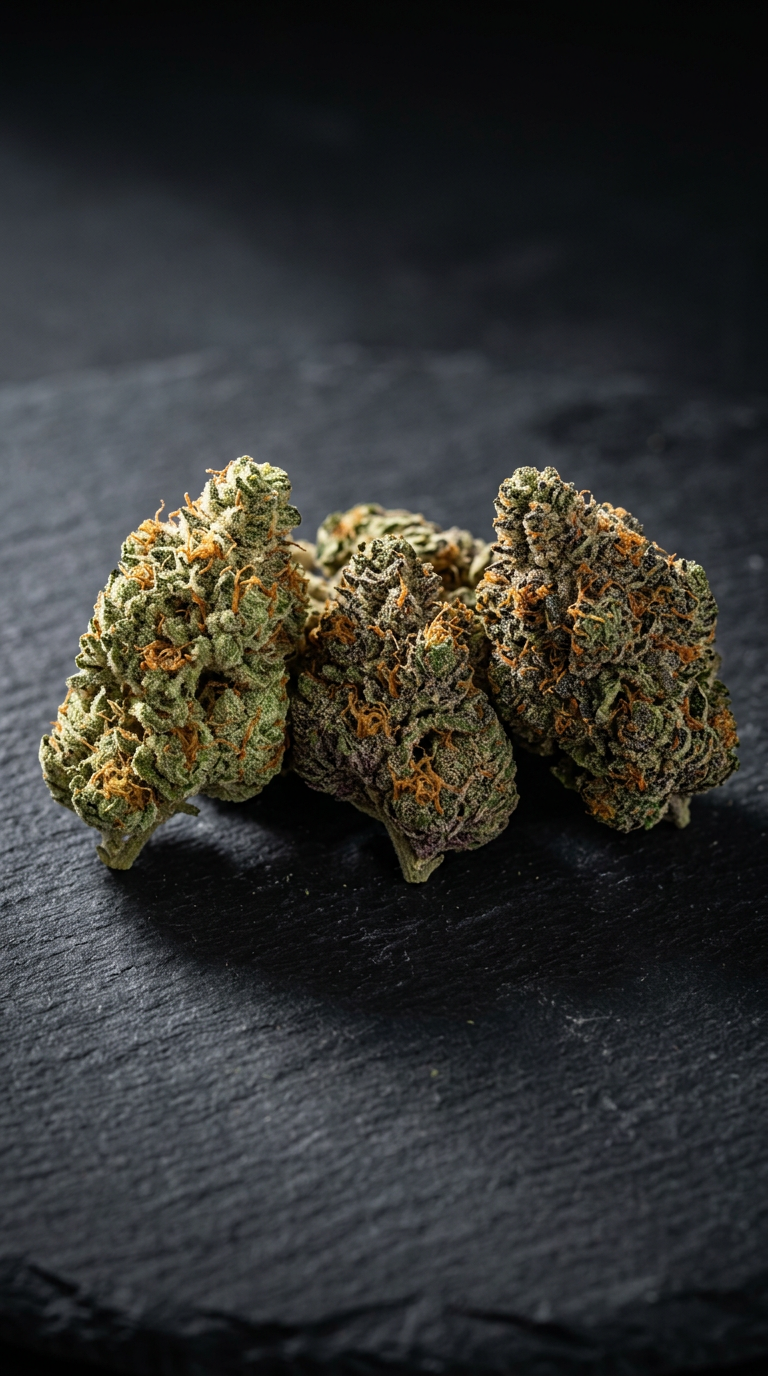
If your goal is strong CB1 activation — whether for recreational euphoria, creative enhancement, or robust pain relief via central pathways — you want high-THC strains with minimal CBD to blunt the effect. The key metric is not just THC percentage but the THC:CBD ratio and the terpene profile that shapes how that THC hits.
What to Look For in a High-CB1 Strain
- THC above 20% (for strong CB1 activation)
- CBD below 1% (to avoid CB1 modulation by CBD)
- Terpene profiles including myrcene (crosses blood-brain barrier more easily), limonene, and pinene
- Indica-dominant or balanced hybrid genetics for body-centred CB1 effects
- Sativa-dominant genetics for cerebral, energetic CB1 activation
Strong CB1 Strains: Our Top Picks
OG Kush Feminized — 26% THC
One of the most studied CB1-activating strains in the world. OG Kush's terpene profile (myrcene, limonene, caryophyllene) accelerates CB1 binding and produces a well-rounded euphoric, relaxing high. Widely used as a benchmark for CB1-dominant effects.
Quantum Kush Feminized — 30% THC
At 30% THC, Quantum Kush sits at the extreme end of CB1 activation potential. This is not a subtlety strain — it's built for maximum CB1 saturation. Experienced growers only; beginners should start lower.
Purple Kush Feminized — 27% THC
A pure indica lineage delivering deep physical CB1 activation alongside the body sedation characteristic of myrcene-heavy terpene profiles. Excellent for evening use where complete CB1-driven relaxation is the goal.
Black Widow Feminized — 26% THC
Known for a powerful cerebral CB1 effect alongside notable full-body sensations. Strong euphoria and sensory enhancement make this a classic choice for high CB1 activation.
Wedding Cake — ~25% THC (widely available, not in our range)
A hybrid with particularly dense trichome coverage and high THC consistency. Known for strong CB1 activation with a sweet vanilla-pepper terpene profile. Grows medium-tall with moderate difficulty.
Gorilla Glue #4 — ~27% THC (widely available)
One of the most resin-heavy strains available. Extremely high CB1 activation with a heavy, sedating effect profile. Challenging to grow well but delivers exceptional potency when conditions are dialled in. See our complete Gorilla Glue strain encyclopedia.
For the strongest CB1 activation from your grow, focus on trichome ripeness as much as THC percentage. Trichomes harvested at peak milky-white opacity (before full amber) deliver the highest THC:CBN ratio and therefore the sharpest CB1 response.
Choosing Strains for CB2 Activation: Pain, Inflammation & Immune Support
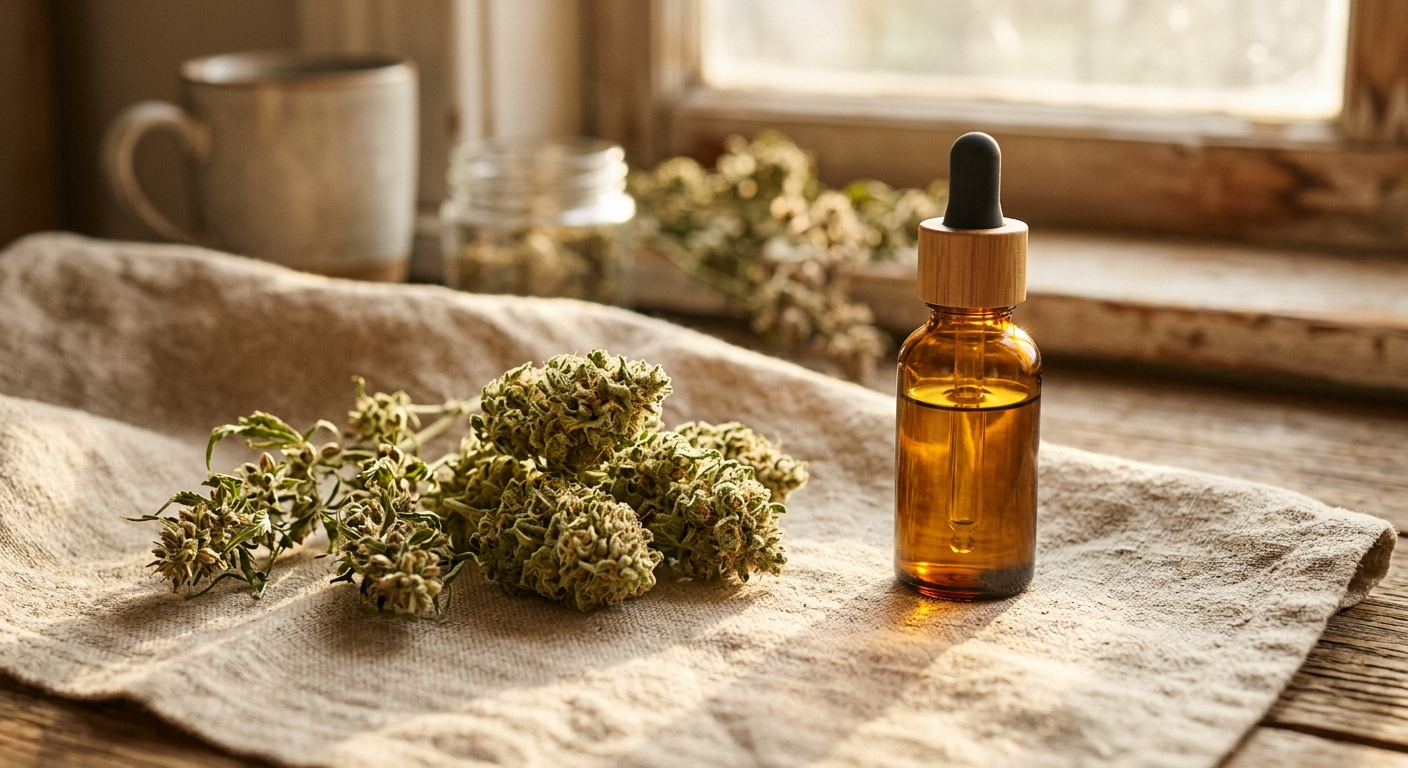
CB2-targeted strain selection is about cannabinoid ratio architecture, not just picking any CBD strain. You want a profile that delivers meaningful CB2 agonism — whether through CBD's indirect modulation, CBG's partial agonism, or beta-caryophyllene's direct terpene-mediated CB2 binding. The result is anti-inflammatory activity, peripheral pain relief, and immune modulation without strong psychoactivity.
What to Look For in a CB2-Focused Strain
- CBD above 8% OR a 1:1 to 1:3 THC:CBD ratio
- Notable CBG content (look for strains with reported CBG above 1%)
- High beta-caryophyllene terpene presence (Kush lineages, Diesels, Cookies crosses)
- CBC content where lab data is available
- Lower THC (under 15%) to avoid CB1 dominance overwhelming the CB2 contribution
CB2-Relevant Strains Worth Growing
Swiss Miss Feminized — 15% THC
Swiss Miss delivers moderate THC levels alongside notable CBD content, creating a balanced receptor activation profile where CB2 effects are genuinely felt. The lighter psychoactivity makes it suitable for daytime use where inflammation relief is the priority.
Cookies Kush Feminized — 18% THC
The Kush genetic backbone brings heavy beta-caryophyllene content, adding direct CB2 agonism through terpene pathways. Cookies Kush delivers a body-focused effect profile that reflects meaningful CB2 contribution alongside its CB1 activity.
Purple Power Feminized — 10% THC
At 10% THC, Purple Power is one of the most CB2-accessible strains in our range. Lower THC means weaker CB1 dominance, allowing the anti-inflammatory terpene and cannabinoid profile to show through more clearly. Ideal for growers prioritising wellness over intensity.
ACDC — ~1% THC / ~20% CBD (widely available)
One of the most studied high-CBD strains available. Virtually no CB1 psychoactivity; almost entirely CB2-pathway effects. Challenging to grow indoors but exceptional for purely therapeutic CB2 targeting. Often used as a reference strain in CBD bioavailability research.
Harlequin — ~5% THC / ~10% CBD (widely available)
A classic 1:2 THC:CBD strain that delivers a gentle CB1 lift alongside robust CB2 activity. Functional and clear-headed, making it a popular choice for daytime pain and inflammation management without sedation.
Charlotte's Web — ~0.3% THC / ~17% CBD (widely available hemp-lineage)
The strain that brought high-CBD cannabis to global attention. Minimal CB1 activity; designed almost entirely around CBD-mediated CB2 and indirect CB1 modulation. Best suited for extraction rather than direct flower use.
For maximum CB2 effect, combine a high-CBD or balanced strain with high-beta-caryophyllene genetics. You get two independent CB2 activation pathways simultaneously — from the CBD cannabinoid side and the terpene side — for a more complete anti-inflammatory response.
CB1 vs CB2: Head-to-Head Verdict Cards
Cut through the complexity with these side-by-side verdicts for common growing and consumption goals.
| Goal | Receptor Target | Strain Strategy | Example Strains |
|---|---|---|---|
| Maximum euphoria / recreational high | CB1 (dominant) | THC 22%+, CBD under 1%, myrcene-heavy | Quantum Kush, OG Kush, Gorilla Glue #4 |
| Creative / cerebral energy | CB1 (sativa-style activation) | High THC, limonene/pinene terpenes, sativa genetics | Sour Diesel, Super Lemon Haze, New York Power Diesel |
| Sleep / deep relaxation | CB1 (indica, high myrcene) | Indica genetics, 20%+ THC, late harvest (some CBN) | Purple Kush, Northern Lights x Big Bud, Granddaddy Purple |
| Pain relief (central + peripheral) | CB1 + CB2 (balanced) | 1:1 to 2:1 THC:CBD, caryophyllene-rich | Cookies Kush, Harlequin, Swiss Miss |
| Anti-inflammatory, minimal high | CB2 (dominant) | High CBD, low THC, CBG-positive strains | Purple Power, ACDC, Charlotte's Web |
| Appetite suppression / alertness | CB1 (antagonist — THCV) | Landrace African sativa, Durban lineage | Malawi Gold, Swazi, Durban Poison |
| Anxiety reduction, calm clarity | CB1 (modulated) + CB2 | Moderate THC + CBD, limonene + linalool terpenes | Blue Magoo, Jillybean, Cannatonic |
How Growing Conditions Shift Cannabinoid Ratios — and Which Receptors Get Activated
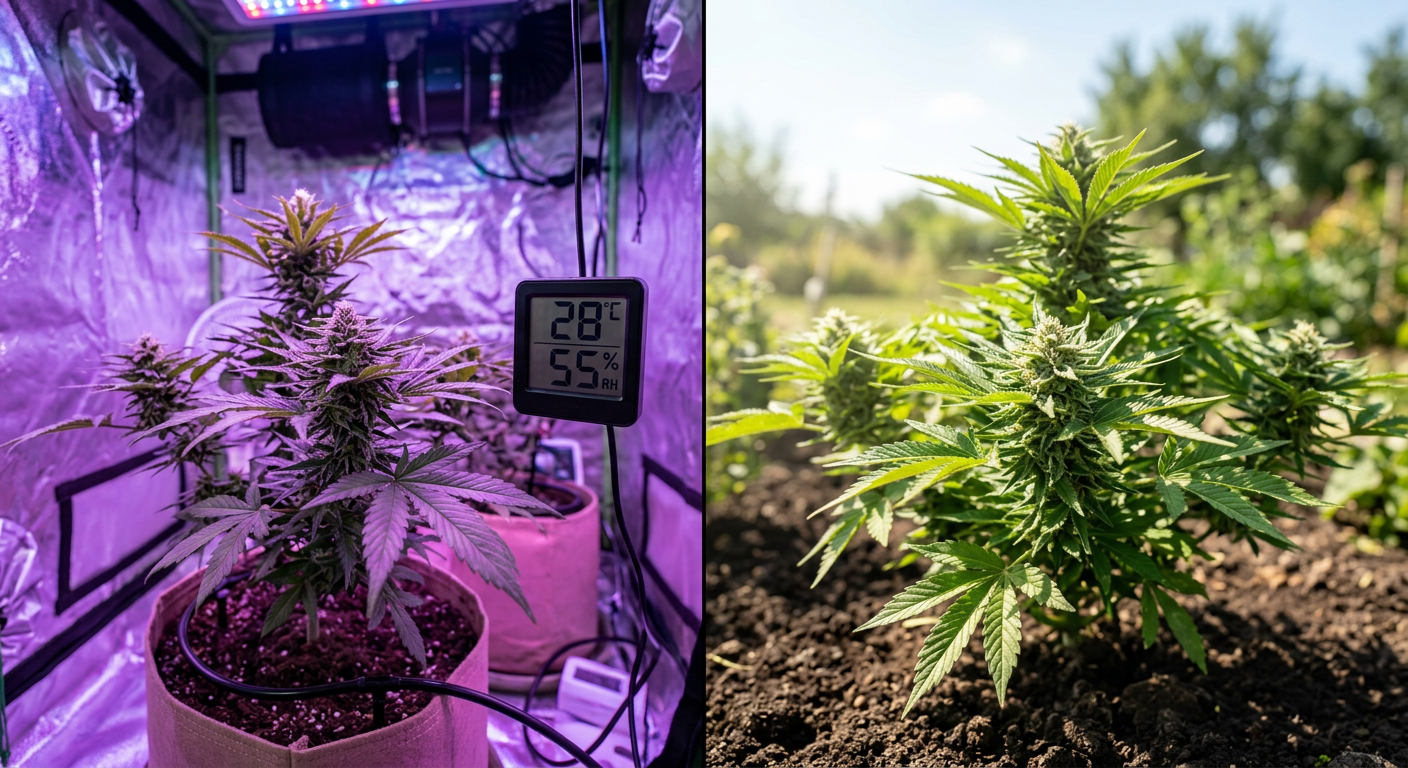
Here's the part that almost nobody covers: as the grower, you have more control over the final CB1/CB2 activation profile than most people realise. The same strain seed can produce meaningfully different cannabinoid ratios depending on how you grow it. These variables matter most.
Harvest Timing: The Biggest CB1 Variable
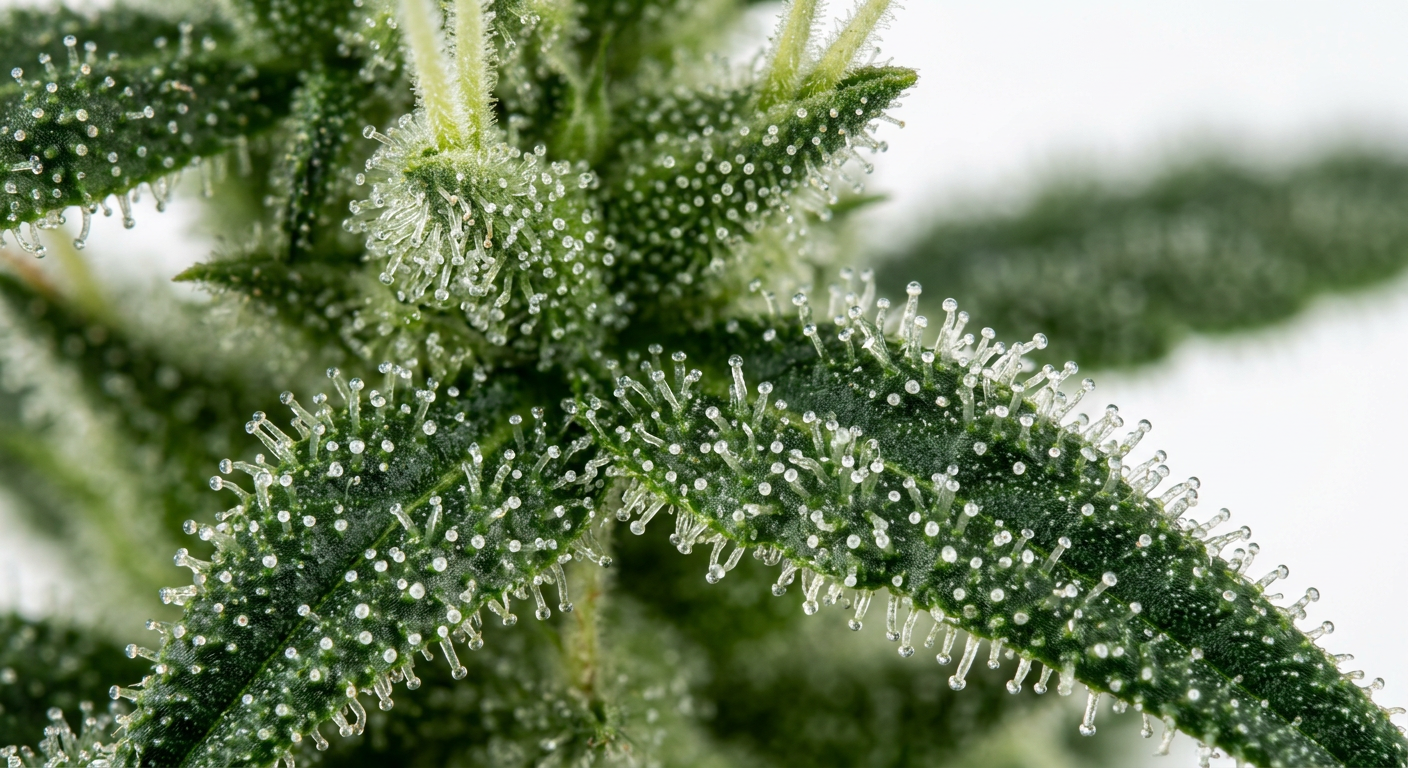
THC is at peak concentration when trichomes are approximately 70–90% milky white with a minority of amber. As the plant ages past this window, THC converts to CBN through oxidation. CBN has only about 10% of THC's CB1 binding affinity — so a late harvest doesn't just mean older cannabis, it means genuinely reduced CB1 activation per gram.
Milky White Trichomes (Peak THC)
Maximum CB1 activation potential. Harvest now for the sharpest psychoactive effect and highest THC:CBN ratio.
Mixed Milky/Amber Trichomes
Balanced CB1/CBN profile. Slightly more sedative effect, useful for sleep-focused CB1 activation with some CBN contribution.
Majority Amber Trichomes
Significant THC degradation. Lower CB1 potency, higher CBN. More appropriate for heavy sedation than euphoric CB1 effects.
Temperature: Heat Degrades THC and Shifts the Profile
High grow temperatures — consistently above 28°C (82°F) in the canopy — accelerate THC degradation. If you're running a hot grow room, you're losing CB1 potency before harvest even arrives. Temperatures between 22–26°C (72–79°F) during late flowering preserve cannabinoid integrity best.
Cold temperatures during late flowering (below 15°C/59°F at night) can trigger anthocyanin pigment production in predisposed strains, producing purple coloration — but more relevantly, cold stress in the final 2 weeks can stress trichome production upward as a defence response, potentially increasing total cannabinoid density. Our VPD grow guide covers the temperature-humidity relationship that underpins this.
UV Light: The Trichome Production Driver
Cannabis produces cannabinoids and terpenes in trichomes partly as a UV radiation defence mechanism. Supplemental UVB lighting (280–315nm wavelengths) during the final 2–3 weeks of flowering has been documented to increase total trichome density and potentially shift cannabinoid profiles toward higher THC and CBG expression. Outdoor grows in high-altitude environments naturally receive more UV and consistently produce more resinous harvests.
Nutrient Stress in Late Flower: Terpene Amplification
Deliberately flushing or reducing nutrients in the final 2 weeks — a practice sometimes called 'late flush' — may increase terpene expression as the plant shifts resources. Since terpenes like beta-caryophyllene contribute direct CB2 binding, anything that amplifies the terpene profile indirectly influences which receptors get the most activity.
Use our yield estimator tool to model how harvest timing adjustments (which affect dry weight and cannabinoid density) might change your total output. It's also useful for planning how many plants you need for a specific target quantity.
Genetics Set the Ceiling; Growing Conditions Set the Floor
No amount of optimised growing conditions will push a genetically 15% THC strain to 25% THC. Genetics establish the maximum possible cannabinoid expression. Growing conditions determine how close to that maximum you actually get. For CB2-focused growing goals, selecting the right CBD:THC ratio genetics is the first decision — cultivation technique is the second.
Grower's Checklist: Matching Your Cultivation Goals to Receptor Targets
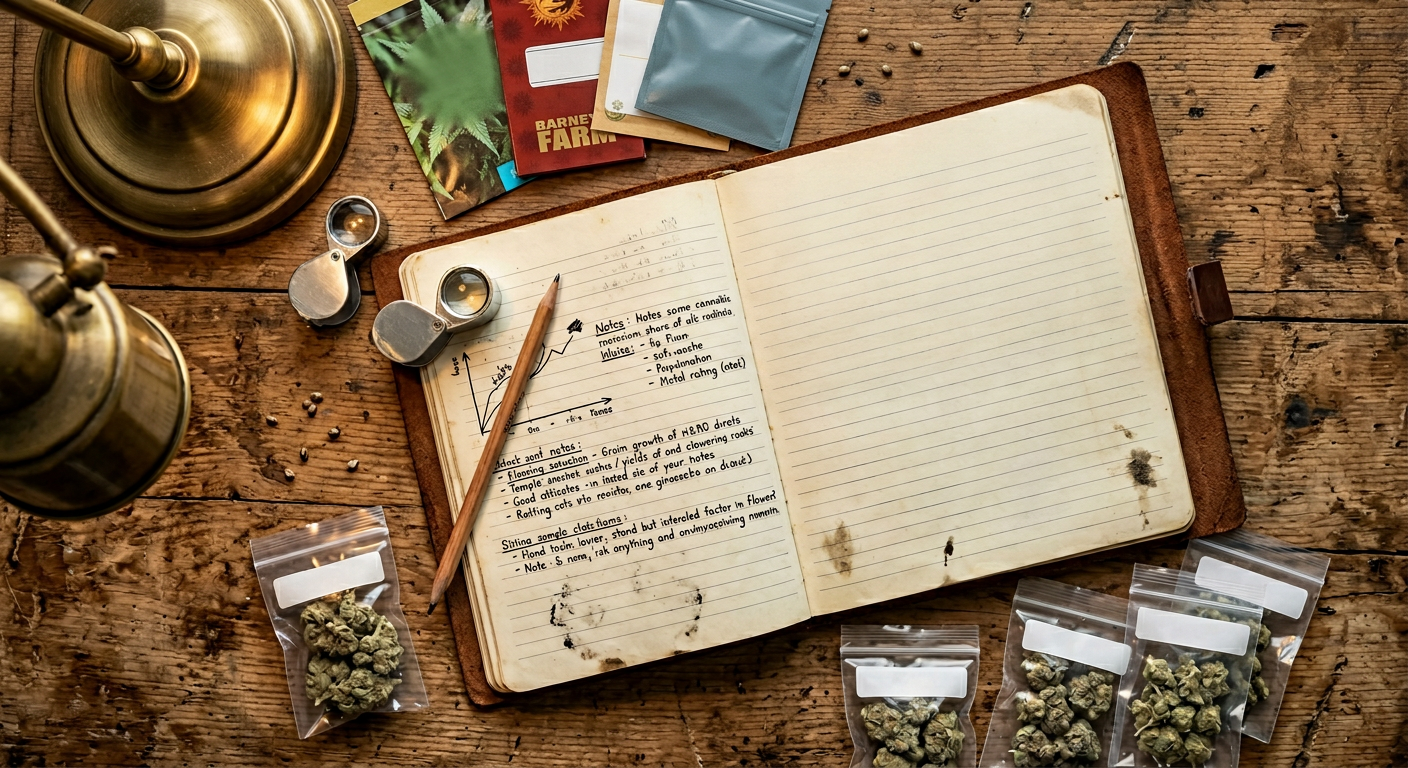
Use this checklist before you buy seeds. Each item directly maps your growing decision to the CB1/CB2 receptor outcome you're after.
- Define your primary receptor target: CB1 (psychoactive/pain), CB2 (anti-inflammatory/immune), or balanced
- Check seed THC% and CBD% — calculate the ratio, not just the percentage
- Research the strain's known terpene dominants — look for caryophyllene for CB2 support
- Choose indica-dominant genetics for body-focused CB1; sativa for cerebral CB1
- Plan harvest timing: early-window harvest for peak CB1, mid-window for balanced, late for CBN sedation
- Control grow room temperature: stay under 26°C in late flower to preserve THC (CB1 potency)
- Consider UVB supplementation in final 2–3 weeks to boost trichome density
- For CB2 targets: prioritise CBD-dominant or balanced genetics over trying to manipulate a high-THC strain
- Store dried cannabis in airtight, dark, cool conditions to prevent THC-to-CBN degradation
- Read lab reports: look at the full cannabinoid panel (CBG, CBC, THCV) not just THC and CBD
The single most impactful thing a grower can do to control CB1 vs CB2 activation ratio is seed selection. Choose the right genetic architecture first. Every technique after that is optimisation, not transformation.
Tools to Help You Plan
Getting the most out of your grow — whether CB1- or CB2-targeted — starts with good data. These free tools help you optimise the growing conditions that protect and maximise your chosen cannabinoid profile:
- VPD Calculator — keep temperature and humidity in the zone that preserves terpenes and cannabinoids
- Grow Planner — map your grow timeline to hit your ideal harvest window precisely
- Light Calculator — ensure your canopy receives the intensity needed for peak trichome production
- Nutrient Calculator — plan your late-flower flush timing to amplify terpene expression
Putting It All Together: Your CB1/CB2 Strain Selection Blueprint
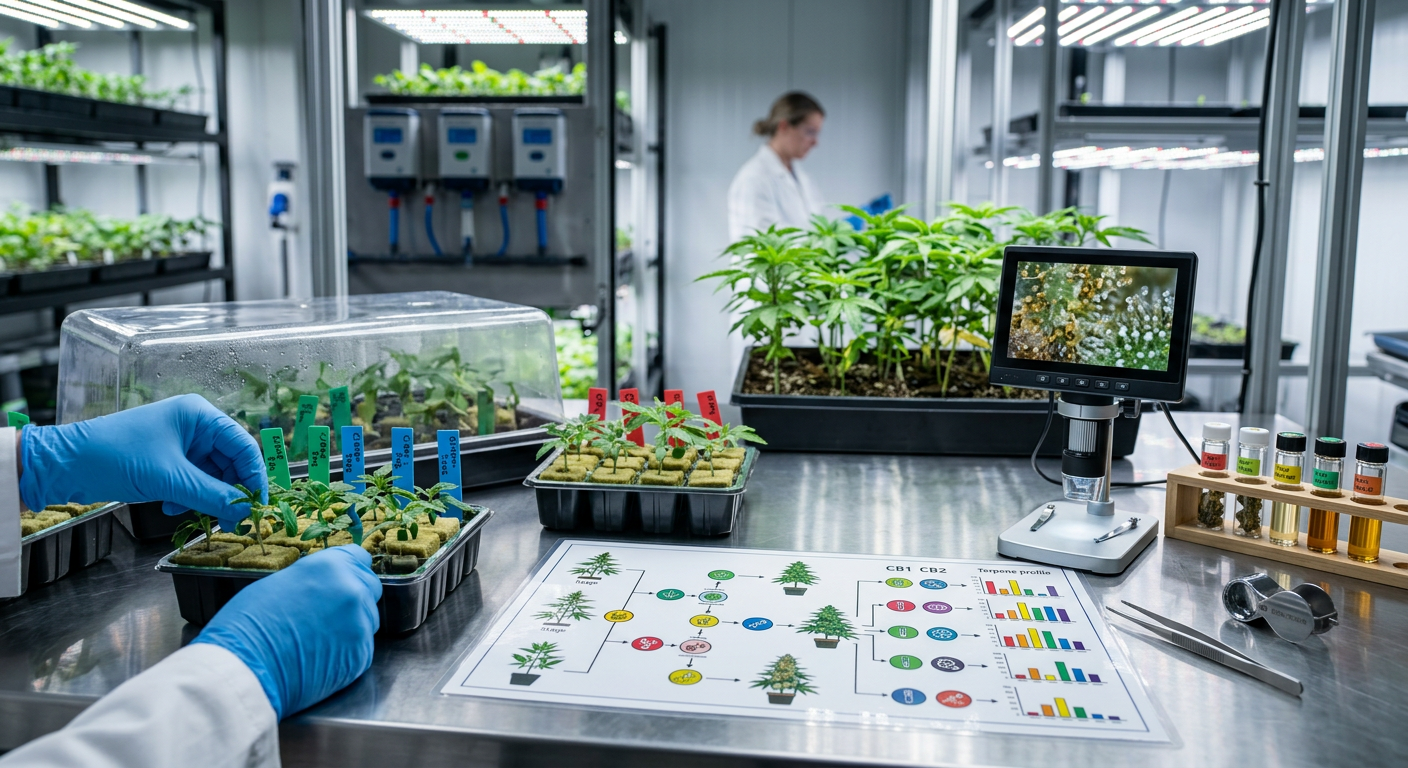
Every cannabis effect — from a 3-hour creative flow state to quiet relief from sore joints — runs through the CB1 and CB2 receptor system. Understanding which receptor you're targeting, and choosing seeds and growing practices that deliver the right cannabinoid profile to activate it, transforms strain selection from guesswork into a repeatable strategy.
The key principles to carry forward:
- CB1 = brain and CNS = psychoactivity, central pain relief, appetite, mood — driven by THC
- CB2 = immune and peripheral = inflammation, tissue pain, immune modulation — driven by CBD, CBG, and beta-caryophyllene
- THC:CBD ratio determines the CB1:CB2 activation balance more than any single cannabinoid percentage
- Minor cannabinoids (CBG, CBN, CBC, THCV) add nuance — know what each does before dismissing it as a trace amount
- Growing conditions (harvest timing, temperature, UV) shift the final receptor activation profile within the limits set by genetics
For the foundational science behind how your body uses all these cannabinoids — including how the endocannabinoid system regulates everything from appetite to immune response — visit our complete guide to the endocannabinoid system. And for strain-specific decisions, our best indoor strains guide maps genetics to grow environment alongside effect profiles.
High-THC strains (CB1 dominant, 25%+) can intensify anxiety and paranoia in sensitive individuals or at high doses. If you're new to cannabis or exploring CB1 activation for the first time, start with strains in the 15–20% THC range. CB2-focused low-THC or balanced strains carry much lower risk of adverse cognitive effects.
Frequently Asked Questions
What is the difference between CB1 and CB2 receptors?
CB1 receptors are concentrated in the brain and central nervous system, controlling psychoactive effects, mood, memory, appetite, and central pain pathways. CB2 receptors sit primarily in immune tissue and peripheral organs, regulating inflammation, immune cell activity, and peripheral pain. THC's strong CB1 binding causes the cannabis 'high'; CBD's CB2 modulation drives anti-inflammatory effects without significant psychoactivity.
Does THC activate CB1 or CB2 receptors?
THC is a partial agonist with high binding affinity for CB1 receptors, which is why it produces euphoria, altered perception, and appetite stimulation. It also has weaker binding to CB2 receptors, contributing some anti-inflammatory effect. At typical consumption doses, CB1 activation overwhelmingly dominates the THC experience.
Which strains target CB2 receptors for inflammation?
High-CBD strains (CBD above 8%), balanced 1:1 THC:CBD strains, and strains with high beta-caryophyllene content offer the most relevant CB2 activity. ACDC, Harlequin, Charlotte's Web, and our own Purple Power and Swiss Miss are strong options. CBG-rich strains also contribute CB2-mediated effects through partial agonism.
Can growing conditions change which receptors a cannabis strain activates?
Yes, significantly. Harvest timing is the most impactful variable — harvesting at peak milky trichomes maximises THC (CB1 activation), while late harvests convert THC to the weaker CBN. Temperature above 28°C degrades THC. UVB supplementation in late flower can increase trichome density, affecting total cannabinoid output. However, genetics set the maximum possible cannabinoid ratio — growing conditions optimise within those limits.
Does CBD block CB1 receptors and reduce the cannabis high?
CBD acts as a negative allosteric modulator at CB1 — it changes the receptor's shape, reducing THC's binding efficiency without fully blocking it. In practice, this means high-CBD strains or CBD-rich consumption methods soften or reduce THC's psychoactive intensity. A 1:1 THC:CBD ratio noticeably mellows the high compared to the same THC dose with no CBD present.