Why Strain Family Predicts Terpene Profile Before You Ever Smell a Jar
Picture this: you're browsing seed descriptions, and two strains both claim "earthy, citrus notes." One is an OG Kush cross. One is a Diesel cross. They will smell and test completely differently, and knowing why is the entire point of this guide.
Cannabis terpene profiles by strain family follow predictable genetic patterns. Terpene synthase genes are inherited just like cannabinoid production pathways, which means lineage is the single most reliable predictor of what you'll taste, smell, and measure on a COA before you ever crack a seed.
This article maps the dominant terpene signatures of six major cannabis strain families: with real test data, flavor science, and practical guidance for growers who want to buy seeds with confidence.
The Genetics-to-Flavor Pipeline: How Lineage Shapes Terpenes
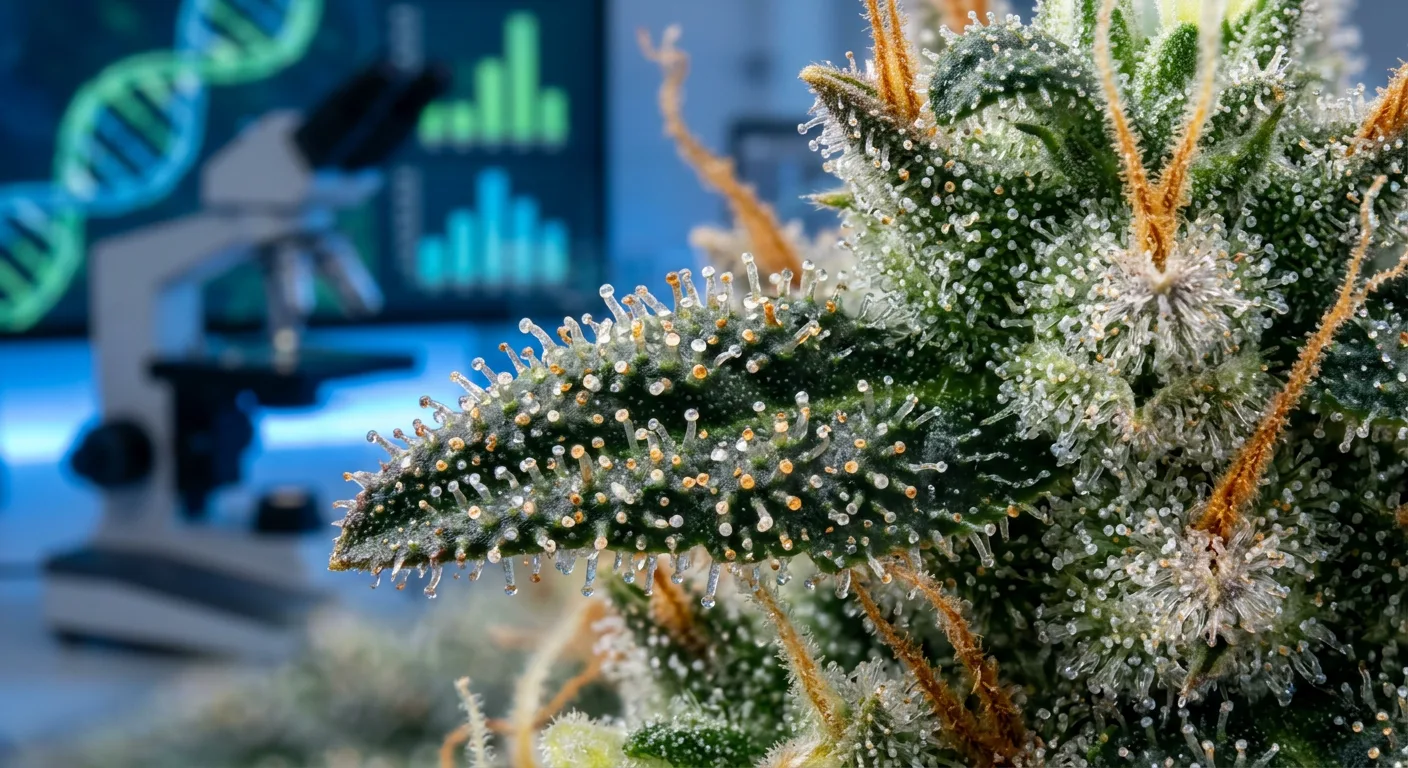
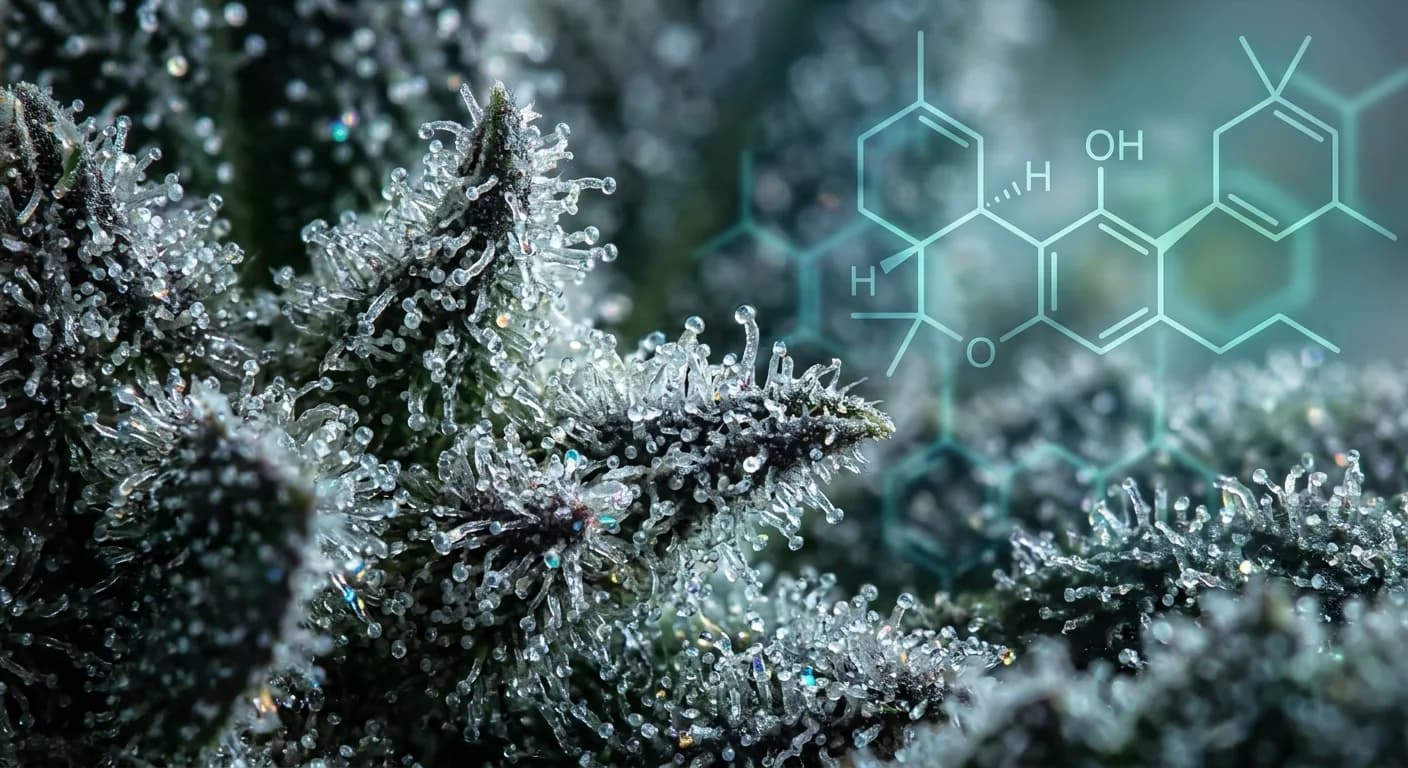
The dominant terpene profile of any cannabis strain family is the result of specific terpene synthase (TPS) enzyme activity encoded in the plant's genome. A 2021 study published in Science Advances identified at least 30 functional TPS genes in cannabis, each responsible for synthesizing one or more terpenes in the trichome glands during late flowering.[1]
When a breeder crosses two plants, the offspring inherits a blend of TPS gene variants from both parents. If one parent strongly expresses the genes for myrcene synthesis and the other expresses limonene synthase dominantly, the F1 offspring often shows a predictable blend, or one terpene dominates depending on which allele pair is homozygous.
Science note: Terpene heritability estimates from greenhouse studies range from 0.55 to 0.82 (on a 0–1 scale), meaning genetics explains 55–82% of a terpene's concentration across environments. This is why knowing a strain's family is a reliable shortcut to predicting flavor: it's not marketing, it's molecular biology.
The remaining variance, roughly 18–45%, comes from environment: light intensity, temperature, soil chemistry, UV exposure, and harvest timing. But genetics sets the ceiling and the direction. A strain that cannot produce terpinolene by genetics will never test high in terpinolene, no matter what you do in the grow room.
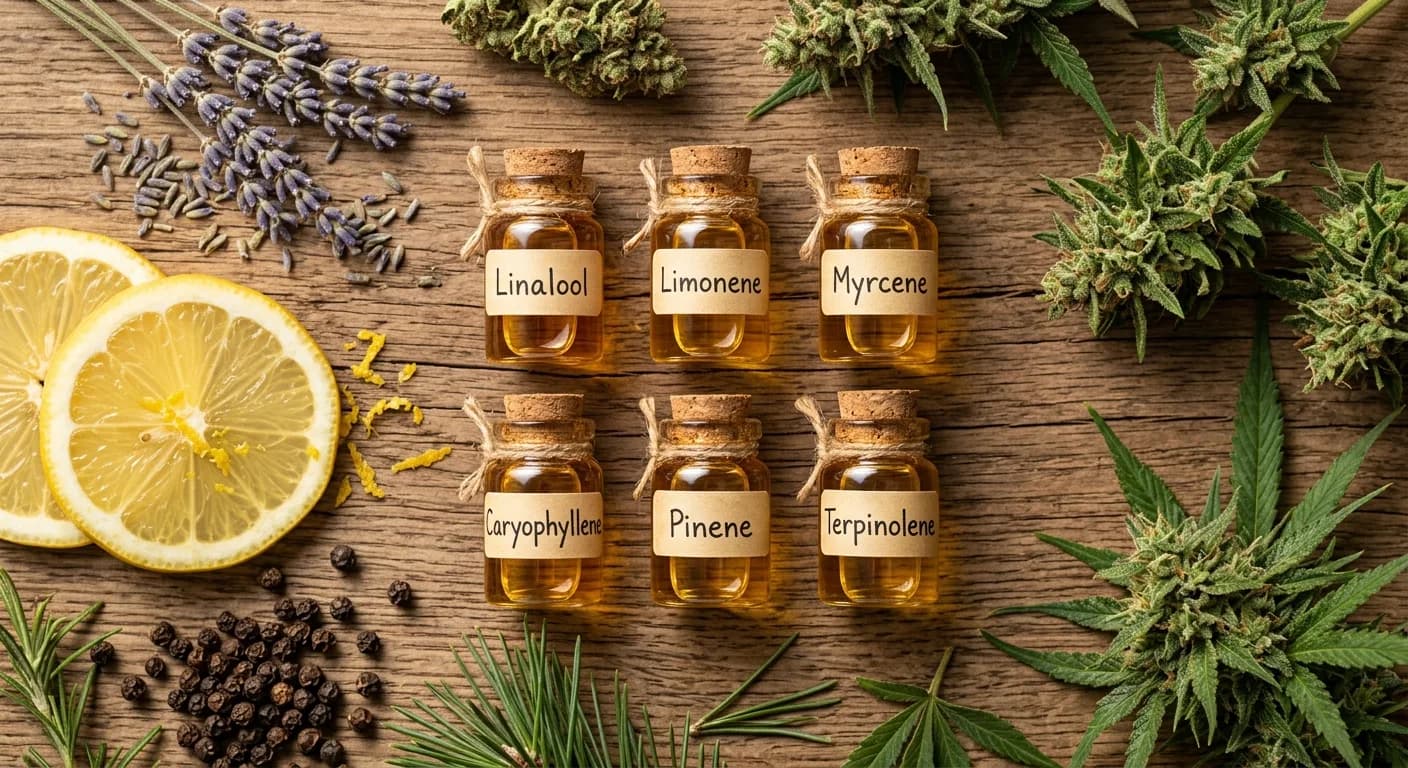
This is why our complete cannabis terpene chart organizes terpenes not just by molecule but by which strain families express them most reliably. Before buying seeds, cross-referencing lineage with known terpene signatures tells you far more than any breeder flavor description ever will.
Key takeaway: Lineage predicts terpene profile because terpene synthase genes are heritable traits. Knowing a strain's family, OG, Haze, Diesel, Cookies, lets you predict taste, aroma, and lab results before you purchase seeds or harvest your first crop.
OG Kush Family Terpene Profile: Myrcene, Limonene, Caryophyllene
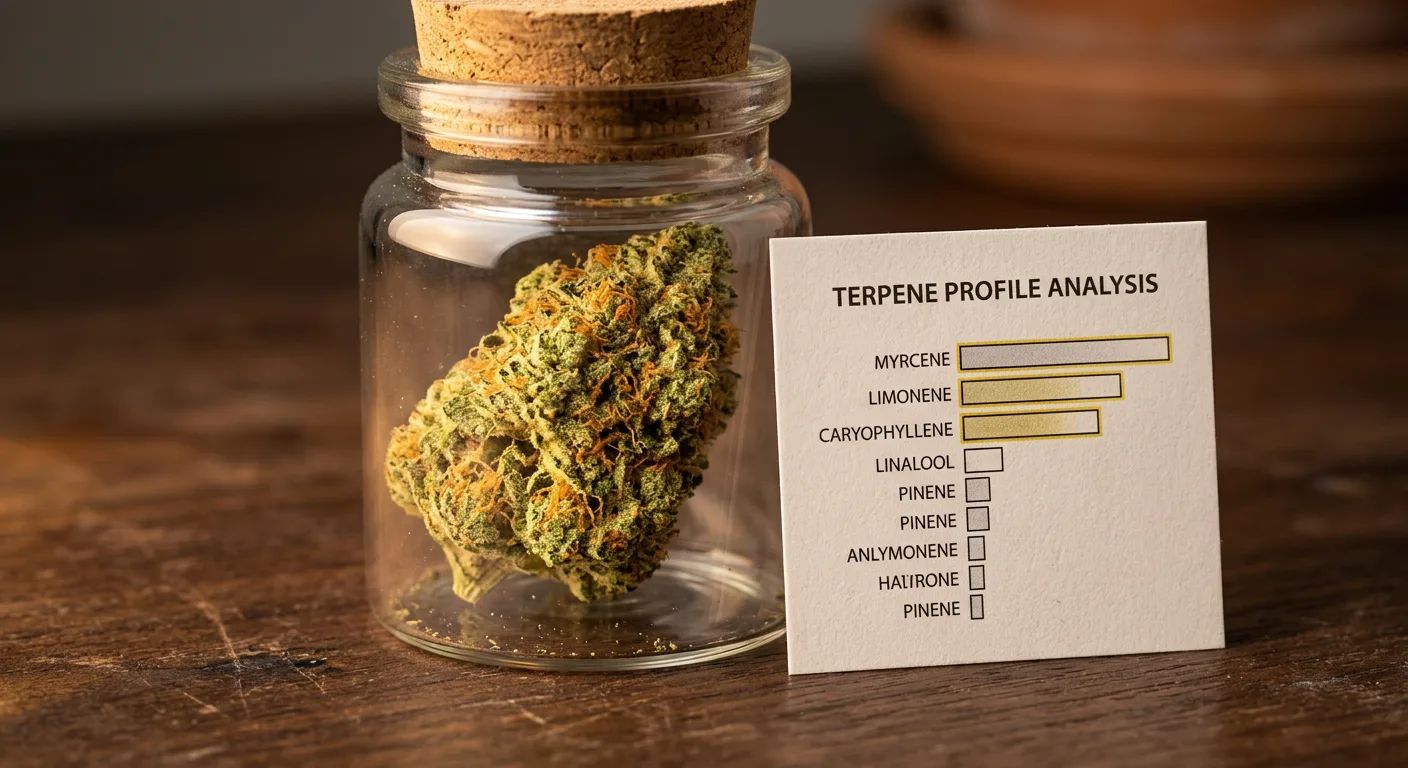
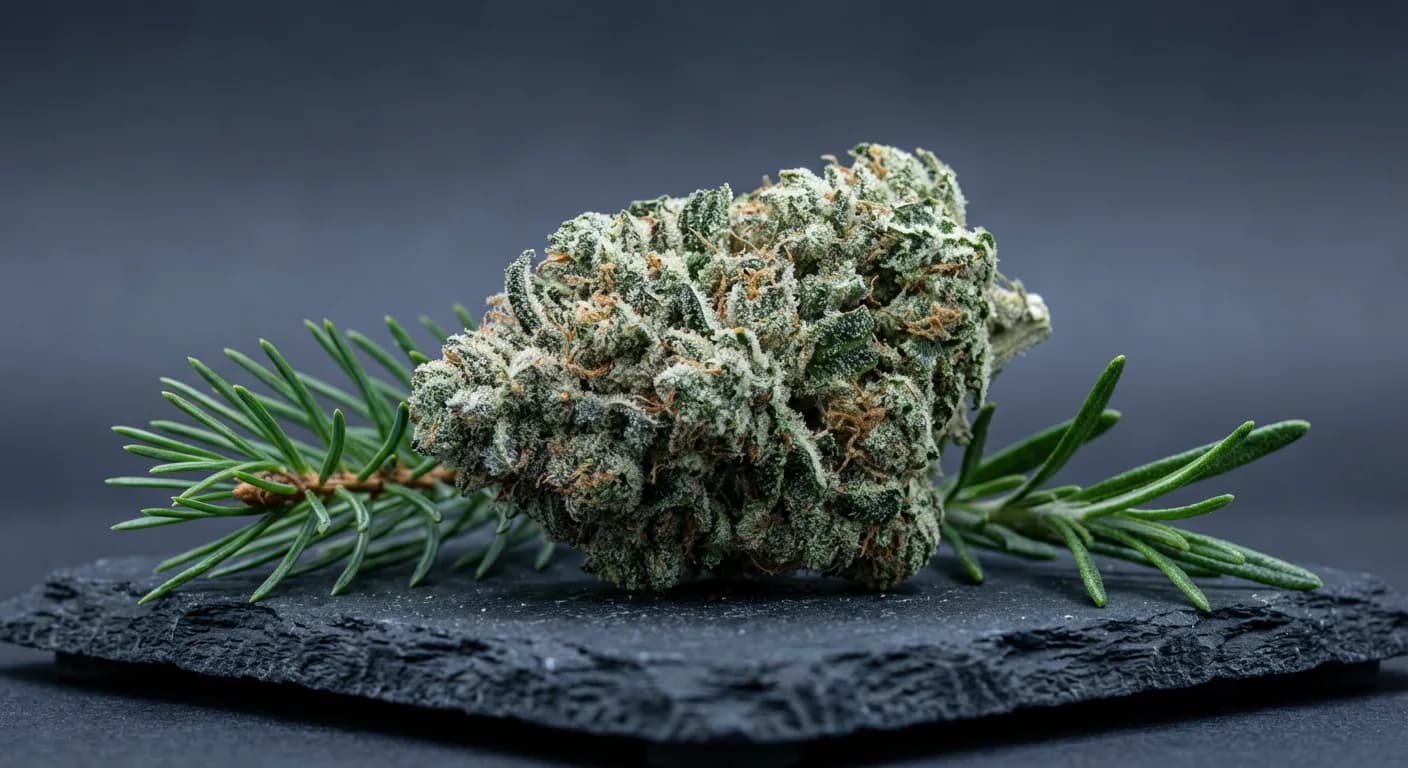
The OG Kush family delivers the most recognizable terpene signature in North American cannabis: a fuel-forward, earthy base with a sharp lemon edge and a peppery backbone. Understanding this triangle of dominant terpenes explains every OG you've ever smelled.
The OG Terpene Triangle
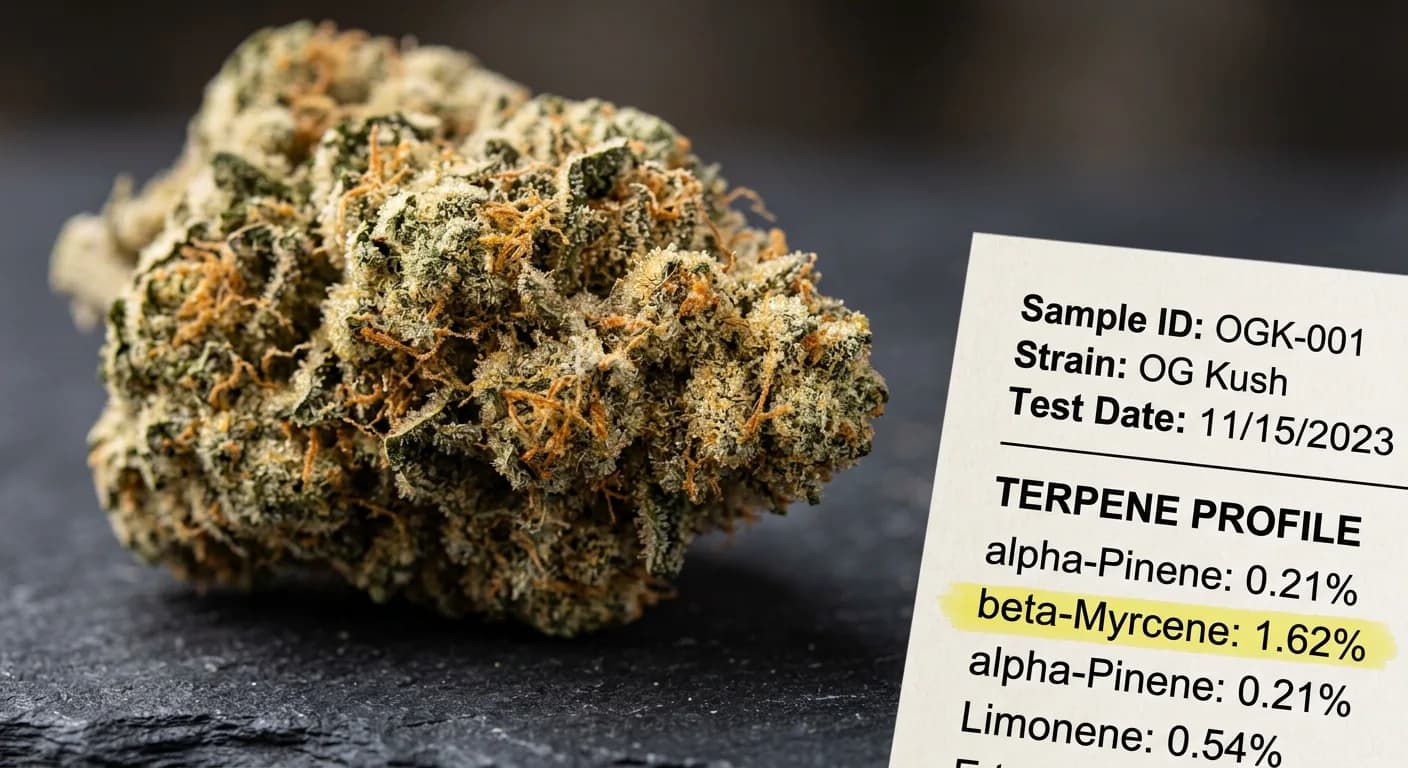
Across dozens of laboratory analyses, OG Kush and its closest crosses consistently test with the following dominant terpene hierarchy:
- Myrcene (β-myrcene): Typically 25–45% of total terpene fraction. Earthy, musky, slightly herbal. The heaviest compound in the OG nose.
- Limonene (d-limonene): Typically 10–20% of total terpene fraction. Bright lemon-fuel character. The compound responsible for the "cleaning product" top note many OG fans love.
- β-Caryophyllene: Typically 8–18% of total terpene fraction. Peppery, spicy, dry. Adds the throat-warming finish to OG smoke.
Secondary terpenes often include linalool, α-humulene, and small amounts of α-pinene, but these rarely exceed 5% each in true OG-dominant phenotypes. When you read about humulene's earthy, hoppy character, the OG family is exactly where it appears most reliably.
OG Kush Terpene Radar: What the Chart Looks Like
If you plotted an OG Kush terpene profile on a six-axis radar chart (myrcene, limonene, caryophyllene, terpinolene, ocimene, linalool), you'd see a triangle sharply weighted toward the first three axes. Terpinolene and ocimene spikes would be nearly flat: this absence is just as diagnostic as what's present.
OG Crosses That Preserve the Profile
Several notable crosses maintain strong OG terpene fidelity because one parent's OG genetics dominate the TPS expression:
- Tahoe OG: Intensifies myrcene further; often tests at 35–50% myrcene dominance. Heavier, more sedative nose.
- Fire OG: Pushes limonene higher within the OG framework; fuel + citrus ratio shifts toward citrus. Brighter aroma profile.
- Skywalker OG: Adds a floral linalool signature from the Skywalker Haze parent without disrupting the OG base. Our Skywalker OG Autoflower (23% THC) captures this layered OG-forward profile in an autoflowering format.
- Headband: OG Kush × Sour Diesel hybrid that demonstrates what happens when OG meets Diesel, limonene climbs significantly while myrcene stays dominant.
Growers specifically seeking the classic OG nose should look at our OG Kush Feminized Seeds (26% THC), which preserve the original myrcene-forward, fuel-citrus-pepper terpene architecture. For a high-myrcene Kush variant with even deeper earthy expression, Purple Kush Feminized (27% THC) tilts the profile toward pure earthy-grape sedation.
Grower tip: OG family strains increase limonene expression when exposed to slight temperature drops (5–8°F) during the last two weeks of flowering. If you want to push that lemon-fuel top note, cool your nights during late flower and watch your next COA carefully.
Haze Family Terpene Profile: Terpinolene, Ocimene, and the Sativa Difference
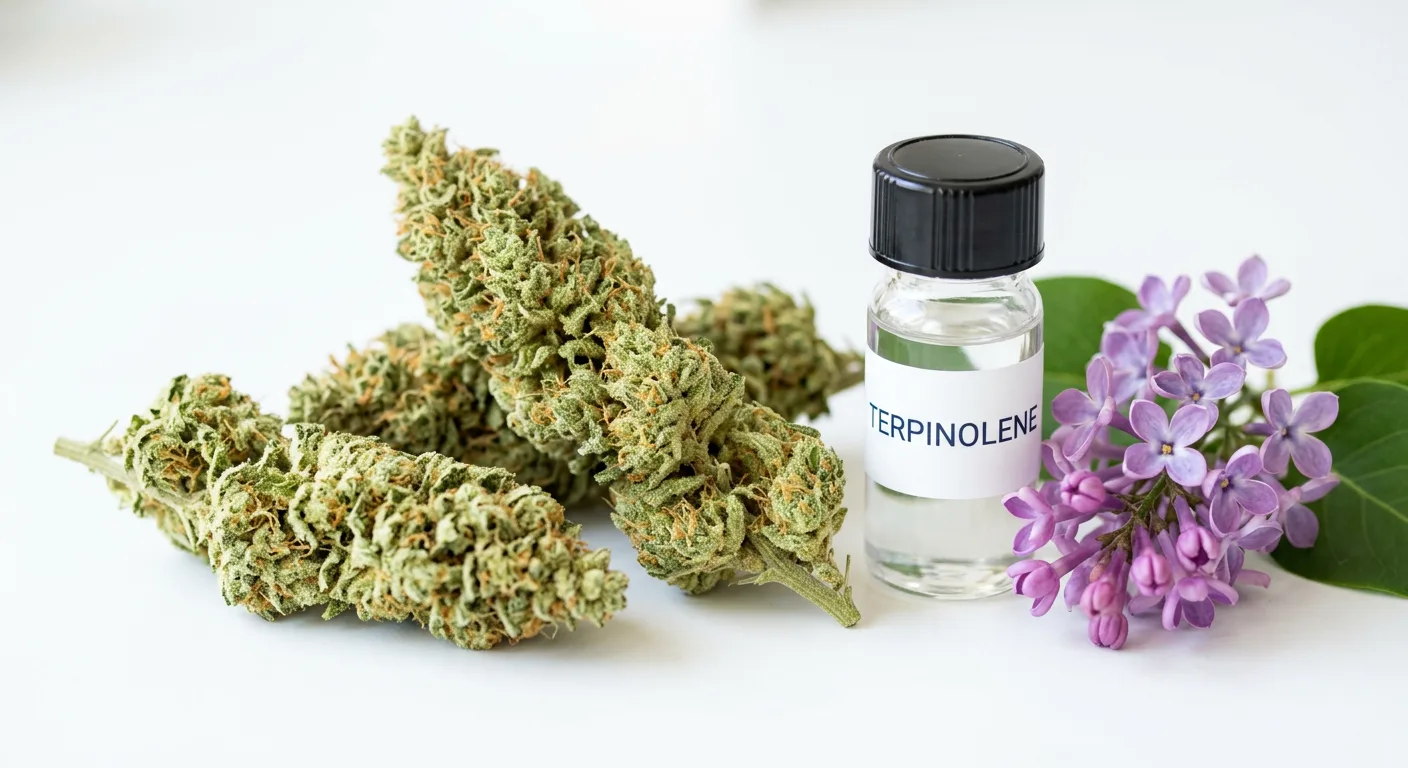
The Haze family smells nothing like OG Kush, and that's entirely explained by terpene chemistry. Where OG is earthy and fuel-forward, Haze strains express a floral, sweet, almost herbal aroma that comes from a completely different dominant terpene pair: terpinolene and ocimene.
Why Hazes Taste So Different
Terpinolene and ocimene are the two terpenes most strongly associated with the Haze lineage, and both are almost absent from true OG phenotypes. This single genetic divergence, which terpene synthase genes are expressed most strongly, accounts for the enormous aromatic distance between these two families.
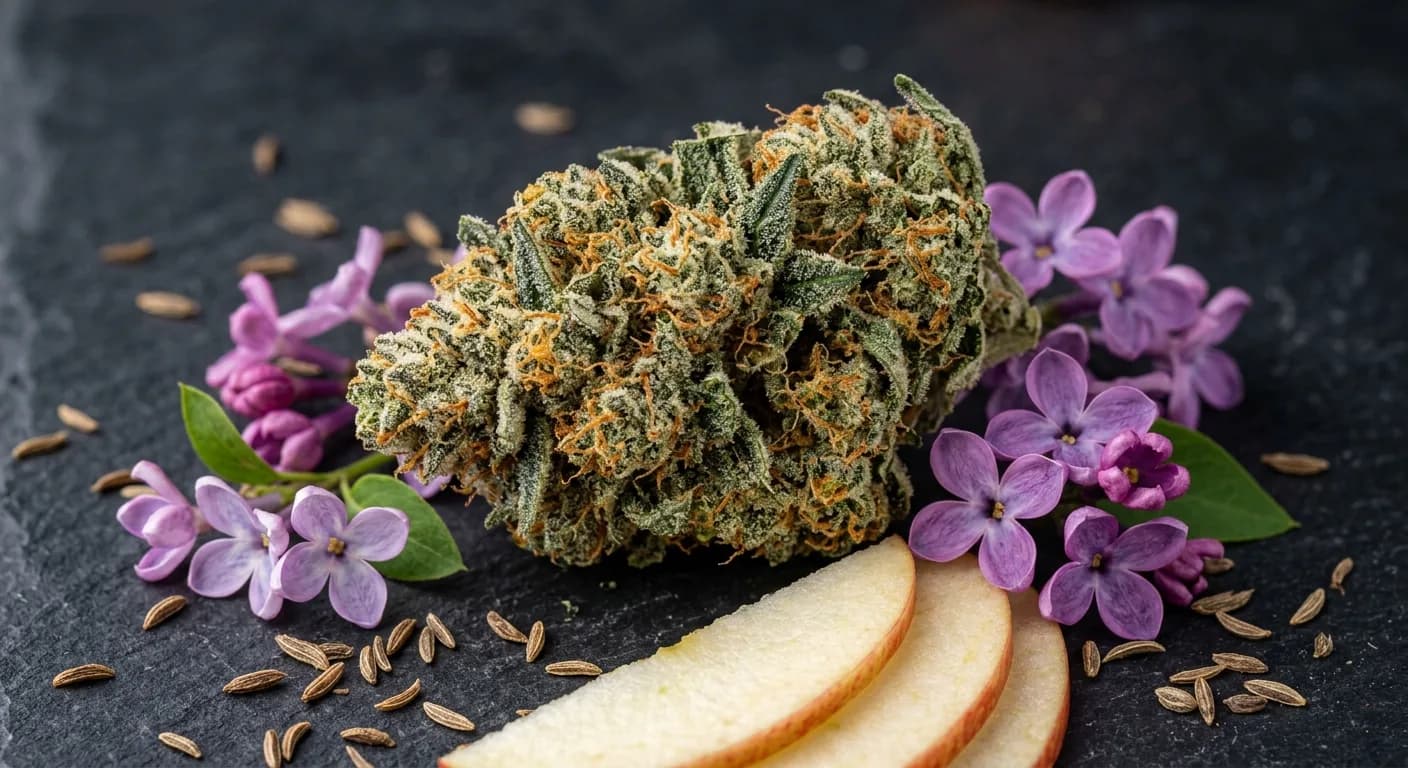
- Terpinolene: Fresh, floral, piney, slightly herbal. Often described as smelling like "lilac, apple, and fresh-cut wood." Typically 15–30% of total terpene fraction in Haze-dominant strains.
- trans-β-Ocimene: Sweet, herbal, slightly citrusy, with a soft tropical edge. Typically 8–18% in Haze dominants. Fundación CANNA's research found trans-β-ocimene averaging 6.6% across diverse cultivars, but in Haze genetics, this climbs significantly higher.
- Myrcene: Present but typically lower than in OG family (10–20% vs 25–45%). The Haze nose is not dominated by myrcene earthiness.
- β-Pinene and α-Pinene: Often more prominent in Haze lineages than in OGs, contributing the fresh piney backdrop. See our complete Pinene guide for deep detail on this terpene.
Haze Terpene Radar: What the Chart Looks Like
A Haze radar chart shows strong terpinolene and ocimene spikes with modest myrcene, the inverse of OG. Caryophyllene is typically low, and limonene is moderate. The overall impression is "light and bright" versus OG's "heavy and dark."
Classic Haze Expressions and Their Terpene Variants
- Original Haze: Highest terpinolene expression of any mainstream strain family. Some phenos test terpinolene at 35%+ of total terps.
- Super Silver Haze: Introduces some myrcene from Skunk and Northern Lights heritage, creating a more rounded, accessible nose.
- Super Lemon Haze: The Lemon Skunk parentage pushes limonene upward, creating a rare Haze phenotype where citrus competes with terpinolene. Our Super Lemon Haze Feminized (23% THC) captures this bright terpinolene + limonene combination with a distinctly zesty, floral aroma.
- Amnesia Haze: One of the most terpinolene-forward commercial varieties. Our Amnesia Haze Autoflower (17% THC) brings this classic Haze terpene architecture to an easier-growing autoflowering format.
- Tangerine Haze: Limonene rises prominently alongside terpinolene, creating an almost candy-orange aroma. Try our Tangerine Haze Feminized (18% THC) for this bright citrus-Haze combination.
- Blueberry Haze: Introduces linalool from Blueberry genetics, softening the sharp Haze profile with a floral-berry layer. Available as Blueberry Haze Feminized (20% THC).
Key takeaway: If a strain's lineage traces back to Original Haze, even three or four crosses deep, it very likely expresses terpinolene and ocimene prominently. This is one of the most genetically stable terpene traits in all of cannabis breeding, making Haze lineage one of the easiest terpene profiles to predict from a seed catalog.
Diesel Family Terpene Profile: Myrcene + Limonene + Caryophyllene (With a Twist)
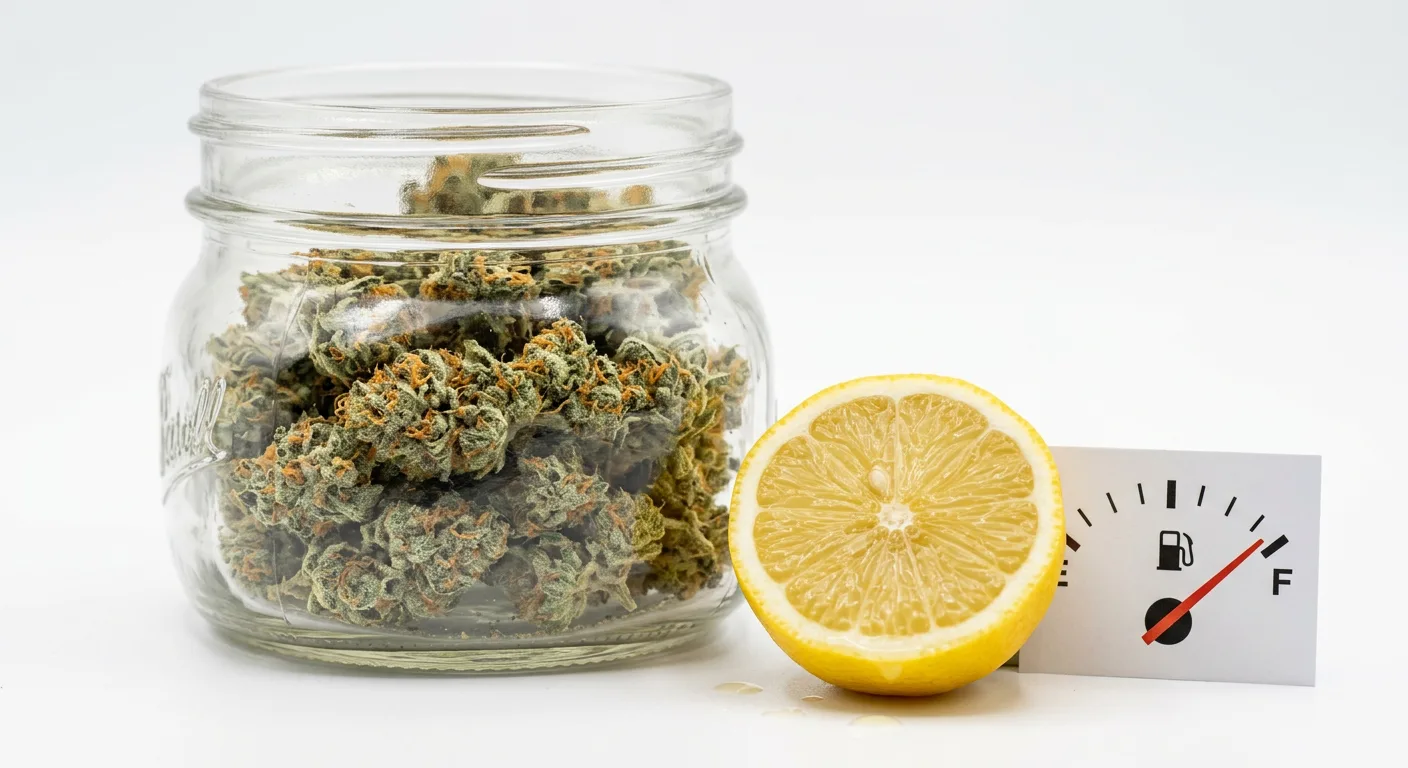
At first glance, the Diesel terpene profile looks similar to OG Kush: both feature myrcene, limonene, and caryophyllene as top three compounds. But the ratio shift between these families creates a completely different sensory experience, and understanding that ratio is the key to distinguishing these families on a COA.
The Diesel Ratio Shift: More Limonene, Less Myrcene
Where OG Kush is myrcene-dominant with limonene as a clear secondary, Diesel strains close that gap significantly. In Sour Diesel phenotypes, limonene often competes with myrcene for the dominant position, and in some phenos, limonene actually takes the top spot.
| Terpene | OG Kush Family (% of terpene fraction) | Diesel Family (% of terpene fraction) |
|---|---|---|
| Myrcene | 25–45% | 15–30% |
| Limonene | 10–20% | 18–35% |
| β-Caryophyllene | 8–18% | 10–22% |
| α-Pinene | 2–5% | 4–10% |
| Terpinolene | <2% | <3% |
| Ocimene | <2% | <2% |
This limonene dominance is what creates the famous Diesel "fuel plus citrus" character. Limonene in higher concentrations smells sharp, almost solvent-like at room temperature: this is the chemical reality behind the phrase "smells like gasoline." Combined with myrcene's musky earthiness, you get an aroma that's simultaneously industrial and citrusy.
What Puts the "Sour" in Sour Diesel
The "sour" quality in Sour Diesel isn't from a distinct terpene: it's a perceptual effect of high limonene interacting with moderate caryophyllene and a pinene backing note. Lab data from multiple Sour Diesel phenotypes shows consistently elevated α-pinene (4–9%) compared to OG Kush, and this pinene sharpness translates to that sour, almost acrid edge in the nose.
Diesel Crosses and Terpene Inheritance
- Sour Diesel: The archetype. Limonene typically 20–35%, myrcene 15–28%, caryophyllene 12–20%. Our Sour Diesel Feminized (24% THC) delivers this classic high-limonene, fuel-dominant terpene signature.
- New York Diesel (NYC Diesel): Adds a grapefruit-dominant limonene expression from its Mexican and Afghani Haze heritage. Our New York Power Diesel Feminized (24% THC) pushes the citrus-fuel combination to its brightest expression.
- Headband: Diesel × OG cross that showcases the blend between both families, limonene remains high but myrcene climbs back toward OG levels.
- Jack Herer: While technically a complex hybrid, its Diesel heritage contributes elevated limonene and pinene that give it that crisp, clear, somewhat sour character.
Grower tip: Diesel family strains are especially sensitive to curing temperature when it comes to limonene retention. Limonene has a lower boiling point than myrcene (176°F vs 334°F) and is more volatile during drying. Slow-curing at 60–65°F in sealed jars preserves far more limonene than fast-drying: this is why properly cured Diesel smells dramatically more pungent than rushed harvests. See our small harvest curing guide for technique details.
Cookies Family Terpene Profile: Caryophyllene and Limonene Forward

Girl Scout Cookies (GSC) and its descendants represent one of the most commercially successful terpene evolutions in modern cannabis breeding. The Cookies family sits at the crossroads of OG Kush and Durban Poison genetics, and the result is a terpene profile that borrowed selectively from both parents, then got amplified through phenotype selection.
The GSC Terpene Breakdown
What separates Cookies from OG Kush is that caryophyllene rises to compete for or claim the dominant position, while myrcene drops back. This creates a sweeter, spicier, more complex aromatic profile versus the heavy earthy-fuel of pure OG lineage.
- β-Caryophyllene: 20–35% of terpene fraction in many Cookies phenotypes. Much higher than in OG Kush (where it's typically tertiary). This is what delivers the "pepper and spice" top note that distinguishes Cookies from OG.
- Limonene: 18–30%. Often the #1 or #2 terpene. Contributes the sweet-citrus, almost candy-like quality that Cookies strains are famous for.
- Myrcene: Drops to 10–22%, still present but no longer the anchor. The OG earthiness is there but softened.
- Linalool: 4–10% in many Cookies expressions, notably higher than in OG family. Adds a soft floral, slightly lavender note that contributes to the "sweet" descriptor.
This caryophyllene + limonene combination creates a distinctly different sensory experience: where OG smells like earth and fuel, Cookies smells like sweet spice and citrus. Both share genetic roots, but the TPS gene expression pattern diverged significantly. For more on caryophyllene's unique properties, including its status as the only terpene known to interact with CB2 receptors, see our detailed guide on best caryophyllene strains.
Why Cookies Crosses Maintain This Profile
GSC became a dominant breeding parent in the 2010s specifically because its terpene traits are remarkably stable across crosses. The high-caryophyllene, high-limonene expression acts as a near-dominant trait in many F1 pairings, meaning even one Cookies parent tends to push the offspring's terpene profile toward the sweet-spice direction.
- Wedding Cake (Triangle Mints × GSC): Caryophyllene dominant, linalool elevated. "Vanilla cake" aroma is caryophyllene + linalool interacting at high concentrations.
- Gelato: Sunset Sherbet × Thin Mint GSC. Limonene rises further, myrcene contributes a creamy base, caryophyllene maintains the spice framework. One of the most limonene-forward Cookies expressions.
- White Cookies: White Widow × GSC. Adds caryophyllene from two different parent directions. Our White Cookies Feminized (22% THC) demonstrates this amplified caryophyllene expression with a characteristically peppery-sweet nose.
- Cookies Kush: Brings the OG/Kush myrcene back into the Cookies framework. Our Cookies Kush Feminized (18% THC) is a balanced expression with caryophyllene and myrcene sharing dominance, earthy and sweet simultaneously.
- Phantom Cookies: Blue Dream × GSC heritage. Terpinolene and caryophyllene coexist in an unusual Cookies expression. Available as Phantom Cookies Feminized (18% THC).
Science note: β-Caryophyllene is unique among cannabis terpenes because it is a dietary cannabinoid: it directly binds CB2 receptors at physiologically relevant concentrations. This means Cookies-family strains, which express among the highest caryophyllene concentrations in commercial cannabis, may offer distinct functional properties beyond aroma and flavor.
Hindu Kush Landrace Family: High Myrcene, Hash Terpenes, and the Earthiest Baseline
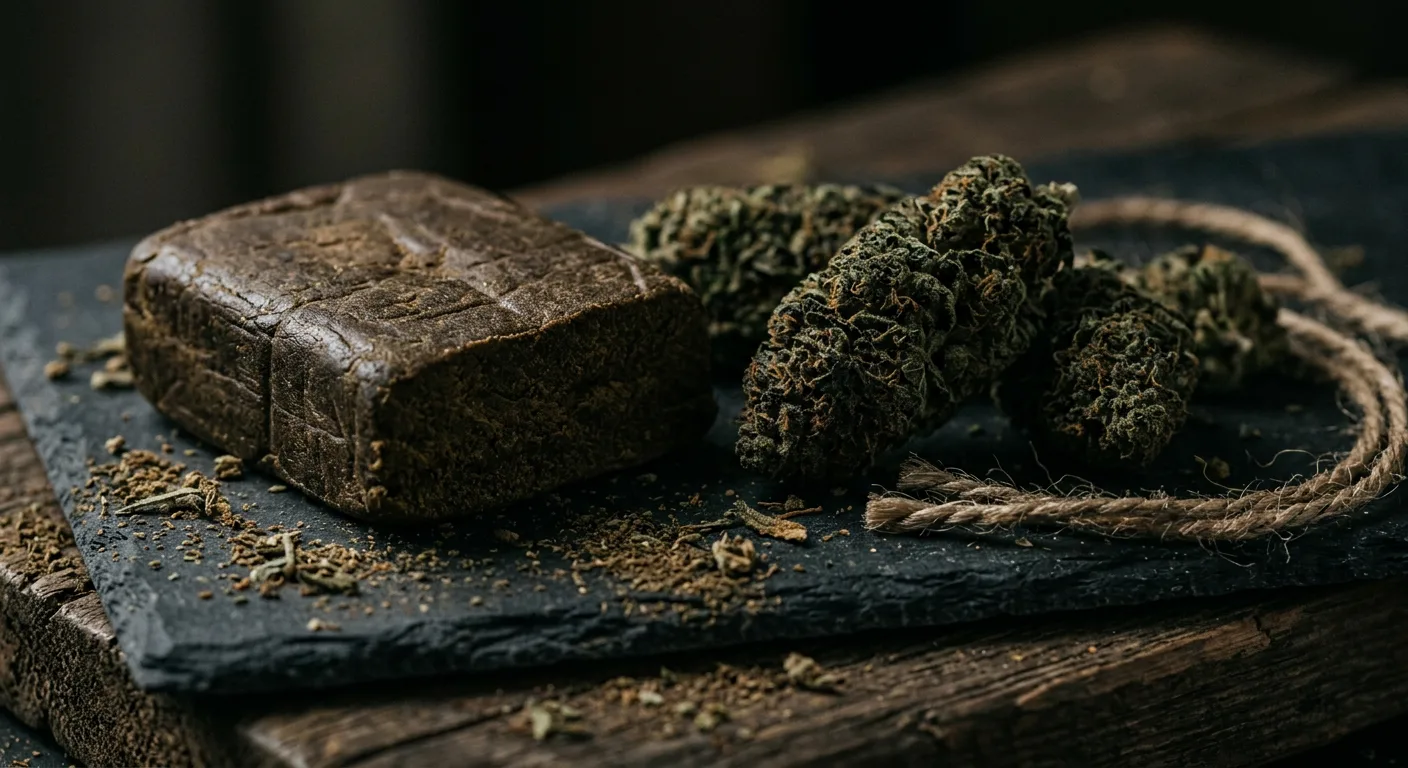
Before OG Kush, before Cookies, before Diesel, there was the Hindu Kush. This Central Asian landrace and its direct derivatives represent the ancestral baseline terpene architecture that many modern strain families evolved from. Understanding Hindu Kush terpene chemistry helps explain why so many modern hybrids carry an earthy, hash-like undercurrent.
The Landrace Terpene Signature
Pure Hindu Kush and its closest landrace derivatives typically express the most myrcene-dominant profiles measurable in cannabis. Some Afghani and Hindu Kush landrace phenotypes test at 50–65% myrcene as a proportion of total terpenes: an extraordinary concentration that creates the heavy, musky, almost sweet hash aroma that defines traditional charas and hand-pressed resin.
- β-Myrcene: 40–65% of terpene fraction. Earthy, musky, grape-adjacent. The primary hash aroma compound.
- β-Caryophyllene: 10–20%. Spice and pepper, especially prominent in the smoke.
- α-Pinene: 5–12%. A slightly fresher, piney counterpoint to the heavy myrcene base.
- Linalool: 3–8%. A soft floral note that rounds out pure Kush expressions.
- Limonene: Typically low, 3–8%. Not a defining feature of landrace Kush profiles.
This high-myrcene, low-limonene pattern is the ancestral template. When OG Kush "added" the limonene signature, it was almost certainly through hybridization with Chemdog or other complex hybrid genetics that introduced elevated limonene expression. The Kush baseline remained earthy: it was the new genetics that brought the citrus.
Modern Strains That Carry Landrace Kush Terpene DNA
- Northern Lights: Among the closest modern strains to Afghani Kush terpene architecture. Extremely myrcene dominant, very low terpinolene, moderate caryophyllene. Our Northern Lights × Big Bud Feminized (20% THC) amplifies the myrcene-dominant Kush profile with additional floral and sweet notes from Big Bud genetics.
- Purple Kush: Hindu Kush × Purple Afghani. Some phenotypes introduce linalool-driven floral sweetness alongside the dominant myrcene. Our Purple Kush Feminized (27% THC) expresses this deep, earthy-floral Kush terpene profile at very high THC levels.
- Holy Grail Kush: OG Kush × Kosher Kush. An interesting case where landrace Kush myrcene meets OG's limonene expression, creating a balanced earthy-fuel-pepper profile. Available as Holy Grail Kush Autoflower (20% THC).
- Banana Kush: Adds a linalool-driven banana/tropical note to the Kush myrcene base. Our Banana Kush Autoflower (18% THC) delivers this unusual sweet-earthy combination in an autoflowering package.
Grower caution: High-myrcene Kush strains are among the most temperature-sensitive during drying and curing. Myrcene degrades rapidly above 68°F. If you dry Kush-family harvests in a warm room (above 70°F), you can lose 30–50% of your myrcene fraction within the first week, and with it, the signature hash-earth aroma. Keep drying rooms cool and dark. Check our guide on long-term cannabis storage for preservation strategies.
Fruit Strain Family: Zkittlez, Runtz, Gelato, and the Sweet Terpene Revolution
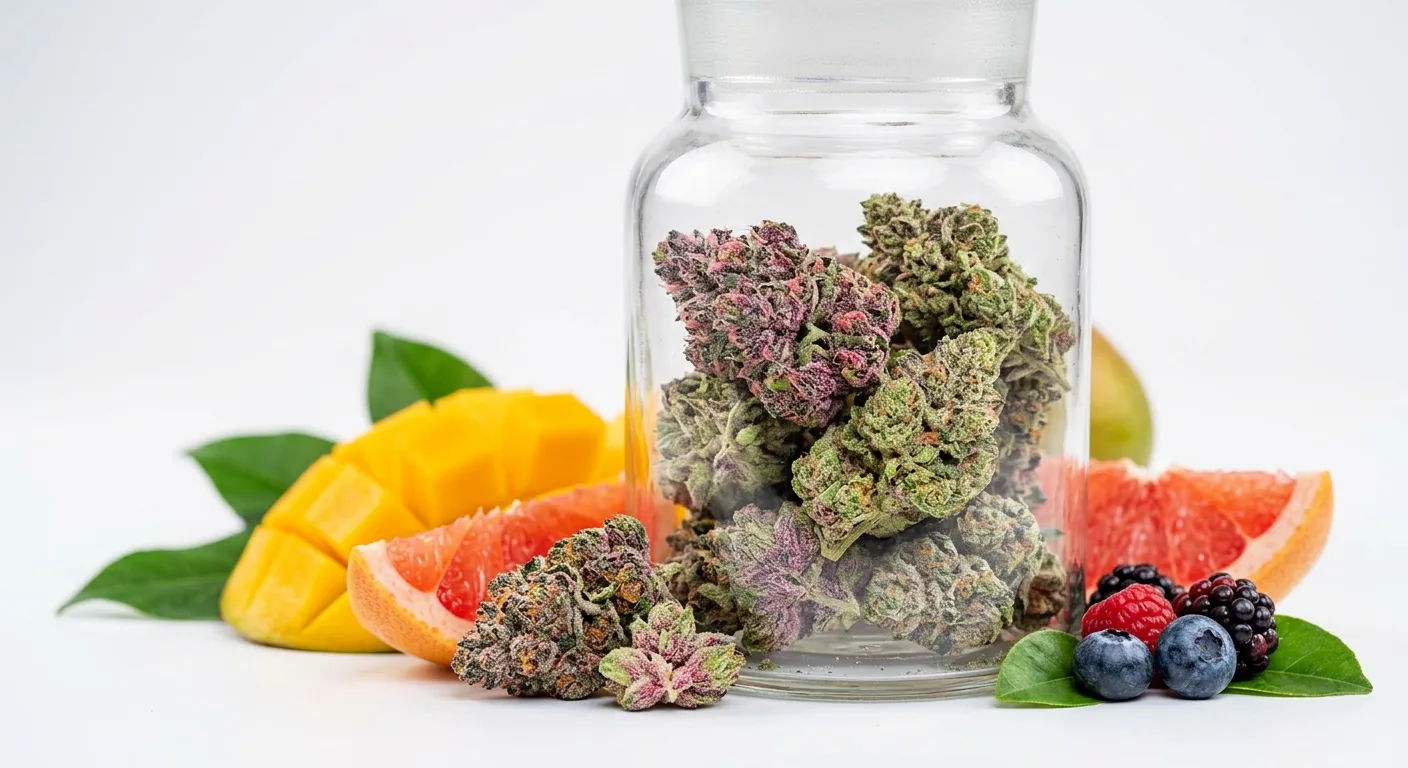
The explosion of fruit-forward cannabis over the past decade wasn't accidental. Breeders intentionally selected for limonene, linalool, and specific ester-adjacent terpene combinations to create strains that smell like candy, tropical fruit, and dessert. Understanding the terpene architecture of this modern family explains why these strains taste so radically different from their ancestors.
The Sweet Terpene Stack
Fruit strains typically share a common terpene architecture built on three compounds, with a fourth that varies by expression:
- Limonene: 20–40% in many fruit-forward phenotypes. The citrus/sweet baseline. Not the sharp solvent-limonene of Diesel but a rounder, sweeter citrus expression due to the presence of linalool moderating it.
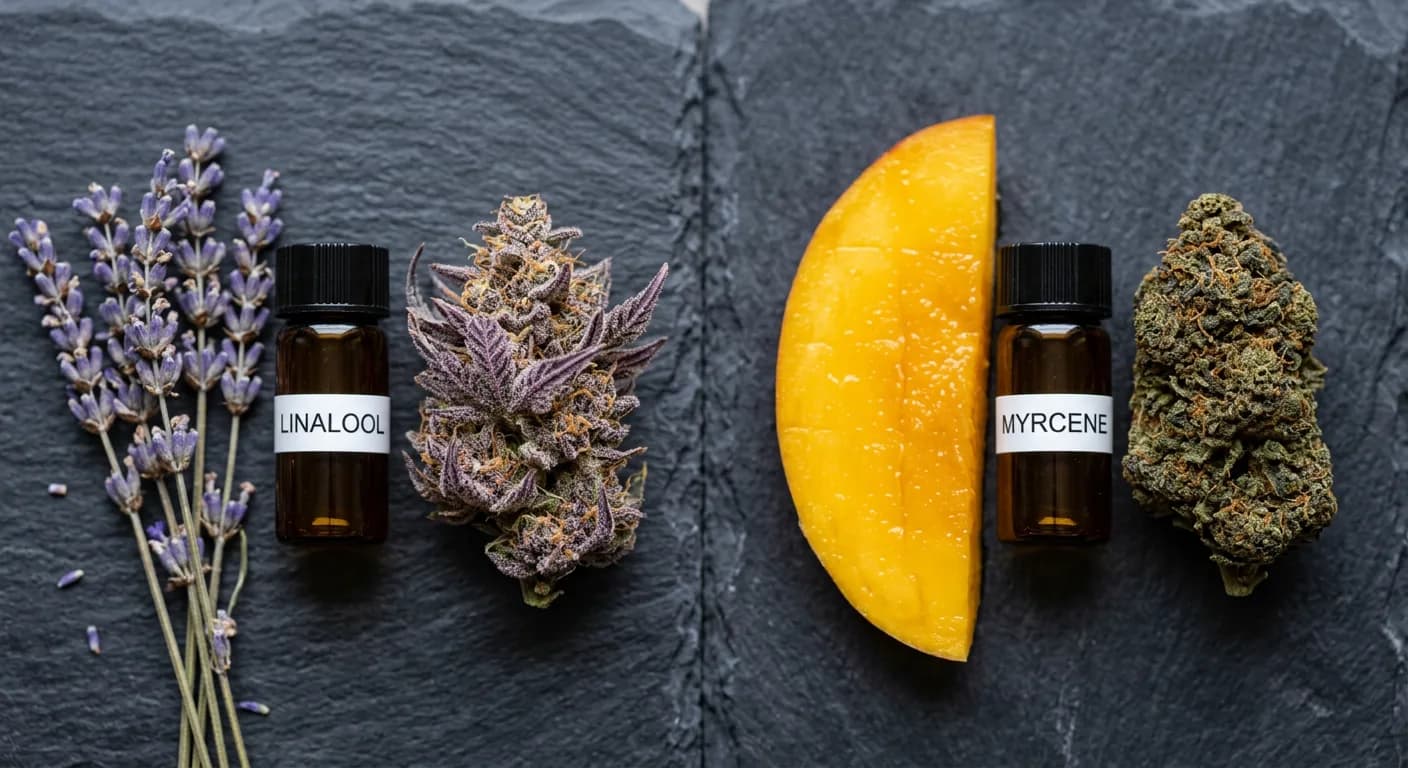
- Linalool: 8–20%, much higher than in any other family. Linalool contributes the floral, almost perfume-like sweetness that turns limonene from "lemon" into "candy." See our detailed comparison of linalool vs myrcene for more on linalool's unique character.
- Myrcene: 15–25%. Present as an earthy backbone but subordinated to limonene and linalool.
- β-Caryophyllene: 8–15%. Keeps some spicy depth and prevents the profile from becoming one-dimensionally sweet.
How Selective Breeding Concentrated Sweet Terpenes
The rise of strains like Zkittlez, Runtz, and Gelato represents decades of deliberate phenotype selection. Breeders at every generation kept the "sweetest-smelling" plants and used those as parents, unconsciously selecting for high linalool and limonene expression while removing myrcene-forward, earthy genetics from the breeding line.
This is a classic example of how domestication pressure shapes secondary metabolite chemistry. Wild cannabis landrace terpene profiles evolved to repel insects and attract pollinators, not to taste like Skittles. The modern fruit strain family is the result of human selection overriding that evolutionary baseline to express terpenes in ratios that appeal to human sensory preferences.
Fruit Family Strains and Their Terpene Signatures
- Zkittlez: One of the highest-linalool commercial strains available. The "grape and berry" impression is primarily linalool + myrcene interacting.
- Runtz: Zkittlez × Gelato. Amplifies limonene while maintaining Zkittlez's linalool base, the "candy store" aroma profile.
- Gelato: Sunset Sherbet × Thin Mint GSC. Higher caryophyllene than Runtz; the "creamy" quality comes from linalool + caryophyllene combination.
- Jillybean: Orange Velvet × Space Queen. Limonene-forward with strong myrcene support; tropical citrus expression. Our Jillybean Feminized (18% THC) captures this bright, tropical-orange terpene profile.
- Papaya: Citradelic Sunset lineage. One of the more tropical terpene expressions in our catalog, with elevated limonene and a distinctive sweet-mango quality driven by a unique myrcene-linalool ratio. Available as Papaya Feminized (25% THC).
Key takeaway: The fruit strain revolution was chemically driven by rising linalool and limonene expression. When you see a strain described as tasting like "candy, berries, or tropical fruit," you're almost always looking at a high-limonene, elevated-linalool terpene profile that emerged from deliberate phenotype selection over multiple breeding generations.
Terpene Profile Comparison: All Six Families Side by Side
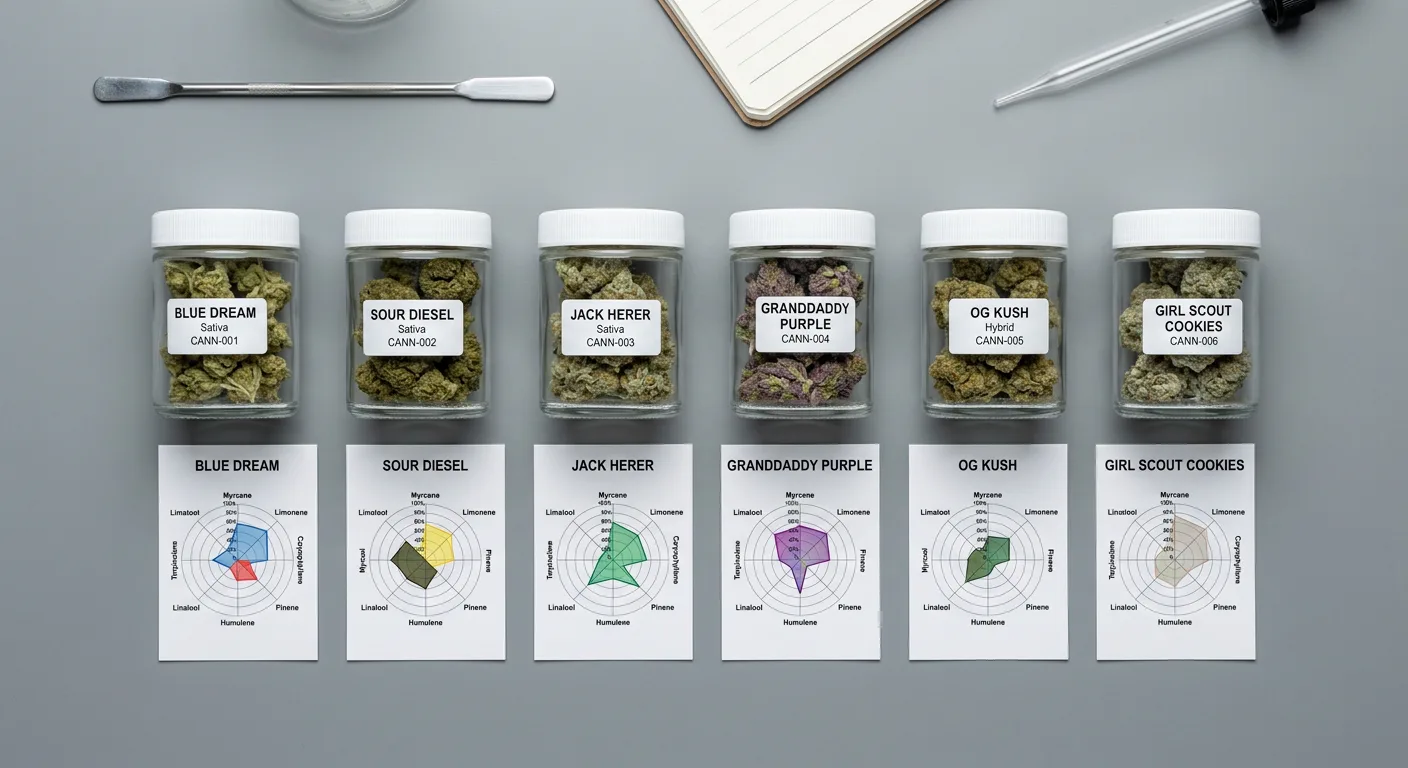
The following table maps dominant terpene rankings across all six strain families discussed in this guide. Use this as a quick-reference tool when comparing seed descriptions, evaluating COAs, or planning a grow focused on specific aroma and flavor outcomes.
| Strain Family | #1 Terpene | #2 Terpene | #3 Terpene | Flavor Profile | Defining Aroma Word |
|---|---|---|---|---|---|
| OG Kush | Myrcene (25–45%) | Limonene (10–20%) | Caryophyllene (8–18%) | Earthy, fuel, lemon | Petroleum |
| Haze | Terpinolene (15–35%) | Ocimene (8–18%) | Myrcene (10–20%) | Floral, sweet, herbal | Lilac |
| Diesel | Limonene (18–35%) | Myrcene (15–30%) | Caryophyllene (10–22%) | Fuel, sour citrus | Gasoline |
| Cookies (GSC) | Caryophyllene (20–35%) | Limonene (18–30%) | Myrcene (10–22%) | Sweet spice, citrus | Baked goods |
| Hindu Kush (Landrace) | Myrcene (40–65%) | Caryophyllene (10–20%) | Pinene (5–12%) | Earthy, hash, musky | Hashish |
| Fruit Strains | Limonene (20–40%) | Linalool (8–20%) | Myrcene (15–25%) | Sweet, candy, tropical | Candy |
How to Use Lineage to Predict Terpenes Before Buying Seeds

Understanding cannabis terpene profiles by strain family transforms how you shop for seeds. Instead of relying on marketing language like "earthy with notes of citrus", which applies to a dozen different terpene configurations: you can trace lineage to predict what a strain will actually produce on your COA and in your jar.
A Step-by-Step Approach to Terpene-Informed Seed Selection
Identify the Strain's Primary Lineage
Every seed description should list parent strains. Look for clear family markers: "OG Kush × ___" indicates myrcene-dominant architecture. "___ Haze" or "Haze × ___" signals terpinolene. "Sour Diesel × ___" points to high limonene. "GSC × ___" or "Cookies × ___" suggests elevated caryophyllene.
Map the Cross to the Terpene Table
Use the comparison table above to map both parents to their expected terpene families. If one parent is OG Kush (myrcene-dominant) and the other is Cookies (caryophyllene-dominant), expect the F1 to show elevated caryophyllene with a strong myrcene second, the "earthy spice" combination seen in strains like Headband or Platinum OG.
Consult COA Data When Available
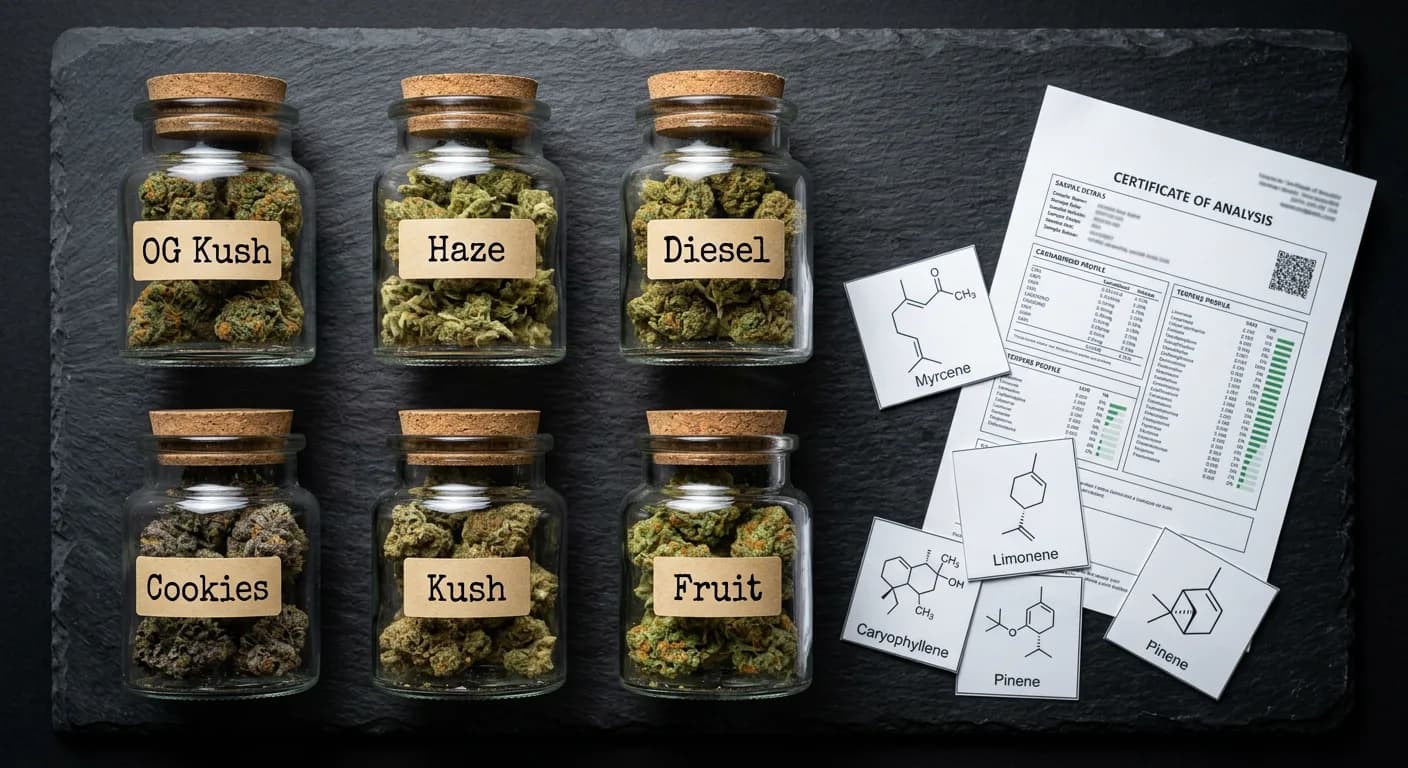
If a seed bank publishes third-party lab results for their strains (as COA documents), you can verify predicted terpene profiles against actual test data. Our guide on how to read a cannabis terpene lab report walks you through interpreting COA terpene panels correctly.
Factor in Environment and Grow Style
Remember that environment accounts for 18–45% of final terpene expression. Indoor growing with controlled lighting, temperature drops in late flower, and proper curing will maximize genetic terpene potential. Use our grow planner tool to schedule late-flower environmental adjustments that enhance terpene production in your specific strain family.
Match Lineage to Your Desired Outcome
If you're growing for caryophyllene expression (the only terpene with known CB2 receptor activity), prioritize Cookies-family genetics. For the highest terpinolene and a floral, bright profile, select Haze-dominant seeds. For heavy earthy sedation with maximum myrcene, go straight to Kush landrace derivatives. Knowing your target terpene determines your optimal lineage choice.
Lineage Red Flags: When Marketing Doesn't Match Genetics
Several common marketing claims should trigger skepticism when evaluated against lineage:
- "Earthy OG × pure Haze" claiming equal terpinolene and myrcene: genetics rarely work that way at F1
- Diesel crosses claiming "no fuel taste", high limonene from Diesel genetics doesn't disappear at F1
- Heavy Kush phenotypes claimed to express "tropical fruit" without significant Fruit family input in parentage
- Cookies crosses without caryophyllene listed as a primary terpene: if GSC is a parent, caryophyllene will be present
- Any claim of a completely unique terpene profile that shares no family markers with listed parents
Seed buyer tip: Before purchasing any premium seeds, cross-reference the listed lineage against the terpene family table above. If the described flavor profile doesn't match what the genetics predict, ask the seller for COA documentation. Reputable genetics producers can back their terpene claims with third-party lab data, and our germination guarantee covers every seed we sell.
Environment, Curing, and How They Interact With Genetic Terpene Potential
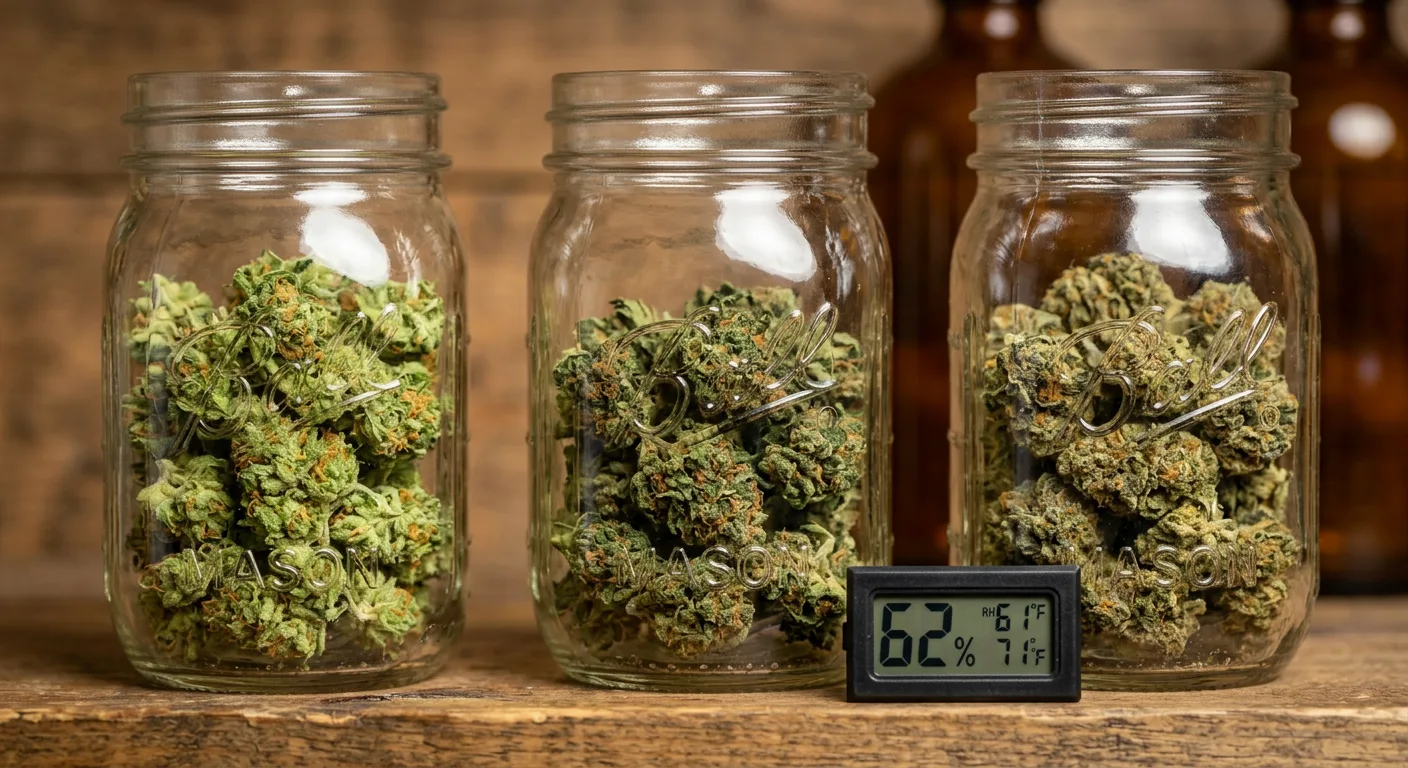
Genetics determines which terpenes a strain can produce and in roughly what ratios. But environment and post-harvest handling determine how much of that genetic potential actually makes it into the final product you smoke or test.
Key Environmental Levers for Each Strain Family
- OG Kush family: Slight temperature reduction (5–8°F) in the final 10–14 days of flowering increases limonene. Consistent VPD management in the 1.0–1.5 kPa range protects myrcene production during late flowering. See our complete VPD guide for optimal ranges by growth stage.
- Haze family: Extended flowering times are critical, terpinolene and ocimene production peaks late. Harvesting early is the most common way Haze growers destroy their terpene profile. Terpinolene levels can increase by 30–40% in the final two weeks of a fully mature Haze. Our guide on when to harvest for maximum potency applies directly here.
- Diesel family: Limonene is highly volatile, the most evaporable terpene in the Diesel stack. Slow drying at 60–65°F and 55–60% relative humidity is critical. Consider Boveda packs during cure to maintain consistent humidity. Read our detailed review of humidity packs for cannabis storage.
- Cookies family: Caryophyllene is the most stable terpene in the Cookies stack (highest boiling point at 266°F). Even if curing is imperfect, caryophyllene survives well. However, linalool (if present in your specific phenotype) is volatile and needs careful slow-curing to preserve.
- Kush landrace: The myrcene-dominant profile is vulnerable at any temperature above 68°F during drying. Keep your dry room cool or myrcene evaporates quickly, leaving a flat, hay-adjacent smell.
- Fruit strains: Linalool and limonene are both relatively volatile. Fruit strain growers often report dramatic terpene improvement with a 60-day cure vs a 30-day cure, the slower the better for preserving the sweet profile. Monitor water activity during curing to maintain the 0.55–0.65 Aw safe zone.
Critical warning: UV light is a terpene destroyer across all strain families. Even 30 minutes of direct sunlight exposure on cured cannabis can degrade 15–20% of total terpene content. Store all finished product in UV-blocking, airtight glass jars, regardless of what strain family you grew. The genetic terpene potential is irrelevant if post-harvest handling destroys what the plant built.
Using Lab Data to Verify Your Grow Environment's Impact
The best way to track whether your environment is serving or sabotaging your strain's terpene genetics is to test multiple harvests from the same seed batch under different conditions. If your first OG Kush run tests at 18% myrcene and 8% limonene but a second run with proper temperature control tests at 31% myrcene and 14% limonene, you've quantified exactly what your environment was costing you, in dollars and in quality.
Use our yield estimator tool alongside COA data to understand how terpene optimization translates into real-world value per harvest.
Frequently Asked Questions
What terpenes are in OG Kush strains?
OG Kush strains consistently test with myrcene as the dominant terpene (typically 25–45% of the total terpene fraction), followed by limonene (10–20%) and β-caryophyllene (8–18%). This "terpene triangle" creates OG's signature earthy, fuel-and-lemon aroma. Secondary terpenes including linalool, α-humulene, and α-pinene are also present but rarely exceed 5% each in true OG phenotypes.
Why do Haze strains smell so different from OG Kush?
Haze strains express terpinolene (15–35%) and trans-β-ocimene (8–18%) as their dominant terpenes, two compounds that are nearly absent in OG Kush phenotypes. OG Kush is dominated by myrcene (earthy/musky) and limonene (fuel/citrus), while Haze is dominated by terpinolene (floral/piney/herbal) and ocimene (sweet/tropical). This single divergence in terpene synthase gene expression accounts for the enormous aromatic distance between the two families.
What makes Cookies strains (GSC lineage) taste different from OG?
In Cookies strains, β-caryophyllene rises to become the dominant or co-dominant terpene (20–35% of terpene fraction), while myrcene drops compared to OG family. Limonene remains elevated and linalool is higher than in OG genetics. This caryophyllene + limonene + linalool combination creates the characteristic sweet-spice, baked-goods aroma of GSC and its descendants, versus OG's heavy earthy-fuel profile that's built on myrcene + limonene + lower caryophyllene.
How does strain lineage affect terpene expression?
Terpene expression is controlled by terpene synthase (TPS) genes inherited from both parents. Studies estimate that genetics explains 55–82% of a terpene's concentration, with environment accounting for the remaining 18–45%. This means lineage is the most reliable predictor of terpene profile: a strain with OG Kush parents will almost always test myrcene-dominant, regardless of grow conditions, because the TPS gene variants driving myrcene synthesis are inherited from the parent.
Which strain family has the highest caryophyllene cannabis?
The Cookies family (GSC lineage and its crosses) consistently produces the highest β-caryophyllene concentrations in commercial cannabis, with many phenotypes testing at 20–35% of total terpene fraction. Wedding Cake, Gelato, White Cookies, and similar Cookies-derived strains are your best options if maximizing caryophyllene is the goal. The Diesel family also tests moderately high in caryophyllene (10–22%), while OG Kush family averages lower at 8–18%.
Sources & References
This article was researched using 1 peer-reviewed study.
- Booth JK, Bohlmann J. Terpene Synthases and Terpene Variation in Cannabis sativa. Plant Physiol. 2020 — pubmed.ncbi.nlm.nih.gov/32591428 [Research]