The Genetics Revolution Hiding in Plain Sight
Imagine planting ten seeds and watching every single one grow into an almost identical plant — same height, same structure, same harvest window, same potency. For most cannabis growers, that sounds like a fantasy. But for growers working with F1 hybrid cannabis strains, it's Tuesday.
F1 hybrids represent the most significant leap in cannabis breeding since growers first crossed indica and sativa lines decades ago. They borrow a concept that corn farmers have relied on since the 1920s and apply it to one of the most genetically complex plants on earth. The results are extraordinary — and the science behind them is even more fascinating.
This guide breaks down exactly what F1 hybrids are, why they perform the way they do, and what it means for you as a grower. Whether you're running a single tent or a commercial facility, understanding first-generation genetics will change how you think about seeds forever.
What Is an F1 Hybrid Cannabis Strain?
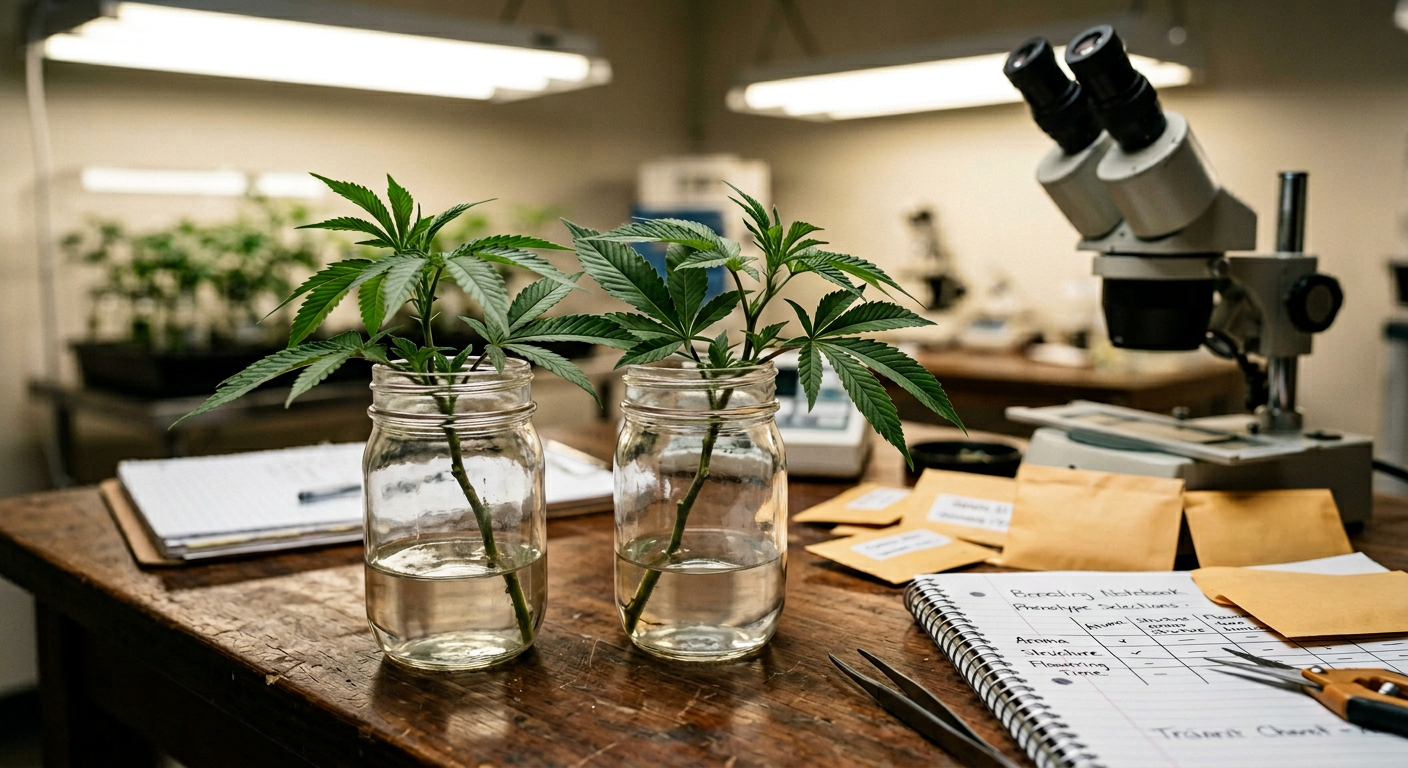
An F1 hybrid cannabis strain is the direct offspring produced by crossing two genetically distinct, highly inbred parent lines. The "F1" stands for Filial 1 — simply meaning "first generation." Each plant in that first generation carries one set of genes from each parent, creating an extraordinarily uniform population.
The key word in that definition is inbred. True F1 production starts long before the final cross. Breeders spend years — often five to seven growing seasons — stabilizing each parent line through repeated self-pollination or sibling crosses. Only once both parents breed true for every target trait does the actual F1 cross happen.
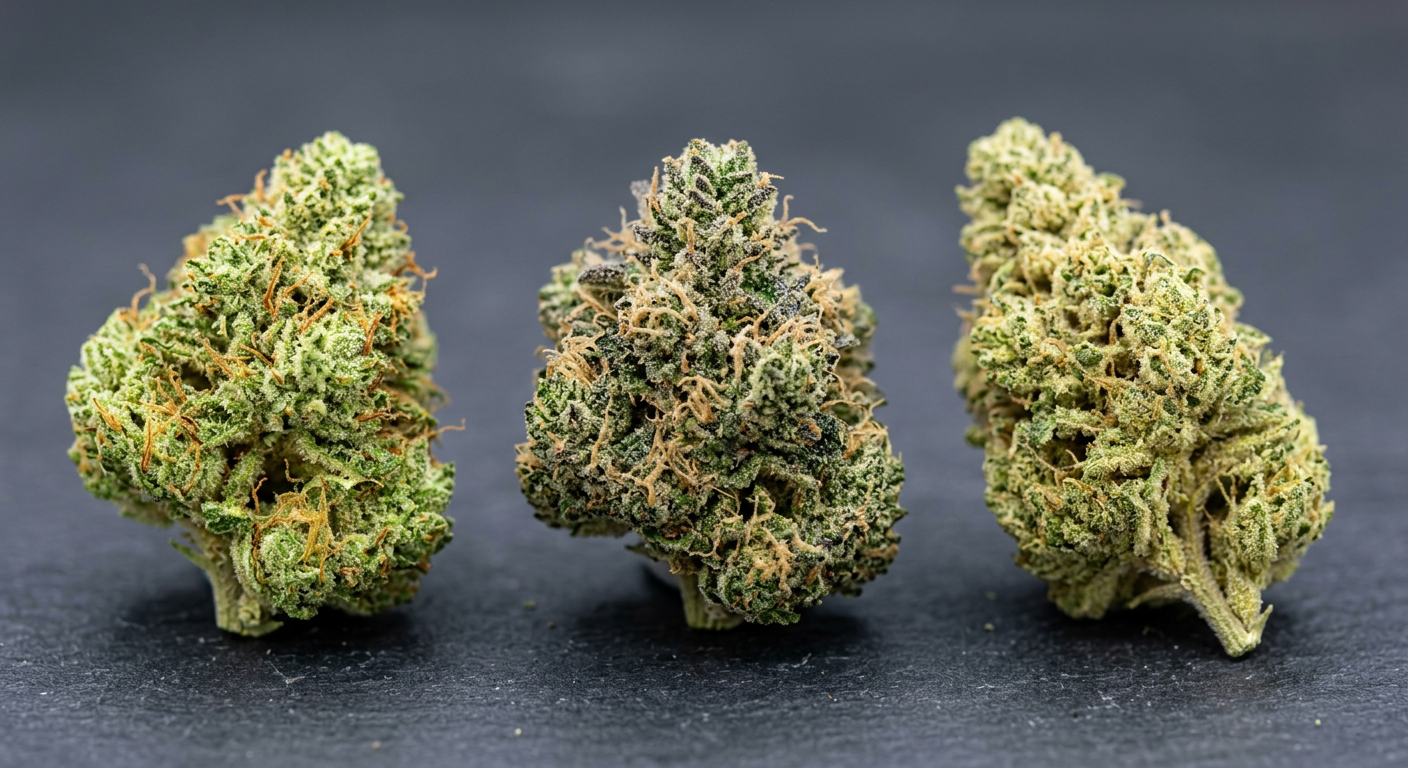
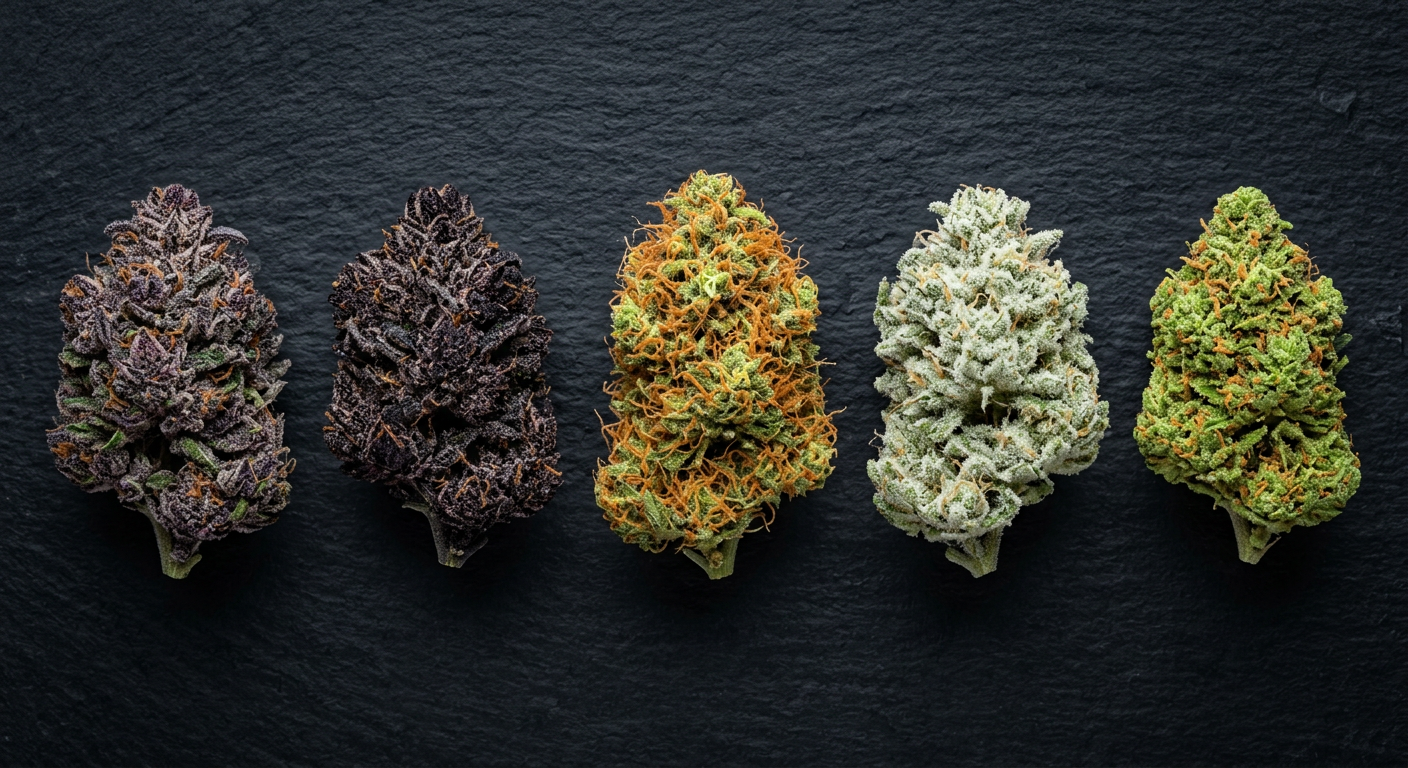
The result is a batch of seeds where every plant expresses nearly identical characteristics. Compare that to a regular feminized hybrid, where phenotype variation can be dramatic from seed to seed within the same packet.
F1 hybrids are not simply crossing two popular strains together. True F1 production requires both parents to be deeply inbred, homozygous lines — a process that takes years of methodical selection before a single F1 seed is ever produced.
What Does F1 Mean in Cannabis Genetics?
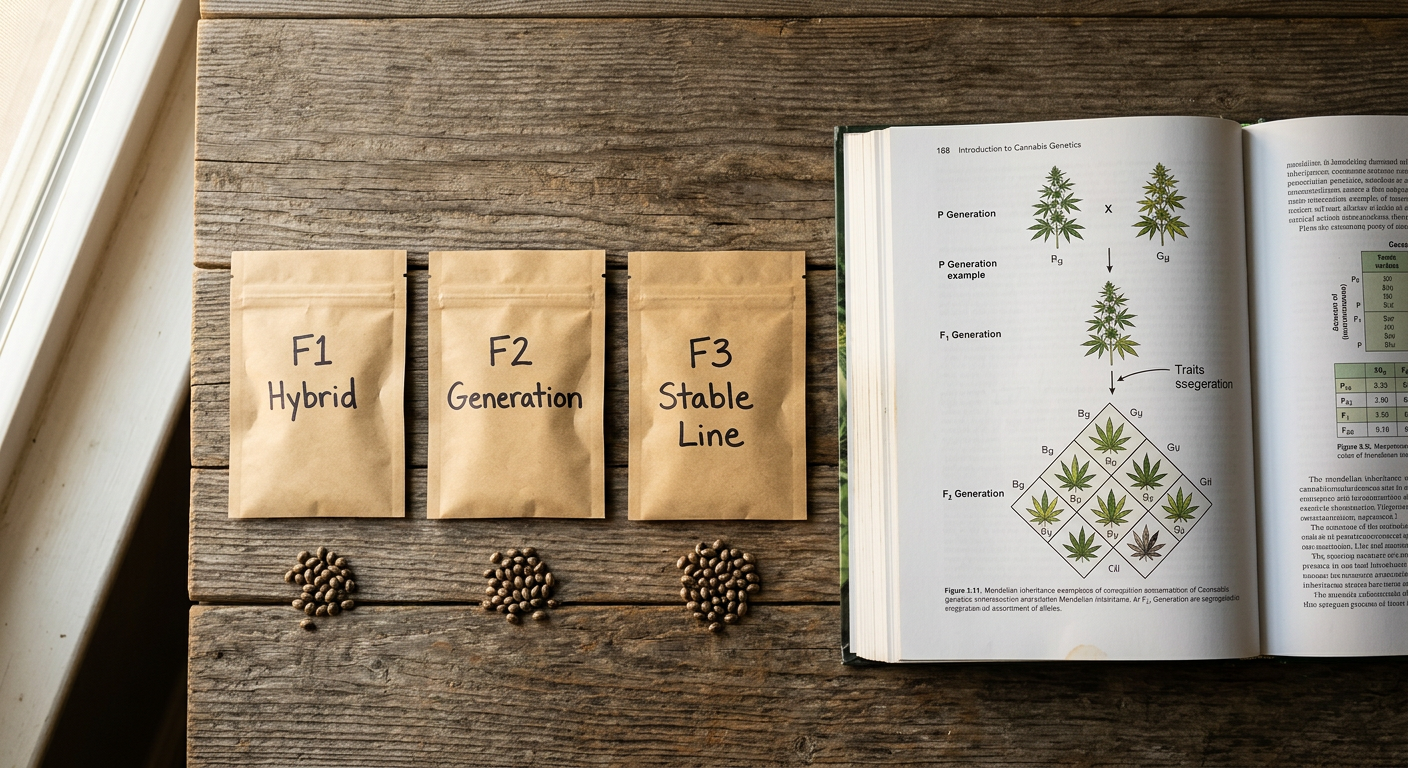
In cannabis genetics, F1 means the first filial generation — the immediate offspring of two genetically stable, homozygous parent lines. The notation comes directly from Gregor Mendel's original genetics framework. Every plant in a true F1 population will be genetically heterozygous, carrying one allele from each parent at every gene locus.
This heterozygosity is actually the source of F1's greatest power. When two different but stable versions of the same gene come together, the plant often expresses a boosted version of that trait — a phenomenon called dominance complementation, which feeds directly into hybrid vigor.
How F1 Cannabis Differs from Regular Hybrids
Most seeds labeled "hybrid" in cannabis catalogs are not true F1s. They're crosses between two already-variable strains — sometimes called "polyhybrids" — where the parents themselves carry enormous genetic variability. Growing a packet of those seeds gives you a wide range of phenotypes that can differ significantly in height, flowering time, and yield.
True F1 hybrids start from inbred lines (IBLs) where both parents express near-zero variation. This controlled foundation is what makes the first-generation cross so predictable and powerful.
Heterosis and Hybrid Vigor: The Science Behind the Magic

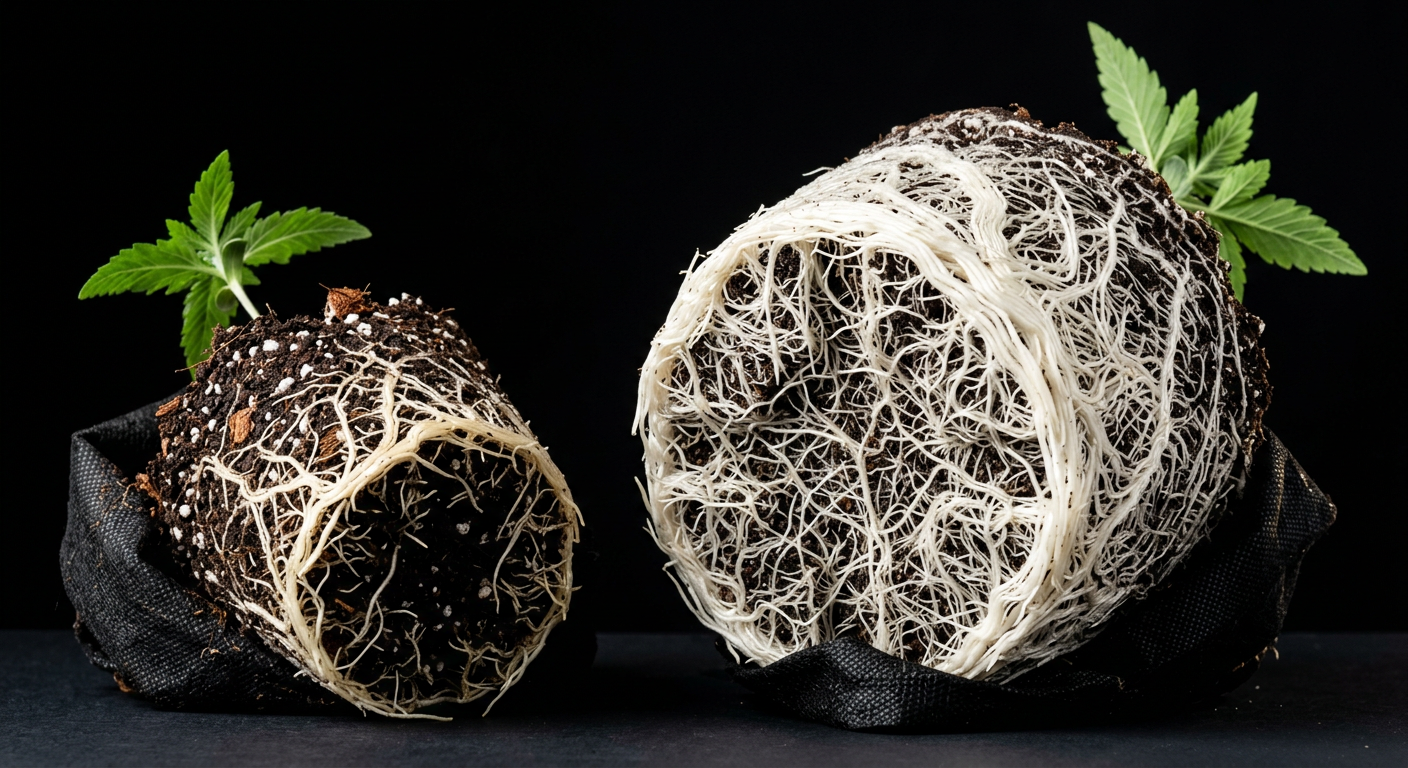
Hybrid vigor — formally known as heterosis — is the tendency for F1 hybrids to outperform both of their parents across a wide range of traits. It's the biological engine that makes F1 cannabis strains grow faster, yield more, resist stress better, and finish more consistently than either parent line alone.
Heterosis isn't magic, and it isn't marketing spin. It's a documented, measurable genetic phenomenon that agriculture has exploited for over a century. In cannabis, it manifests as accelerated root establishment, stronger cell walls, faster vegetative growth, denser canopy development, and higher resin production.
"Hybrid vigor in F1 cannabis isn't just about size. It's about resilience — the kind of genetic robustness that lets a plant shrug off the minor stresses that cripple lesser genetics."
The Three Mechanisms of Heterosis
Plant geneticists have identified three primary models that explain why hybrid vigor occurs. In cannabis, all three likely play a role simultaneously.
- Dominance complementation: When a harmful recessive allele from one parent is masked by a functional dominant allele from the other parent, the hybrid escapes any negative effect either parent might have carried.
- Overdominance: In some cases, having two different versions of a gene at the same locus actually produces a superior outcome compared to having two copies of the "best" version. The heterozygous state itself is advantageous.
- Epistasis: Positive interactions between genes from different parents create synergistic effects that neither parent could produce alone — this is especially relevant for complex traits like terpene profiles and cannabinoid ratios.
Research in corn and tomato breeding — two crops where F1 production is most mature — shows that heterosis can increase yield by 15–50% depending on the trait measured. Early cannabis breeding data suggests similar gains are possible, particularly in biomass production and disease resistance.
What Hybrid Vigor Looks Like in Your Grow Room
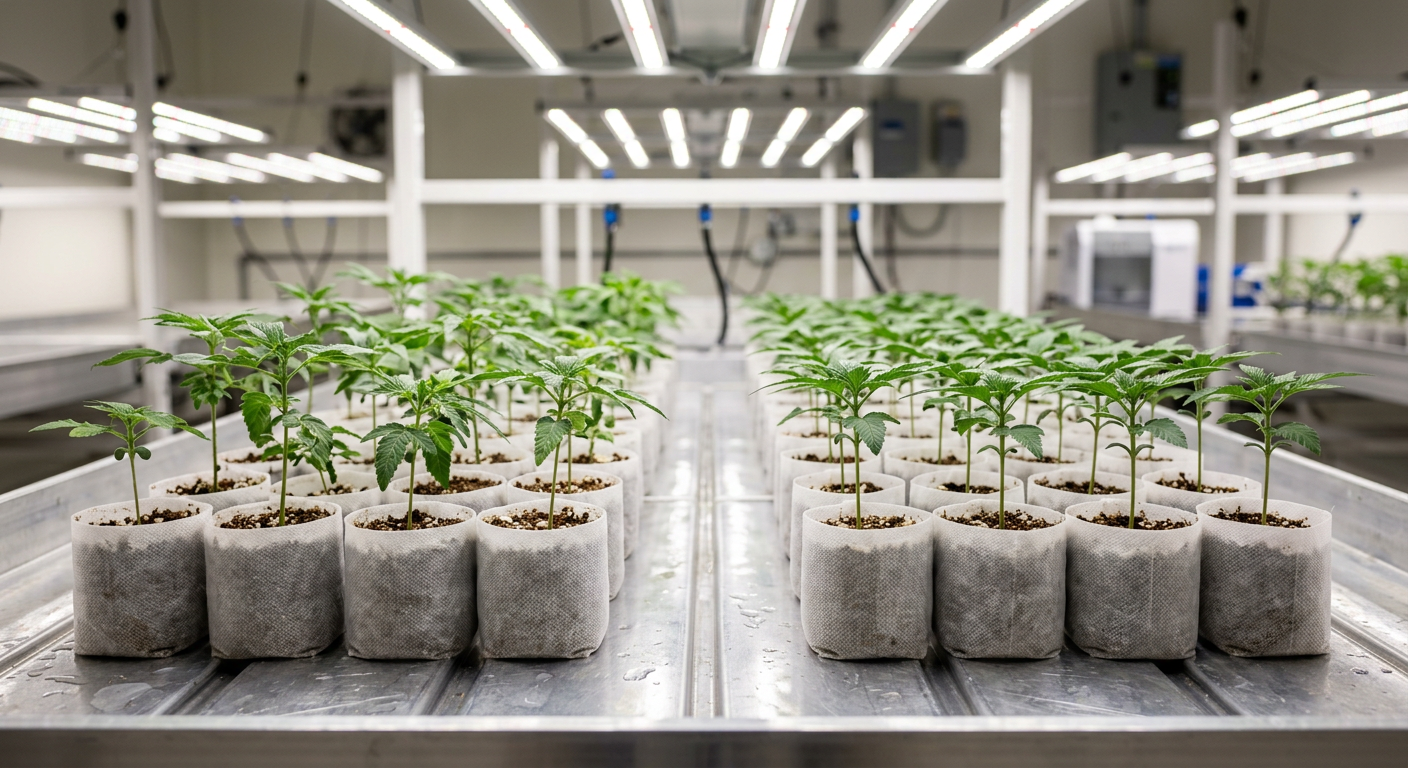
If you've never grown true F1 cannabis, the expression of hybrid vigor can be genuinely startling. Growers who switch from regular feminized hybrids often report that F1 seedlings emerge faster, develop their first true leaves in fewer days, and establish root systems that seem almost aggressive by comparison.
During the vegetative phase, this translates to noticeably shorter internodal spacing for their height — meaning denser branching without sacrificing vertical growth. Plants tend to recover faster from any training stress, whether that's topping, FIMming, or screen of green setups.
- Root zone establishment: 20–40% faster than non-hybrid parents
- Vegetative growth rate: measurably accelerated in the first 3–4 weeks
- Stress recovery: F1s bounce back from training, temperature swings, or pH fluctuations more quickly
- Disease resistance: stronger immune response to common pathogens
- Harvest uniformity: 90–98% of plants finish within the same 5–7 day window
How F1 Cannabis Strains Are Created
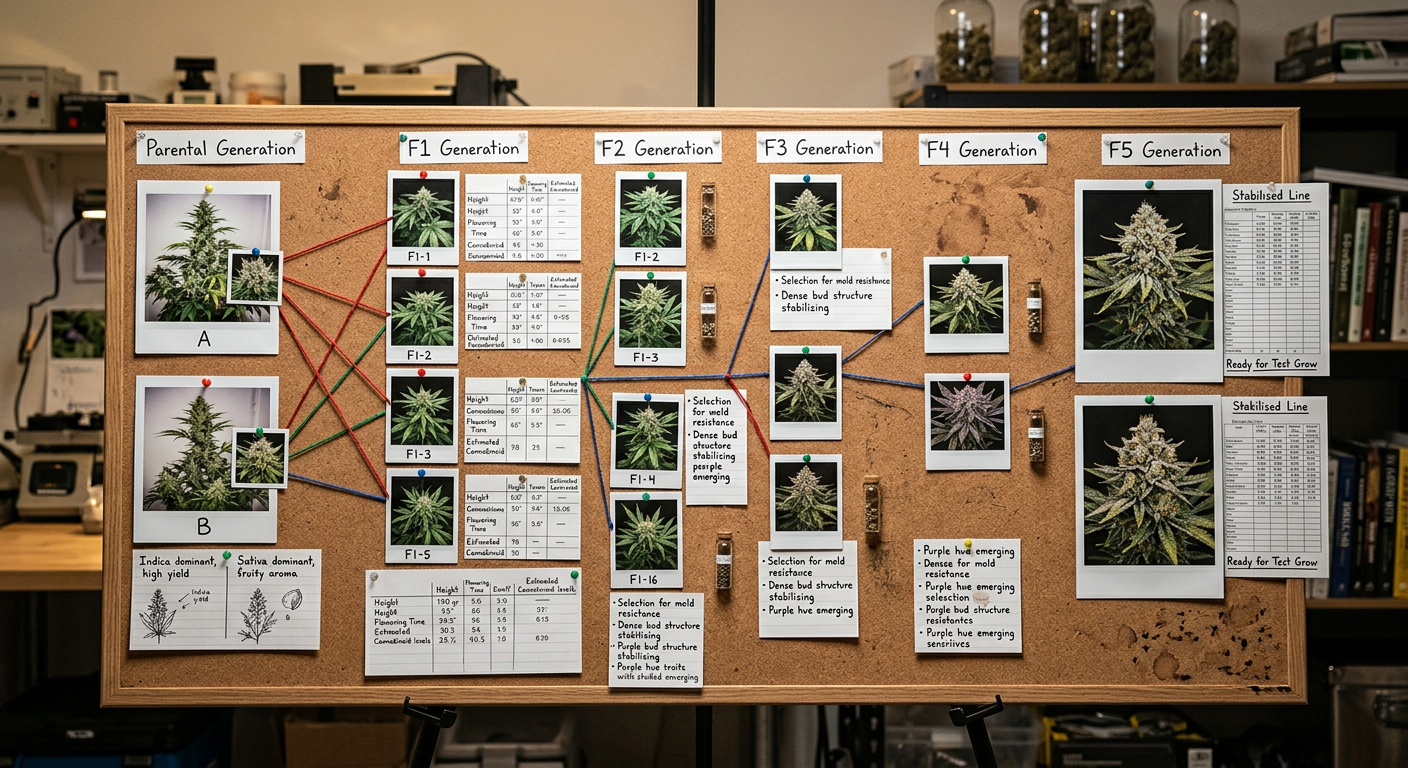
Creating true F1 hybrid cannabis strains is one of the most labor-intensive processes in plant breeding. It takes discipline, patience, meticulous record-keeping, and years of work before a single marketable seed is produced. Understanding the creation process helps you appreciate why true F1s command respect among serious cultivators.
Select Elite Parent Phenotypes
The process begins with identifying two genetically distant parent candidates — often from different landrace or heirloom lineages — that carry complementary traits. Breeders look for parents whose strengths cover each other's weaknesses. For background on original genetics, see our guide to landrace cannabis strains.
Develop Inbred Lines (IBLs)
Each parent is self-pollinated or sib-crossed repeatedly — typically for 6–8 generations. After each generation, breeders cull plants that don't meet the target phenotype. By generation 6, the line should be expressing the target traits with 95%+ consistency. This is the longest phase, often taking 3–5 years.
Test Cross Compatibility
Before scaling production, breeders make small test crosses between the two IBLs and grow out 50–100 plants. They measure uniformity, hybrid vigor expression, and whether the target traits from both parents are combining as intended. Multiple rounds of test crosses may occur before the final combination is selected.
Scale F1 Seed Production
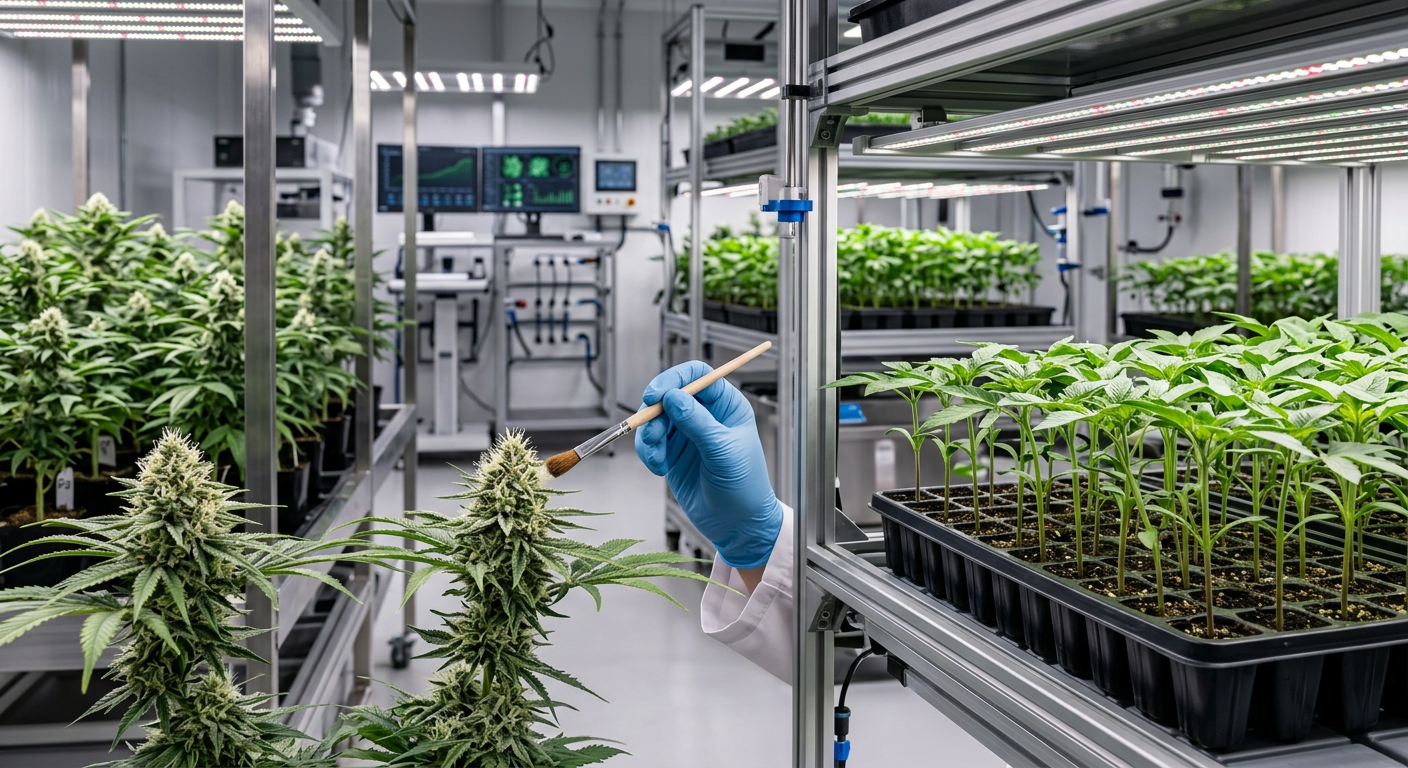
Once the ideal parent combination is confirmed, controlled pollination is scaled up. Female plants from one IBL are pollinated by males from the other in a strictly isolated environment. Every seed produced from this cross is an F1 hybrid. Seed production is carefully documented to maintain genetic traceability.
Quality Control and Grow-Out Testing
Batches of F1 seeds are grown out in test conditions across multiple environments before release. Breeders measure germination rates, uniformity percentages, growth metrics, cannabinoid content, terpene profiles, and resistance characteristics. Only batches that meet specification thresholds reach the market.
If a seed company can't tell you how many generations of inbreeding went into their parent lines, it's probably not a true F1 hybrid. Ask specifically about the homozygosity level of the parent IBLs — reputable F1 breeders will have this data.
Genetic Stability of F1 Cannabis: What It Means and What It Doesn't
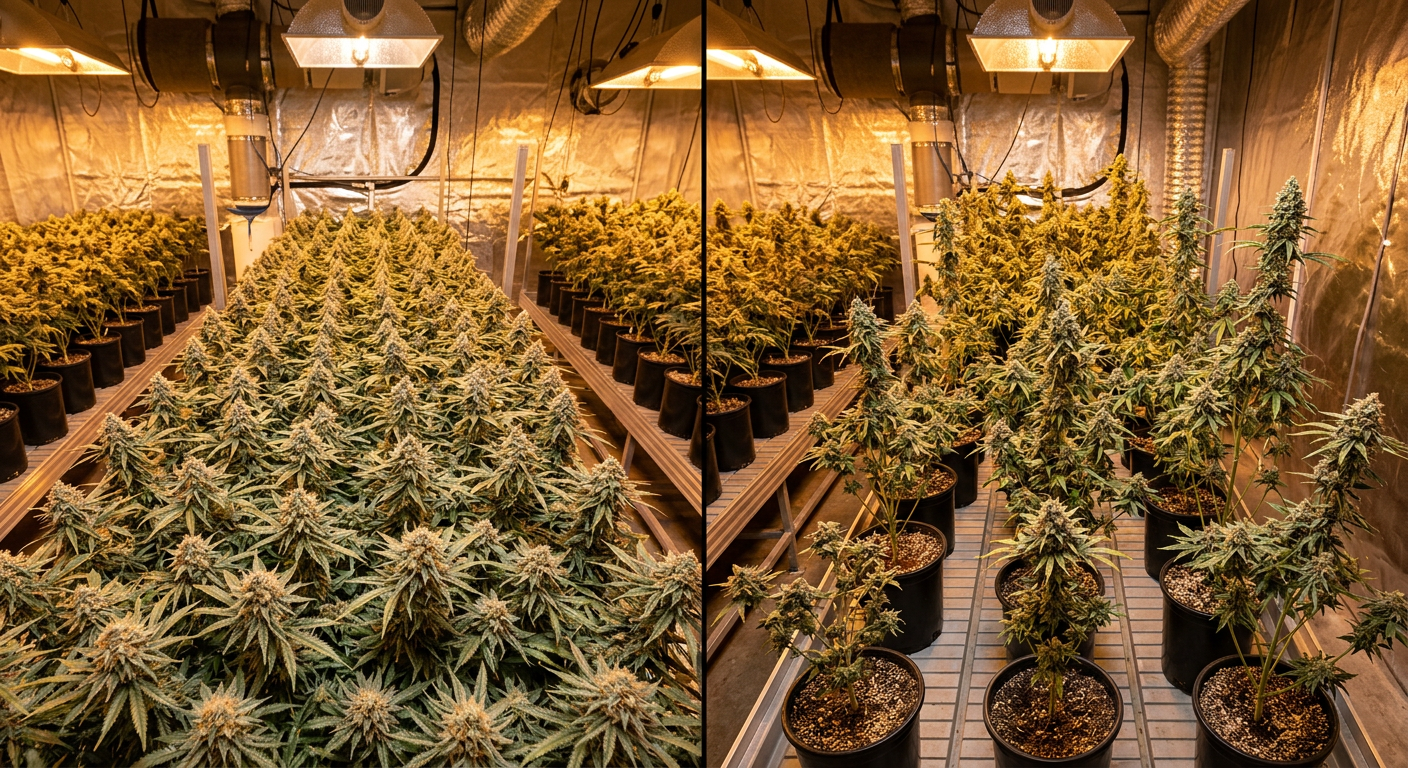
"Genetic stability" is one of the most misunderstood phrases in cannabis culture. When growers talk about F1 hybrid stability, they mean phenotypic uniformity across a population — not the ability to breed stable offspring from F1 plants. These are two completely different things, and confusing them leads to expensive mistakes.
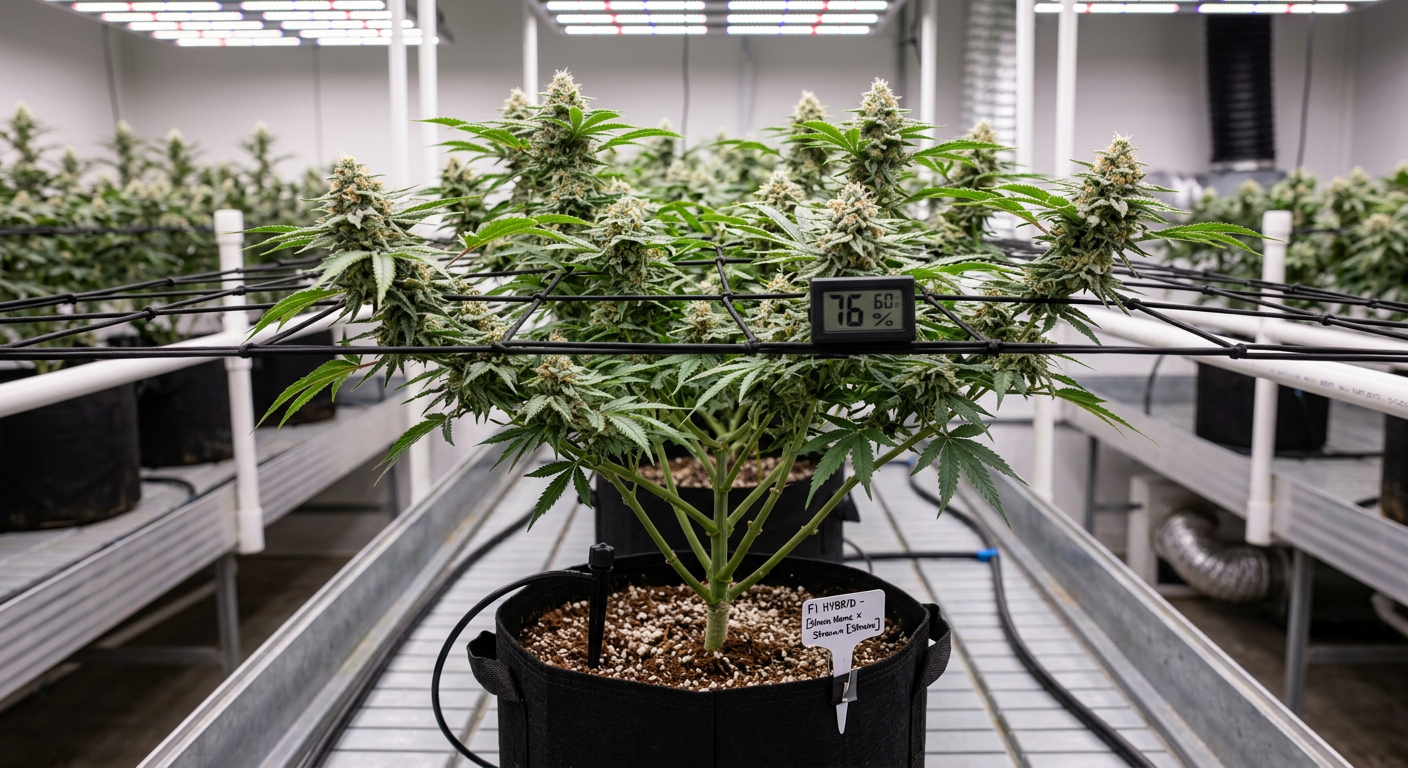
F1 cannabis strains are phenotypically stable because every plant in the batch is genetically identical — all heterozygous, all carrying the exact same combination of alleles from the two inbred parents. This uniformity is what makes commercial cultivation so efficient. You can set training nets, feeding schedules, and harvest windows for the entire crop and have them apply equally to every plant.
The F1 Stability Paradox
Here's where it gets counterintuitive: despite their phenotypic uniformity, F1 plants are genetically unstable as breeding stock. If you take pollen from an F1 male and cross it with an F1 female, the resulting seeds (called F2s) will display wild genetic variation — a process called segregation. This is actually predictable Mendelian genetics at work, but it means F1 plants cannot reliably reproduce their own traits through seed.
This is why growers who want to preserve elite F1 phenotypes turn to cloning rather than seed production. A clone captures the exact genetic snapshot of one exceptional plant indefinitely. For a deep dive into finding those elite individual plants, see our guide to cannabis phenotype hunting.
Never use F1 hybrid seeds as breeding stock expecting consistent offspring. The F2 generation from two F1 parents will express significant trait segregation — some plants may be excellent, but many will underperform. For breeding projects, work backward to the inbred parent lines, not forward from the F1.
F1 Hybrid vs F2 Cannabis Strains: A Direct Comparison

Understanding the difference between F1 and F2 cannabis strains is essential for anyone making seed-buying decisions. The two generations behave very differently in the grow room, and each has its place depending on your goals as a cultivator.
| Characteristic | F1 Hybrid | F2 Generation |
|---|---|---|
| Phenotype uniformity | 95–99% consistent | 25–75% variable |
| Hybrid vigor expression | Maximum (full heterosis) | Reduced (50% on average) |
| Predictability for commercial grow | Excellent | Poor to moderate |
| Breeding potential | Low (segregates in F2) | High (can select new IBLs) |
| Seed cost | Higher (years of IBL work) | Lower |
| Best use case | Commercial cultivation, consistent harvests | Breeding projects, phenotype hunting |
| Cloning preservation | Essential for long-term use | Optional |
| Genetic diversity in crop | Minimal | High |
F2 seeds are not "inferior" — they're just a different tool. Breeders love F2 populations because that genetic diversity is where new elite phenotypes hide. Growers prioritizing consistency and yield predictability should choose F1s. Breeders chasing the next great cultivar often prefer F2s for exactly the same reason growers avoid them.
F1 Cannabis Growing Advantages: What to Expect in Your Garden
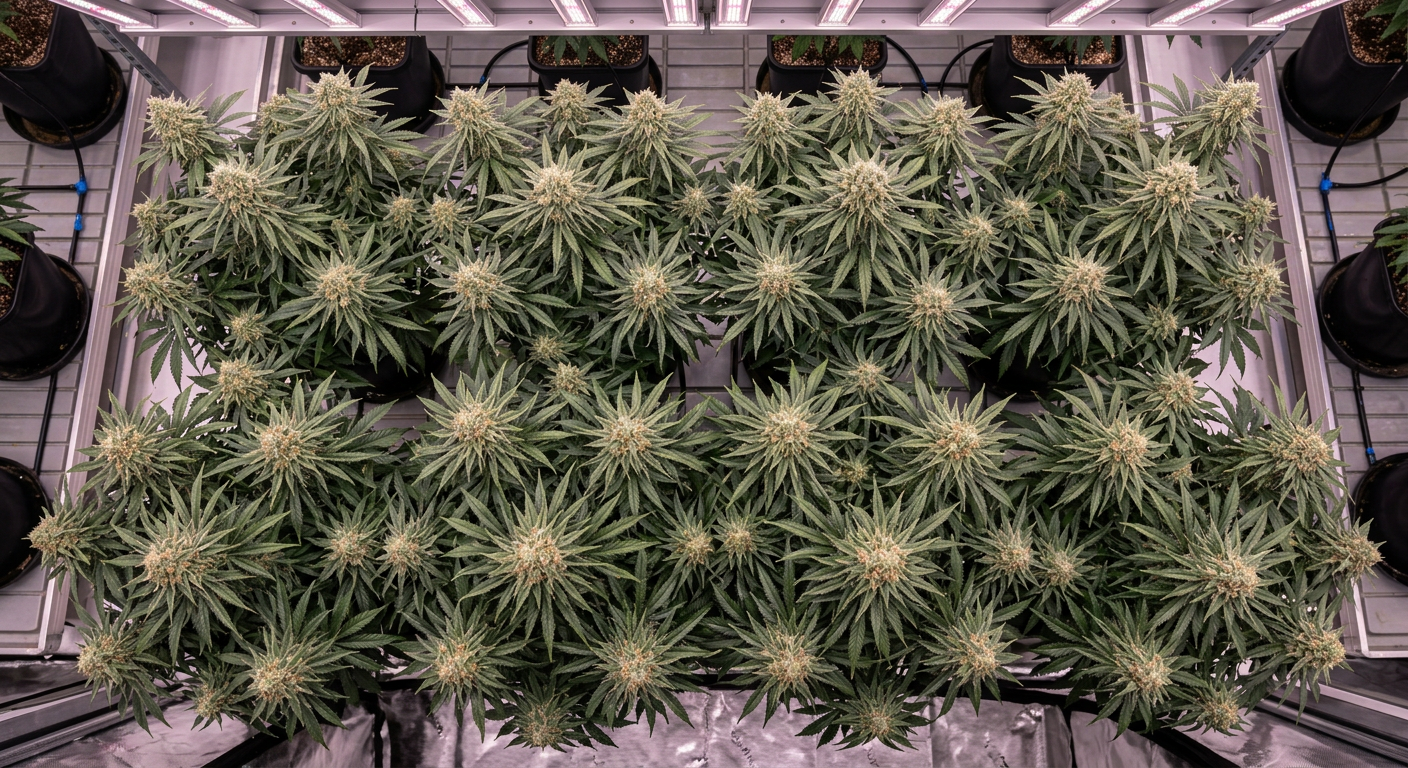
Growing F1 hybrid cannabis strains changes your cultivation workflow in practical, measurable ways. The advantages compound from germination all the way through to harvest, and they're most dramatic for growers who've previously worked exclusively with polyhybrid feminized seeds.
Uniformity Makes Everything Easier
When every plant in your tent or room grows to the same height and flowers on the same schedule, training becomes dramatically more efficient. You set your light schedule once, dial in your VPD targets, and apply them uniformly. There's no tall plant shading shorter ones, no stragglers that need extra weeks, no guessing about harvest timing for individual plants.
For commercial operations, this uniformity translates directly to labor efficiency. Staff can follow standardized protocols instead of making plant-by-plant judgment calls. Harvest can be coordinated rather than staggered, and post-harvest processes like drying and curing benefit from consistent moisture content across the entire batch.
Stress Resistance in Practice
Hybrid vigor-driven stress resistance isn't just a theoretical advantage — it shows up in real grow conditions in several concrete ways.
- Temperature fluctuations: F1 plants tend to recover from heat stress or cold snaps faster than parents, maintaining growth momentum through environmental irregularities
- Transplant shock: Root system vigor means transplanting causes minimal setback — most F1 plants show new growth within 24–48 hours of a move
- Pest and pathogen pressure: Stronger cell walls and more robust immune responses mean F1s are less susceptible to common problems like spider mites, botrytis, and powdery mildew
- Overwatering recovery: Vigorous root systems drain and re-oxygenate more effectively, bouncing back faster from grower errors
- Nutrient stress: F1s tend to show deficiencies later and recover faster when corrected, giving growers more of a buffer for minor feeding mistakes
Because F1 plants are so uniform, any plant that significantly deviates from the group — growing much taller, much shorter, or behaving differently — is worth investigating as a potential hermaphrodite or environmental outlier. Uniformity makes anomalies easy to spot early.
Yield and Potency: Real Numbers
Yield advantages from hybrid vigor typically range from 15–35% above the average of both parents when grown under identical conditions. Potency gains are less dramatic but measurable — F1 plants often express the highest-THC traits from both parents more consistently than either parent line does on its own.
Terpene profiles in F1 hybrids often surprise growers with their complexity. When two distinct terpene lineages combine through epistatic interactions, the resulting profile can be more layered than either parent — explaining why some of the most celebrated flavors in modern cannabis come from controlled F1 crosses rather than IBLs.
F1 Hybrid vs Stabilized Regular Strains: Choosing the Right Genetics
F1 hybrids aren't the right choice for every grower in every situation. Understanding how they compare to stabilized regular strains — and to classic feminized hybrids — helps you make purchasing decisions that match your actual goals and resources.
When F1 Hybrids Win
- Commercial or semi-commercial cultivation where crop consistency directly impacts profitability
- Growers who need predictable canopy management for ScrOG or sea-of-green setups
- New growers who benefit from forgiving, vigorous plants that tolerate learning-curve mistakes
- Any situation where multiple plants must finish simultaneously to optimize harvest logistics
- Growers prioritizing disease resistance, particularly those who've struggled with mold issues
When Stabilized Strains or Polyhybrids Win
- Breeders who need genetic diversity to select from — F1 uniformity is a disadvantage here
- Growers on a tight seed budget — true F1 production costs are reflected in seed prices
- Cultivators who prioritize working with classic, historically documented genetics from heirloom lineages
- Anyone planning to breed their own strains and wanting flexibility in crosses
The cannabis industry is still in early stages of true F1 commercialization compared to crops like corn, sunflower, and tomato where F1 hybrids dominate 80–95% of commercial production. As cannabis breeding matures, expect F1 hybrids to follow the same trajectory — becoming the default choice for serious cultivation rather than the premium exception.
Best F1 Hybrid Strains and Comparable Genetics to Explore
While true certified F1 hybrids with documented inbred parent lines are still a developing category in cannabis, many high-performing feminized hybrids exhibit strong heterosis characteristics from controlled crosses between genetically distinct parent populations. Understanding which strains carry the most vigorous hybrid genetics helps you select the best seeds for your goals.
High-THC Hybrid Powerhouses
Strains built on genetically distant parent crosses — where one parent is distinctly indica and the other strongly sativa — tend to express the most pronounced hybrid vigor. The genetic distance between parents directly correlates with heterosis magnitude.
- Northern Lights x Amnesia Haze (24% THC) — a textbook high-distance cross between one of cannabis's most stable indica IBLs and a sativa-dominant haze lineage. The contrast between parent lines maximizes hybrid vigor expression in growth rate and resin production.
- Northern Lights x Big Bud (20% THC) — combines Northern Lights' legendary consistency with Big Bud's yield-focused genetics, producing a crop known for uniformity and impressive flower density.
- Super Lemon Haze (23% THC) — a multiple Cannabis Cup winner built on the genetic cross between Super Silver Haze and Lemon Skunk, two distinct hybrid lineages whose combination produces exceptional vigor and a complex terpene profile.
- New York Power Diesel (24% THC) — diesel genetics crossed with New York City Diesel parentage, showing strong growth uniformity and the kind of fast canopy development associated with vigorous hybrid genetics.
Indica-Leaning Hybrids with Strong Uniformity
Indica-dominant crosses with diverse parent backgrounds often show the most consistent canopy structure — a particular advantage for ScrOG and multi-plant training setups.
- OG Kush (26% THC) — one of the most influential hybrid lineages in modern cannabis, combining Hindu Kush landrace genetics with a distinct northern California hybrid background. Its consistent structure and exceptional trichome density reflect a well-fixed hybrid genotype.
- Purple Kush (27% THC) — built from two distinct Kush landrace lines with enough genetic distance to produce strong uniformity and impressive cannabinoid expression.
- White Widow (25% THC) — perhaps the most famous controlled cross in cannabis history: a Brazilian sativa landrace crossed with a South Indian indica. The extreme geographic and genetic distance between parents is why White Widow expressed such dramatic hybrid vigor when it first appeared in the 1990s.
- Quantum Kush (30% THC) — for growers prioritizing maximum potency from their hybrid genetics, Quantum Kush's 30% THC ceiling reflects what controlled crossing of high-THCA parent lines can achieve.
Autoflowering Hybrids with Vigorous Expression
The introduction of ruderalis genetics into hybrid crosses adds a third genetically distinct lineage, and autoflowering F1-style crosses often display impressive heterosis — particularly in early development speed and stress tolerance.
- Skywalker OG Autoflower (23% THC) — combines OG Kush hybrid genetics with ruderalis for a vigorous, fast-finishing autoflower that shows strong uniformity across a crop
- Holy Grail Kush Autoflower (20% THC) — the Kosher Kush x OG #18 parentage brings genetically diverse backgrounds into an autoflowering format with notable resilience
- Amnesia Haze Autoflower (17% THC) — translates the legendary sativa x indica x ruderalis vigor of Amnesia Haze genetics into a compact, fast-finishing format ideal for growers who want haze-type complexity with autoflower convenience
When evaluating any strain for hybrid vigor, look at the geographic and genetic distance between the parent lines. White Widow (Brazilian sativa x South Indian indica), Sour Diesel (Chemdawg x MA Super Skunk), and Northern Lights crosses all benefit from this principle — the wider the genetic gap between parents, the stronger the potential for heterosis.
Growing F1 Hybrid Cannabis: Practical Tips for Maximum Performance
F1 hybrids reward growers who optimize their environment, but they're also forgiving enough for beginners to succeed with. Getting the most from F1 genetics means understanding how to channel their vigor productively rather than letting it run unchecked.
Seedling and Early Vegetative Stage
F1 seedlings often emerge faster and more uniformly than other seed types. Germination rates consistently hit 95–100% when seeds are stored correctly and germinated with the paper towel method or directly into a moist growing medium. Uniform emergence means you can start your seedling care protocol for the entire batch on the same day rather than staggering care across different development stages.
Because F1 plants develop faster, watch for the transition from seedling to vegetative growth carefully. They can outpace lighting coverage if you're using lower-intensity seedling setups, so be ready to increase intensity or lower your light source earlier than you might expect.
Vegetative Training
Hybrid vigor means F1 plants respond extremely well to high-stress training (HST) techniques. Topping and FIMming during the vegetative stage produces noticeably faster recovery in F1s compared to less vigorous genetics. You can often apply these techniques slightly earlier — at the 4th to 5th node — without worrying about stunting growth.
- Top at node 4–5 for maximum lateral branching
- Allow 5–7 days recovery before any further HST
- Maintain VPD at 0.8–1.0 kPa during veg for optimal growth rate
- Feed at full recommended rates — F1 vigor means higher nutrient demand
- Flip to 12/12 slightly earlier than with regular hybrids — F1s often stretch 50–80% of veg height
- Keep temperature swings under 10°F between day and night for best results
- Monitor canopy height daily during stretch — uniformity means you can train the whole canopy at once
Flowering and Harvest
One of the most practically valuable F1 advantages emerges during the flowering stage: the entire crop finishes within a very tight window. Rather than checking trichomes on individual plants over a 2–3 week spread, F1 growers often harvest all plants within 5–7 days of each other. Check our guide on when to harvest cannabis for trichome reading techniques that apply equally well to the whole F1 canopy.
Post-harvest uniformity also benefits the drying and curing process. When all buds come off plants with near-identical moisture content and density, you can optimize your drying environment once and have it work for the entire harvest rather than managing different moisture levels from plant to plant.
Don't make the mistake of under-sizing your space for F1 hybrids. Their accelerated growth and strong branching response to training means they can fill a canopy faster than expected. Plan for 15–20% more canopy space than you'd allocate to standard hybrids, or be prepared to flip to flower slightly earlier.
The Future of F1 Hybrid Cannabis Breeding
The cannabis industry's embrace of true F1 hybrid production is still in its early stages compared to where it will be in a decade. As legal markets mature, the demand for crop consistency, yield predictability, and documented genetic traceability is driving serious investment in IBL development and F1 seed programs.
Genomic tools that were unaffordable for cannabis breeders five years ago are now accessible. DNA marker-assisted selection allows breeders to confirm homozygosity in parent lines without growing out multiple generations — compressing the IBL development timeline from 7 years to potentially 3–4. This acceleration is already producing a new wave of true F1 cannabis varieties with unprecedented genetic documentation.
"In ten years, asking whether a commercial cannabis variety is an F1 hybrid will feel as basic as asking whether a tomato seedling came from a certified variety. F1 production will be the standard, not the exception."
For home growers and small commercial operators, this means an expanding catalog of true F1 options at accessible price points within the next few years. Understanding the genetics now — before the market fully matures — puts you ahead of the curve as a cultivator and helps you evaluate seed company claims with genuine scientific literacy.
The F1 hybrid revolution in cannabis isn't about replacing great genetics — it's about making exceptional genetics reproducible at scale. Every classic strain that made cannabis history is a candidate for IBL development, which means the future of F1 cannabis might preserve the best of the past while delivering the consistency growers have always wanted.
Frequently Asked Questions
What is an F1 hybrid cannabis strain?
An F1 hybrid cannabis strain is the first-generation offspring produced by crossing two genetically stable, highly inbred parent lines. The "F1" stands for Filial 1 — meaning first generation. Every plant in a true F1 batch is genetically near-identical, which produces exceptional phenotype uniformity and hybrid vigor (heterosis). True F1 production requires years of inbreeding each parent line before the final cross is made.
What does hybrid vigor mean in cannabis growing?
Hybrid vigor — also called heterosis — is the tendency for F1 hybrids to outperform both parent lines across multiple traits. In cannabis, this shows up as faster root establishment, accelerated vegetative growth, stronger stress resistance, better disease tolerance, and higher yields compared to either parent grown under the same conditions. The effect is strongest in the F1 generation and diminishes significantly in F2 and later generations.
Can I breed from F1 hybrid cannabis seeds?
You can, but the offspring (F2 generation) will show significant genetic segregation — meaning a wide range of phenotypes rather than the uniformity you got from the F1s. This is predictable Mendelian genetics, not a defect. Breeders actually use F2 populations intentionally to hunt for new elite phenotypes. However, if you want to preserve an exceptional F1 plant, cloning is the correct approach rather than seed production.
Are F1 cannabis seeds worth the higher price?
For most commercial and serious home growers, yes. The higher seed cost is offset by reduced crop failure rates, more efficient use of grow space and resources, predictable harvest timing, and consistently higher yields. When you factor in the cost of lighting, nutrients, and time per gram of final product, F1 hybrids typically deliver better economics than cheaper polyhybrid seeds with high phenotype variability.
How do F1 hybrids differ from regular feminized cannabis seeds?
Most regular feminized seeds are crosses between two already-variable hybrid strains — called polyhybrids — where the parents themselves carry significant genetic variability. This produces a range of phenotypes within the same packet. True F1 hybrids start from deeply inbred, homozygous parent lines, which means every plant in the batch expresses near-identical characteristics. Regular feminized seeds are not F1 hybrids unless the breeder specifically documents inbred parent lines.